

Executive Overview
The political landscape of the United States experienced a historic, earth-shattering shift during the November 3, 2026, midterm elections. For nearly a decade, political analysts, pollsters, and party strategists debated when—or if—a true reckoning would arrive for Donald Trump and the broader Make America Great Again (MAGA) movement. On Tuesday night, that question was answered decisively.
Voters across the country took Donald Trump at his word when he commanded them to vote as if he personally were on the ballot. They listened, but not in the way the White House had hoped. What began as an early evening tremor in rural Kentucky quickly escalated into a coast-to-coast political avalanche. Across the nation, a surging Democratic coalition swept away entrenched Republican power structures, flipped long-held legislative seats, and breached historic ideological bastions from the Palmetto State to the Lone Star State.
The monumental defeat suffered by Republicans offers a stark, sobering lesson for the GOP: a political coalition built on division, aggressive executive overreach, and an alienation of key demographic groups has reached its limits. At the same time, the results hand Democrats a profound mandate—one earned not by playing it safe, but by championing aggressive, working-class-focused economic policies and standing firm against civil rights rollbacks. As the dust settles on a staggering night of democratic participation, the American political paradigm has been irrevocably rewritten.
Detailed Chronology: From Kentucky’s Early Warning to a National Avalanche
The signs of a seismic political shift were evident from the moment the first precincts reported their totals.
The Early Tipping Point: Kentucky’s 6th Congressional District
Just 30 minutes after the polls closed at 6:00 p.m. in Kentucky’s 6th Congressional District, early returns from deeply conservative rural counties began to trickle in. Traditionally a bellwether, the district had been safely anchored by Republicans since 2012, when GOP incumbent Andy Barr—now running to succeed the late Mitch McConnell in the Senate—first captured the seat. Through aggressive legislative gerrymandering, the district had been structurally fortified to shield Republican candidates from competitive challenges.
Yet, as the numbers filled in, Republican nominee Ralph Alvarado was found to be severely underperforming Barr’s 2024 margins by a staggering 20 percentage points. This sharp drop signaled that a massive contingency of registered Republicans had either stayed home or cast protest votes for Democratic challenger Zach Dembo. By 9:15 p.m., Alvarado conceded the race, pulling the curtain back on a trend that would soon repeat itself in every corner of the country: the predicted "blue wave" was rapidly becoming an unstoppable avalanche.
Sweeping Southern Strongholds and Historic Upsets
Moving further south, Democrats secured an early and decisive victory with Jon Ossoff’s handily won reelection in Georgia, instantly bolstering national party morale. North Carolina followed suit as Governor Roy Cooper was projected to defeat former Republican National Committee Chairman Michael Whatley in a closely watched Senate showdown. Even ruby-red Florida saw competitive statewide races, where Democratic gubernatorial nominee David Jolly and democratic socialist Senate candidate Angie Nixon kept conservative opponents on edge before the Panhandle’s late-counted votes preserved narrow margins for the GOP.
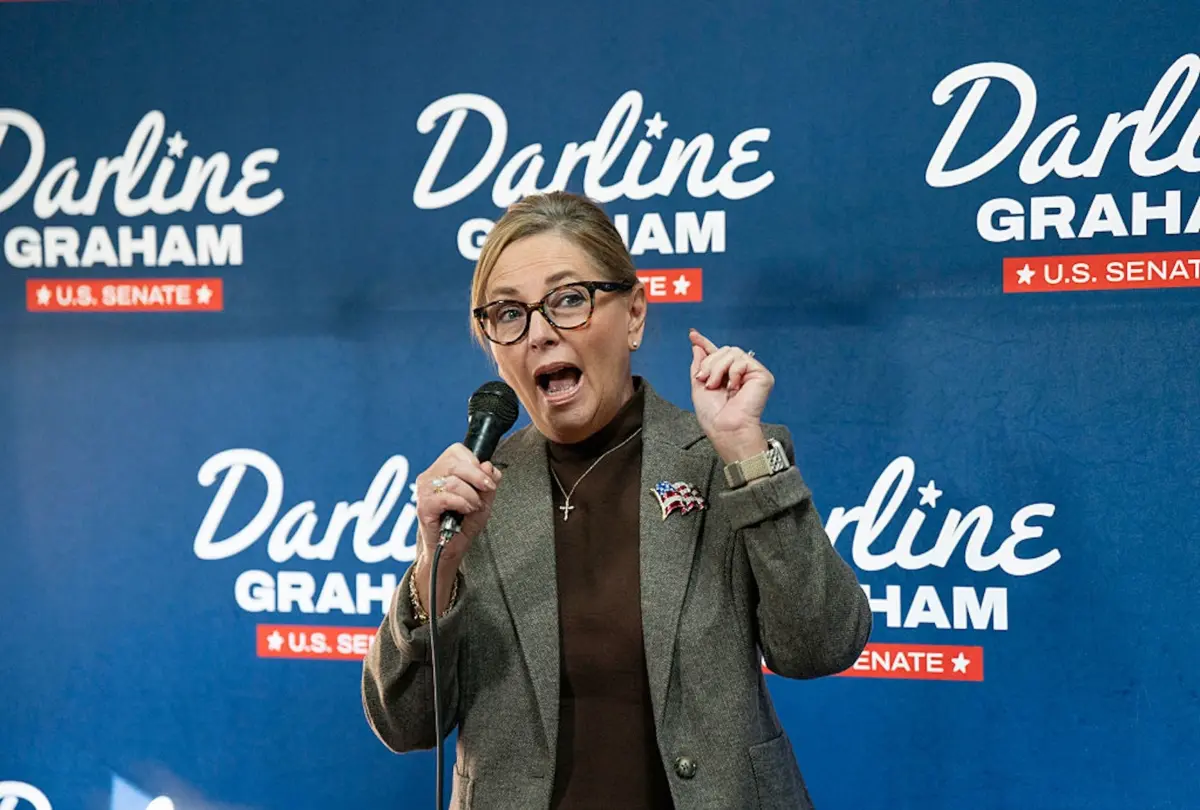
The true crown jewel of the night’s historic upsets, however, occurred in South Carolina. Following the death of longtime Senator Lindsey Graham, Donald Trump had effectively installed Graham’s sister, Darline Graham, as the state’s Republican nominee. In a state that has not sent a Democrat to the U.S. Senate since 1998, Dr. Annie Andrews delivered a stunning rebuke of political dynasties and Trumpian appointment politics, unseating Graham in a historic landslide.
The Midwest and Texas Tipping Points
The momentum rolled unabated across the Midwest and West. In Ohio, Democratic gubernatorial nominee Amy Acton routed Vivek Ramaswamy following a widely condemned campaign ad released by the Republican candidate.
Meanwhile, Texas became the epicenter of the night’s most dramatic political theater. In a stunning repudiation of state leadership, James Talarico was projected to win a massive victory over scandal-plagued Ken Paxton in the Senate race, while Gina Hinojosa ousted incumbent Governor Greg Abbott from the governor’s mansion. These victories shattered the long-standing conservative myth of unbreakable Republican dominance in the South, proving that no state is permanently out of reach when a motivated electorate demands change.
Supporting Context & Metrics: The Anatomy of a Coalition Collapse
To understand how the 2026 midterms transformed from a standard legislative check-and-balance election into a historic rout, one must examine the systematic unraveling of the modern Republican coalition over the preceding twenty-two months.
The Erosion of Trump’s Multi-Racial Coalition
In the 2024 general election, Donald Trump successfully expanded his electoral base by making historic, albeit contested, inroads with Black men, Latino voters, and young demographics. Buoyed by this success, the administration and its congressional allies leaned heavily into aggressive national gerrymandering schemes while overseeing a deteriorating economic climate driven by persistent inflation and administrative missteps.
However, the administration committed a fatal political error: it attacked the very demographic blocs that had helped return the White House to Republican hands. Key factors contributing to this coalition fracture included:
- The Gutting of Voting Rights: The Supreme Court’s controversial ruling earlier in the year effectively dismantled the remaining enforcement mechanisms of the Voting Rights Act—a decision widely denounced as "Jim Crow 2.0." This judicial activism mobilized Black voters to turn out in numbers rarely seen in a midterm cycle.
- Immigration Crackdowns and Deportations: More than a year of aggressive Immigration and Customs Enforcement (ICE) raids, mass deportation initiatives, and public threats against naturalized citizens alienated Hispanic communities en masse. The resulting Latino backlash played a decisive role in flipping competitive seats in states like Texas and Arizona.
- Alienation of Youth Voters: Broad attacks on civil rights, the social safety net, and public education alienated Gen Z and millennial voters across demographic lines, driving unprecedented midterm turnout among young Americans.
By weaponizing federal power against minority and immigrant communities, the administration spent nearly two years alienating the foundational pillars of its own majority.
+-------------------------------------------------------------------+
                  THE 2026 COALITION SHIFT MATRIX
+---------------------------+---------------------------------------+
| Demographic Group         | 2024 Voting Trend vs. 2026 Midterms   |
+---------------------------+---------------------------------------+
| Black Voters              | Increased mobilization; high turnout  |
| Latino Voters             | Shifted en masse toward Democrats     |
| Young Voters (18-29)      | Strong rejection of civil rights roll-|
|                           | backs and economic insecurity         |
| Working-Class Suburbs     | Abandoned traditional GOP alignment   |
+---------------------------+---------------------------------------+
Official Statements and Political Reactions
As the election returns solidified late Tuesday night, party leaders and candidates took to the podiums to interpret the seismic results for a stunned nation.
Dr. Annie Andrews, reflecting on her historic Senate victory in South Carolina, emphasized the power of grassroots healthcare advocacy:
"Tonight, the people of South Carolina proved that working families care more about access to affordable healthcare, safe communities, and economic dignity than top-down political mandates. We ran a campaign centered on the real needs of everyday people, and the voters responded by turning the page on an era of division."
Democratic strategist and campaign analysts noted the definitive rejection of conventional political moderation:
"For a decade, the Democratic Party has looked for the breaking point of the MAGA movement. Voters have delivered that breaking point today. But this mandate comes with a strict warning: voters do not want platitudes; they want relentless fighters who will champion working-class interests against entrenched corporate and political power."
Republican leadership, meanwhile, faced internal recriminations as figures across the conservative spectrum attempted to process the breadth of the losses. While some congressional leaders urged a return to core economic messaging, grassroots organizers conceded that the administration’s aggressive social and immigration policies had turned moderate suburbanites and independent voters firmly against the party.
Future Outlook: The Mandate and the Test Ahead
As the sun rises on a radically altered political reality, Democrats are undeniably feeling a long-absent wind at their backs. Yet, party leadership recognizes that tonight’s celebration must quickly give way to the immense governance challenges ahead.
The 2026 midterms delivered a loud and unambiguous message: voters want leaders willing to challenge conventional wisdom and fight for economic affordability and civil protections. This lesson was forged by candidates like Jon Ossoff, who staked his political survival on defending Affordable Care Act subsidies during the longest government shutdown in history, and Dr. Abdul El-Sayed in Michigan, who successfully linked foreign policy expenditures to domestic consumer price pressures.
However, Democrats now face an even greater test: maintaining discipline and staying true to their mandate. Historically, the party has often stumbled after major electoral victories, falling victim to internal division and cautious moderation just when bold action was required.
During his campaign, embattled Texas Republican Ken Paxton frequently warned voters: "If we lose Texas, we lose America." On November 3, 2026, Democrats put Texas firmly in their win column—and America did not fall. Instead, the nation stands at the dawn of a new political era, one defined by a revitalized electorate demanding accountability, equity, and relentless advocacy from its elected officials. Whether Washington’s newly empowered leaders can rise to meet that expectation remains the defining question of the decade.
