

Executive Overview
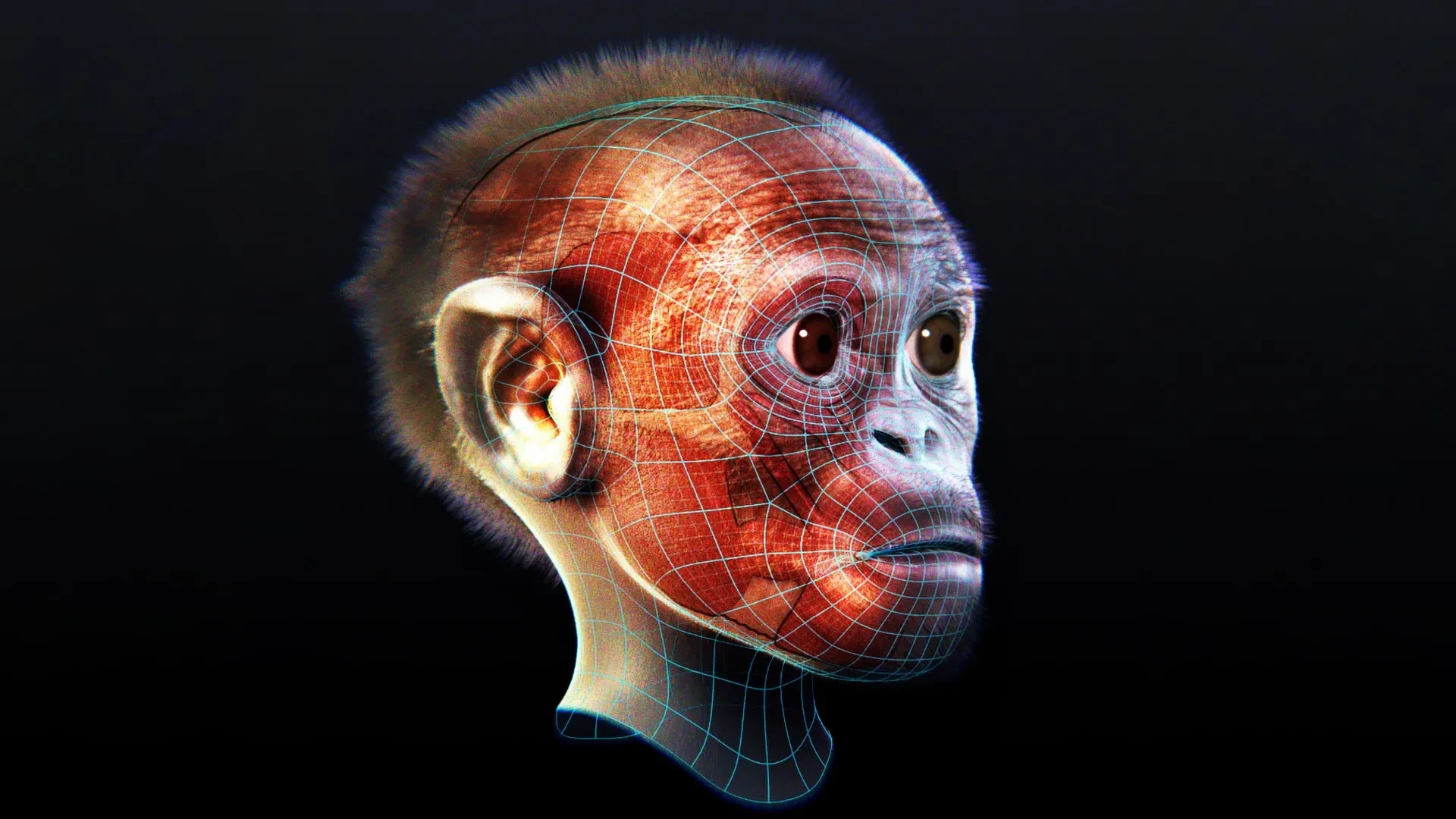
One hundred years after it first stunned the scientific community and fundamentally altered our understanding of human ancestry, the iconic Taung Child fossil continues to upend established anthropological dogma. A landmark international study published in the prestigious journal Nature has definitively dated these ancient remains to between 2.96 and 3.03 million years ago. More explosively, the research reveals that the hominin family tree in southern Africa was not a linear progression, but rather a chaotic, deeply intertwined bush shaped by relentless climate volatility.
Led by Professor Gabriele Macho of the Archaeology, Environmental Changes and Geo-Chemistry (AMGC) research group at the Vrije Universiteit Brussel (VUB), the study scrutinized the developmental biology, dental patterns, and cranial growth markers of the Taung Child alongside other contemporaneous hominin fossils. The findings challenge the foundational assumption that Australopithecus africanus was a singular, homogenous species dominating the southern African landscape. Instead, the data expose a dynamic mosaic of distinct hominin groups that periodically diverged, isolated, reunited, and hybridized as dramatic environmental shifts reshaped their prehistoric world.
This comprehensive investigation forces a systemic reassessment of how paleoanthropologists classify fossil specimens. Because the Taung Child serves as the definitive "type specimen" for Australopithecus africanus, these new insights call into question decades of subsequent fossil classifications. Ultimately, the research paints a vivid picture of a greener, wetter South Africa three million years ago—a lush crucible of evolution that directly preceded the emergence of our own genus, Homo.
Detailed Chronology: From a Limestone Quarry to a Modern Scientific Revolution
To fully comprehend the magnitude of Professor Macho’s recent study, one must trace the historical trajectory of the Taung Child and the shifting paradigms of paleoanthropology over the past century.
1924–1925: The African Genesis
The story of the Taung Child began in the late autumn of 1924 at a limestone quarry operated by the Northern Lime Company in Taung, British Bechuanaland (modern-day South Africa). Quarry workers blasted away rock and uncovered a remarkable fossilized juvenile skull containing an endocranial cast of the brain and a preserved set of deciduous and emerging permanent teeth.
The find was shipped to Professor Raymond Dart at the University of the Witwatersrand in Johannesburg. In 1925, Dart published a revolutionary paper in the journal Nature naming the specimen Australopithecus africanus ("Southern Ape of Africa"). At the time, Dart’s assertion that humanity originated in Africa was met with intense skepticism by the European scientific establishment, which was then enamored with the fraudulent "Piltdown Man" fossil discovered in England. Piltdown supported a Eurocentric origin of humanity; the Taung Child challenged it. Decades later, as Piltdown Man was exposed as an elaborate hoax, Dart’s African hypothesis was definitively vindicated.
The Typological Dilemma
Despite its monumental status, the Taung Child presented an enduring methodological problem for paleoanthropologists. As a juvenile—estimated to have been between three and four years old at the time of death—its skull and dentition were still developing. Consequently, scientists never established definitive, standardized criteria for assigning adult fossil discoveries unearthed at other southern African sites, such as Sterkfontein, Makapansgat, and Kromdraai, to the species Australopithecus africanus.
Over the decades, hundreds of adult fossils were swept into the A. africanus taxon by default. For a century, the anthropological community operated under the working assumption that the Taung Child was merely a youthful representative of a vast, uniform species that comfortably populated the region for nearly a million years. Professor Macho’s new study shatters this baseline assumption, revealing that the Taung Child remains the only fossil that can be classified with absolute certainty as true Australopithecus africanus.
The 21st-Century Breakthrough
The recent breakthrough was achieved by looking beyond external cranial morphology and examining microscopic patterns of growth. Professor Macho and her international team deployed advanced imaging and histological techniques to analyze tooth micro-structure, enamel apposition rates, and neurological development trajectories.
By comparing the Taung Child’s developmental blueprint with adult fossils traditionally lumped into Australopithecus africanus, the researchers identified stark divergences. Adult specimens from Sterkfontein, for example, exhibited dental and cranial development patterns incompatible with the biological profile of the Taung Child. This chronological and developmental misalignment proves that fossils previously assumed to belong to a single, monolithic species actually represent multiple distinct hominin lineages inhabiting southern Africa concurrently or in rapid succession.
Supporting Context & Metrics: Climate Shifts and Ecological Pressures
The diversification of early human relatives in southern Africa was not a random biological drift; it was orchestrated by dramatic, cyclical environmental upheavals. The VUB-led study emphasizes that millions of years ago, southern Africa was an evolutionary engine driven by radical climate volatility.
Reconstructing a 3-Million-Year-Old Ecosystem
Through the analysis of fossilized pollen grains and micro-botanical remains preserved alongside hominin sites, the researchers reconstructed the ancient environment of the Taung region. The data revealed a landscape utterly alien to the arid, scrub-covered terrain found there today.
- Precipitation and Flora: Three million years ago, the region experienced significantly higher annual rainfall and sustained periods of dense, closed-canopy forest.
- Botanical Anomalies: Researchers identified fossilized pollen from tree species currently indigenous only to regions hundreds of kilometers to the northeast, indicating a vastly expanded tropical and sub-tropical biome.
- Ecosystem Dynamics: This lush, well-watered environment provided abundant resources, allowing diverse herbivore and hominin populations to flourish, diverge, and expand their ecological niches.
The Mechanics of Evolutionary Divergence and Hybridization
Southern Africa occupied a critical geographical threshold, situated at the dynamic boundary between tropical and temperate climatic zones. This positioning made the region exceptionally sensitive to global climate shifts, which caused continuous expansions and contractions of ecological habitats.
[Global Climate Shifts]
        │
        ▼
[Habitat Expansion & Contraction]
        │
        ├──> Geographical Isolation ──> Allopatric Speciation (Distinct Lineages)
        │
└──> Secondary Contact ──────> Interbreeding & Genetic Hybridization- Fragmentation (Allopatric Speciation): As dry periods compressed forested habitats into isolated pockets, hominin populations were likewise fragmented. Trapped in separate ecological refugia, isolated groups adapted independently to local micro-climates, developing distinct morphological and physiological traits.
- Reunification and Hybridization: When subsequent global warming and increased precipitation restored the interconnected forest corridors, these previously separated populations migrated, expanded, and came back into contact. Rather than remaining reproductively isolated, these groups frequently interbred.
- Pathogen and Predator Pressures: Shifting environments also altered predator-prey dynamics and exposed hominins to novel pathogens. These selective pressures accelerated localized genetic adaptations, further enriching the biological diversity of the region.
This cyclical pattern of separation, adaptation, and hybridization created a tangled evolutionary web rather than a linear ladder. It explains why contemporaneous fossils from the same geographical region exhibit such startling anatomical variations.
Official Statements and Expert Perspectives
The publication in Nature has generated profound ripples across the global anthropological community, prompting leading researchers to re-evaluate decades of established textbook dogmas.
Discussing the core findings, lead author Professor Gabriele Macho articulated the paradigm shift necessitated by the research:
"For over 100 years, we assumed the Taung Child was just one of many similar fossils from the era," noted Professor Gabriele Macho. "Our findings turn that on its head. The human family tree wasn’t a neat, straight trunk—it was a chaotic, tangled bush driven by climate shifts."
Macho emphasized that the traditional view of human evolution—popularized by classic illustrations depicting a slow, orderly march from ape-like ancestors to upright humans—fails to capture the biological reality preserved in the fossil record.
"What we are seeing in southern Africa around three million years ago is not a linear succession of species replacing one another," Macho explained. "Instead, we are witnessing a dynamic network of populations. They separated when the climate dried out, evolved distinct characteristics in isolation, and then reunited and interbred when the rains returned. Nature was experimenting with multiple hominin forms simultaneously."
Co-researchers and independent paleoanthropologists have echoed these sentiments, noting that the study underscores the inadequacy of rigid species boundaries in the hominin fossil record. By demonstrating that dental and cerebral development rates varied significantly among fossils historically assigned to Australopithecus africanus, the study provides a methodological roadmap for future taxonomic revisions.
Future Outlook: The Next Century of Paleoanthropology
As the scientific community marks the centenary of the Taung Child’s discovery, these new findings signal the dawn of a transformative era in paleoanthropological research. The realization that southern Africa hosted a complex, interconnected web of hominin species forces a thorough overhaul of analytical frameworks.
Methodological Innovations
Moving forward, researchers intend to apply the high-resolution developmental and histological techniques utilized in the VUB study to other major hominin fossil collections across Africa. By shifting the primary focus from static external morphology to dynamic growth patterns (such as dental micro-structure and neurocranial development rates), scientists can construct more accurate phylogenetic models. This approach will help resolve long-standing debates regarding species boundaries within the genera Australopithecus and early Homo.
Implications for the Emergence of Homo
Perhaps the most profound implication of this research concerns the immediate ancestry of our own genus, Homo. For decades, paleoanthropologists sought a single ancestral species from which Homo cleanly emerged roughly 2.8 to 2.5 million years ago.
The revelation that the late Pliocene landscape of southern Africa was populated by multiple, hybridizing hominin lineages suggests a far more collaborative and messy genesis for humanity. Genetic exchange and hybridization between distinct ancestral populations may have served as a critical evolutionary catalyst, pooling advantageous genetic traits—such as increased cranial capacity, manual dexterity, and dietary adaptability—that equipped early Homo to survive the volatile climatic fluctuations of the ensuing Pleistocene epoch.
As ongoing excavations continue to unearth new fossil material across the African continent, the Taung Child remains a touchstone of scientific discovery. A century after Raymond Dart first peered into a box of blasted limestone from a South African quarry, this ancient juvenile continues to guide humanity toward a more nuanced, complex, and scientifically accurate appreciation of our deep evolutionary roots.
