

Executive Overview
In a high-stakes electoral showdown that captured the attention of the entire nation, incumbent Democratic Senator Jon Ossoff secured a commanding victory in Georgia on Tuesday, easily turning back a vigorous challenge from Republican Representative Mike Collins. Projected as the winner by the Associated Press, Ossoff’s triumphant defense of his Senate seat defies the conventional wisdom that gripped political analysts in the wake of the 2024 presidential cycle, when Donald Trump carried the Peach State.
Ossoff’s decisive win is more than just a local political triumph; it serves as a watershed moment for the Democratic Party. By successfully anchoring his campaign to kitchen-table issues—most notably the defense of Affordable Care Act (ACA) subsidies during a brutal, record-shattering government shutdown—Ossoff charted a pragmatic yet fiercely combative path forward. His ability to connect with working-class voters while aggressively prosecuting the opposition has instantly transformed him into a heavyweight contender on the national stage.
As political pundits, strategists, and donors pore over the election results, attention is already shifting from the immediate glow of victory to the horizon of 2028. Despite Ossoff’s repeated assertions that he harbors "zero interest" in pursuing the presidency, his electoral blueprint, sharpening rhetorical style, and proven ability to win in a critical Southern battleground make him an inevitable focal point of early presidential speculation. This analysis examines the anatomy of Ossoff’s campaign, the strategic missteps of his challenger, the broader socio-economic currents that defined the race, and what this pivotal outcome signals for the future of American politics.
Detailed Chronology of the Race
The path to Ossoff’s November 3, 2026, victory was neither straightforward nor preordained. It was forged in the fires of a hostile political environment and tested by unprecedented national crises.
The Post-2024 Hangover and Early Forecasts
Following Donald Trump’s victory in Georgia during the 2024 presidential election, early prognosticators wrote off Ossoff’s chances of reelection. Conventional political analysis suggested that a Republican wave, combined with Trump’s enduring coattails in the state, would inevitably sweep a GOP challenger into office. Representative Mike Collins, capitalizing on his alignment with the MAGA base, stepped forward to challenge the incumbent, aiming to flip the seat and solidify Republican dominance in the Senate.
The Crucible of the Government Shutdown
The turning point of the campaign arrived mid-term during the longest government shutdown in United States history. As federal services stalled and economic anxiety spiked nationwide, the political landscape shifted dramatically. While some Democrats floundered in the face of Republican gridlock, Ossoff seized the narrative.
Rather than shying away from the fiscal fight, Ossoff staked his entire political candidacy on a populist crusade to protect and expand Affordable Care Act subsidies. Traveling relentlessly across urban centers, suburban developments, and rural towns in Georgia, he framed the healthcare debate not as an abstract policy argument, but as a matter of immediate economic survival for working families. This hyper-local, affordability-first strategy defused Republican attacks and positioned Ossoff as a steadfast defender of everyday Georgians against Washington dysfunction.
The Final Stretch: Rallies and Rhetoric
By the final months of the campaign, Ossoff had adopted a distinctly pugnacious stance on the stump. Abandoning the muted, cautious tone often expected of Southern Democrats, the senator embraced a fighter’s mentality reminiscent of rising progressive stars like Michigan’s Abdul El-Sayed. He took every opportunity to land sharp jabs against Republican policies and leadership, occasionally raising eyebrows among centrist commentators who still clung to traditional notions of senatorial decorum.
A notable flashpoint occurred in August, when Ossoff drew both gasps and roaring applause during a campaign stop by mocking controversies surrounding Trump administration personnel and foreign policy entanglements. Pointing to the administration’s costly and prolonged conflict with Iran, Ossoff did not mince words regarding national priorities.
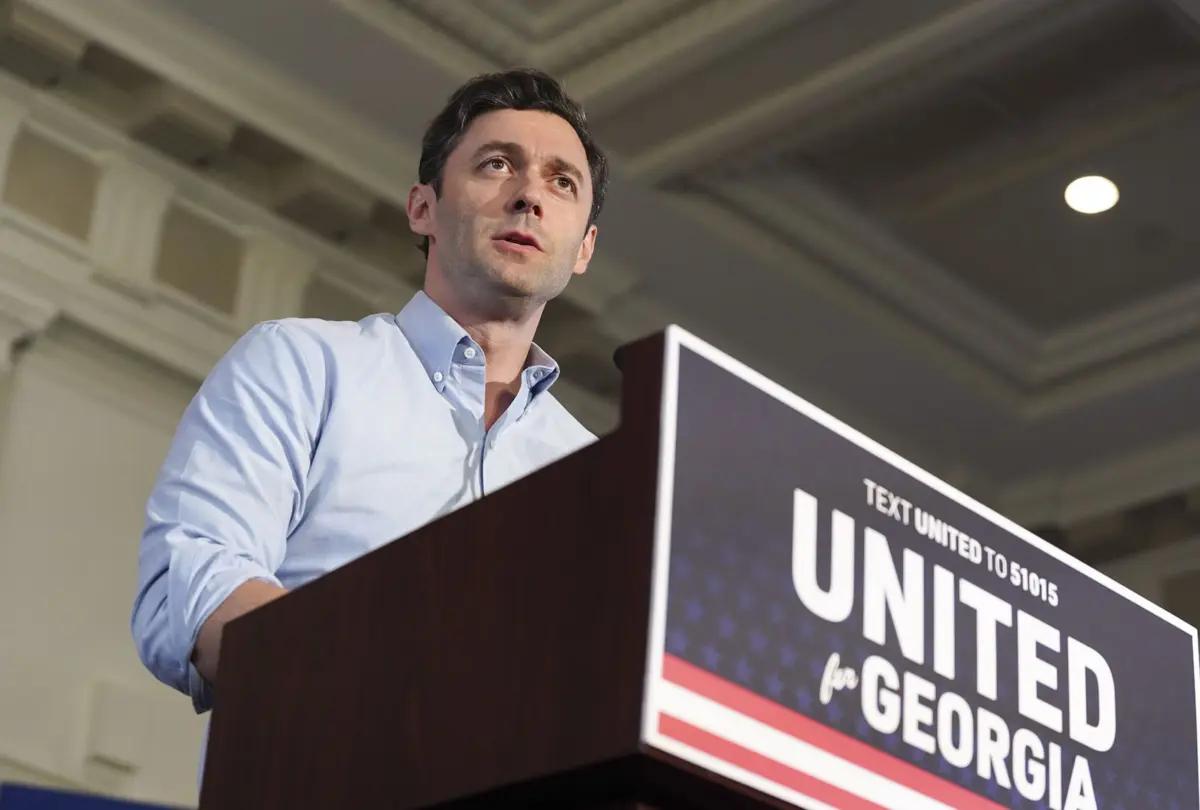
"So [Trump] doesn’t want to do this job," Ossoff told a fired-up crowd at a campaign event. "He wants to build his ballroom and travel with Natalie on their apparently defenseless flying palace gifted by the Emir of Qatar."
The calculated risk paid off. Instead of alienating moderate voters, Ossoff’s willingness to punch upward energized the Democratic base, casting him as a fearless defender of accountability in an era of unprecedented political spectacle.
Election Night and the Decisive Outcome
As polls closed on November 3, 2026, early returns quickly dismantled the narrative of a Republican sweep in Georgia. Ossoff decisively outperformed expectations, building an insurmountable lead over Collins as votes rolled in from vote-rich DeKalb County, Fulton County, and crucial suburban swing districts. By mid-evening, the Associated Press called the race for the incumbent, cementing a victory that exceeded even the most optimistic internal Democratic polling.
Supporting Context & Metrics
To fully understand the magnitude of Jon Ossoff’s victory, one must examine the confluence of demographic shifts, legislative battles, and tactical campaign execution that shaped the 2026 midterms in Georgia.
Economic Anxiety and the Affordability Crisis
Throughout the campaign, polling consistently indicated that economic issues—specifically skyrocketing inflation, the cost of living, and healthcare accessibility—were top of mind for Georgia voters. Ossoff’s campaign capitalized on these concerns by shifting the debate away from cultural wedge issues and back to material conditions.
- Healthcare Subsidies: By championing ACA subsidies during the historic government shutdown, Ossoff protected a lifeline utilized by hundreds of thousands of Georgians. This concrete policy stance neutralized Republican attacks regarding government spending.
- Foreign Entanglements: Ossoff systematically linked domestic economic struggles to foreign policy missteps, hammering Trump and his congressional allies over the financial toll of the Iran conflict and questionable expenditures, such as the widely criticized foreign-gifted aircraft controversy.
The Collapse of the Challenger’s Campaign
While Ossoff ran a disciplined, localized campaign, Representative Mike Collins struggled to maintain momentum. Collins’s candidacy was severely hobbled by persistent self-inflicted controversies, including scrutiny over his congressional payroll management and uncomfortable disclosures regarding his past associations with fringe figures and alleged white nationalists. These distractions made it difficult for Collins to maintain a cohesive economic message, allowing Ossoff to define the race on his own terms.
Demographic and Geographic Realities
Georgia remains one of the premier battleground states in the American republic, characterized by a dynamic coalition of growing suburban populations around Atlanta, a mobilized Black electorate, and conservative rural enclaves. Ossoff’s victory demonstrated that a Democrat can successfully thread the needle in the Peach State not by running to the political center, but by actively championing economic populism while maintaining a high-visibility, grassroots organizing presence across diverse communities.
Official Statements and Campaign Reactions
The reverberations of Ossoff’s victory were felt immediately across the national political landscape, drawing praise from allies, analysis from pundits, and carefully calibrated responses from the senator himself regarding his political future.
The Incumbent’s Stance
Despite relentless speculation linking him to the 2028 presidential sweepstakes, Jon Ossoff has maintained a disciplined public posture. When pressed by journalists about his higher ambitions, Ossoff has consistently stated that he has "zero interest in running for president," choosing instead to emphasize his immediate duty to the people of Georgia.
However, political insiders note that such disclaimers are standard operating procedure for rising stars navigating active legislative terms. All eyes will be fixed on Ossoff’s victory speech, slated for late Tuesday evening, where political analysts and national donors will search for ideological signposts and rhetorical cues regarding his long-term trajectory.
Democratic and Republican Repercussions
Democratic strategists hailed the result as a blueprint for winning in hostile or purple states during challenging midterm cycles. By demonstrating that Democrats can fight back aggressively on economic security without compromising on core values, Ossoff provided a model for future statewide races.
Conversely, Republican leadership is expected to reevaluate its strategy in Georgia following back-to-back electoral disappointments. The defeat of Mike Collins underscores the limitations of relying solely on nationalized culture-war grievances in a state where rapid demographic evolution demands concrete, issue-oriented governance.
Future Outlook: The Road to 2028 and Beyond
As the confetti settles in Atlanta and the 2026 midterm results are tallied nationwide, the political calculus has undeniably shifted. Jon Ossoff’s commanding victory elevates him into the top tier of national Democratic figures, cementing his status as a formidable voice within the party.
The 2028 Presidential Calculus
The conversation surrounding a potential Ossoff presidential bid is unlikely to subside anytime soon. The Democratic Party, actively searching for a new generation of leaders capable of bridging the gap between working-class economic anxiety and progressive aspirations, will inevitably cast its gaze toward successful Southern incumbents. Ossoff’s proven electoral durability in a state as pivotal as Georgia makes him an exceedingly attractive prospective candidate for 2028.
Legislative Priorities in the Senate
Before any presidential ambitions can materialize, Ossoff faces the immediate reality of returning to Capitol Hill for the next congressional session. Empowered by a resounding mandate from his constituents, he is expected to use his renewed platform to push aggressively for affordability legislation, healthcare protections, and fiscal accountability.
Whether Jon Ossoff ultimately heeds the growing calls for a national run or chooses to cement his legacy within the United States Senate, Tuesday’s victory marks a definitive turning point. In securing his seat against formidable odds, Ossoff has proven that he is not merely a survivor of Georgia’s turbulent political wars, but one of the chief architects of the modern Democratic coalition’s future.
