

Executive Overview
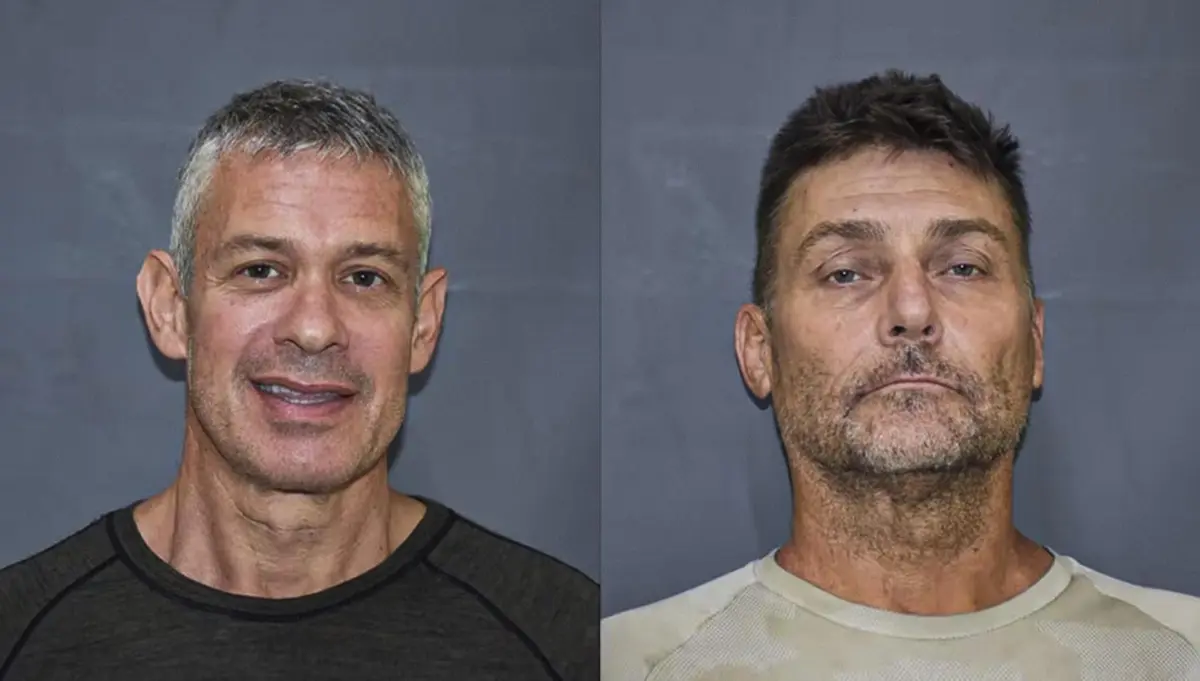
A chilling chapter in the history of the tranquil Caribbean island nation of Dominica has finally drawn to a close, yet the profound shockwaves of the tragedy continue to reverberate across international borders. On Monday, a court delivered a definitive and uncompromising sentence: American businessman Jonathan Lehrer and his employee, mechanic Robert Snyder Jr., were condemned to spend the remainder of their lives behind bars—sentenced to life imprisonment without the possibility of parole.
This decisive ruling brings a measure of judicial finality to a harrowing three-year saga that began with the execution-style slaying of Canadian special-effects visionary Daniel Langlois and his long-time partner, Dominique Marchand. The couple, whose lives were globally recognized for both technological innovation and profound philanthropic dedication, were brutally murdered in November 2023. Their bodies were discovered inside a charred, burned-out vehicle on the island—a horrific scene that shattered the idyllic peace of Dominica and left its tight-knit community grappling with an unprecedented level of violence.
Following a rigorous judicial process that exposed deep-seated local land disputes, personal animosities, and a chilling disregard for human life, a jury found both Lehrer and Snyder guilty of the double homicide this past July. Despite the defense attempting to minimize the escalating tensions between the neighbors prior to the killings, the overwhelming weight of the evidence sealed the fate of the two American expatriates.
As the legal proceedings conclude, the broader legacy of Daniel Langlois and Dominique Marchand remains untarnished by the violence that ended their lives. Their contributions to modern cinema—specifically the digital revolution that birthed films like Jurassic Park—alongside their tireless humanitarian work for the people of Dominica, ensure that their memory endures far beyond the tragedy of their final hours.
Detailed Chronology: From Silicon Valley Success to a Caribbean Nightmare
The Visionaries of Coulibri Ridge
To understand the magnitude of the loss felt in Dominica and the international creative community, one must trace the extraordinary trajectories of Daniel Langlois and Dominique Marchand. Long before relocating to the Caribbean, Langlois was a trailblazing pioneer in digital media and computer graphics. In the 1980s and 1990s, he laid the foundational software architecture that brought computer-generated imagery (CGI) into the modern cinematic era. His technological genius culminated in software that famously enabled the realistic dinosaurs of Steven Spielberg’s 1993 masterpiece, Jurassic Park, fundamentally altering the landscape of visual effects forever.
Seeking a sanctuary away from the frenetic pace of the tech and film industries, Langlois and Marchand turned their sights toward Dominica, often referred to as the "Nature Island" of the Caribbean due to its lush rainforests, volcanic peaks, and pristine ecosystems. In the 1990s, the couple purchased sprawling acreage to construct Coulibri Ridge, an ambitious, ultra-sustainable eco-resort designed to harmonize completely with the surrounding environment.
Over the span of more than two decades, Langlois and Marchand poured their hearts, souls, and considerable resources into the project. Crucially, they committed to utilizing exclusively local labor, intentionally employing and training residents of Dominica to build the resort from the ground up. This commitment to community integration transformed them from mere foreign investors into beloved and deeply integrated members of the local society.
Paradise Threatened: The Road Dispute
As Langlois and Marchand quietly cultivated their ecological paradise, another American expatriate entered the picture. In 2011, Jonathan Lehrer moved to Dominica with his family and acquired a sprawling, historic chocolate plantation located in close proximity to the couple’s property.
What should have been a peaceful coexistence among foreign entrepreneurs gradually soured into a bitter, protracted feud. At the center of the conflict was a vital infrastructure detail: access to a public access road that traversed the properties. As legal documents and local accounts would later reveal, Lehrer and Langlois clashed repeatedly over transit rights, property boundaries, and usage of the roadway.
While Langlois reportedly pursued legal avenues to resolve the logistical and legal disputes, Lehrer viewed these actions through an aggressive, combative lens. Despite the mounting hostilities, Lehrer publicly downplayed the severity of the feud. In prior interviews with investigative journalists, Lehrer dismissed the conflict with chilling nonchalance, claiming he "never even lost a half a wink of sleep" over the legal wrangling and characterizing Langlois’ legal strategy as an attempt to "overwhelm [him] with paperwork."
The November 2023 Atrocity
The simmering tensions violently boiled over in November 2023. What began as a localized neighborhood dispute culminated in a premeditated act of calculated violence. Langlois and Marchand were ambushed, murdered, and subsequently placed inside their own motor vehicle, which was then deliberately set ablaze.
The discovery of the burned-out vehicle and the subsequent confirmation of the couple’s deaths plunged the island nation into profound shock and grief. Local authorities, recognizing the international scope and high-profile nature of the victims, launched an exhaustive multi-agency investigation. Suspicion quickly zeroed in on Jonathan Lehrer and his trusted employee and mechanic, Robert Snyder Jr.
Following extensive forensic analysis, witness testimonies, and the piecing together of circumstantial and digital evidence, law enforcement arrested both men. The subsequent trial laid bare the chilling mechanics of the conspiracy, leading the jury to reject the defendants’ assertions of innocence and return a unanimous guilty verdict this past July.
Supporting Context & Metrics: Economic and Cultural Impact
The murder of Daniel Langlois and Dominique Marchand was not merely a private tragedy; it was a profound blow to the socio-economic and cultural fabric of Dominica. To fully grasp the community’s devastation, one must examine the couple’s immense footprint on the island.
Philanthropy and Disaster Relief
Langlois and Marchand were not absentee resort owners who viewed Dominica merely as a tax haven or a vacation retreat. They were active, deeply invested participants in the island’s civic life. Their commitment to the local populace was most vividly demonstrated in the harrowing aftermath of Hurricane Maria, a catastrophic Category 5 storm that devastated Dominica in September 2017, destroying critical infrastructure and leaving communities isolated.
- Infrastructure Rehabilitation: In the wake of Hurricane Maria, while many foreign property owners evacuated or focused solely on repairing their own holdings, Langlois and Marchand mobilized resources to aid the broader island population.
- The Jetty and School Projects: The couple funded and spearheaded the construction of a brand-new local jetty—vital for maritime commerce and emergency supplies—and poured financial support into rebuilding a local school that had been decimated by the hurricane winds.
- Job Creation: By strictly employing local laborers for the construction and ongoing operation of Coulibri Ridge, they provided sustainable, high-quality employment and skills training to dozens of Dominican families over a 20-year period.
Economic Ripples Across the Tourism Sector
Coulibri Ridge was designed as a global benchmark for sustainable, off-grid luxury tourism, drawing high-net-worth eco-tourists to Dominica and putting the island on the map for avant-garde environmental architecture. The abrupt and violent removal of its founders threatened to cast a dark shadow over the island’s reputation as a secure, welcoming destination for international investment and tourism.
Local business leaders and tourism boards watched the legal proceedings anxiously, knowing that justice served would be the only way to restore global confidence in the island’s rule of law. The uncompromising life sentences handed down to Lehrer and Snyder signal clearly to the international community that Dominica tolerates no impunity, safeguarding the integrity of its judicial system.
Official Statements and Legal Reactions
The conclusion of the trial has elicited strong emotions from families, friends, and legal representatives across the globe, balancing profound grief with a sense of hard-fought judicial vindication.
The Voice of the Community
For the residents of Dominica who worked alongside Langlois and Marchand, the trial closure brings bittersweet relief. Ann-Marie Delsol, who previously worked as a cook for the murdered couple, captured the collective heartbreak of the island in a statement to the press:
"It is very painful for us because we’ve lost two great people. That’s the first time we are ever having a crime like this in Dominica."
Friends who shared in Langlois’ technological and humanitarian visions similarly memorialized his boundless drive. Simon Walsh, a close friend of Langlois, reflected on his lifelong ethos in an interview with investigators and journalists:
"He wanted to deliver for humanity."
Family Closure and Ongoing Legal Maneuvers
For the biological family of Daniel Langlois, the road to emotional closure has been agonizingly long. Sylvie Deslauriers, Langlois’ mother and family spokesperson, confirmed a poignant milestone alongside
the sentencing: her son’s ashes have finally been officially cleared and returned to his native Canada for a final, peaceful burial among loved ones.
However, the legal battles may not be entirely finished. While representatives for the Lehrer family declined to make immediate public statements following Monday’s sentencing, court observers and international news outlets, including the CBC, have confirmed that the convicted men have already initiated appeals against their original guilty verdicts. Under the regional legal framework, they retain the right to challenge both the conviction and the severity of the life-without-parole sentence. Legal experts, however, note that overturning a conviction supported by such extensive forensic and circumstantial trial evidence remains an exceptionally steep uphill battle.
Future Outlook: Healing and Legacy
As the prison doors close definitively on Jonathan Lehrer and Robert Snyder Jr., the nation of Dominica and the international creative community are left to chart a path forward, defined not by the cruelty of their deaths, but by the brilliance of their lives.
- Preservation of Coulibri Ridge: Coulibri Ridge continues to operate under strict management committed to the original ecological and community-centric vision of its founders. The resort stands as a living monument to sustainable innovation, ensuring that local workers continue to thrive.
- Technological and Philanthropic Legacy: In academic circles and the global visual effects industry, Daniel Langlois is increasingly memorialized through lectures, endowments, and retrospectives that honor his foundational role in digital cinema. His transition from Hollywood innovator to ecological philanthropist serves as an inspirational blueprint for conscientious wealth.
- Strengthened Rule of Law in Dominica: The successful prosecution, trial, and sentencing of two foreign nationals in a high-profile murder case underscore the absolute strength, independence, and integrity of Dominica’s judicial institutions. It reassures citizens and international partners alike that the island remains a safe harbor governed by strict adherence to justice.
Ultimately, while the shadow of the November 2023 atrocity will forever remain a dark stain on an otherwise peaceful paradise, the finality of Monday’s sentencing ensures that Daniel Langlois and Dominique Marchand receive the full measure of justice they were so unjustly denied. Their legacy—etched into the digital foundations of modern film, the verdant hillsides of Coulibri Ridge, and the resilient communities of Dominica—will endure long after the perpetrators of their demise have faded into obscurity.
