

Published: November 4, 2026
Dateline: ANN ARBOR, Mich.
Executive Overview
In a high-stakes showdown that captured national attention and served as the crown jewel of a remarkable evening for the progressive movement, Democrat Dr. Abdul El-Sayed has been projected to defeat Republican Mike Rogers for Michigan’s open U.S. Senate seat. The Associated Press called the race shortly after 2:00 a.m. on Wednesday, November 4, 2026, with El-Sayed maintaining a formidable seven-point lead over his Republican opponent.
This decisive victory brings closure to one of the most fiercely contested, financially robust, and politically volatile senate races of the 2026 midterm cycle. El-Sayed, a former public health official and progressive champion, succeeds retiring Democratic Senator Gary Peters. The retention of this seat is not merely a statistical hold for the Democratic caucus; it represents a major ideological victory for the progressive wing of the party. Running on an unapologetically left-leaning platform centered on universal healthcare, economic equity, and climate action, El-Sayed proved that progressive policies can mobilize a broad, diverse coalition in a critical Rust Belt swing state.
Yet, the path to victory was far from straightforward. The final stretch of the campaign was overshadowed by an extraordinary and unprecedented act of intra-party defection: just 48 hours before the opening of polling stations, former Democratic primary rival Representative Haley Stevens publicly endorsed the Republican nominee, sending shockwaves through the Michigan political landscape. Despite this eleventh-hour turbulence, El-Sayed’s campaign rallied its grassroots infrastructure, ultimately weathering the storm to secure a historic win that capped off a massive night for progressives nationwide.
Detailed Chronology: From Primary Battles to the Midnight Call
The Primary Foundation and General Election Setup
The contest for Michigan’s U.S. Senate seat began in earnest following the announcement that incumbent Democratic Senator Gary Peters would not seek re-election. For months, political analysts identified the seat as a premier battleground that could determine the balance of power in the upper chamber.
The primary season was marked by intense competition within the Democratic Party. Dr. Abdul El-Sayed, leveraging his high-profile background as the former health director for the city of Detroit and his strong grassroots backing, squared off against several prominent Democrats, including U.S. Representative Haley Stevens. In August, El-Sayed emerged victorious from the primary, consolidating progressive support while attempting to bridge the gap with the party’s moderate wing.
On the Republican side, Mike Rogers—a former seven-term congressman and onetime chairman of the House Intelligence Committee—easily secured the GOP nomination. Backed heavily by national conservative apparatuses and aligned closely with President Donald Trump, Rogers positioned himself as an economic nationalist focused on revitalizing domestic manufacturing, slashing taxes, and challenging administrative overreach.
The Final Sprint and the October Surprise
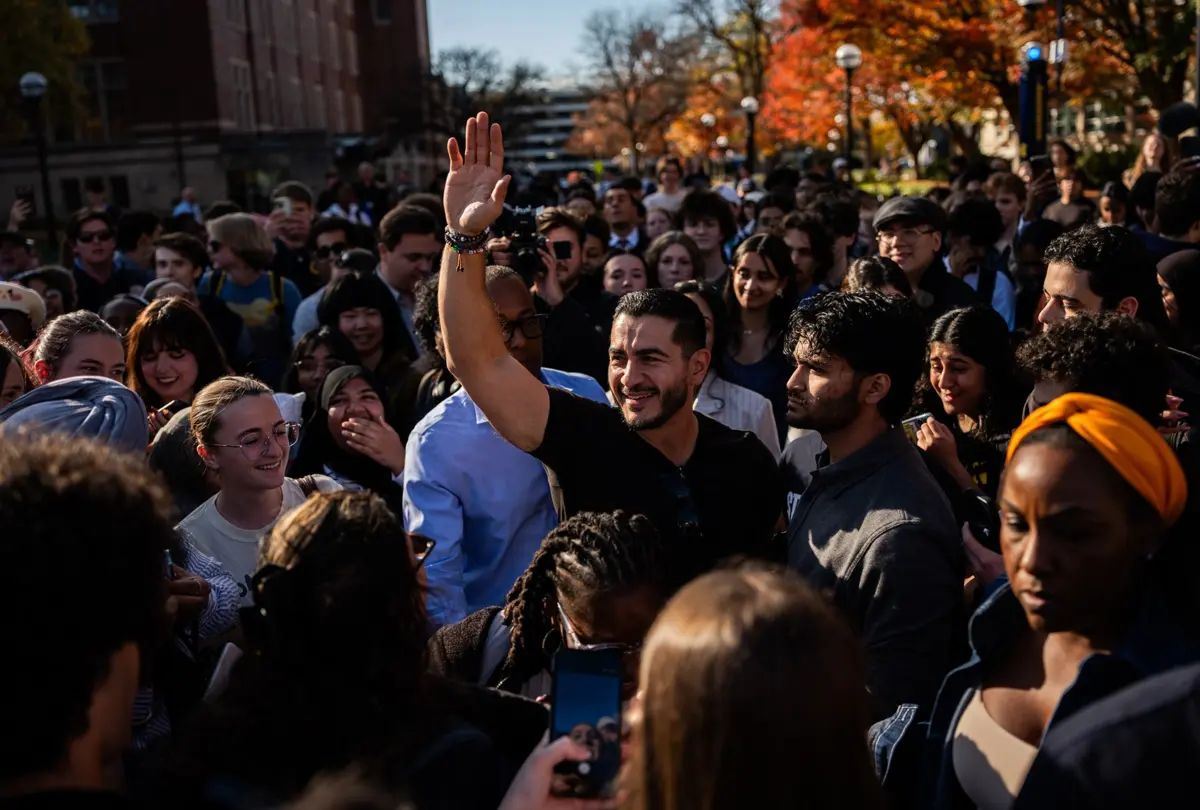
As the general election entered its final weeks, polling suggested a razor-thin margin. El-Sayed hammered away at economic and healthcare themes, staging high-energy campaign events across the state, including key stops at college campuses like the University of Michigan in Ann Arbor. Rogers countered by aggressively targeting working-class communities, emphasizing his foreign policy credentials and alignment with the Trump administration’s economic platform.
With more than 2.3 million Michigan voters having already cast early or absentee ballots by Monday, November 2, both campaigns were operating in a hyper-compressed window for persuasive messaging.
Then came the unexpected earthquake. On Sunday, November 1, just two days before Election Day, Rep. Haley Stevens made an appearance at a Detroit church to formally endorse Republican Mike Rogers over her fellow Democrat, Abdul El-Sayed. The announcement stunned political observers across the country. Stevens justified her endorsement by citing irreconcilable policy disagreements with El-Sayed—specifically regarding foreign policy concerning Israel—as well as concerns over the strategic direction of his campaign.
The Aftermath of the Endorsement and Election Night
The fallout from Stevens’ maneuver was immediate and severe. Michigan Democratic leadership swiftly condemned the move, viewing it as a profound betrayal of party solidarity during a high-stakes national election. The internal fracture spilled into the public sphere when multiple members of Stevens’ congressional staff resigned in protest, publicly distancing themselves from her endorsement of the GOP candidate.
While the Rogers campaign eagerly seized upon Stevens’ remarks in the final 48 hours to validate their bipartisan framing, the El-Sayed campaign pivoted with remarkable discipline. Rather than engaging in a protracted public feud, El-Sayed urged his base to channel their frustration into voter turnout. The strategy yielded an immediate and massive surge: the El-Sayed campaign reported an astonishing $2.4 million in grassroots fundraising on Sunday alone, while state Democratic organizations noted a sudden, unprecedented influx of volunteers eager to knock on doors and man phone banks.
As election day dawned on November 3, lines formed early at precincts across the state, from the urban centers of Detroit and Flint to the suburban corridors of Oakland County and academic hubs like Ann Arbor. As returns trickled in through the evening, early leads solidified. By 2:00 a.m. on Wednesday, the mathematical threshold had been crossed, prompting the Associated Press to call the race for El-Sayed as his lead stabilized at approximately seven percentage points.
Supporting Context & Metrics
To fully understand the weight of Dr. Abdul El-Sayed’s victory, one must examine the broader socioeconomic and political dynamics that shaped the 2026 Michigan Senate race:
- The Electorate and Early Voting: The 2026 midterms saw exceptionally high engagement in Michigan. By the eve of the election, the secretary of state reported that over 2.3 million citizens had already utilized early in-person voting or mail-in ballots. This massive cache of early votes cushioned the El-Sayed campaign against late-stage disruptions, ensuring a deep reservoir of banked ballots before the Stevens endorsement controversy broke.
- Financial Mobilization: The race commanded tens of millions of dollars in outside spending from super PACs, national party committees, and special interest groups. Despite Rogers benefiting from substantial corporate and conservative independent expenditures, El-Sayed’s campaign demonstrated an extraordinary capacity for small-dollar, grassroots fundraising—a financial engine that famously netted $2.4 million in a single 24-hour period during the final weekend panic.
- Demographic Realignment: El-Sayed’s coalition relied heavily on a motivated alliance of urban voters, young adults, progressive suburbanites, and organized labor. His public health background resonated deeply in post-pandemic policy debates, allowing him to successfully frame healthcare access not merely as a social welfare issue, but as an essential pillar of economic security for working families.
Official Statements and Reactions
The dramatic conclusion of the race elicited powerful reactions from political leaders, institutional stakeholders, and the candidates themselves:
"Tonight, the people of Michigan chose a politics of hope, health, and human dignity over division and despair. We ran this race to ensure that every Michigander—no matter their zip code, their income, or their background—has a champion in Washington who will fight for their right to thrive."
— Dr. Abdul El-Sayed, in his victory address in Ann Arbor.
Democratic Party officials praised the resilience of the state apparatus in the face of internal dissent. National progressives hailed the outcome as undeniable proof that populist, left-leaning policy platforms can win in the industrial Midwest.
Conversely, the Republican camp expressed disappointment while pointing to the unique nature of the cycle. Mike Rogers’ campaign released a statement acknowledging the hard-fought battle, while conservative commentators noted that the unprecedented late endorsement by a sitting Democratic congresswoman underscored deep ideological fractures within the modern Democratic coalition—fractures that Republicans will undoubtedly seek to exploit in future election cycles.
Future Outlook: What El-Sayed’s Victory Means for Washington and the Progressive Movement
Dr. Abdul El-Sayed’s transition from public health advocate and municipal official to the United States Senate marks a generational shift in Michigan politics. As he prepares to take his oath of office in January 2027, several key implications emerge for the national political landscape:
- A Resurgent Progressive Voice in the Senate: El-Sayed joins a growing bloc of progressive lawmakers in the upper chamber who are prepared to push the Democratic Party toward a more assertive economic agenda. His policy focus will likely center on federal healthcare reform, lowering prescription drug costs, aggressive investments in green infrastructure, and labor rights.
- Navigating Intra-Party Reconciliation: The friction caused by Haley Stevens’ late-stage endorsement leaves behind lingering institutional wounds within the Michigan Democratic Party. Repairing relations with moderate elements of the party and unifying a diverse state constituency will be an immediate administrative and political challenge for Senator-elect El-Sayed as he builds his legislative office.
- The Blue Wall Blueprint: El-Sayed’s victory provides a potential blueprint for how progressive candidates can successfully navigate the complexities of Rust Belt politics. By wedding a populist economic message with deep grassroots organizing and an authentic public service background, progressives have demonstrated that they can hold vital Senate seats in pivotal swing states.
Ultimately, the 2026 Michigan Senate race will be remembered as a masterclass in electoral resilience. Overcoming millions in opposition spending, a grueling primary battle, and a stunning eleventh-hour betrayal by a member of his own party, Dr. Abdul El-Sayed stood victorious—ushering in a new chapter for Michigan representation and capping off a monumental night for the American progressive movement.
