

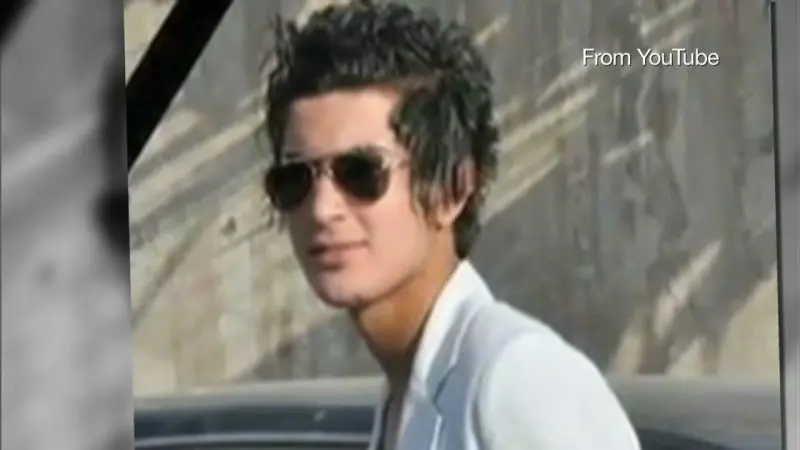
BAGHDAD — In the sprawling, labyrinthine neighborhoods of the Iraqi capital, a terrifying wave of violence has gripped marginalized youth and minority communities. A surge of brutal murders, allegedly targeting individuals perceived as homosexual or part of the alternative "emo" subculture, has ignited a profound human rights crisis. As grieving families bury their young and survivors go into hiding, a chilling question echoes through the streets of Baghdad: Is the Iraqi government an unwitting bystander to these atrocities, or has its own rhetoric actively incited them?
Executive Overview
Over a concentrated three-week period in early 2012, a systematic campaign of terror has unfolded across several predominantly Shiite districts of Baghdad. Official tallies from security sources place the death toll at a minimum of 14, but human rights defenders and local activists argue that these figures represent merely the tip of an iceberg. Some estimates suggest that the actual number of victims murdered or disappeared since February could range from dozens to well over one hundred.
The targets of this deadly purge are broadly defined by their non-conformity. Local vigilante groups and militias appear to be hunting anyone who deviates from strict traditional norms—specifically young men and women adopting the "emo" aesthetic, characterized by Western-style tight clothing, long or dyed hair, dark apparel, and skull motifs, alongside individuals perceived to be gay or lesbian.
This localized wave of violence does not occur in a vacuum. It follows closely on the heels of a fiery public condemnation by Iraq’s Ministry of Interior, which officially labeled the emo phenomenon as "Satanic" and vowed to eradicate it entirely. By greenlighting "moral police" interventions in schools and framing alternative youth subcultures as an existential threat to public morality, critics argue the state has created a permissive environment for sectarian militias and extremist elements to execute extrajudicial violence with impunity.
Detailed Chronology and Anatomy of the Terror
The escalation of violence has followed a swift, calculated trajectory, transforming neighborhoods that were already scarred by years of sectarian conflict into hunting grounds for non-conforming youth.
The Geography of Fear
According to local activists and community monitors, the vast majority of the targeted killings have been concentrated in densely populated Shiite neighborhoods of Baghdad. Areas such as Sadr City, Shulaa, Ameen, and Tariq have emerged as primary flashpoints. In these socially conservative enclaves, the visibility of alternative subcultures is frequently interpreted not merely as teenage rebellion, but as a direct affront to religious values and cultural purity.
The Threat Letters: Nightly Warnings
The climate of terror is meticulously manufactured through psychological warfare. In mid-March, a prominent gay activist in Baghdad received a chilling piece of correspondence slipped under his door in Sadr City—an experience shared by numerous peers across the capital.
The letter, bearing the hallmarks of radical militia groups, listed 33 specific individuals marked for execution. It read, in part:
"We strongly warn every male and female debauchee, if you do not stop this dirty act within four days, then the punishment of God will fall on you at the hands of Mujahideen."
Speaking to journalists under strict conditions of anonymity due to imminent threats to his life, the activist recounted a harrowing warning delivered directly to him: "Ten days ago, I received a letter from militiamen threatening me that if they found me then they will not kill me like other ‘perverts,’ but they will cut my body into pieces."
While independent verification of every distributed letter remains a challenge in a city fractured by competing security forces, the psychological impact has been absolute. The threats have forced targets to flee their homes, discard their possessions, and seek sanctuary in the shadows.
Supporting Context & Metrics: Dissecting the Scale of Violence
Understanding the true dimensions of the crisis requires parsing conflicting data streams from official government channels, international human rights organizations, and grassroots activists on the ground.
The Body Count Discrepancy
- Official Government Estimates: A senior official within the Iraqi Ministry of Interior, speaking anonymously because they lacked authorization to address the media directly, confirmed that at least 14 violent deaths linked to the anti-emo and anti-gay campaign occurred within a narrow three-week window in Baghdad.
- Activist Reports: In stark contrast, human rights advocates and underground support networks operating inside Iraq claim the official numbers are severely underreported. By factoring in undocumented disappearances, uninvestigated "honor killings," and bodies recovered in remote districts, these activists estimate that the death toll since February easily surpasses several dozen, with some estimates climbing above 100.
Defining "Emo" in Post-War Iraq
In Western societies, "emo" refers to a genre of rock music and an associated emotional, introspective subculture. However, in the post-2003 socio-political landscape of Iraq, the term has undergone a radical semantic shift. To conservative religious factions and militia leaders, "emo" has become a catch-all designation for any youth adopting Westernized styles.
Characterized by tight jeans, sweeping bangs, black clothing, studded belts, and accessories featuring skulls or band logos, these visual markers have been weaponized. Because such styles defy traditional Islamic modesty codes and run counter to the hyper-masculine ethos cultivated by decades of war, young people displaying these traits are routinely stigmatized as being psychologically unstable, ungodly, or morally corrupt.
Official Statements and State Complicity
The most alarming aspect of the current crisis is the perceived alignment between vigilante death squads and official state rhetoric. Observers note that the surge in murders directly correlates with institutional pronouncements regarding youth culture.
The Interior Ministry’s Declaration
Less than a month before the peak of the killings, the Iraqi Ministry of Interior released an official statement addressing what it termed the "emo phenomenon." Far from treating the trend as a benign youth subculture, the ministry denounced it in harsh terms, officially categorizing it as a form of "Satanism."
The statement highlighted young people wearing "strange and tight clothes with graphics such as skulls" and announced that state security apparatuses were actively monitoring the movement with the explicit objective of "eliminating it."
To operationalize this directive, the government authorized community policing units—frequently referred to colloquially as "moral police"—to enter educational institutions across the capital. Their mandate: to identify, question, and root out behavior deemed subversive or contrary to public morals.
Accusations of State Abdications
Human rights organizations, including Human Rights Watch and Amnesty International, have repeatedly urged the Iraqi government to retract its inflammatory statements and protect its citizens. Critics argue that by framing alternative youth as "Satanic" or "debauched," the Interior Ministry effectively issued a license to kill, signaling to radical militias that extrajudicial violence against these demographics would face little to no resistance from law enforcement.
The Chilling Effect on Baghdad’s Youth
The combination of state-sanctioned surveillance and brutal militia violence has created an immediate, profound chilling effect across schools, universities, and public spaces in Baghdad. Conformity has become the sole currency of survival.
The Transformation of Daily Life
Teenagers and young adults who have no connection to the emo subculture or the LGBTQ+ community are nonetheless altering their appearance overnight out of sheer self-preservation.
Kamel Saad, a 17-year-old high school student in Baghdad, described the atmosphere of paranoia permeating his daily life. Following the recent campaigns, Saad made the conscious decision to cut his long hair short.
"I’m not the only one," Saad told reporters. "All my friends in the school decided to change their hair style and change their clothes, too, even though we’re not emo or gay."
Saad’s fears are grounded in direct encounters with the newly empowered security apparatus. He recounted an incident from two weeks prior when a group of men identifying themselves as community police walked unannounced into his classroom. The officers demanded that students inform on their peers, instructing them to report anyone exhibiting "suspicious behavior."
"I thought it was about terrorism," Saad recalled, referencing the constant threat of insurgent bombings that has plagued Iraq for years. "But later, when the police explained more, we realized that they were talking about emo."
Future Outlook: A Vulnerable Population at Crossroads
As spring progresses in Baghdad, the outlook for Iraq’s alternative youth and LGBTQ+ communities remains perilous. The convergence of post-war trauma, resurgent sectarian militias, and conservative state policies has created a hostile ecosystem where difference is treated as a capital offense.
International pressure continues to mount on the administration of Prime Minister Nouri al-Maliki to condemn the violence unequivocally, disarm the vigilante networks operating in Shiite strongholds, and rein in the moral police units patrolling schools. However, with political factions competing for conservative religious credentials, tangible protections for vulnerable minorities remain distressingly scarce.
For now, Iraq’s non-conforming youth find themselves navigating a harrowing reality. Forced into the shadows, cutting their hair, and discarding their clothes, they live suspended between the terror of militia violence and the abandonment of a state sworn to protect them. Unless systemic reforms and genuine human rights protections take root, the alleys of Baghdad risk claiming many more young lives in the name of ideological purity.