

Executive Overview
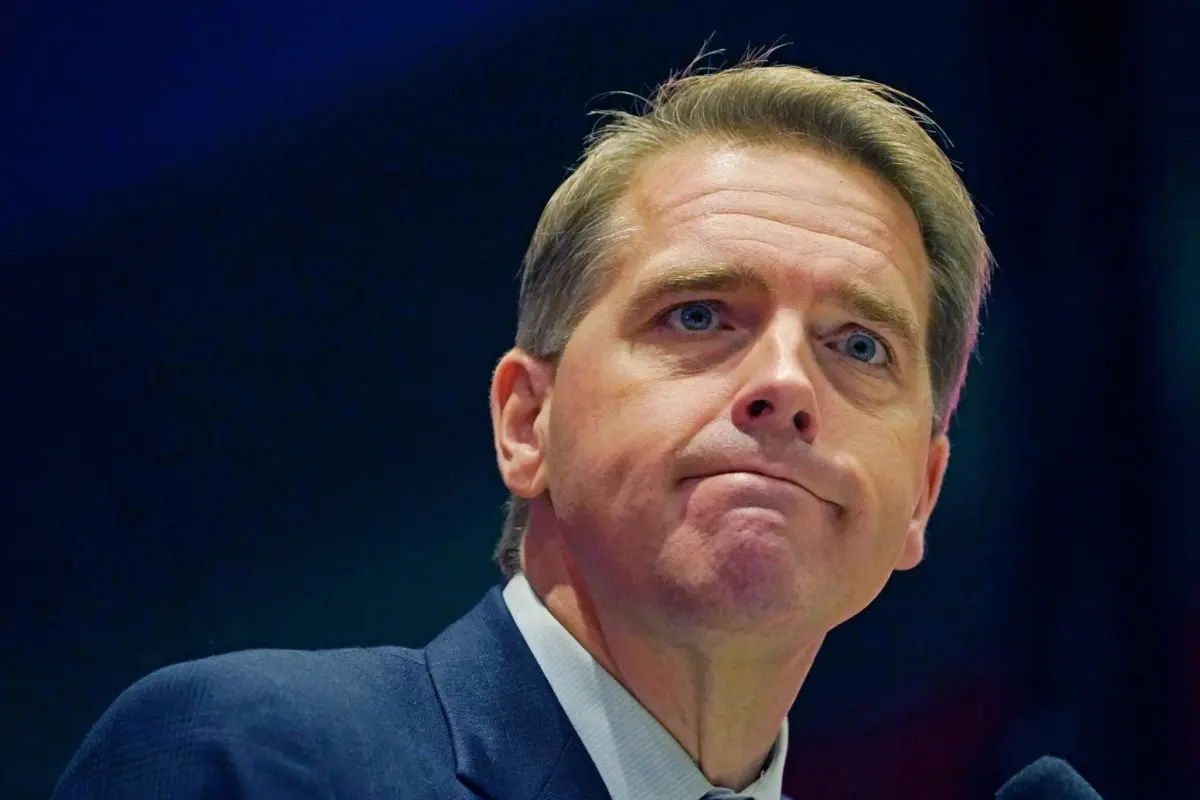
The shifting sands of American media and politics have collided once again, producing a cascade of high-profile developments across Washington, D.C., and major newsrooms nationwide. Most prominently, as Karoline Leavitt prepares to step down from her post as White House press secretary, conservative CNN commentator Scott Jennings has emerged as an early—albeit polarizing—candidate to succeed her. While Jennings orchestrates a calculated push behind the scenes, including outreach to White House Chief of Staff Susie Wiles, his potential candidacy faces stiff internal headwinds from MAGA loyalists wary of his establishment Republican ties.
Concurrently, legacy broadcasting is undergoing a radical reimagining. CBS News is reportedly exploring a revival of its iconic 60 Minutes closing segment popularized by Andy Rooney, testing out eclectic star-studded lineups featuring sports analysts, comedians, and tennis legends. Yet, the friction between institutional editorial control and provocative commentary is not confined to television; it has claimed a casualty in regional print journalism. Matt Calkins, a veteran sports columnist for The Seattle Times, resigned in protest after editors spiked his piece addressing transgender athletes in women’s sports.
This comprehensive report synthesizes these interlocking storylines, examining the mechanics of political appointments, the shifting economics of newsroom curation, and the ongoing culture wars shaping modern media discourse.
Detailed Chronology
The White House Press Secretary Succession Derby
- Mid-August 2026: White House Press Secretary Karoline Leavitt announces her departure from the administration. The 28-year-old press secretary, who served as the singular voice of the briefing room during Donald Trump’s second term, cites family reasons—specifically the recent birth of her second child—prompting her exit by the end of the month.
- Shortly After the Announcement: Reports surface identifying CNN commentator and Salem Radio host Scott Jennings as a leading contender to replace Leavitt. Jennings, renowned for his fiery defense of President Donald Trump on CNN NewsNight, begins aggressively positioning himself for the role.
- The Natalie Harp Incident: Jennings forcefully defends Trump aide Natalie Harp, who made headlines after evading a potential security threat by slipping off Air Force One in Turkey onto a secondary aircraft. Following sharp critiques from Democratic Senator Jon Ossoff—who blasted the administration’s priorities regarding travel and luxury assets—Jennings launches a robust defense across social media and cable news.
- The Push for Access: According to reports from Politico, Jennings circulates clips of his defense of Harp directly to senior White House staffers. Over the weekend, he initiates contact to secure a private meeting with White House Chief of Staff Susie Wiles.
- Mid-Week Media Teasing: When pressed by guest host Lulu Garcia-Navarro on CNN NewsNight, Jennings dismisses rumors of his appointment. However, in a subsequent exchange with CNN anchor Kaitlan Collins, Jennings plays coy, remarking, "I don’t really have anything to say about it other than, I mean, I would get to see you every day"—prompting Collins to aptly observe, "That’s not a no."
- MAGA Backlash: The New York Post reports that Trump’s most fervent populist allies are actively moving to derail Jennings’ candidacy, pointing to his long-standing, close-knit ties to Senate Minority Leader Mitch McConnell, whose re-election campaign Jennings once managed.
The 60 Minutes Rooney-Esque Experiment
- Late August 2026: Rumors emerge that CBS News leadership—spearheaded by Editor-in-Chief Bari Weiss and Executive Producer Nick Bilton—is evaluating a modern revival of the legendary “A Few Minutes with Andy Rooney” segment, which ran on 60 Minutes from 1978 until Rooney’s passing in 2011.
- Talent Outreach: Industry reports reveal that CBS has held exploratory talks with high-profile personalities, including ESPN podcaster Stephen A. Smith, comedian Jerry Seinfeld, Monty Python icon John Cleese, and tennis great-turned-broadcaster John McEnroe.
- Rejections and Realities: Jerry Seinfeld reportedly declines the overture, while trade publications note that Stephen A. Smith is an unlikely fit. Observers indicate that if the concept materializes, it will likely feature a rotating ensemble of distinct cultural voices rather than a single permanent fixture.
The Matt Calkins Seattle Times Resignation
- Friday, July 31: Matt Calkins, an 11-year veteran sports columnist for The Seattle Times, submits a draft column focusing on the complexities of biological males and females competing in women’s sports. Calkins notes that he did not pre-pitch the column to his editors, operating under a standard flexible timeline.
- Early August: Newsroom leaders review the draft over several consecutive days. Ultimately, management informs Calkins that the piece will not be published, officially citing protocol violations regarding advance notice.
- Mid-August: Rejecting management’s rationale as a pretext for censoring viewpoints that challenge prevailing newsroom narratives, Calkins formally resigns from The Seattle Times. He publishes the rejected column and his resignation rationale on Substack, sparking a swift polarized reaction across the national media ecosystem.
Supporting Context & Metrics
The convergence of these three narratives highlights deep systemic shifts within American media and political infrastructure:
- The Economics of the Podium: Transitioning from cable news commentary to White House press secretary carries stark financial and professional implications. As media analysts note, taking the executive branch podium often requires a substantial pay cut compared to lucrative dual-income streams from major cable networks and syndicated radio. However, for media figures like Jennings, it represents the ultimate leap from the analytical sidelines back into the engine room of executive power.
- Ideological Gatekeeping in Legacy Newsrooms: The Calkins resignation underscores a widening chasm between traditional newsroom cultures and heterodox viewpoints. Calkins’ historical record of spiked columns—touching on equal-pay lawsuits, cancel culture, and post-2020 policing debates—illustrates an institutional fear of audience backlash and "outrage mobs," which critics argue stifles robust public debate within local journalism.
- The Attention Economy and Institutional Reinvention: CBS’s pursuit of non-traditional commentators like Stephen A. Smith and John McEnroe reflects the desperate imperative for legacy broadcast networks to capture fragmented audiences. By injecting provocative, distinct personalities into heritage formats, networks hope to recreate the viral resonance that single-columnists once effortlessly commanded.
Official Statements
-
Scott Jennings (On White House Rumors):
"I don’t have anything to say about that." (Speaking to Politico)
And during his exchange with Kaitlan Collins:
"I don’t really have anything to say about it other than, I mean, I would get to see you every day."
-
Kaitlan Collins (CNN Anchor, responding to Jennings):
"That’s not a no."
-
Matt Calkins (Former Seattle Times Columnist, via Substack):
"Two things can be true at once. You can show compassion for people who feel trapped in the wrong body while acknowledging they have a biological advantage. After all, why do we separate males and females in sports in the first place? … The common theme [of my spiked columns]? All of these challenged prevailing newsroom narratives and likely would have triggered the outrage mob."
-
Senator Jon Ossoff (D-GA, criticizing the Trump administration):
"He doesn’t want to do the job. He wants to build his ballroom and travel with Natalie on their apparently defenseless flying palace gifted by the emir of Qatar."
Future Outlook
As August 2026 draws to a close, the coming weeks will resolve several high-stakes questions across the media-political landscape:
- The Press Secretary Selection: President Trump remains deliberative, signaling a preference to return to a male press secretary for the first time since the early months of his first term. Whether Scott Jennings can overcome resistance from populist hardliners suspicious of his McConnell origins will test the influence of pragmatists within the West Wing, particularly Chief of Staff Susie Wiles.
- The Evolution of CBS News: The success of Weiss and Bilton’s potential 60 Minutes revamp hinges on their ability to secure culturally resonant voices who can balance sharp critique with broad-based appeal. If a rotating commentary model launches successfully, it could spark a broader industry trend toward personality-driven analysis in heritage television.
- The Independent Substack Exodus: Matt Calkins’ transition to independent publishing via Substack highlights the growing viability of direct-to-consumer journalism for writers who find themselves at odds with legacy publication gatekeepers. As platforms like Substack offer viable economic lifelines, traditional newsrooms will increasingly grapple with retention issues among veteran commentators unwilling to self-censor.