

Executive Overview
In the rapidly evolving landscape of search engine optimization (SEO), visibility is no longer just about ranking for broad, high-volume head terms. Today’s digital consumers are precise, demanding, and context-driven. Propelled largely by the exponential growth of voice-activated searches on mobile devices and smart home assistants, search queries have shifted away from fragmented keywords toward natural, conversational phrasing.

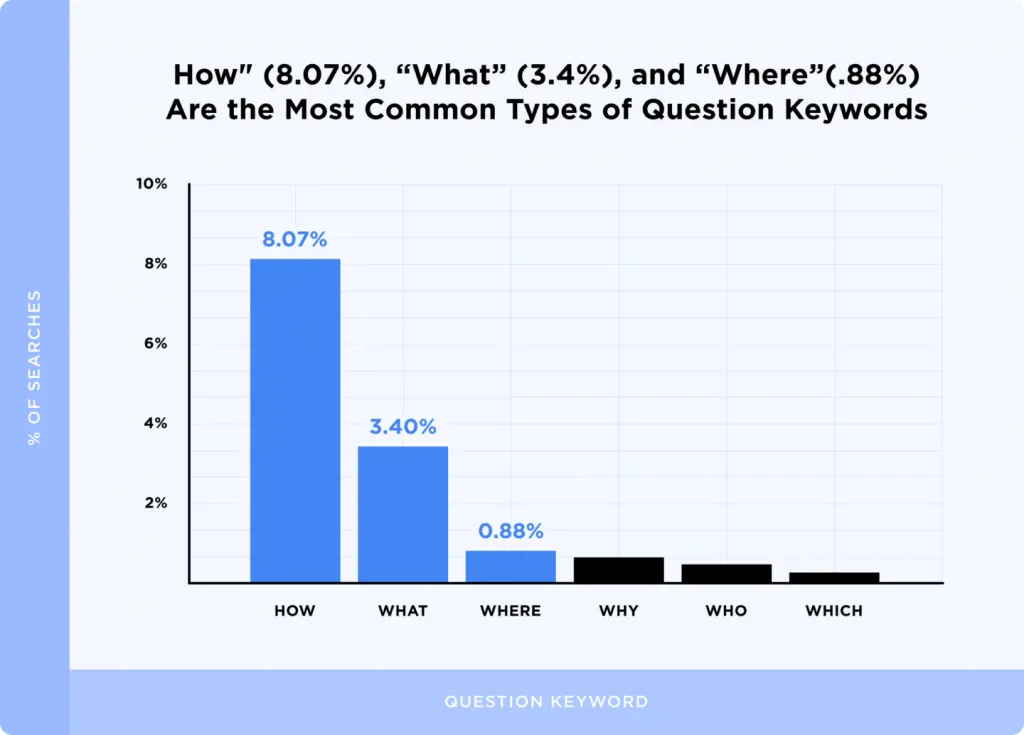
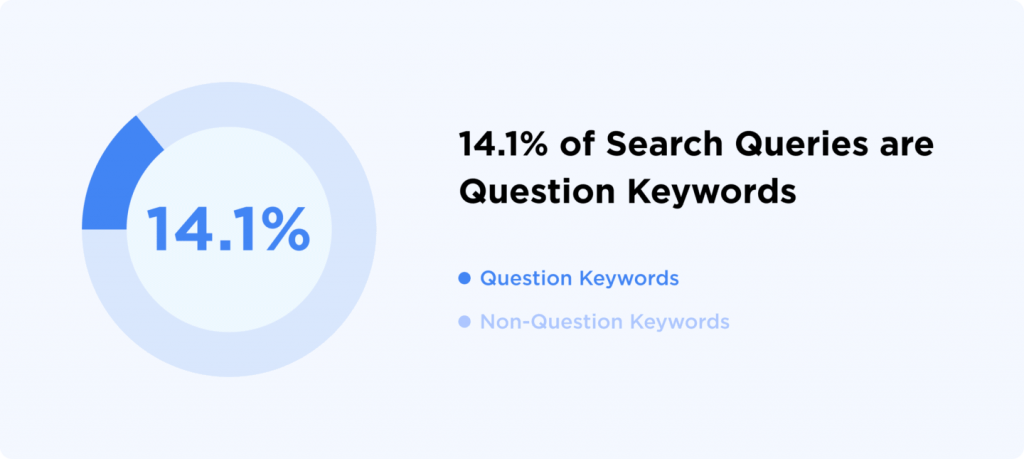
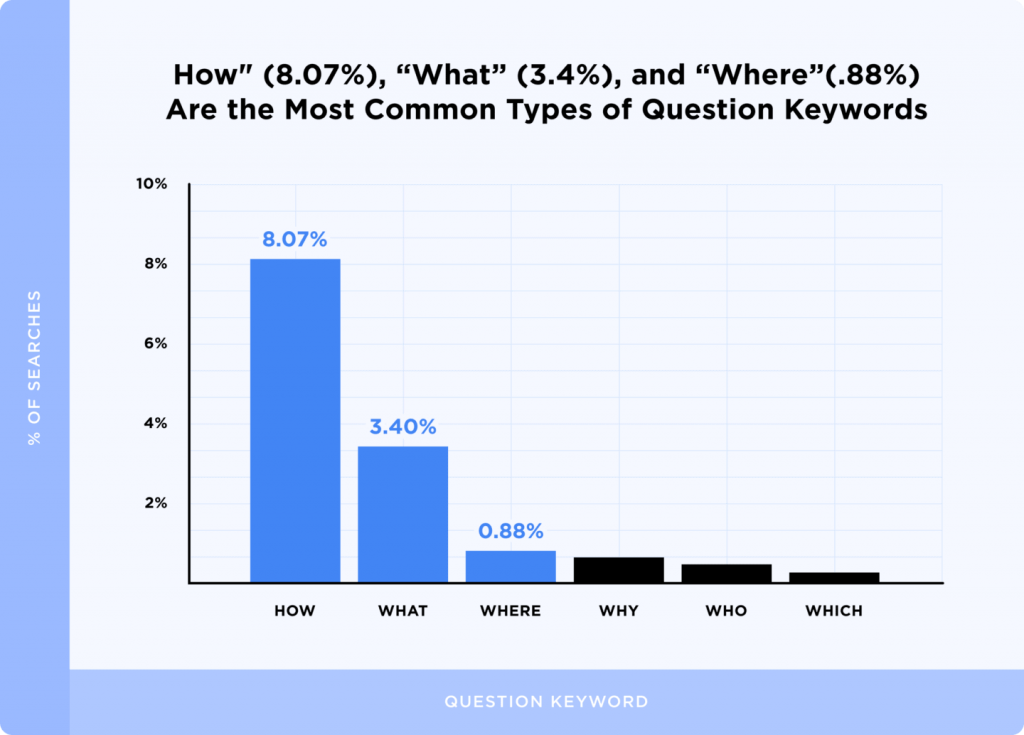
Recent industry studies underscore this paradigm shift: an astounding 14.1% of all Google searches are question-based keywords. When applied to Google’s staggering volume of roughly 3.5 billion daily searches, this translates to nearly 490 million questions asked every single day. Among these, interrogatives like “how” (8.07%) and “what” (3.4%) dominate the digital discourse.
For content marketers, SEO professionals, and digital strategists, this behavior represents an unprecedented opportunity. Question-based searches embody high user intent, signaling that a searcher is actively grappling with a specific problem and seeking an immediate, actionable solution. By strategically answering these questions, businesses can seamlessly position their products, services, or affiliate offers as the definitive solution.
However, systematically identifying and scaling the production of these high-intent, low-competition keywords requires more than guesswork. This report examines four advanced, scalable methodologies designed to extract valuable question-based keyword opportunities, helping brands dominate search engine results pages (SERPs) and capture high-converting traffic.
Detailed Chronology: The Evolution of Search and Intent-Driven Optimization
To understand why question-based keyword strategies are indispensable today, it is vital to trace how search engines and user behavior have evolved over the past decade.

The Shift from Strings to Things
In the early days of SEO, search engines relied heavily on exact-match keyword strings. Marketers would stuff content with phrases like "best CRM software" regardless of readability. However, major algorithmic updates—such as Google’s Hummingbird and BERT—transformed search engines from simple text matchers into semantic comprehension engines. Google learned to understand the intent behind a query, mapping relationships between concepts, entities, and human problems.

The Rise of Conversational and Voice Search
The widespread adoption of smartphones and smart speakers accelerated this evolution. Users stopped typing rigid queries like "coffee bean grinder instructions" and began asking Siri, Alexa, or Google Assistant, "How do I grind coffee beans for a French press?" This shift normalized long-tail, conversational queries framed as complete sentences or direct questions.

The Integration of Interrogatives into the SERP Ecosystem
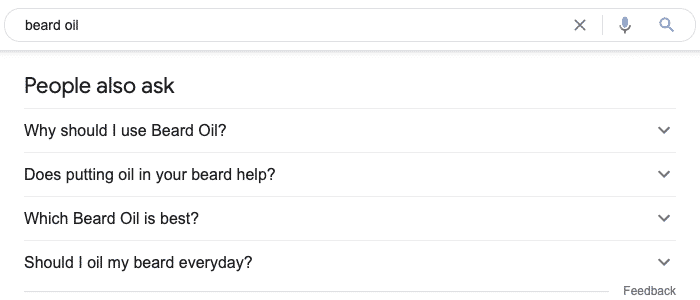
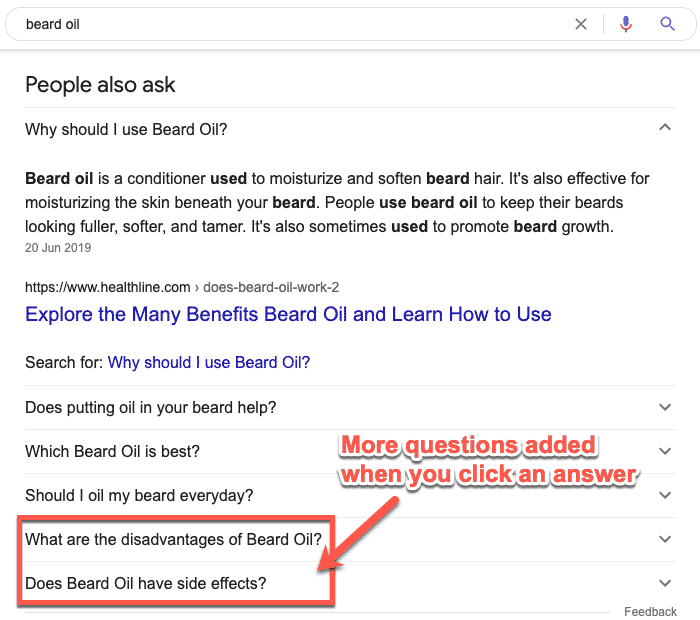
Recognizing this behavioral shift, Google redesigned its interface to directly serve direct answers. Features like the "People Also Ask" (PAA) box, featured snippets, and knowledge panels became dominant real estate on the SERP. Consequently, SEO strategy evolved from merely capturing top-of-funnel traffic to intercepting users at precise micro-moments of friction. Marketers who adapted by structuring content to answer specific questions quickly captured valuable PAA visibility, bypassing traditional ranking barriers and claiming prime visual space above organic search results.

Supporting Context & Metrics: Why Question Keywords are a Marketer’s Goldmine
Integrating question-based keywords into an overarching content strategy offers two primary, distinct advantages: exceptional user intent and minimal keyword competition.

1. High Searcher Intent
When an internet user enters a question into a search bar, they are rarely browsing casually. They are experiencing a pain point, a knowledge gap, or a technical hurdle that requires immediate resolution.
Because these queries are hyper-specific, they exhibit a much higher degree of commercial or informational intent. For brands, this creates an ideal environment for contextual marketing. By providing an objective, comprehensive answer to the user’s question, a business can naturally introduce its product or service as the logical tool to resolve the issue.
2. Low Keyword Competition and Accessible Rankings
Unlike broad, highly competitive head terms—which often require massive budgets, extensive content hubs, and aggressive backlink campaigns to rank—question-based keywords are typically long-tail phrases.

Because they target niche sub-topics or specific use cases, their keyword difficulty (KD) scores are frequently low (often highlighted in green within major SEO platforms like Semrush or Ahrefs). This means that digital marketers, even those operating sites with modest Domain Authority (DA), can rank on the first page of Google for these terms without building extensive backlink profiles or producing exhaustive 5,000-word guides.
Four Proven Frameworks to Scale Question-Based Keyword Research
Scaling question research manually is inefficient. Below are four systematic, automated approaches to unearth hundreds of high-intent, low-competition question keywords using industry-standard tools.
+-----------------------------------------------------------------+
|               4 Ways to Scale Question Research                 |
+-----------------------------------------------------------------+
          |                      |                      |
          v                      v                      v
+------------------+   +------------------+   +------------------+
| 1. SEO Platform  |   | 2. PAA Box & SEO |   | 3. Subreddit     |
| Question Reports |   | Minion Extension |   | Organic Mining   |
+------------------+   +------------------+   +------------------+
                                 |
                                 v
                       +------------------+
                       | 4. High-Traffic  |
                       | Quora Threads    |
                       +------------------+
1. Leveraging Dedicated SEO Platform Question Reports
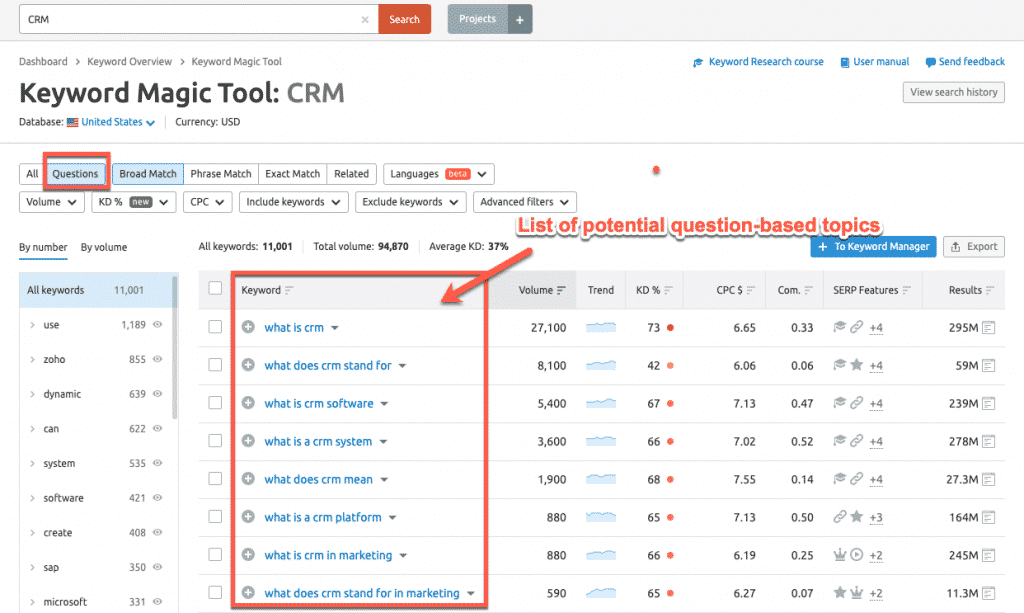
Major SEO platforms—including Semrush and Ahrefs—feature built-in keyword magic tools and topic research databases designed to isolate interrogatives.
- Execution: Input a broad seed topic relevant to your niche (e.g., "CRM software") into the platform’s keyword research tool.
- Filtering: Apply the built-in "Questions" filter to restrict the dataset exclusively to queries starting with how, what, why, where, when, who, and can.
- Strategic Analysis: Examine the tiered results. While top-tier results may feature high search volumes and stiff competition, scrolling further down uncovers ultra-specific, long-tail variations (e.g., "Can a CRM be integrated with an ERP?" or "What features to look for in a HIPAA-compliant CRM?").
- Refinement: Utilize advanced intent and grouping filters within tools like Semrush to quickly surface commercial or transactional question clusters that align with your product offerings.
2. Mining the "People Also Ask" (PAA) Box at Scale
The PAA box is a direct reflection of what Google’s algorithms recognize as recurring user inquiries. However, manually clicking, expanding, and copying PAA boxes is labor-intensive.

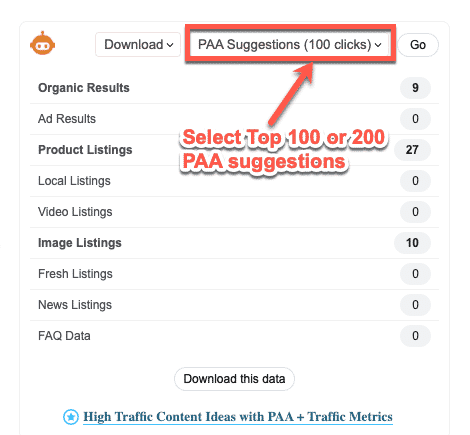
- Execution: Install SEO Minion, a free Chrome extension widely recommended by leading SEO practitioners.
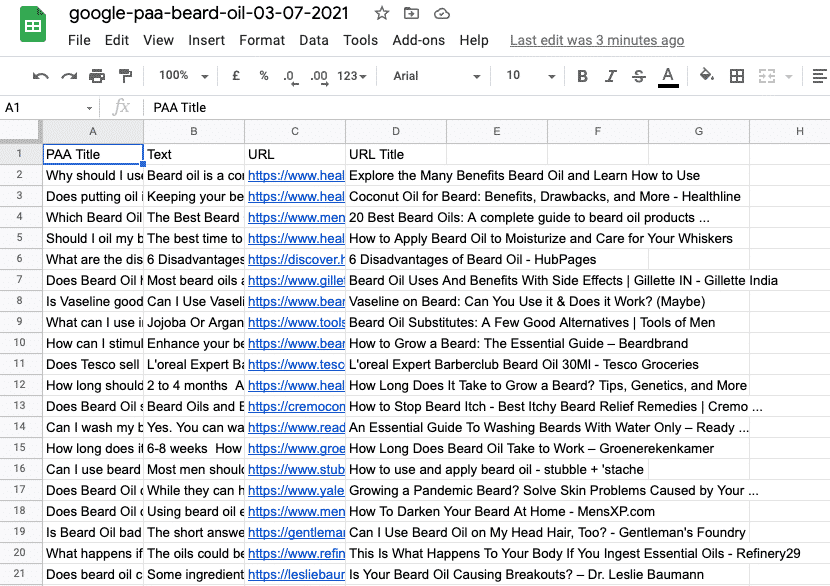
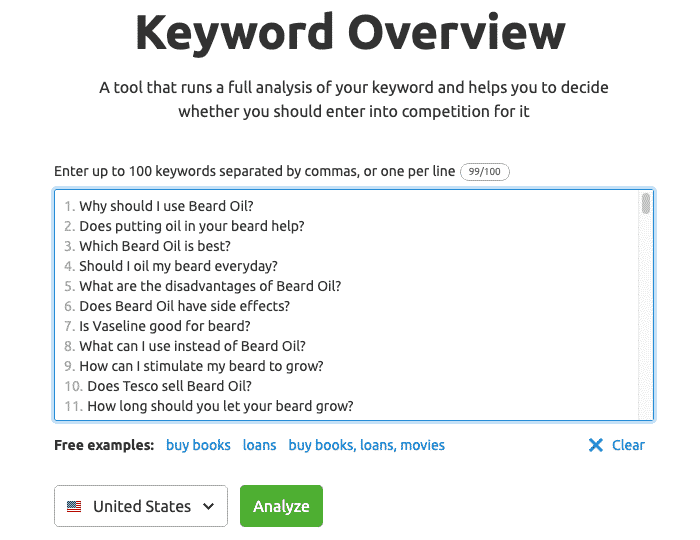
- Data Extraction: Enter your seed keyword into Google. Open the SEO Minion widget on the SERP, select the "People Also Ask" export feature, and define your record threshold (e.g., extracting the top 100 to 200 PAA queries).
- Bulk Analysis: Export the resulting CSV file, copy the primary title column containing the questions, and paste them into a bulk keyword analysis tool like the Semrush Keyword Overview report.
- Scoring: Analyze the batch for search volume and keyword difficulty. While only a small percentage of extracted queries may feature high search volumes, compiling multiple seed topics yields a robust portfolio of low-competition, high-yield content ideas.
3. Mining Subreddits for Niche Community Pain Points
Online communities like Reddit are digital goldmines for authentic consumer language, unresolved product frustrations, and hyper-targeted niche questions.

- Execution: Locate subreddits dedicated to your industry, product category, or competitor base (e.g.,
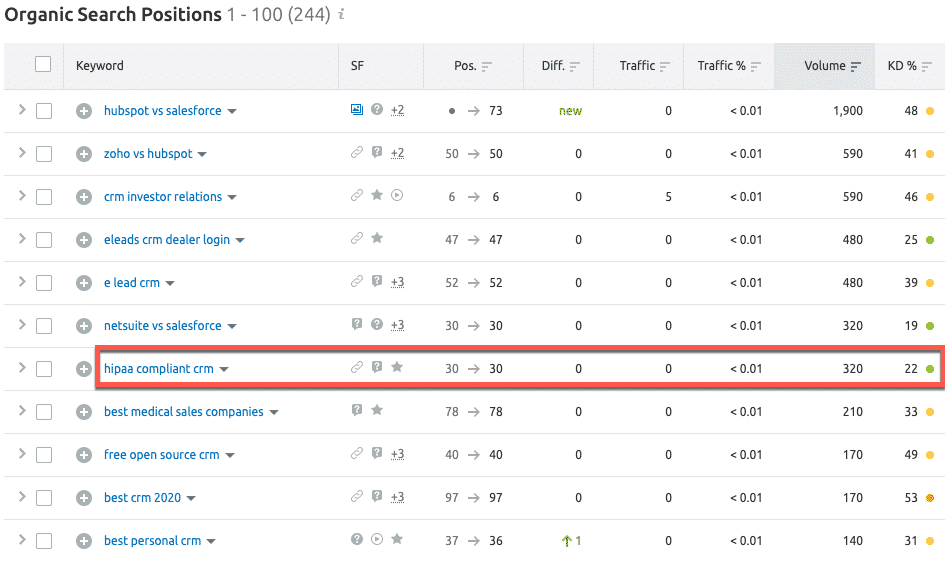
r/CRM). - Organic Research Integration: Input the specific subreddit URL or subfolder into Semrush’s Organic Research report.
- Advanced Filtering: Apply filters to isolate valuable queries. For example, set a minimum search volume threshold (e.g., volume > 20) and add an advanced word-count filter ensuring phrases are longer than two words.
- Opportunity Discovery: Look for green or light-yellow keyword difficulty scores. This process often uncovers unique comparative queries ("HubSpot vs Salesforce"), vertical-specific needs ("best CRM for gyms"), or compliance-driven pain points ("HIPAA compliant CRM"), providing distinct angles for product differentiation and content creation.
4. Mining High-Traffic Quora Threads
Quora consistently ranks prominently in organic search results for conversational queries. Beyond answering questions directly on the platform for referral traffic, Quora serves as an exceptional keyword research repository.

- Execution: Navigate to the Organic Research report in Semrush, input
quora.com, and apply advanced URL/subdirectory filters alongside keyword modifiers like "how," "best," or your core product category. - Discovery: Review the ranking keywords for Quora pages within your niche. Identify recurring questions that competitors may have overlooked on their own blogs.
- Aggregation: Utilize the bulk addition features within your SEO platform to add these relevant question-based keywords to a master content planner, ready for editorial briefing and production.
Future Outlook: The Next Frontier of Intent Optimization
As artificial intelligence continues to reshape search engines—exemplified by the rollout of Google’s Search Generative Experience (SGE) and conversational AI assistants—the value of question-based optimization will only intensify.

Future search experiences are moving away from traditional blue links toward synthesized, conversational answers generated directly on the SERP. In this environment, search engines will increasingly rely on well-structured, authoritative content that directly answers specific user queries to train and source their AI models. Websites that proactively build comprehensive libraries of question-based, low-competition content will be best positioned to secure citations within AI-driven summaries, maintaining visibility and authority in an automated digital ecosystem.
Marketers who integrate these four scalable research methodologies today will not only capture immediate, high-intent traffic but will also future-proof their digital properties against the next generation of search technology.