In the rapidly evolving landscape of digital marketing, organic search visibility remains a critical cornerstone for sustainable business growth. As search engines become increasingly sophisticated—driven by advanced natural language processing and intent-matching algorithms—the margin for error in keyword strategy has narrowed significantly. Gone are the days of high-volume keyword stuffing and superficial search engine optimization (SEO); today’s digital ecosystem demands a precise, data-driven approach centered on user intent, competitive intelligence, and topical authority.
Enter Semrush, an industry-leading all-in-one digital marketing suite equipped with robust tools designed to demystify the search landscape. This comprehensive guide provides an authoritative, end-to-end framework for leveraging Semrush’s most powerful modules—including the Keyword Manager, Keyword Magic Tool, and Keyword Gap—to build resilient, high-converting organic search strategies. Whether you are managing an established e-commerce empire, a localized professional service firm, or a niche affiliate content portfolio, mastering these methodologies will allow you to systematically uncover high-intent keyword opportunities, bridge competitive deficits, and scale your content production workflow with unprecedented efficiency.
Detailed Chronology: The Evolution of Search Intelligence and Semrush Integration
To fully appreciate the utility of modern SEO platforms, it is essential to examine how keyword research has transformed over the past decade. In the early stages of search engine marketing, keyword research was largely a localized, manual endeavor. Marketers relied on rudimentary volume estimators and broad seed terms, often resulting in bloated keyword lists with little regard for semantic relevance or user context.
As search algorithms matured—particularly with Google’s introduction of semantic search updates like Hummingbird, BERT, and MUM—the focus shifted heavily toward understanding why a user is searching. Search intent became the primary metric guiding content architecture. Platforms like Semrush responded by expanding their databases into the tens of billions of keywords, introducing advanced intent classification filters (Informational, Navigational, Commercial, and Transactional), and developing automated topical clustering algorithms.
The integration of these features into a unified ecosystem represents a monumental shift in how digital strategists operate. Historically, marketers were forced to export data across multiple disparate tools—using one software for rank tracking, another for keyword ideation, and a spreadsheet utility for manual clustering. The chronological integration of Semrush’s toolkit closed these operational silos. Today, users can seamlessly transition from discovering a competitor’s traffic-driving subfolders to identifying content gaps, automatically clustering related terms, and pushing those keywords directly into tracking or writing assistants—all within a singular interface.
Executing a successful SEO campaign requires moving beyond surface-level metrics like raw search volume. True strategic growth is achieved by analyzing the intersection of search demand, keyword difficulty (KD%), traffic potential, and monetization alignment.
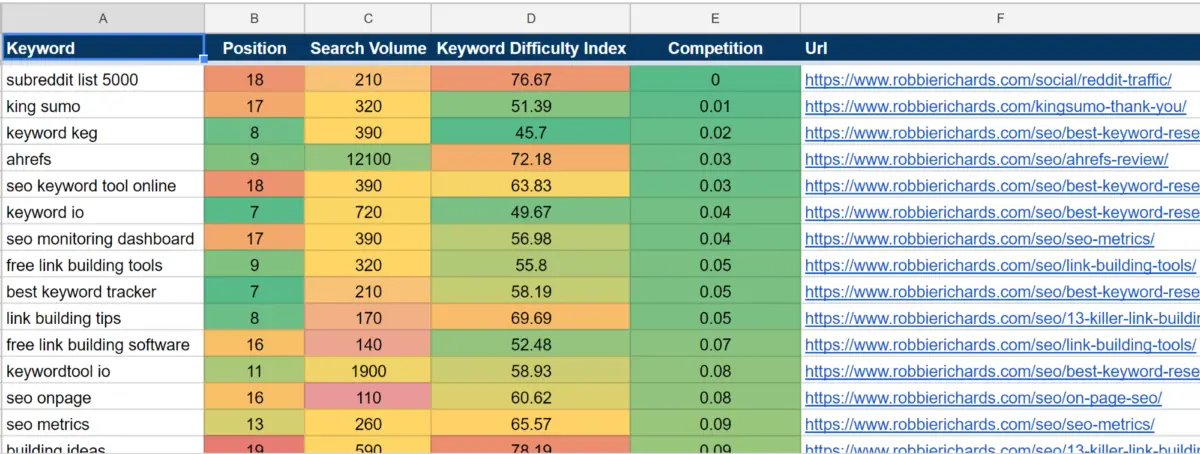
When working with an established website that already possesses a content footprint, the most lucrative starting point is not brainstorming new topics, but rather optimizing existing assets. By identifying keywords for which your domain is already ranking on the cusp of page one (typically positions 4 through 15), you can capture rapid organic traffic gains with minimal effort compared to building new content from scratch.
Execution Framework: Navigate to the Semrush SEO Toolkit, access the Organic Research >> Positions report, and apply advanced filters. Target positions 4–15, set a baseline search volume threshold relevant to your niche, and cap the Keyword Difficulty (KD) to filter out hyper-competitive terms.
Workflow Integration: Segment these opportunities into "Existing" and "New" lists inside Semrush, or export them into a dedicated formatting template to automatically sort opportunities by descending search volume and low SERP competition.
2. Competitor Intelligence & Subfolder Analysis
Analyzing your top competitors is the fastest route to uncovering proven, high-intent target keywords. Semrush provides multiple avenues for competitor reverse-engineering:
The Top Pages Report: By entering a competitor’s domain (e.g., an e-commerce brand like Beardbrand or a legal practice like Dolman Law) into the Organic Research Pages report, you can isolate the exact URLs driving the vast majority of their organic traffic.
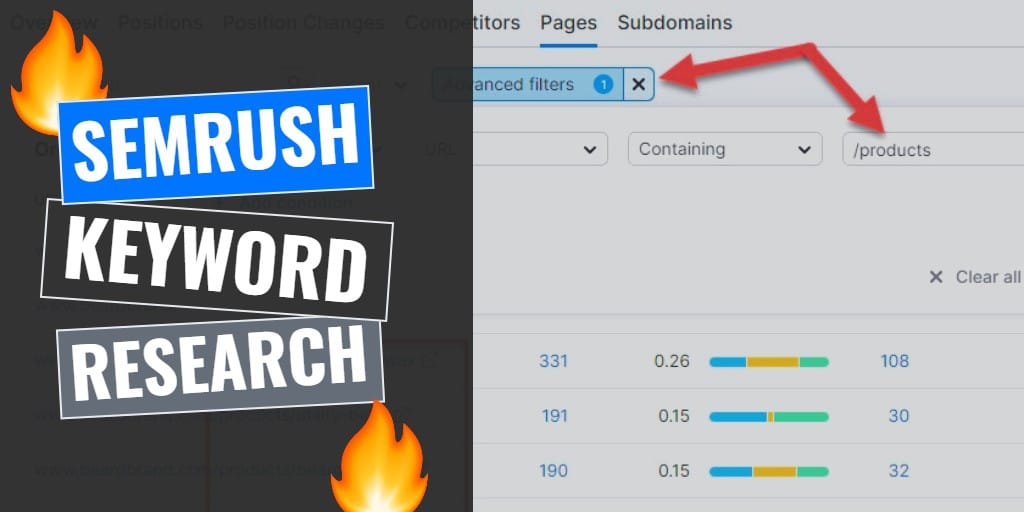
Subfolder Filtering: By applying URL filters—such as /products/ for e-commerce or /legal-services/ for legal firms—you can instantly strip away blog noise and homepages to focus exclusively on commercially lucrative service or product pages.
Keyword Modifiers: For sites that do not use structured subfolders, applying keyword modifiers (such as "best," "review," "software," or specific product categories) allows you to isolate high-intent commercial and transactional queries.
3. Advanced Keyword Gap Analysis
The Semrush Keyword Gap Tool allows digital marketers to compare up to five competitor domains simultaneously against their own. This analysis yields vital reports:
Missing Keywords: Terms that all selected competitors rank for, but your domain does not.
Weak Keywords: Terms where your domain ranks lower than your competitors.
PPC-Organic Gaps: Uniquely, Semrush enables marketers to analyze paid search data alongside organic results, allowing brands to identify high-intent commercial keywords their competitors are bidding on, thereby providing "paid air cover" while organic rankings are built.
Official Statements and Industry Methodology
Industry authorities and veteran growth marketers frequently emphasize the necessity of structured, data-backed workflows when deploying enterprise SEO tools. Robbie Richards, a recognized digital marketing strategist and creator of comprehensive Semrush implementation guides, highlights the operational efficiency gained through integrated tooling:
"One of the things I really like about Semrush is that its keyword research tools are all integrated. Once you have finished building your target keyword list in Semrush, you can select keywords and send them to the Position Tracking tool to monitor rankings or transfer them to the SEO Writing Assistant for content production and on-page analysis."
Furthermore, Semrush’s ongoing expansion of its global keyword database—surpassing 24 billion keywords across multiple languages and locales—underscores the platform’s commitment to delivering granular, hyper-localized search data. Official product frameworks stress that modern keyword research must abandon rigid, siloed lists in favor of Topical Clustering.
By grouping hundreds or thousands of semantically related keywords into cohesive topical hubs, website owners can signal clear subject-matter expertise to search engine crawlers, satisfying both Google’s E-E-A-T (Experience, Expertise, Authoritativeness, and Trustworthiness) guidelines and the user’s comprehensive informational needs.
Future Outlook: The Next Frontier of Search and AI-Driven Optimization
As we look toward the future of digital marketing, the integration of Artificial Intelligence (AI) and Search Generative Experience (SGE) will continue to reshape how users interact with search engines. Traditional blue links are rapidly being supplemented by AI-generated conversational summaries, fundamentally altering click-through rate dynamics and user search behavior.
In this shifting paradigm, the role of tools like Semrush will only grow more vital. Future-proofing your SEO strategy requires shifting from a mindset of simply chasing high-volume head terms to capturing micro-moments of intense user intent. The ability to automatically cluster keywords, analyze multi-intent SERP features, and rapidly deploy optimized content using integrated writing assistants will separate market leaders from underperforming domains.
To remain competitive, digital marketers must commit to continuous learning, regular keyword gap audits, and rigorous topical cluster expansion. By leveraging a comprehensive, data-rich ecosystem like Semrush—and utilizing structured frameworks for both existing asset optimization and competitor reverse-engineering—businesses can build resilient organic funnels capable of weathering algorithmic updates and capturing high-value traffic for years to come.
Ready to transform your digital strategy? Take advantage of a full-access 14-day free trial of Semrush to begin implementing these advanced keyword research and topical clustering tactics within your business today.