How do you track movement in the SERPs? Are you still relying on manual spreadsheets updated diligently every single day, or do you find yourself restricted to sluggish, weekly data pulls?
In the modern search landscape of 2025, neither option is remotely ideal. When managing a large volume of keywords, aggressive competitors, and a constantly mutating array of SERP features across multiple clients and distinct search engines, precision and velocity are everything. Modern Search Engine Results Page (SERP) tracking tools allow digital marketers, agencies, and enterprise brands to input entire keyword inventories alongside their respective SERP features, eliminating inaccurate manual data entry and ending the wait for fresh intelligence.
Investing in robust SERP tracking software is no longer a luxury; it is a fundamental requirement for modern digital marketing. Accurately monitoring rankings across different search engines, geographic locations, and devices provides the primary empirical validation needed to justify SEO investments to stakeholders. By evaluating the essential criteria, core features, and standout platforms dominating the market, organizations can implement a data-driven framework that directly ties organic search visibility to revenue and conversions.
Detailed Chronology & Industry Evolution
The evolution of rank tracking mirrors the maturation of the search engine optimization industry itself.
The Era of Manual Scrapes and Basic Desktop Software
In the early days of SEO, tracking rankings was a rudimentary affair. Practitioners used basic desktop scrapers or manually typed keywords into search engines, logging positions into complex Excel sheets. Data was volatile, subjective, and localized only to the user’s immediate browser cache.
The Shift to Cloud-Based Automation
As search algorithms grew more sophisticated—incorporating personalization, localized results, and instant answers—manual tracking became entirely obsolete. The industry transitioned toward cloud-based automated rank trackers. These platforms introduced scheduled daily updates, allowing teams to monitor hundreds or thousands of keywords without tying up local hardware.
The Rise of Advanced SERP Feature Integration
By the late 2010s and early 2020s, traditional "blue links" began sharing space with a proliferation of SERP features, including featured snippets, People Also Ask (PAA) boxes, video carousels, knowledge panels, and local map packs. Rank trackers evolved from simple position monitors into comprehensive SERP analysis suites. Today, in 2025, tools must process sophisticated elements like AI-generated overviews, real-time index changes, and multi-device segmentation to remain competitive.
Supporting Context & Essential Features
When evaluating the market for the best SERP tracking software, several core technical capabilities separate mediocre tools from enterprise-grade solutions.
1. Access Accurate On-Demand Ranking Updates
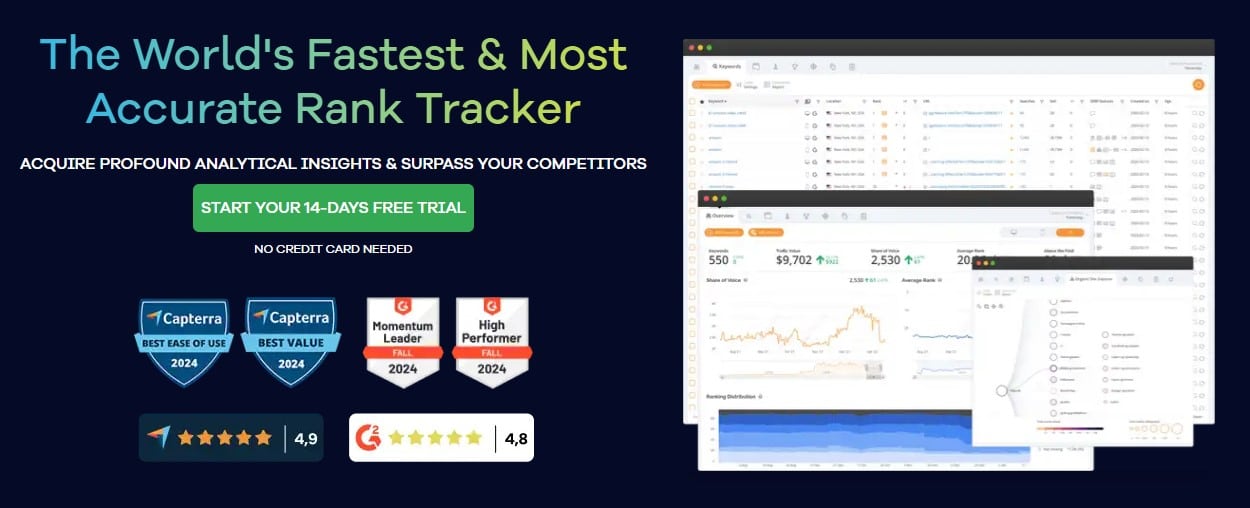
SERP positions change at lightning speed. Relying on tools that update every few days leaves blind spots during algorithm updates or competitive surges. Leading platforms like AccuRanker update keyword sets automatically every 24 hours while providing on-demand manual refresh buttons to pull real-time data instantly.
2. Monitor Performance Across Diverse SERP Features
Targeting Position #0 or capturing AI Overviews and featured snippets requires knowing precisely which keywords trigger these elements. Advanced SERP analysis features track the movement of over 50 distinct SERP features in a single dashboard view, highlighting actionable opportunities to steal visibility from competitors.
3. Cross-Search Engine Monitoring
While Google commands the majority of global search volume, comprehensive SEO strategies often require tracking visibility across alternative engines like Bing, Baidu, Yandex, and YouTube—particularly for international campaigns or specific niche markets.
4. Granular Geographic and Device Tracking
Global or national data is rarely enough. Modern tracking software must offer granular geographic filtering down to the state, city, or zip code level, alongside clear segmentation between desktop and mobile rankings.
5. Mapping SERP Movements to Traffic and Revenue
Tracking rankings in a vacuum provides limited business value. Integrating SERP data with analytics platforms (such as Google Analytics or Adobe Analytics) allows marketers to correlate ranking increases directly with organic traffic, bounce rates, conversions, and bottom-line revenue.
6. Historical Data and Competitor Comparison
Point-in-time metrics are insufficient for strategic planning. Robust trackers maintain deep historical archives, allowing teams to view long-term performance trends and benchmark their keyword distribution against key competitors across defined position brackets (e.g., positions 1–3, 4–10, 11–50).
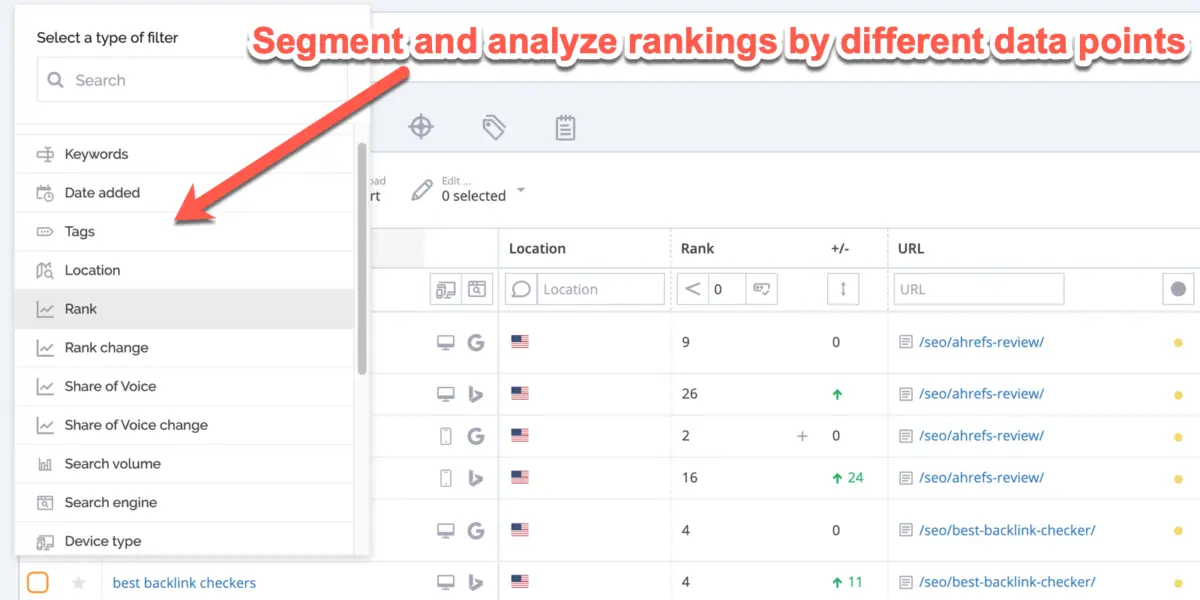
7. Data Tagging and Segmentation
As keyword portfolios scale, tagging becomes essential. Segmenting data by topic, sales funnel stage, content asset type, or device ensures that stakeholders can analyze performance through multiple strategic lenses.
8. White-Label Reporting and Integrations
Agencies and enterprise teams require seamless reporting workflows. Native white-label PDF reports and robust integrations with third-party data visualization tools (such as Looker Studio or Databox) ensure stakeholders receive clear, digestible insights on schedule.
The 7 Best SERP Tracking Tools for 2025
The market features a vast array of options. Below is an in-depth review of the top standalone trackers and all-in-one SEO platforms dominating the industry.
1. AccuRanker
Type: Standalone SERP Tracker
Best For: Agencies, enterprise brands, and professionals demanding high-speed, hyper-accurate data and deep API access.
Overview: Trusted by over 32,000 companies—including major brands like HubSpot, IKEA, and Kinsta—AccuRanker is widely regarded as one of the fastest and most precise keyword ranking tools on the market. It excels at delivering lightning-fast on-demand updates, robust landing page performance reports via analytics integrations, and comprehensive Share of Voice (SoV) tracking.
Pricing: Plans scale based on keyword volume, starting at $116/month for up to 1,000 tracked keywords.
2. Semrush (Position Tracker & SERP Gap Analyzer)
Type: All-in-One SEO Platform & Advanced Tracking Suite
Best For: Digital marketing professionals and enterprises seeking an all-inclusive toolkit with industry-leading tracking accuracy.
Overview: Serving over 10 million users from global powerhouses like Samsung, Vodafone, and Booking.com, Semrush offers a Position Tracking tool that rivals the accuracy of dedicated standalone trackers. Beyond standard rank monitoring, Semrush provides advanced features in its App Center, such as the SERP Gap Analyzer, which scans search results to identify under-optimized content, uncovers low-hanging fruit via Google Search Console integration, and automates tedious manual research.
Pricing: Subscription plans start at $139.95/month.
3. ProRankTracker
Type: Standalone SERP Tracker
Best For: International companies, agencies, ecommerce brands, and video marketers looking for scalable, cost-effective tracking.
Overview: Utilized by over 60,000 customers, ProRankTracker delivers highly accurate multi-device and multilingual SERP data across an expansive network of global locations, making it a reliable choice for diverse localization needs.
Pricing: Entry-level plans begin at $39/month.
4. Advanced Web Ranking (AWR)
Type: Standalone SERP Tracker
Best For: In-house marketing teams and large agencies requiring heavy-duty customization and reporting flexibility.
Overview: Trusted by prominent brands like Microsoft, AWR specializes in multi-location, multi-device tracking with robust competitor benchmarking and highly flexible white-label reporting engines.
Pricing: Subscription tiers start at $99/month.
5. SERPWatcher (by Mangools)
Type: All-in-One SEO Platform Component
Best For: Startups, small businesses, and agencies looking for an intuitive, budget-friendly interface.
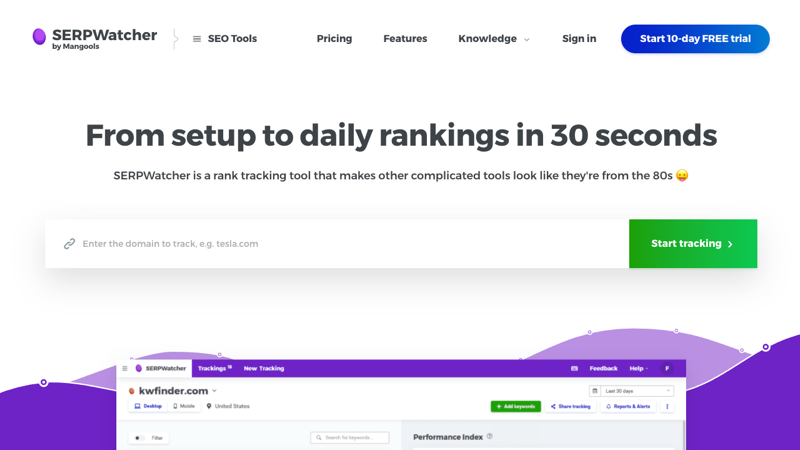
Overview: Developed by Mangools and trusted by major enterprises like Airbnb and Adidas, SERPWatcher centers around a proprietary "Performance Index" that measures organic traffic potential alongside standard position metrics. Paired with companion tools like SERPChecker, it offers a streamlined user experience without sacrificing core analytical depth.
Pricing: Bundled Mangools plans start at $29.90/month.
6. SE Ranking
Type: All-in-One SEO Platform
Best For: Small-to-medium businesses and digital agencies seeking comprehensive tools with precise location simulation.
Overview: SE Ranking captures accurate data by simulating real user behavior across specific search engines and precise geographic coordinates. Its position tracking module supports comprehensive competitor analysis, historical data viewing, and multi-device segmentation.
Pricing: Plans start at $52/month based on daily tracking for 500 keywords.
7. Nightwatch
Type: Standalone SERP Tracker
Best For: Freelancers, SMBs, and agencies looking for granular global location tracking.
Overview: Trusted by brands like Shopify, Scotiabank, and Coinbase, Nightwatch provides exceptionally accurate daily tracking across more than 107,000 global locations, supported by flexible data segmentation and visualization features.
Pricing: Paid plans start at $32/month for up to 250 keywords, backed by a 14-day free trial.
Official Statements & Industry Perspectives
Industry leaders continue to emphasize the transformative impact of advanced SERP tracking and reporting integrations.
Matthew Howells-Barby, Co-Founder of TrafficThinkTank, notes:
"It’s by far the best keyword ranking tracker in the market and has a ton of great reporting functions. If you want visibility on large volumes of keywords housed within a nice dashboard—this is for you."
Similarly, Ian Howells, Co-Founder of Traffic Think Tank, highlights the importance of modern data visualization:
"The thing that really got me using them heavily in the last month or two is their Looker Studio connector. Combining the tag feature, as well as the Share of Voice metric… has been a big help in making these reports immediately digestible."
Future Outlook
As we look deeper into 2025 and beyond, SERP tracking technology will continue to evolve alongside artificial intelligence and shifting consumer search habits. The rise of generative engine optimization (GEO) and AI-driven search results means that traditional ranking metrics must adapt to measure visibility inside conversational summaries and zero-click answers.
Marketers who adopt sophisticated tracking software capable of parsing these complex SERP features, mapping visibility to revenue, and automating gap analysis will maintain a distinct competitive advantage. Choosing the right tool depends entirely on organizational scale, budget, and specific reporting needs—whether selecting a dedicated powerhouse like AccuRanker or a comprehensive all-in-one platform like Semrush. Evaluating your keyword volume, localization requirements, and integration stack today will ensure your SEO strategy remains resilient and transparent for years to come.