

Executive Overview
To the casual observer scrolling through social media, a video showcasing a sleek new pair of sunglasses, a striking designer perfume, or the perfect cut of denim looks like little more than everyday lifestyle content. Yet, beneath these unassuming clips lies a multibillion-dollar e-commerce ecosystem that has fundamentally rewritten the rules of global retail. Digital creators are no longer just entertainers or tastemakers; they have quietly evolved into some of the most influential brokers in the modern consumer market.
This is the world of affiliate marketing—a referral-based digital economy that is deceptively simple in its mechanics, yet staggering in its financial scale. By embedding custom links into otherwise innocuous posts across platforms like ShopMy, LTK, TikTok Shop, and Amazon, content creators can capture a lucrative cut of every resulting sale. With commission rates typically ranging anywhere from five to thirty percent, top-tier operations are raking in upward of five figures a month simply by pointing followers toward the products they already use and love.
As the traditional revenue models for digital publishing and social media view counts experience volatility, affiliate marketing has emerged as the stabilizing bedrock of the creator economy. It transforms everyday product recommendations into reliable, compounding streams of passive income, proving that the modern influencer’s most valuable asset isn’t just their reach—it is the hard-earned trust of their audience.

Detailed Chronology: The Evolution of the Creator Economy
To understand how affiliate marketing became a dominant force in modern retail, it is necessary to trace the trajectory of how monetization has evolved across digital platforms.
Phase One: The Wild West of Brand Sponsorships (Pre-2018)
In the early days of lifestyle and fashion influencing, monetization was largely transactional and blunt. Brands would contract creators for flat-fee sponsored posts, paying a lump sum for a dedicated Instagram photo or YouTube video. While this provided upfront cash for creators, it was fraught with inefficiencies. Brands struggled to accurately measure return on investment (ROI), and audiences quickly grew cynical of heavy-handed advertisements that lacked authenticity.
Phase Two: The Rise of Curated Link Aggregators (2018–2021)
As social platforms matured, infrastructure caught up with consumer behavior. Dedicated third-party tools such as LTK (formerly LiketoKnow.it) and ShopMy emerged, giving creators a seamless way to monetize their wardrobes and home decor. Instead of just tagging a brand, creators could build centralized storefronts where followers could shop their exact looks. This period shifted the paradigm from "pay-per-post" to performance-based marketing, aligning the financial incentives of creators directly with actual consumer purchases.

Phase Three: Native Social Commerce Integration (2021–Present)
The landscape shifted dramatically with the rollout of native e-commerce tools embedded directly inside high-velocity short-form video apps. The launch of TikTok Shop, alongside robust affiliate suites on Amazon and Instagram, lowered the friction of buying to a single tap. Links were no longer confined to static bios or hard-to-find blog posts; they could be seamlessly integrated into viral video loops, shifting affiliate marketing from a secondary side-hustle into a primary wealth-generation engine for digital creators.
Supporting Context & Metrics: The Anatomy of a High-Yield Link
While the ecosystem is vast, the day-to-day reality for creators hinges on nuance, audience psychology, and strategic restraint. Several prominent voices in the digital space illustrate how different approaches yield vastly different financial outcomes.
Kristal Heredia: Building a Life-Changing Income Stream
For 30-year-old fashion and lifestyle creator Kristal Heredia, embracing affiliate marketing was a turning point in her professional life. "It has been life-changing," Heredia notes. "It makes up between 30 and 40 percent of my income. Once I realized the type of money I could make, I was all in."

Heredia emphasizes that conversions happen when followers can see utility in action. A prime example of this strategy was a post featuring a shapewear bodysuit from Feelingirl. By presenting a natural, before-and-under-dress demonstration, the post resonated deeply. "I don’t think people want to be sold to," Heredia observes. "They want to be a part of the story." That single strategic integration translated into a massive payout of $4,010.
Victoria Paris: The "Passive Linker" Maximizing Short-Form Power
Fluctuating ad-revenue payouts from platforms like TikTok, YouTube, and Facebook have historically made financial planning difficult for creators. Affiliate links offer a reliable antidote to this unpredictability. Victoria Paris, a 27-year-old lifestyle influencer who brands herself as a "passive linker," discovered this firsthand.
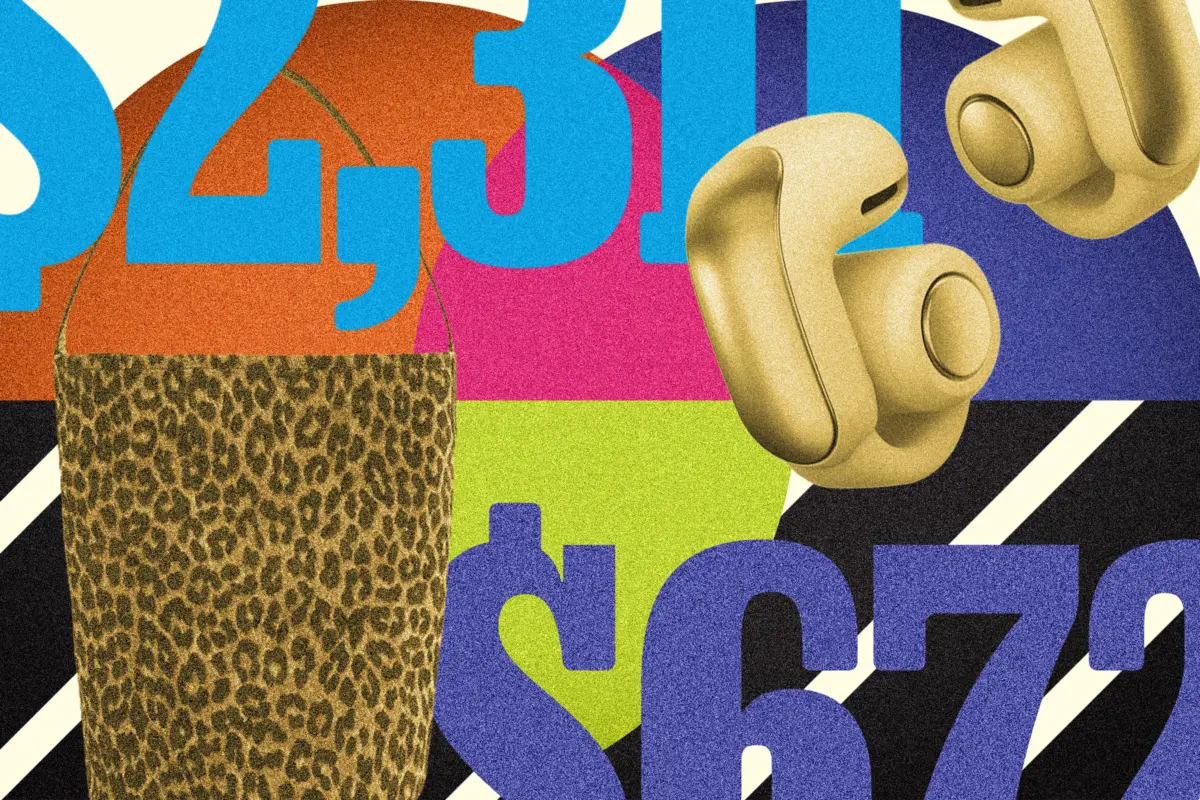
Despite only adopting affiliate links in the fall, Paris crossed $50,000 in year-to-date revenue by leaning into ephemeral content formats, noting that her bestselling products frequently originate from Instagram Stories that disappear after 24 hours. Paris learned the ropes from fellow creator Jaz Smith and quickly realized she was leaving substantial capital on the table for products she already championed organically, such as a pair of $299 Bose Ultra Open Earbuds—tech she "lives and dies" by, which netted her $672 in commissions. "It was so assaulting to me to hear how much money I had been missing out on," she admits.

Heather Hurst (@pigg.jpeg): The Power of High-Trust Scarcity
Not all creators subscribe to the volume-heavy approach. Heather Hurst, author of the fashion Substack PIGPEN and creator behind the handle @pigg.jpeg, takes a minimalist stance on affiliate links. Because her audience does not expect a constant deluge of shopping links, the few she does share carry immense weight and drive exceptional conversion rates.
"I like the things that I like, and then I ignore the rest," Hurst explains, a philosophy that cultivates "high trust" among her followers. This selective strategy paid off massively when she posted a TikTok review of a $198 J.Crew Berkeley Bucket Bag—a piece that gained traction due to its aesthetic similarity to a much pricier luxury alternative from The Row. "The video went viral in a subset of the internet that’s super into dupe culture," she recalls, resulting in a single-item profit of $2,311.
Jaz Smith (@justjazzzyidk): Consistency and Product Research
For Jaz Smith, affiliate marketing serves a dual purpose: it rewards creators for the exhaustive labor of product discovery. "We get so much stuff sent to us," Smith explains. "If we’re choosing to stand by a product, it speaks a lot to [the fact that] we’ve done the research."

Because Smith maintains a consistent posting cadence featuring genuine daily staples—such as her go-to $250 Dolce Vita Gyra Leather Boots—her audience knows her preferences are authentic. "Repeat purchases of mine end up being repeat purchases for people who are watching my videos," she says, a dynamic that drove a staggering $13,100 in commission revenue for those specific boots.
Official Insights: The Psychology of the Digital Broker
While the immediate draw of affiliate marketing is financial, top-tier creators argue that the most valuable currency generated by these links is behavioral insight.
When an audience rushes to purchase a specific item recommended by a creator, it serves as tangible evidence of a deeper psychological bond. A viral product doesn’t just validate temporary seasonal trends—such as the sudden ubiquity of raffia textures or the return of bold stripes. Rather, it acts as concrete proof of a trusted relationship built over years of content creation.

Consumers are ultimately placing their hard-earned money behind a simple, powerful reassurance: Trust me. In an era oversaturated with corporate advertising and programmatic pop-ups, the affiliate link succeeds precisely because it borrows human authority.
Future Outlook: Where Retail and the Creator Economy Collide
As we look toward the future of e-commerce, the boundaries between content creation, recommendation, and point-of-sale transactions will continue to dissolve entirely. Traditional retail brands are rapidly reallocating marketing budgets away from traditional media channels and toward creator-led affiliate partnerships, recognizing that micro-influencers and macro-celebrities alike command distribution networks that rival legacy department stores.
For creators, the mandate moving forward will be balancing commercial monetization with audience trust. As platforms roll out increasingly frictionless shopping tools, creators who prioritize genuine product curation and transparent storytelling will continue to thrive as retail’s new power brokers. Those who over-commercialize risk eroding the very foundation of their influence. Ultimately, affiliate marketing has proven to be more than a passing digital trend—it is the bedrock upon which the modern independent economy is being built.