

Executive Overview
In the volatile ecosystem of modern internet culture, virality is rarely engineered; more often, it is struck like lightning in a bottle. Yet, very few digital phenomena capture the collective, absurd imagination quite like "Chanty Beluga."
Originating as an insider joke sparked in the dead of night on a Brooklyn film set, Chanty Beluga has rapidly metastasized across social media platforms into an omnipresent, decentralized internet meme. From confessional TikToks and speculative Instagram fan pages to parodic covers of mid-2000s pop-rock anthems, the elusive Chanty has become a blank canvas for the collective psyche of Gen Z and millennial internet users.
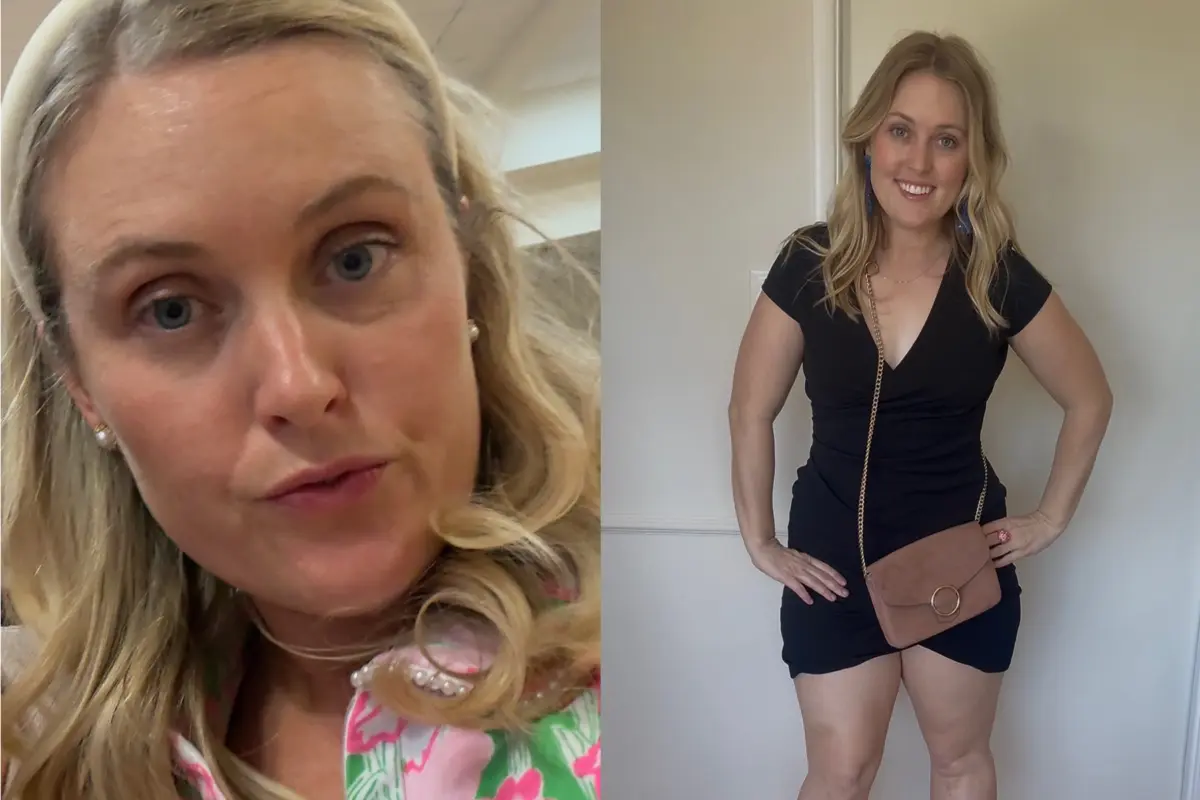
Behind this sprawling, chaotic digital folklore is 31-year-old comedian, writer, and actress Courtney O’Donnell. In her first-ever in-depth interview regarding the character, O’Donnell pulls back the curtain on how a meaningless utterance at 4:00 a.m. evolved into a cultural touchstone. Far from a calculated PR stunt, Chanty Beluga represents a fascinating sociological case study in how modern audiences yearn for unstructured, collaborative storytelling in an era dominated by over-produced, hyper-monetized content.
This piece explores the anatomy of the Chanty Beluga phenomenon, chronicling its accidental inception, examining the broader comedic career of its creator, and analyzing the implications of crowdsourced internet lore in the mid-2020s.
Detailed Chronology: From a 4:00 AM Improv Session to Global Virality
The Midnight Genesis in Brooklyn
The story of Chanty Beluga begins not in a corporate brainstorming room, but in the grueling, sleep-deprived crucible of independent filmmaking. At approximately 4:00 a.m. on the final leg of a 10-day improvised shoot for the upcoming comedy film Stephanie Bride to Be, the production was running on fumes.
The movie—executive produced by John Wilson and featuring an ensemble cast including Michael Imperioli, Amy Sedaris, Saturday Night Live breakout Veronika Slowikowska, and O’Donnell herself—was wrapping up its rigorous schedule in Brooklyn. To combat sheer exhaustion, a tight-knit cluster of actors and writers lingered on set, throwing out absurd riffs just to keep each other awake.
"We were just totally dicking around, being silly," O’Donnell recalls. In the haze of fatigue, she dropped her first character hook: "Hi, my name’s Chanty."
To the room of sleep-deprived creatives, it struck an immediate, inexplicable funny bone. Moments later, O’Donnell doubled down, expanding the throwaway name into its majestic, surreal final form: "Actually, my name is Chanty Beluga."
"We said the full name, and it seriously went viral in the room," O’Donnell says. "We just could not stop saying Chanty Beluga."
The First Self-Tapes and the Spark of Online Adoption
Upon returning home, O’Donnell decided to capture the lingering energy of the joke. She recorded a quick, lo-fi self-tape of Chanty formally introducing herself to the world—a mundane, deadpan delivery of a profoundly ridiculous premise. She uploaded the footage to Instagram, anticipating that perhaps ten friends who shared her comedic sensibilities would appreciate the nod.
Instead, the internet did what the internet does best: it ran away with it.
"People were really connecting to it and thought it was so funny," she notes. Encouraged by the initial reception, she established a dedicated Instagram account under the handle and began seeding out sparse, vignettes of Chanty navigating everyday life.
Within days, the joke evolved past O’Donnell’s direct control. The first independent fan accounts began cropping up, tracking nonexistent updates about the character. When friends confronted O’Donnell, accusing her of manufacturing the fan pages herself to artificially inflate her reach, she vehemently denied it. "I swear these are random people on the internet," she told them. "I’m not a psychopath!"
Supporting Context & Metrics: The Anatomy of a Modern Meme
To understand why Chanty Beluga resonated so deeply across social media, one must examine the specific cultural landscape of 2026 internet humor. O’Donnell’s creation thrives precisely because it defies traditional algorithmic rules.
The Rejection of Relatability Culture
For years, social media content creation has been dictated by the gospel of "relatability"—creators bending over backward to hold up a hyper-curated mirror to everyday human experiences, anxieties, and consumer habits.
Chanty Beluga operates on the exact opposite frequency. She is aggressively, delightfully unrelatable.
"Something about the intonation of the words feels like crack to say," O’Donnell suggests. Furthermore, she notes that Chanty serves as an antidote to algorithmic fatigue: "I think it’s also a response to social media content today, [where] everyone feels like they have to create this content that holds up a mirror to everyone else’s experience. And with Chanty, no one else is named Chanty."
The "Paper Doll" Phenomenon
Unlike heavily scripted fictional characters with rigid backstories, Chanty is designed as a blank slate. She is a digital cipher.
"She’s a Barbie doll. She’s a paper doll. You can put her in any situation. She can do anything," O’Donnell explains. While the comedian initially toyed with the instinct to construct an elaborate, ironclad backstory for the character, she quickly realized that the collective imagination of the internet was far more powerful. By leaving narrative gaps, she invited the public to co-write the lore.
The Expansion of Chanty Lore
The internet accepted that invitation with startling speed and creativity. Within weeks, a sprawling, decentralized mythology began to populate TikTok, X (formerly Twitter), and Instagram:
- The Cinematic Universe Cross-Overs: Users began drawing comparisons between Chanty Beluga and Maddie Ralph from John Early’s critically acclaimed directorial debut Maddie’s Secret, running elaborate conspiracy theories that the two have never been seen in the same room together.
- The Tabloid Scandals: Fan-generated narratives emerged claiming Chanty owes various individuals thousands of dollars, has been involved in hit-and-run traffic accidents, or causes dramatic scenes in lines at local smoothie chains.
- Immersive Parody Content: Videos surfaced of creators walking up to hostess stands asking for tables under the name Chanty Beluga, calling Ubers to verify if they are "for Chanty Beluga," and recording delicate acoustic covers of the Plain White T’s classic "Hey There Delilah" with the name swapped out.
Official Statements & Creator Perspectives: Beyond Chanty
While Chanty Beluga has temporarily hijacked public consciousness, she is merely the latest manifestation of a deeply considered comedic career that spans stand-up, fake media satire, and indie filmmaking.
Satirizing the Millennial "Girl-Boss" and Podcast Industrial Complex
O’Donnell’s broader body of work heavily interrogates contemporary social media tropes. Take, for instance, her fake podcast Yup, She Went There, co-hosted with fellow comedian Chelsea Morgan. The project explicitly lampoons the endless churn of the digital "podcast-clip-farm world"—an ecosystem characterized by influencers hocking dubious wellness trends, from Ozempic-infused water to placenta chips, all in pursuit of viral shock value.
Her upcoming one-woman theatrical show, Planet Courtney, slated for a run at New York’s prestigious La Mama theater, pushes these themes into hyper-drive. In the show, O’Donnell plays an exaggerated, highly unhinged version of herself tasked with saving her planet from financial ruin and private equity takeovers. Rotating through various soul-crushing service industry jobs—therapist, waitress, and flight attendant—she drags unsuspecting audience members onto the stage to act as her clients.
"It’s a fun, crazy, zany, out-there world, [with] a very millennial girl-boss culture backdrop," she says.
From Stand-Up Roots to Cinematic Ambitions
O’Donnell’s journey into character-driven comedy evolved organically after she relocated from Brooklyn, where she began performing stand-up in 2019, to Los Angeles three years ago.
"There was just an energy in L.A. of people making things that really excited me," she reflects. "It really opened up my aperture to being like, ‘I don’t want to just be a stand-up. I want to write, I want to act, I want to do it all.’"
That multi-hyphenate ambition yielded Going Pop, a short film released in 2024 following a disgraced pop star attempting a cynical comeback. Written during a cultural moment when legacy pop acts were desperately chasing the queer-centric success of artists like Charli XCX and Chappell Roan, the film allowed O’Donnell to explore the mechanics of manufactured authenticity.
"To play a pop star was incredible. I wrote a real song for it," she notes, adding that the short is currently in active development for adaptation into a longer-form comedy series. Her musical inclinations run deep; lingering on her personal digital archives are early YouTube videos of her covering tracks like Rihanna’s "What’s My Name?"—a paradoxically sensual delivery executed when she was 14 years old and "never kissed a boy."
Navigating the Trolls and the Satirical Tightrope
Unsurprisingly, O’Donnell’s deadpan, highly satirical approach frequently catches literal-minded internet users off guard, generating genuine outrage from those who fail to see the punchline.
"I have one video where it’s like, ‘I just invested $15,000 in Palantir, and I’m going to get mochi pancakes with my sister-in-law. Life is good.’ And people are, like, sending me death threats," she laughs. "But I’m just satirizing that there are people out there that do say and do those crazy things in 2026."
Future Outlook: What’s Next for Courtney O’Donnell and Chanty?
As the dust settles on the initial wave of Chanty Beluga hysteria, O’Donnell remains grounded yet relentlessly ambitious about the future.
Audiences will soon get their first official cinematic taste of the environment that birthed the meme when Stephanie Bride to Be premieres next year. While viewers shouldn’t expect to see Chanty physically materialize in the script, her spectral presence looms large over the final frames of the production.
"You won’t see Chanty in it, but you will know she was born somewhere toward the end of the movie," O’Donnell promises.
As for Chanty herself? O’Donnell has no intention of putting an expiration date on the character, happily surrendering the reigns to the internet’s collective imagination. Whether Chanty remains an urban legend of the digital age or eventually pivots into bizarre corporate territory remains to be seen.
As O’Donnell jokes with characteristic audacity: "We’ll see where Chanty takes us on this journey. I’m not going to stop until I get a brand deal with Raytheon."