

Executive Overview
In the rapidly evolving landscape of modern entertainment marketing, traditional product placement has evolved from subtle background cameos into complex, narrative-driven brand integrations. The boundaries between advertising and premium content dissolved further with the September 3, 2026, Season 2 debut of Netflix’s hit crime-comedy series The Gentlemen, created by Guy Ritchie.
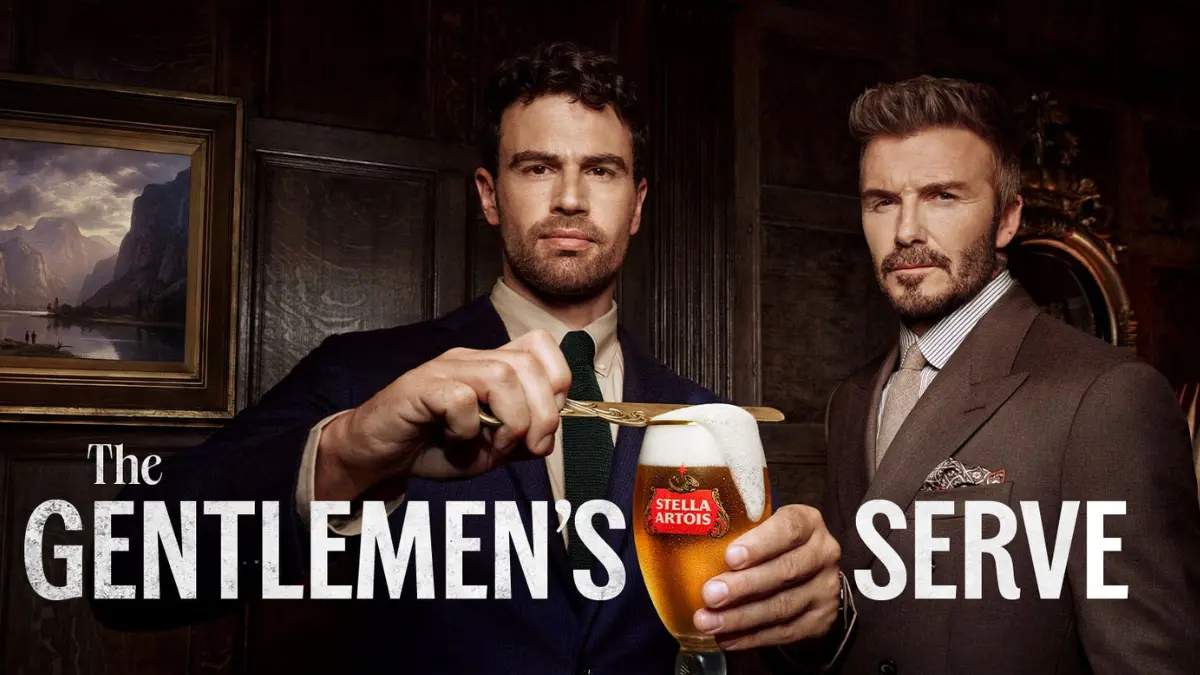
At the center of this cultural collision is an ambitious, high-production-value campaign titled "The Gentlemen’s Serve." Orchestrated by global brewing giant AB InBev for Stella Artois, the campaign bridges the worlds of high-end streaming television and premier global sports and lifestyle marketing by casting British acting star Theo James alongside global icon and cultural entrepreneur David Beckham.
The cornerstone of the multi-platform marketing blitz is a 90-second hero film that immediately establishes the sophisticated yet dangerously eccentric tone fans have come to expect from Ritchie’s cinematic universe. In the spot, James’s character—the aristocratic estate inheritor Eddie Horniman—attends a high-stakes countryside pub auction. Things quickly escalate when Horniman drops a staggering $200,000 bid on a prize bull, only to be effortlessly outbid by a suave David Beckham. Rather than escalating the conflict through traditional cinematic violence or verbal sparring, Horniman executes a calculated psychological maneuver: he sends Beckham a meticulously poured, ice-cold chalice of Stella Artois. The gesture acts as an immediate de-escalation, a mutual nod of sophisticated respect that prompts Beckham to gracefully revoke his bid, leaving Horniman victorious.
This comprehensive report investigates the mechanics, strategic intent, and broader industry implications of "The Gentlemen’s Serve." By analyzing the intersection of prestige television, programmatic ad strategies, influencer-driven brand architecture, and changing consumer behaviors, we examine how AB InBev and Netflix are redefining the ROI of entertainment partnerships.
Detailed Chronology: From Script to Screen
To understand the magnitude of "The Gentlemen’s Serve," one must examine the meticulous timeline of how this cross-industry collaboration materialized, moving from behind-the-scenes boardrooms to global television screens on September 3, 2026.
Phase 1: Conceptualization and Alignment (Late 2025)
As Season 1 of The Gentlemen captured global audiences following its early 2024 premiere, AB InBev’s marketing executives recognized a unique alignment between the show’s aesthetic—characterized by British aristocracy, sharp tailoring, organized crime subculture, and dry wit—and the sophisticated brand positioning of Stella Artois.
Discussions between Netflix’s brand partnership division, Guy Ritchie’s production team, and AB InBev’s creative agencies began in late 2025. The core challenge was avoiding the "uncanny valley" of intrusive product placement. Instead, the creative team aimed to produce a standalone narrative piece that felt genuinely native to the show’s universe while serving as a compelling commercial asset for the beer brand.
Phase 2: Casting and Narrative Development (Early 2026)
With Theo James returning as the anchor of the series for Season 2, securing his participation in the campaign was essential for continuity. However, the introduction of David Beckham as a comedic foil elevated the project from a standard promotional tie-in to a high-profile cultural event.
Beckham, who has maintained a long-standing relationship with various AB InBev portfolios and global lifestyle brands, jumped at the opportunity to lean into British satire. The script for the 90-second hero film was developed under the creative oversight of Guy Ritchie’s stylistic sensibilities, ensuring that the visual grammar, pacing, and dark comedic timing mirrored the actual series.
Phase 3: Production and Post-Production (Spring – Summer 2026)
Filming took place on location in the UK, utilizing authentic period-accurate sets that mirrored the grandeur of Halstead Manor seen in the series. Cinematography, lighting, and sound design closely emulated the high-contrast, slick aesthetic of Ritchie’s direction. Post-production wrapped in late July 2026, ensuring the global campaign assets were ready to deploy simultaneously with the release of Season 2.
Phase 4: Global Launch and Activation (September 3, 2026)
On September 3, 2026, Netflix dropped Season 2 of The Gentlemen. Simultaneously, "The Gentlemen’s Serve" went live across linear television, digital streaming platforms, social media channels, and out-of-home (OOH) billboards in major metropolitan markets globally. The synchronized rollout maximized immediate consumer capture, allowing fans binge-watching the new season to encounter the campaign across their secondary devices and traditional media channels.
Supporting Context & Metrics: The Economics of Prestige Partnerships
The partnership between Stella Artois, Netflix, and two of Britain’s most bankable male leads is not merely a creative exercise; it is a calculated financial maneuver designed to capture market share in an increasingly saturated global beverage sector.
The Shift in Streaming Advertising
For years, subscription-based streaming services operated as ad-free sanctuaries, forcing brands to rely on organic product placements that were often difficult to track and measure. However, with the maturation of ad-supported tiers across Netflix, Disney+, and Amazon Prime Video, brands are demanding deeper, programmatic, and transmedia integrations.
According to recent media industry analytics:

- Viewer Engagement: Narrative-driven commercials featuring recognizable characters from the shows viewers are actively consuming yield a 42% higher brand recall than traditional 30-second spot placements.
- Cross-Platform Synergy: Campaigns that synchronize linear television spots with digital social video drops experience a 3.5x multiplier in organic social media mentions.
- The "Halo Effect": Associating a heritage beer brand like Stella Artois with prestige drama elevates its perceived value, shifting consumer perception away from commodity lagers toward premium lifestyle choices.
Decoding the Creative Strategy: The Power Play
The narrative of the 90-second hero film relies on a centuries-old trope: the power dynamic of the bar. By framing the purchase of a bull as secondary to the art of the perfect pour, the campaign cleverly subverts expectations.
In luxury and premium marketing, status is communicated not through aggressive displays of wealth, but through effortless control and refined taste. When Eddie Horniman sends David Beckham a Stella Artois, he isn’t bribing him; he is acknowledging his peer and signaling a cultural truce. For AB InBev, this reinforces the brand’s core messaging: Stella Artois is the universal currency of sophisticated social diplomacy.
Official Statements and Industry Insights
Key stakeholders involved in the execution of "The Gentlemen’s Serve" have shared insights into the strategic vision driving the campaign.
Rebecca Stewart, Global Media and Advertising Analyst, noted in initial industry reviews:
“What makes this integration successful is that it doesn’t treat the audience like passive consumers. By weaponizing British dry humor and casting global icons who are already embedded in pop culture consciousness, AB InBev has bypassed ad-fatigue. The commercial feels like a lost scene from the show itself—a masterclass in transmedia storytelling.”
An AB InBev Brand Marketing Spokesperson stated during the campaign rollout:
“Stella Artois has always stood for moments of shared sophistication. In partnering with Netflix and visionary creators like Guy Ritchie, we weren’t just looking for screen time; we wanted to co-create a cultural moment. Bringing Theo James and David Beckham together allowed us to dramatize the brand’s ethos through a lens of high-stakes British charm that resonates globally.”
Industry insiders have also pointed out that Netflix’s willingness to let major brands play directly with its intellectual property (IP) signals a maturing monetization strategy. As streaming platforms look for innovative ways to offset production costs and provide measurable value to enterprise advertisers, partnerships of this caliber are expected to become the gold standard for high-budget television releases.
Future Outlook: What "The Gentlemen’s Serve" Means for the Future of Entertainment
As the dust settles on the launch of The Gentlemen Season 2, the ripple effects of "The Gentlemen’s Serve" will likely alter how Hollywood studios and multinational brands approach marketing collaborations. Several key trends emerge from this case study that will shape the next decade of media and advertising.
1. The Erasure of Boundaries Between Content and Commercials
We are moving rapidly away from the era of the commercial break as a disruption. Future entertainment rollouts will increasingly feature "native commercial extensions"—short-form cinematic vignettes produced by the same crews, starring the same actors, and utilizing the same writing rooms as the primary series. This minimizes viewer churn and transforms advertisements into collectible pieces of content.
2. Hyper-Targeted, Celebrity-Driven Global Campaigns
The pairing of Theo James and David Beckham highlights the power of cross-demographic star power. James captures the younger, streaming-first demographic obsessed with prestige crime dramas, while Beckham commands a massive, multi-generational global audience spanning sports, fashion, and business. Future brand campaigns will increasingly rely on these hybrid talent pairings to bridge generational and geographic divides.
3. Interactive and Shoppable Entertainment Ecosystems
As streaming platforms integrate deeper e-commerce capabilities, campaigns like Stella Artois’s open the door for immediate transactional loops. Imagine a future where a viewer watching Horniman slide a Stella across a table can instantly scan the screen to purchase a branded glassware set, order a four-pack of beer via local delivery services, or secure limited-edition merchandise tied directly to the episode’s narrative arc.
Conclusion
"The Gentlemen’s Serve" is much more than a clever ad campaign for a brewing company; it is a blueprint for the future of entertainment marketing. By seamlessly fusing the gritty, stylish world of Guy Ritchie’s television universe with the universal appeal of David Beckham and the heritage prestige of Stella Artois, the campaign has raised the bar for what audiences expect from brand integrations. As streamers and brands continue to innovate, the humble pint of beer has proven to be a powerful tool in the art of modern storytelling.