

Executive Overview
In the modern media landscape, the intersection of sports entertainment, digital engagement, and corporate partnerships is constantly evolving to capture increasingly fragmented audiences. Few cultural phenomena illustrate this shift quite as vividly as fantasy football. What began decades ago as localized, newspaper-stat-driven pastimes among office colleagues has transformed into a multi-billion-dollar digital ecosystem, driving massive viewership, app engagement, and high-stakes brand sponsorships.
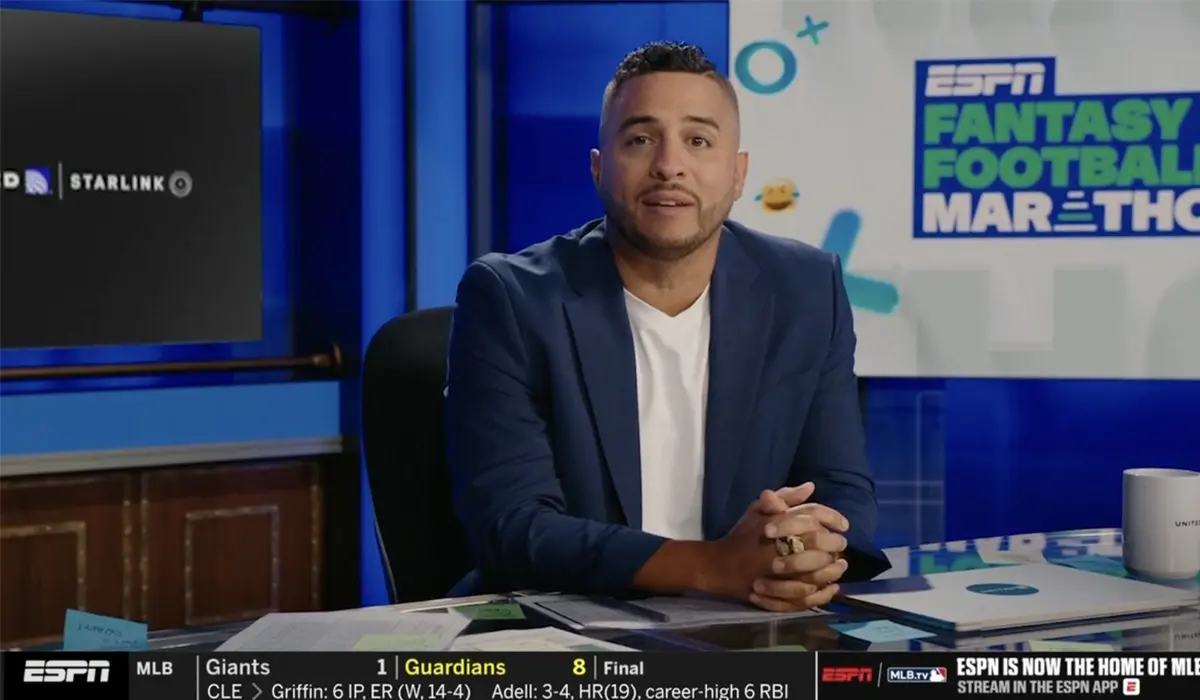
The latest milestone in this ongoing evolution arrived during the ESPN Fantasy Football Marathon, where ESPN and United Airlines executed an unprecedented activation: a live fantasy draft conducted 35,000 feet in the air aboard a commercial aircraft. Leveraging cutting-edge in-flight connectivity provided by SpaceX’s Starlink Wi-Fi, ESPN fantasy expert and host Tyler Fulghum successfully executed a marquee fantasy draft while cruising at high altitudes, broadcasting the entire spectacle back to millions of viewers on Earth.
This high-flying stunt is more than just a clever marketing gimmick; it represents a convergence of aviation technology, broadcast innovation, and sports media dominance. For ESPN, the activation underscores a remarkable period of sustained growth, coming off an NFL season that saw participation in its fantasy leagues swell to 14 million users—marking the third consecutive year of growth exceeding one million players. For United Airlines, the partnership serves as a high-visibility showcase for the reliability and speed of its next-generation inflight internet service, proving that the modern connected traveler—and sports fanatic—never has to miss a beat, even when crossing time zones at Mach numbers.
This report provides a comprehensive examination of this groundbreaking event, analyzing the metrics behind ESPN’s fantasy sports empire, the technological feats that made an airborne draft possible, the strategic imperatives driving both brands, and the broader implications for the future of sports media and commercial aviation.
Detailed Chronology: Anatomy of a 35,000-Foot Draft
The execution of a live, broadcast-quality television segment from a moving commercial aircraft requires months of meticulous logistical planning, technological testing, and real-time coordination between broadcast producers, aviation engineers, and satellite internet providers.
Phase 1: Conceptualization and Feasibility
The genesis of the airborne draft began months prior to the kickoff of the NFL season. As ESPN prepared for its annual Fantasy Football Marathon—a cornerstone programming event designed to kick off the fantasy season and drive app engagement—producers sought a concept that would break through the digital noise. Simultaneously, United Airlines was aggressively rolling out its implementation of high-speed, low-latency Starlink Wi-Fi across its fleet, seeking high-impact environments to demonstrate the service’s capabilities to consumers and enterprise clients alike.
The central challenge was formidable: broadcasting live video, maintaining stable audio communication, and interacting with real-time draft software while traveling at roughly 500 miles per hour, miles above the earth, presented a gauntlet of potential points of failure. Packet loss, latency spikes, and bandwidth limitations have historically plagued in-flight internet connections, making real-time interactive gaming and live broadcasting from planes an industry white whale.
Phase 2: Technical Integration and Testing
Weeks before the live broadcast, technical teams from ESPN and United conducted rigorous test flights. Engineers integrated portable broadcast encoding hardware with United’s onboard Starlink network architecture.
Unlike traditional air-to-ground (ATG) Wi-Fi systems, which rely on cellular towers pointing upward and often suffer from congestion and slow speeds, Starlink utilizes a sprawling constellation of Low Earth Orbit (LEO) satellites. This architecture provides fiber-optic-like speeds and low latency, essential parameters for maintaining a seamless two-way video feed and executing time-sensitive fantasy draft picks without catastrophic lag.
During dry runs, technicians simulated various flight paths, altitude shifts, and network loads to ensure that Tyler Fulghum could communicate with the main studio in Bristol, Connecticut, access the ESPN Fantasy app, and converse with fellow league members without interruption.
Phase 3: The Live Execution
On the day of the broadcast, everything converged during the ESPN Fantasy Football Marathon. As United flight [Flight Identifier] cruised at a steady 35,000 feet, the cabin was transformed into an impromptu remote television studio.
Host Tyler Fulghum sat comfortably in his seat, surrounded by unsuspecting passengers and fellow fantasy managers, equipped with a professional microphone setup and a mobile broadcasting rig connected directly to the aircraft’s Starlink router. When it was time for his selection on the draft board, Fulghum logged into the ESPN Fantasy application, analyzed the remaining board, debated his options with the on-ground studio anchors, and locked in his pick in real time.
The transition from the aircraft cabin to the television screen was seamless. Viewers at home witnessed zero discernible latency, highlighting a technical triumph that effectively erased the traditional boundaries separating airborne travelers from terrestrial digital connectivity.
Supporting Context & Metrics: The Expanding Universe of ESPN Fantasy
To fully understand the commercial and cultural significance of the United Airlines partnership, one must examine the staggering scale of ESPN’s fantasy sports operation. Fantasy football is no longer a niche hobby; it is a primary engine of fan retention, linear television viewership, and digital ad revenue.
The Numbers Behind the Growth
During the most recent NFL season, ESPN recorded an astounding 14 million participants in its fantasy football leagues. This milestone was not an isolated surge, but rather the continuation of a powerful upward trajectory. Crucially, it marked the third consecutive year that ESPN Fantasy Football grew by over one million players.
Several key factors drive this sustained expansion:
- Mobile Optimization: ESPN’s continuous investment in its user interface, push-notification systems, and second-screen app experiences has lowered the barrier to entry for casual fans while offering deep data analytics for hardcore players.
- Content Integration: By weaving fantasy analysis directly into its high-profile studio programming—such as Fantasy Focus, SportsCenter, and the dedicated Fantasy Football Marathon—ESPN creates a continuous feedback loop where viewers are constantly incentivized to build, manage, and check their teams on the platform.
- Social and Workplace Communities: Fantasy leagues act as powerful social glue, cementing weekly rituals among friends, families, and corporate colleagues, which organically drives user acquisition year after year.
The United Airlines Value Proposition
For United Airlines, aligning with an entertainment behemoth like ESPN provides immense brand lift. As airlines compete fiercely for business and leisure travelers, in-flight amenities have shifted from basic comforts to essential utilities. High-speed, complimentary Wi-Fi is rapidly becoming the deciding factor for frequent flyers choosing between competing carriers.
By demonstrating that a user can draft a fantasy football team—an activity requiring real-time data processing, fast response times, and high reliability—at 35,000 feet, United effectively neutralized consumer skepticism regarding the usability of in-flight internet. The message to the traveling public was unambiguous: life, work, and play do not have to pause simply because you step onto an airplane.
Official Statements and Industry Perspectives
Executives from both organizations recognized the milestone as a testament to modern technological capabilities and creative marketing strategy.
While specific corporate executives declined to comment off-the-record beyond official press releases, the strategic positioning articulated by both brands sheds light on the philosophy guiding these major activations.
"It’s safe to say that fantasy football is reaching new heights for ESPN and United Airlines."
— Joint promotional messaging surrounding the event.
Media analysts have pointed out that this activation highlights a broader trend: traditional media companies and non-endemic corporate brands are finding increasingly sophisticated ways to blend their services into immersive, real-world experiences.
"The days of static 30-second television commercials are giving way to experiential, live integrations," notes media strategist Marcus Vance. "When ESPN puts an analyst on a plane and streams a draft via satellite, they aren’t just telling people their app is good—they are proving its utility in the most extreme, highly visible way possible. It transforms passive viewers into active believers."
Furthermore, aviation tech experts emphasize that United’s rollout of Starlink is fundamentally altering passenger expectations. "We are moving away from an era where people board a flight and mentally prepare to disconnect," says aerospace analyst Dr. Elena Rostova. "Partnerships like this normalize the idea that the sky is simply an extension of our connected digital living rooms."
Future Outlook: The Next Frontier of Sports and Travel Integration
As the dust settles on the ESPN Fantasy Football Marathon and the NFL season progresses, industry watchers are already looking ahead to see how this partnership—and the broader trend it represents—will evolve in the coming years.
1. The Expansion of In-Flight Broadcasting
The success of the 35,000-foot draft opens the door for more complex remote broadcasting setups. As Low Earth Orbit satellite constellations become denser and more robust, the technical barriers to transmitting ultra-high-definition video from moving vehicles will continue to shrink. We may soon see entire pre-game shows broadcast live from commercial flights, private charters, or moving trains, bringing an unprecedented level of dynamism to sports media production.
2. Deeper Integration of Gaming and Travel
For airlines, the integration of gaming, streaming, and interactive entertainment will likely become a core pillar of the passenger experience. Imagine a future where passengers can not only manage their fantasy teams in flight but participate in live, in-flight trivia tournaments against passengers on other planes, or place legal sports wagers using high-speed onboard networks.
3. Sustaining the Fantasy Boom
For ESPN, the challenge moving forward will be maintaining its staggering growth trajectory in an increasingly competitive market that includes rivals like Yahoo, Sleeper, and DraftKings. Stunts like the United Airlines draft help maintain top-of-mind awareness, but long-term retention will rely on ongoing product innovation, deeper AI-driven analytics tools for users, and creative programming that keeps fans engaged long after the draft concludes.
Conclusion
The collaboration between ESPN and United Airlines during the Fantasy Football Marathon was much more than a clever promotional stunt. It was a vivid demonstration of the power of modern connectivity, proving that digital ecosystems, high-speed satellite networks, and sports media can converge seamlessly across any terrain—even the thin air high above the clouds. As both companies continue to push the boundaries of what is possible in their respective fields, one thing remains certain: the game never stops, no matter where you are.