


By Tracey Compton, Indianapolis Public Editor, The Poynter Institute
Executive Overview
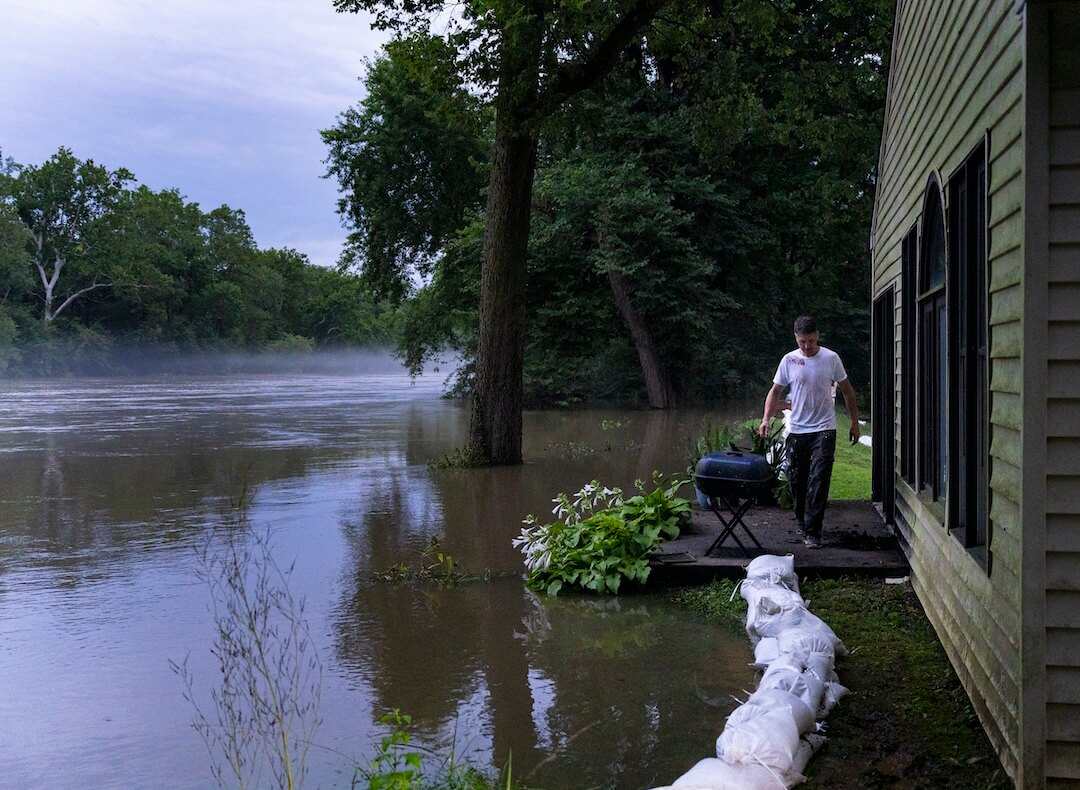
In the wake of devastating storms, record-breaking river surges, and terrifying tornadoes that recently claimed lives and tore through Indiana communities, residents have relied heavily on local television meteorologists for survival. When the White River in Hamilton County breached historical boundaries—surging 24 feet above normal levels and plunging neighborhoods into chaotic, midnight evacuations—local weathercasters provided the immediate, life-saving data Hoosiers needed to find high ground.
Yet, a glaring disconnect persists in modern broadcast journalism. While severe weather coverage dominates local news ratings, local meteorologists routinely omit any substantive discussion of climate change from their broadcasts. When extreme weather events are treated merely as isolated anomalies rather than systemic, shifting patterns, audiences are deprived of the full story.
This investigative column—part of the Indianapolis Public Editor project, a pilot program designed to test whether independent media analysis can elevate audience trust and media literacy—examines why local television meteorologists overwhelmingly steer clear of climate change. Through interviews with national meteorological leadership, global climate journalism experts, and local beat reporters, this report explores the logistics, political pressures, and audience anxieties that keep climate science out of the daily forecast—and highlights where news consumers can actually find rigorous, localized environmental reporting.
Detailed Chronology: The Growing Gap Between Extreme Weather and Climate Reality
The imperative for comprehensive climate reporting in Indianapolis has never been more urgent. Over recent years, Indiana residents have watched familiar seasonal rhythms break down. The state has experienced more frequent heavy precipitation events, intensifying heat domes, and an apparent expansion of Tornado Alley, which has brought destructive straight-line winds and twisters to regions unaccustomed to such frequent fury.
Despite these visible transformations, a stark divide exists between how print/digital newsrooms handle environmental shifts and how television broadcast meteorologists deliver daily forecasts.
When local news consumers ask local editors and public watchdogs about the presence of environmental issues in everyday coverage, the answers vary wildly depending on the medium. While print and public radio outlets like Mirror Indy, WFYI, and the IndyStar routinely tie extreme weather events to long-term climate data—often drawing from the comprehensive Indiana Climate Change Impacts Assessment—local television weather segments remain stubbornly bound to short-term horizons.
When approached for interviews regarding this editorial oversight, leaders across several Indianapolis television stations universally declined to comment. This institutional reluctance prompted a deeper inquiry into the professional networks, associations, and advocacy groups that shape how weather professionals view their roles on camera.
Supporting Context & Metrics: Logistics, Politics, and the Psychology of the Forecast
To understand why local TV meteorologists rarely utter the words "climate change," one must examine the operational constraints of modern broadcasting and the complex psychology of the viewing audience.
The Tyranny of Time and the Daily Forecast
Alan Sealls, president of the American Meteorological Society and a veteran meteorologist of nearly 40 years, points out that the foundational mandate of a television weathercaster is immediate utility: What is the weather going to do today, tomorrow, and perhaps next week?
"Meteorologists focus on what the weather is going to do today and tomorrow and maybe next week," Sealls explains. Many practitioners do not view the underlying drivers of long-term climate change as crucial, actionable intelligence when trying to warn a viewer about an approaching afternoon thunderstorm. Furthermore, logistical hurdles loom large. Unpacking decades of atmospheric data, greenhouse gas concentrations, and localized warming trends is nearly impossible within the rigid confines of a two- or three-minute broadcast segment.
Political Pressures and Regulatory Chilling Effects
While logistical constraints account for much of the omission, external pressures also play a role. Sealls notes that station ownership and corporate political perspectives can dictate broadcasting boundaries. In an era where broadcast licenses can become flashpoints over perceived political bias, corporate hesitation is a tangible reality.
Additionally, shifting political winds and federal rhetoric that openly dismisses or minimizes climate change create a chilling effect across newsrooms. Some meteorologists fear that even mentioning the phrase "climate change" will invite immediate accusations of partisanship from vocal political factions or corporate leadership.
The Myth of the Hostile Audience
Elena González, a journalist and engagement manager for Covering Climate Now—a global journalism training initiative founded by the Columbia Journalism Review, The Nation, The Guardian, and WNYC—argues that fear of audience alienation is often exaggerated.
Over the past two years, Covering Climate Now has trained approximately 400 journalists across the U.S. and Canada, helping newsrooms bridge the gap between abstract global trends and backyard realities. González emphasizes that ignoring the connective tissue between relentless heat waves and a warming planet leaves audiences ill-informed.
"If you have four heat waves in a row, and you are not telling [viewers] that temperatures are intimately linked to climate change—it’s the most clear example—you are not telling your audience the whole story," González says.
Many meteorologists avoid the topic because they dread viewer backlash, fearing a mass exodus of disgruntled viewers. However, research suggests their fears are out of proportion with reality. According to data from the Yale Climate Opinion Maps, only 15% of the American public outright denies that climate change is happening. While climate skeptics can be exceptionally noisy and aggressive in their correspondence with newsrooms, they represent a small minority of total viewers.
Official Statements & Expert Perspectives
To chart a path toward better local reporting, media experts advocate for moving past outdated tropes—such as using imagery of melting icebergs and stranded polar bears—in favor of hyper-localized, solutions-oriented journalism.
The Three Pillars of Effective Climate Reporting
According to Covering Climate Now, quality climate coverage rests on three foundational pillars:
- Humanizing the Story: Focusing on real people whose daily lives, health, and livelihoods are disrupted.
- Localizing Relevance: Grounding broader environmental shifts in familiar geographic and economic contexts.
- Pointing Toward Solutions: Highlighting community preparedness, infrastructure investments, and actionable mitigation strategies.
Alan Sealls underscores that effective climate reporting must intersect with everyday life. "It has to be relevant, it has to be understandable, and, ideally, it needs to be local, where people can literally say, ‘Oh, I’ve seen that; I’ve felt that; I’ve experienced that,’" he notes. He points to agricultural reporting—such as local coverage by WISH-TV detailing how heat domes threaten Indiana crop yields and drive financial hardship for area farms—as an exemplary entry point for climate storytelling.
How Indianapolis Print and Public Media Lead the Way
While local television broadcasts often lag behind, several Indianapolis print and public media outlets have successfully integrated climate attribution into their daily reporting beats.
- Mirror Indy: Westside neighborhood reporter Enrique Saenz, alongside colleagues Darian Benson and Elizabeth Gabriel, published an extensive August analysis connecting heavy rainfall, urban flooding, and heat domes directly to shifting climate patterns. Saenz frequently relies on the Indiana Climate Change Impacts Assessment—a comprehensive database tracking temperature and precipitation changes dating back to the late 1800s—to contextualize why extreme weather events are becoming more frequent.
- WFYI: Public radio station WFYI approaches the environment through a nonpartisan lens, focusing on community impacts rather than partisan debates. News director Sarah Neal-Estes explains that the station treats significant weather pattern shifts as standard public interest reporting, such as their in-depth coverage of Tornado Alley’s geographic expansion into Indiana.
- The IndyStar: Environmental reporters Karl Schneider and Sophie Hartley regularly explore attribution science—the link between global climate change and localized extreme weather. Hartley’s reporting on how shifting weather patterns threaten Indiana’s traditional maple syrup industry and local sap-tapping seasons resonated deeply with readers by bringing macro-level climate trends directly into local backyards. "The topic does stir up controversy when government officials craft policy around climate change, but it is our job as journalists to continue to provide a nonpartisan framework for our reporting," Schneider notes.
Future Outlook: A Missed Opportunity for Broadcast Journalism
As Indiana faces a future shaped by increasingly volatile weather systems, the role of local news media must evolve. Scientific consensus warns that extreme weather events—ranging from catastrophic river surges to historic droughts and destructive straight-line winds—will continue to occur with greater frequency and intensity.
For the average news consumer, relying solely on daily TV weather forecasts leaves critical knowledge gaps. While meteorologists excel at documenting record-breaking temperatures and issuing immediate safety alerts, they miss a profound educational opportunity by failing to explain why these extremes are accelerating. When a weather broadcast reports a historic milestone merely as an isolated statistical anomaly, viewers are denied the context needed to demand robust civic infrastructure, resilient urban planning, and forward-looking government policy.
Local TV stations must recognize that severe weather emergencies represent moments of peak audience attention. Rather than shying away from climate science out of fear of controversy or logistical fatigue, broadcasters have an obligation to provide complete context. Connecting the dots between daily forecasts and long-term environmental shifts does not politicize the weather; it empowers communities to prepare for what lies ahead.
Do you have questions, feedback, or concerns about the Indianapolis media ecosystem? Please reach out to Indianapolis Public Editor Tracey Compton at [email protected]. Your input is vital to strengthening the integrity, accountability, and public trust of local journalism across our community.