

Executive Overview
For decades, the gospel of weeknight cooking has been dominated by a singular, rigid commandment: meal prep. Across the culinary internet and within the pages of lifestyle magazines, home cooks have been urged to spend their Sundays meticulously portioning identical lunches and dinners into glass containers. The promise is always the same—efficiency, thrift, and health. Yet, for many, this system collapses by Wednesday afternoon, undone by the sheer monotony of eating the exact same lentil-and-quinoa bowl or baked chicken breast for the fourth consecutive day.
Traditional meal prep makes an absurdly confident prediction about human psychology: it assumes that our future appetites are completely static. But human hunger is notoriously fluid. On any given evening, a cook might crave a steaming bowl of soup, a vibrant pasta dish, a comforting sandwich, or a fried egg over rice. A fully finished freezer meal robs us of that choice, locking us into a decision made days or weeks prior.
Enter the concept of the "meal starter"—a paradigm shift in domestic cooking philosophy. Rather than freezing complete, immutable dishes, home cooks are increasingly turning to the art of freezing foundational ingredient combinations. By combining proteins, aromatics, and vegetables that share a natural culinary chemistry—such as sliced kielbasa, bell peppers, and onions—into flat freezer packs, cooks can eliminate the tedious, tear-inducing chopping phase of weeknight cooking while retaining total flexibility at the stove.
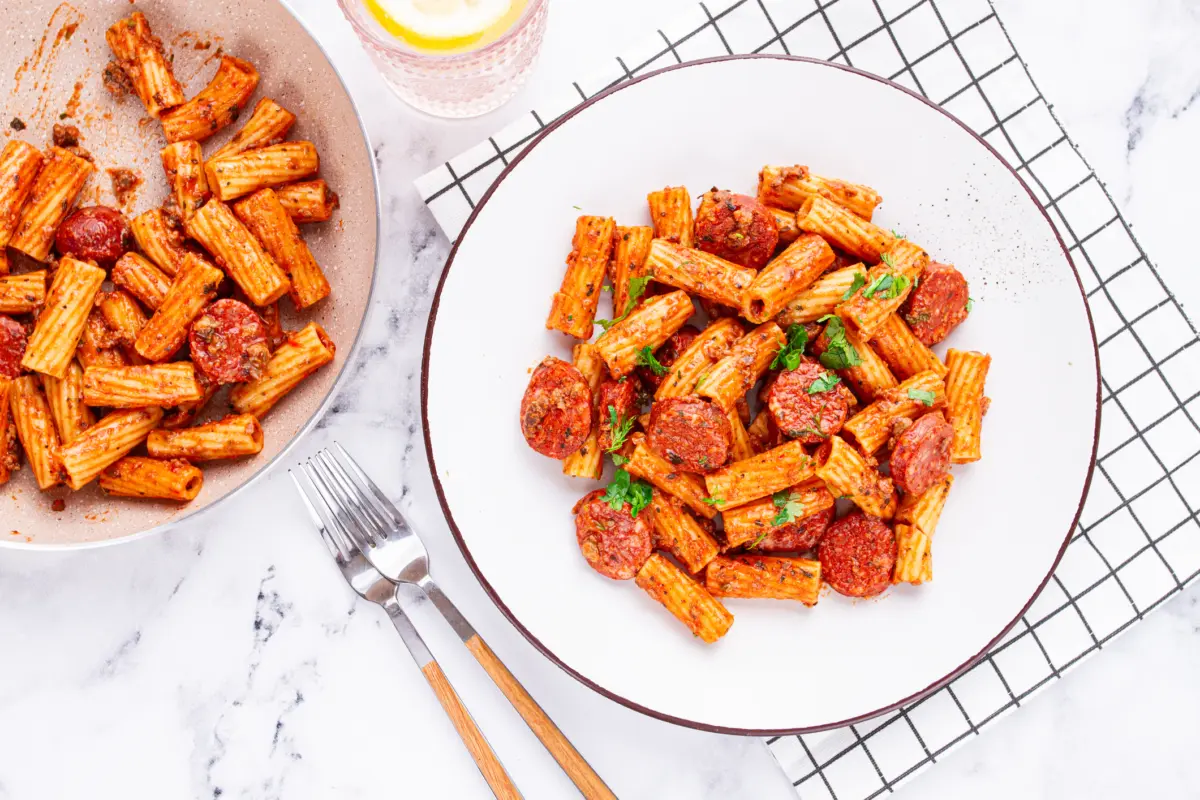
This analytical feature explores the rise of meal starters, the psychological flaws of traditional batch cooking, and provides an authoritative framework for reclaiming your kitchen through intuitive, adaptable meal architecture. Central to this movement is a weeknight masterclass: a smoky sausage and pepper pasta elevated by a glossy, sun-dried tomato pesto sauce.
Detailed Chronology: The Evolution of the Freezer Pack
The modern movement toward flexible meal-starting kits did not emerge from a high-end test kitchen; rather, it was born out of economic observation, grocery store anomalies, and the daily fatigue of the 7:00 p.m. dinner rush.
Phase One: The Grocery Store Discovery
The conceptual foundation of this culinary approach often begins in the most mundane of places: the perimeter aisles of regional supermarkets. For many home cooks, the pivot point arrived during periods of persistent grocery inflation, when staples like smoked kielbasa or regional sausages found themselves quietly, persistently discounted in low-traffic refrigerated cases—tucked near the eggs rather than behind the prestige butcher counter or among premium lunch meats.
Priced at less than $2.50 for a hefty, smoke-cured rope, these sausages represented a culinary "blank space." Historically relegated to traditional roles alongside sauerkraut, cabbage, and coarse mustard, the sausage became a canvas. Observing that these cured proteins invariably paired with the holy trinity of weeknight cooking—peppers and onions—observant home cooks began purchasing them in multiples.
Phase Two: The Birth of the Flat Pack
The logistical breakthrough occurred not through complex food science, but through spatial efficiency. Instead of cooking the ingredients immediately or letting them languish in the crisper drawer, home cooks began slicing the sausage into coins, dicing red bell peppers and medium onions, and combining them directly inside reusable silicone or plastic freezer bags.
Crucially, these ingredients required no blanching, no pre-cooking, and no complex chemical processing. The bags were simply sealed, pressed flat, and stacked vertically in the freezer like files in a cabinet. By winter, a home cook could accumulate a library of half a dozen foundational packs assembled for under twenty dollars total.
Phase Three: The Weeknight Diversification
The true utility of the flat-pack method revealed itself in execution. A single pack of sausage, peppers, and onions ceased to be a single prescribed meal. Instead, it became a chameleon:
- Option A: Dumped into a hot skillet to crisp the edges of the sausage, then spooned over spiced rice with a fried egg and fresh herbs.
- Option B: Swirled into red beans with Cajun spices, leaning toward a Louisiana-style profile.
- Option C: Combined with white beans, fresh rosemary, and grated Parmesan cheese.
- Option D: Piled high onto a toasted hoagie roll for an elevated sub.
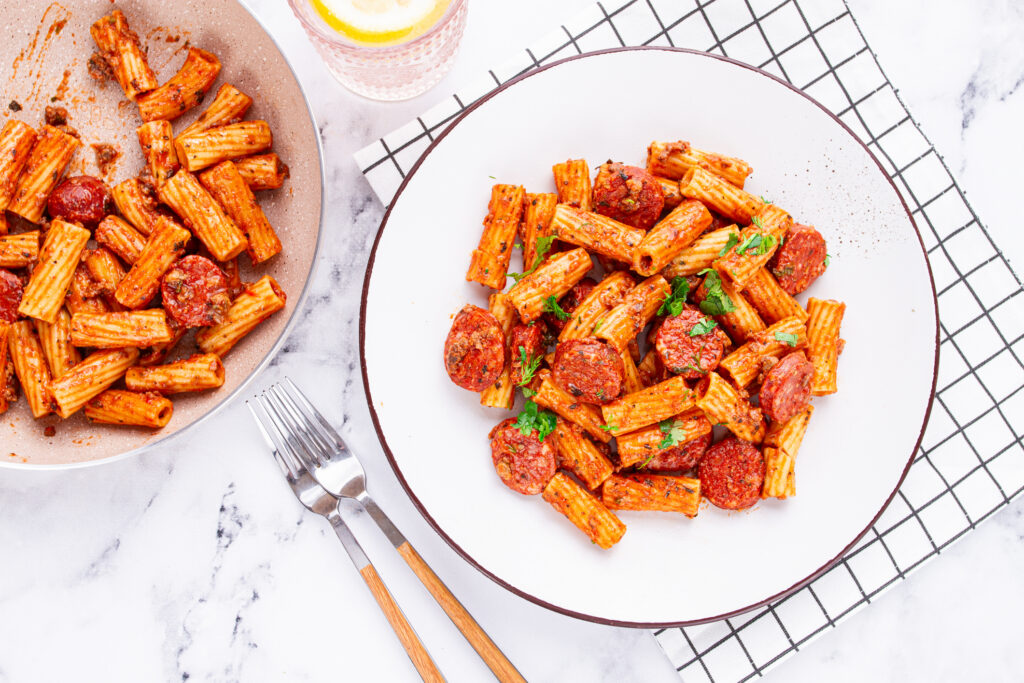
- Option E: Transformed into a glossy, one-pot weeknight pasta utilizing canned tomatoes and sun-dried tomato pesto.
By removing the friction of chopping without dictating the final destination of the meal, the meal starter effectively bridged the gap between raw ingredients and takeout delivery.
Supporting Context & Metrics: Why Traditional Meal Prep Fails
To understand the triumph of the meal starter, one must examine the systemic failure of conventional weekly batch cooking.
The Psychology of Menu Fatigue
Behavioral nutrition studies consistently highlight "decision fatigue" as a primary driver behind restaurant delivery app usage and fast-food reliance during weeknight hours. When individuals arrive home after an eight-hour workday, cognitive bandwidth is heavily depleted.
However, rigid meal prep attempts to solve decision fatigue by swinging the pendulum too far in the opposite direction. By enforcing culinary monotony—demanding that an individual consume five identical lunches—it creates psychological rebellion. The mind rejects the predictable flavor profile, leading to discarded food, wasted groceries, and a renewed reliance on convenience foods.
Economic and Spatial Efficiency Metrics
- Financial Waste Reduction: According to culinary waste audits, traditional meal prep often results in high rates of spoilage because specialized ingredients purchased for complex, multi-step recipes are left underutilized. Meal starters utilize modular ingredients that overlap across multiple cuisines.
- Freezer Real Estate Optimization: Traditional meal containers (heavy glass dishes or rigid plastic tubs) occupy immense vertical space in standard consumer freezers. Flat-pack freezer bags, measuring less than an inch in thickness when frozen, maximize spatial density, allowing a household to store 6 to 10 meal foundations in the footprint historically required for two rigid casserole dishes.
- Time-to-Table Velocity: On average, the most time-consuming phase of weeknight cooking is not applying heat, but the preparatory labor—peeling, dicing, washing, and slicing aromatics. By outsourcing this labor to a proactive Sunday-morning session (or even while unloading groceries), weeknight cooking times drop from 45 minutes to under 20 minutes.
Building Your Own Meal Starters: A Masterclass
The golden rule of building an effective meal starter is deceptively simple: Work backward from the meals you already make and love.
Instead of searching the internet for viral freezer hacks or buying specialized storage systems, open your mental recipe box and identify the flavor combinations that consistently recur in your kitchen. What ingredients do you find yourself chopping together, week after week?
Foundational Combinations to Try
- The Weeknight Standard: Sliced smoked sausage, bell peppers, and onions (adaptable to pasta, rice bowls, soups, and sandwiches).
- The Asian-Inspired Base: Diced chicken breast, thinly sliced scallions, and frozen or freshly minced ginger (primed for stir-fries, noodle soups, or grain bowls).
- The Tex-Mex / Southwestern Base: Shaved corn kernels, poblano peppers, and yellow onions (ideal for chowders, enchilada fillings, or grain salads).
- The Mediterranean Base: Diced butternut squash, shallots, and fresh sprigs of thyme (destined for risottos, grain bowls, or roasted pasta dishes).
- The Umami Base: Ground beef or turkey minced with finely chopped cremini mushrooms and mushroom powder (a head start on meatloaf, weeknight ragùs, or cottage pie).
The Core Rules of Freezer Architecture
- Rule 1: Freeze with Purpose. Ensure the chosen ingredients retain structural integrity after thawing. Avoid delicate greens, high-water-content vegetables like raw cucumbers, and most dairy products, which separate and turn mealy upon freezing.
- Rule 2: Leave Room for Agency. Never include delicate fresh herbs, pre-cooked starches, or sauces in the starter pack. The goal is to create a foundation, not a finished product. You want enough control left on Wednesday night to decide whether you want your base to become a soup or a skillet meal.
- Rule 3: Calibrate Portions Intuitively. Do not rely on generic, standardized measurements. Base the volume of each pack on your household’s actual consumption habits. If two chicken breasts comfortably feed your household, freeze two; if your family requires eight, scale accordingly.
Future Outlook: The Modern Kitchen
As consumer lifestyles grow increasingly fast-paced and grocery budgets face continuous macroeconomic pressure, the culinary landscape is undergoing a quiet democratization. The era of the hyper-curated, aesthetically rigid Sunday meal-prep video is giving way to a more pragmatic, intuitive approach to home economics.
The embrace of meal starters signals a broader cultural pivot toward sustainable domestic efficiency. It recognizes that home cooking does not need to be an all-or-nothing endeavor. By front-loading the mechanical labor of food preparation—the chopping, slicing, and sorting—while preserving the creative joy of seasoning and execution, home cooks are finding a sustainable middle ground.
Ultimately, a well-stocked freezer filled with modular meal starters does not dictate your dinner. It simply meets you halfway across the bridge, transforming the dreaded 7:00 p.m. scramble into an invitation to create.
Featured Recipe: Smoky Sausage and Pepper Pasta with Sun-Dried Tomato Pesto
This recipe exemplifies the power of the meal starter: a fusion of pantry staples, a pre-prepped freezer base, and bright, high-impact finishing touches that make a weeknight meal feel both effortless and artisanal.
                     +-------------------------------------------------+
                     |                 PREP: 5 MINS                    |
                     |                 COOK: 20 MINS                   |
                     |                 SERVINGS: 4                     |
                     +-------------------------------------------------+
Ingredients
- The Foundation: 1 freezer pack containing sliced smoked sausage (such as kielbasa), 1 diced red bell pepper, and 1 diced yellow onion.
- The Pasta: 1 pound (16 oz) short extruded pasta (rigatoni, penne, or fusilli work best to capture the sauce).
- The Aromatics & Body: 3 cloves garlic, thinly sliced; 1 can (14.5 oz) crushed or whole peeled San Marzano tomatoes.
- The Flavor Booster: 1/3 cup prepared sun-dried tomato pesto.
- The Velvet Finish: 1/4 cup heavy cream or mascarpone cheese; 1/2 cup reserved starchy pasta cooking water.
- The Fat & Seasoning: 2 tablespoons extra-virgin olive oil; kosher salt and freshly cracked black pepper to taste; grated Parmesan cheese and fresh basil leaves for serving.
Directions
- Boil the Pasta: Bring a large pot of generously salted water to a rolling boil. Add the pasta and cook according to package instructions until al dente. Crucial Step: Before draining, scoop out approximately one cup of the starchy pasta cooking water and set it aside.
- Crisp the Foundation: While the pasta boils, heat the olive oil in a large, deep skillet or Dutch oven over medium-high heat. Empty the frozen (or thawed) sausage, pepper, and onion starter pack directly into the hot pan. Sauté for 6 to 8 minutes, allowing the edges of the sausage to caramelize and the vegetables to soften and release their moisture.
- Build the Aromatics: Reduce the heat to medium. Add the thinly sliced garlic to the skillet, stirring constantly for about 60 seconds until fragrant and golden, taking care not to burn it.
- Simmer the Sauce: Pour in the canned tomatoes, breaking them up with a wooden spoon if whole. Stir in the sun-dried tomato pesto. Let the sauce simmer gently for 8 to 10 minutes, allowing the flavors to meld and the tomatoes to thicken into a glossy, cohesive base.
- Emulsify and Coat: Add the drained pasta directly into the skillet with the simmering sauce. Pour in the heavy cream and half of the reserved starchy pasta water. Toss vigorously over medium heat for 1 to 2 minutes. The starches from the water will combine with the cream and pesto to create a velvety, glossy coating that clings to every piece of pasta. (Add the remaining pasta water if the sauce appears too thick).
- Serve: Taste and adjust seasoning with kosher salt and black pepper. Divide among warm bowls and garnish generously with freshly grated Parmesan cheese and torn basil leaves.