Finding the right keyword research tool can feel like searching for a needle in a digital haystack. With hundreds of platforms claiming to offer the ultimate data set, most marketers find themselves drowning in options rather than gaining clarity. To cut through the noise, a comprehensive industry study asked 139 search marketing experts a deceptively simple question:
"If you could only use 3 tools for keyword research, which 3 would you choose?"
Rather than relying on generic "Top 10" lists filled with affiliate-driven bias, this investigation went straight to the source. The collective insights of SEO managers, enterprise consultants, and agency founders reveal a definitive leaderboard, highlighting which tools truly drive profitable online campaigns and which features separate average marketers from industry leaders.
Detailed Chronology & Leaderboard Insights
The data collected from the 139 experts paints a clear picture of market dominance. While dozens of auxiliary tools were mentioned, three major heavyweights rose to the top of the leaderboard based on vote count:
Semrush (87 votes)
Google Keyword Planner (57 votes)
Ahrefs (55 votes)
1. Semrush: The Undisputed Industry Leader
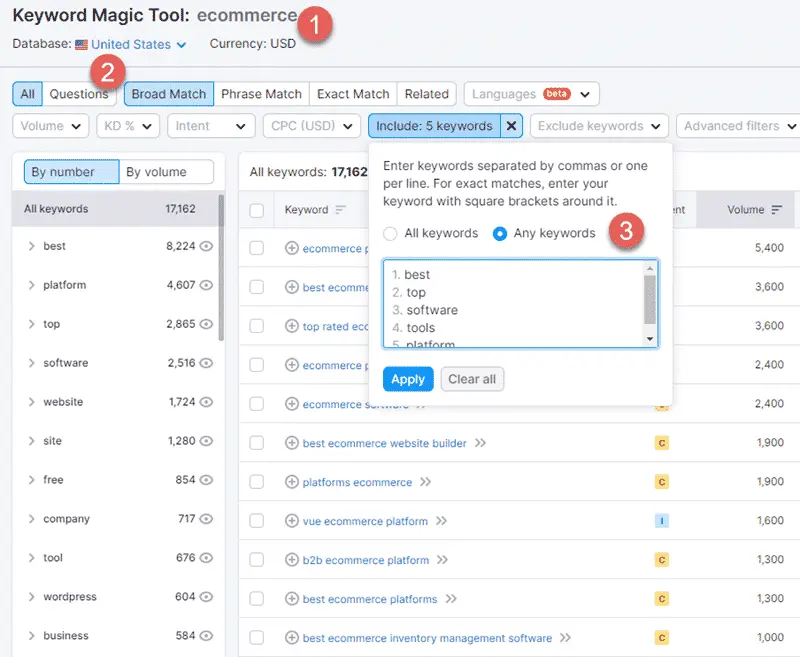
Boasting an astronomical database of over 23 billion keywords spanning 142 international markets, Semrush secured the top spot. Experts praise its versatility for both organic SEO and PPC campaigns. Standout features highlighted by contributors include:
The Keyword Magic Tool: Enables deep topical grouping by search intent, question type, and SERP features, with seamless integration into Position Trackers and PPC toolkits.
The Keyword Gap Tool: Offers side-by-side comparative analysis of up to five competing domains, allowing marketers to spot hidden traffic opportunities instantly.
2. Google Keyword Planner: The Classic Baseline
Despite lacking advanced filtering and organic-specific insights, Google Keyword Planner remains a staple for 57 experts. While non-advertisers now receive generalized search volume ranges rather than exact data, it remains the baseline for checking search trends directly from the source.
3. Ahrefs Keywords Explorer: The Data Powerhouse
Tied closely behind with 55 votes, Ahrefs continues to be a favorite for comprehensive backlink integration and topical research.
Keyword Ideas Report: Generates thousands of potential targets across multiple search engines, including Google, Bing, YouTube, and Amazon.
Supporting Context & Metrics: The Expert Consensus
Beyond the top three, the survey uncovered fascinating trends in how seasoned professionals approach modern keyword research.
The Shift Toward Search Intent and Topic Clusters
A recurring sentiment among top-tier practitioners—such as Brendan Hufford and Suganthan Mohanadasan—is that traditional "keyword matching" is no longer enough. Modern SEO requires a focus on search intent and semantic topical depth. Tools like AnswerThePublic, AlsoAsked, and Keyword Insights were frequently cited as essential additions for mapping out what users actually want when they type a query into a search engine.
Leveraging First-Party Data
Multiple enterprise experts reminded the industry not to overlook free, internal data sources. Tools like Google Search Console (GSC) and direct customer feedback interviews were championed by names like Chris Dreyer and Kurt Frankenberg. GSC uncovers hidden queries that a site is already ranking for, offering immediate "low-hanging fruit" opportunities without requiring expensive software subscriptions.
Perspectives from the Field
The 139 participating experts brought diverse viewpoints from agency leaders, enterprise directors, and independent consultants. Here is what some of the key contributors had to say about their preferred tool stacks:
Luke Monaghan (International SEO Manager at lululemon): Stresses the importance of combining competitive intelligence platforms like Semrush and Sistrix with long-tail research utilities like Keywordtool.io to build comprehensive contextual authority.
Paul Shapiro (Technical SEO Lead at Shopify): Advocates for pushing past standard toolkits by utilizing advanced platforms like MarketMuse for semantic topic modeling and KNIME for custom data analysis.
Brogan Renshaw (Founder at Firewire Digital): Highlights SurferSEO for understanding how search algorithms evaluate content density and structure against top-ranking competitors.
Spencer Hawes (Creator of Long Tail Pro): Emphasizes that tools providing clear keyword difficulty metrics, such as Long Tail Pro, pay for themselves by helping site owners target winnable battles.
Future Outlook: The Evolution of Keyword Research
As search engines become increasingly sophisticated through natural language processing, machine learning, and AI-driven results (such as Google’s Search Generative Experience), the role of keyword research is evolving.
The consensus among the 139 experts is clear: tools are only as good as the strategist wielding them. While platforms like Semrush and Ahrefs will continue to dominate enterprise workflows due to their massive databases and competitive intelligence capabilities, the future belongs to marketers who look beyond raw search volume. Success increasingly requires combining automated tool data with deep customer empathy, advanced semantic mapping, and intent-driven content architecture.
Whether you are managing an international e-commerce brand or launching a new niche affiliate site, streamlining your stack down to two or three core tools—backed by a solid understanding of your audience—remains the ultimate formula for SEO success.


![139 Experts Reveal Best Keyword Research Tools [Leaderboard]](https://www.robbierichards.com/wp-content/uploads/2021/01/Best-Keyword-Research-Tools-for-SEO.jpg)
![139 Experts Reveal Best Keyword Research Tools [Leaderboard]](https://www.robbierichards.com/wp-content/uploads/2021/10/Semrush-home-page-screenshot.jpg)
![139 Experts Reveal Best Keyword Research Tools [Leaderboard]](https://www.robbierichards.com/wp-content/uploads/2022/05/image12.png)
![139 Experts Reveal Best Keyword Research Tools [Leaderboard]](https://www.robbierichards.com/wp-content/uploads/2022/06/Keyword-Gap-Tool.jpg)
![139 Experts Reveal Best Keyword Research Tools [Leaderboard]](https://www.robbierichards.com/wp-content/uploads/2018/08/rj-employee_Robbie-color-new.png)
![139 Experts Reveal Best Keyword Research Tools [Leaderboard]](https://www.robbierichards.com/wp-content/uploads/2022/06/Google-Keyword-Planner.jpg)
![139 Experts Reveal Best Keyword Research Tools [Leaderboard]](https://www.robbierichards.com/wp-content/uploads/2022/06/Ahrefs-home-page.jpg)
![139 Experts Reveal Best Keyword Research Tools [Leaderboard]](https://www.robbierichards.com/wp-content/uploads/2021/08/Luke-Monaghan-headshot.jpg)
![139 Experts Reveal Best Keyword Research Tools [Leaderboard]](https://www.robbierichards.com/wp-content/uploads/2021/08/Gael-Breton-headshot.jpg)
![139 Experts Reveal Best Keyword Research Tools [Leaderboard]](https://www.robbierichards.com/wp-content/uploads/2015/04/KW-Expert-Roundup.jpg)
![139 Experts Reveal Best Keyword Research Tools [Leaderboard]](https://www.robbierichards.com/wp-content/uploads/2019/05/John-Doherty-150x150.jpg)
![139 Experts Reveal Best Keyword Research Tools [Leaderboard]](https://www.robbierichards.com/wp-content/uploads/2015/04/ana_hoffman.jpg)
![139 Experts Reveal Best Keyword Research Tools [Leaderboard]](https://www.robbierichards.com/wp-content/uploads/2021/08/Paul-Shapiro-headshot.jpg)