

Executive Overview
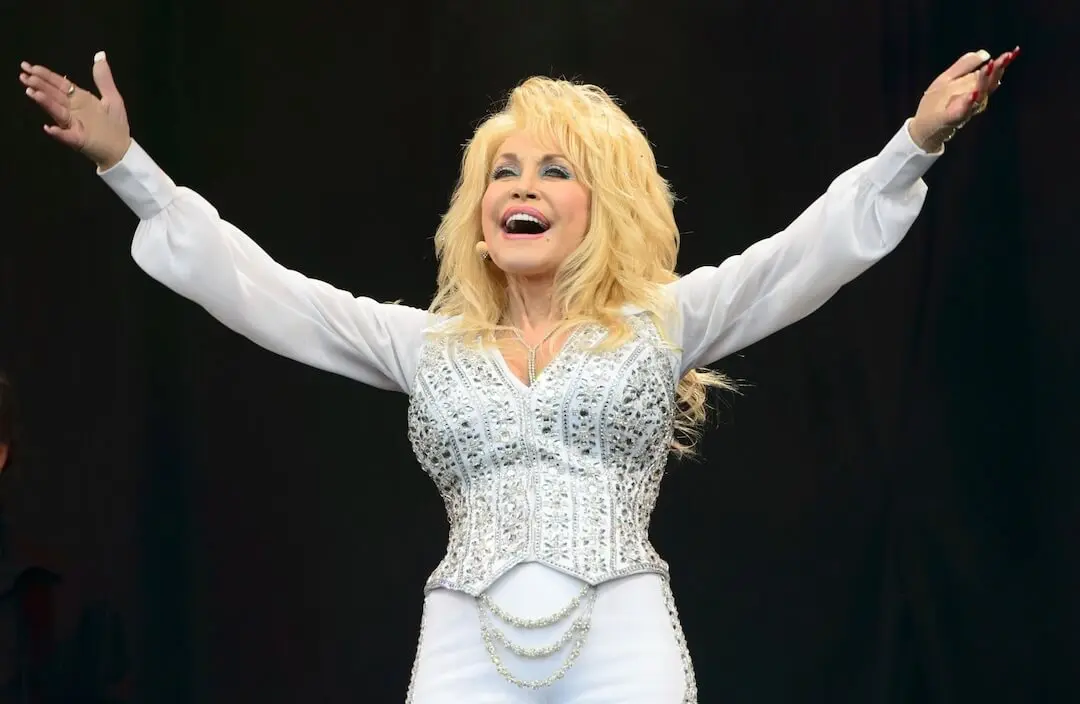
The global cultural and media landscapes experienced a seismic shift this week, marked by the passing of an American icon, escalating international demands for accountability in conflict zones, unprecedented legal battles over press freedom, and a contentious ethical debate regarding the integration of artificial intelligence in opinion journalism. At the center of this news cycle stands the death of Dolly Parton at the age of 80, an event that instantly united a deeply polarized American public in grief. Parton’s passing prompted a rare second-edition front page from USA Today, a weeklong lowering of U.S. flags ordered by President Donald Trump, and an outpouring of tributes from artists across genres.
Simultaneously, the international journalistic community confronted heavy realities. Major news organizations—specifically Reuters and The Associated Press—marked the grim one-year anniversary of the Gaza strikes that claimed the lives of five journalists by issuing a joint, unyielding demand for full accountability and transparency from the Israeli government. Across domestic legal fronts, veteran investigative journalist Catherine Herridge mounted a high-stakes petition to the U.S. Supreme Court, risking steep daily financial penalties to protect confidential sources and preserve the sanctity of the First Amendment. Finally, the modern publishing ecosystem wrestled with a sharp ethics debate after billionaire investor Stanley F. Druckenmiller openly admitted to using generative artificial intelligence to draft a high-profile op-ed for The Wall Street Journal, raising urgent questions about transparency, authorship, and the shifting boundaries of contemporary discourse.
Detailed Chronology
The Passing of Dolly Parton
The news broke quietly on a Tuesday afternoon inside the newsrooms of media outlets nationwide, shattering the routine workflow. Dolly Parton, the legendary country music singer, songwriter, entertainer, and philanthropist, passed away at the age of 80 following a brief battle with cancer.
Concerns regarding Parton’s health had flickered across the industry the previous year when she postponed a heavily anticipated Las Vegas residency, citing unspecified health complications. She later disclosed struggles with kidney stones alongside challenges affecting her immune and digestive systems. Despite these battles, her sudden departure caught the public and her millions of fans entirely unprepared.
Within minutes of the announcement, tributes flooded digital platforms. Kacey Musgraves captured the prevailing global sentiment on social media, writing, "The world feels a lot less sparkly all of a sudden." Political leaders quickly followed suit. President Donald Trump took to Truth Social on Tuesday afternoon to announce that American flags would be flown at half-staff across the nation for one week, declaring Parton to be one of the greatest country singers and cultural forces in history. In a rare display of print journalism adaptation, USA Today rushed a second-edition front page to presses to honor the monumental life and legacy of an artist who transcended generational, political, and cultural divides.
Demands for Accountability in Gaza
As the cultural world mourned, the international news apparatus confronted the solemn one-year milestone of a tragedy that struck at the core of the press corps. On August 25, 2025, Israeli strikes on the Nasser Hospital in Gaza claimed the lives of five journalists and media workers operating in their professional capacities. Among the dead were Reuters cameraman Hussam al-Masri, visual journalist Mariam Dagga (who contributed to AP and other outlets), and freelance journalist Moaz Abu Taha.
On Tuesday, Reuters Editor-in-Chief Alessandra Galloni and AP Executive Editor Julie Pace released a joint statement commemorating their fallen colleagues and forcefully rejecting the explanations provided by Israeli authorities thus far. Noting that hospitals enjoy protected status under international law, the editors emphasized that the official military explanations fell woefully short of the transparency required for an incident of such gravity. The joint statement also reiterated ongoing demands for answers regarding the October 13, 2023, tank-fire killing of Reuters visual journalist Issam Abdallah in southern Lebanon.
Catherine Herridge’s Supreme Court Stand
Domestically, the architecture of investigative reporting faced an existential stress test. Veteran journalist Catherine Herridge officially petitioned the U.S. Supreme Court, seeking protection from a lower court order that threatened her with devastating financial penalties for refusing to reveal confidential sources.
The legal battle stems from a 2017 Fox News investigative series authored by Herridge regarding Yanping Chen, a Chinese American scientist who was the subject of an FBI counterintelligence probe but never criminally charged. Following a civil lawsuit filed by Chen under the Privacy Act, a Washington, D.C., district court ordered Herridge to pay $800 for each day she withheld the identities of her sources. Although District Judge Christopher R. Cooper temporarily stayed the fines to allow for Supreme Court review, Herridge’s case highlights the precarious realities facing whistleblowers and investigative reporters in an era where institutional backing is increasingly rare.
The AI Op-Ed Controversy
Adding an ethical layer to the week’s media developments, financial circles and newsrooms debated the transparency of opinion journalism. Following the publication of an op-ed in The Wall Street Journal by billionaire investor Stanley F. Druckenmiller criticizing Treasury Secretary Scott Bessent’s bond market interventions, sharp-eyed readers questioned whether artificial intelligence had generated the text.
Confronted by reporters, the 73-year-old investor readily confirmed the use of AI, stating that he utilizes the technology for drafting just as he relies on a calculator for arithmetic. While The Wall Street Journal defended the publication—arguing that the op-ed authentically represented Druckenmiller’s long-standing economic philosophy and expertise—media ethicists and rival publications pointed out a glaring transparency failure. The paper neglected to inform readers that AI assisted in crafting the submission, intensifying a growing industry debate over internal standards for automated assistance in editorial content.
Supporting Context & Metrics
To fully appreciate the magnitude of these developments, one must examine the quantitative and qualitative pillars supporting each story:
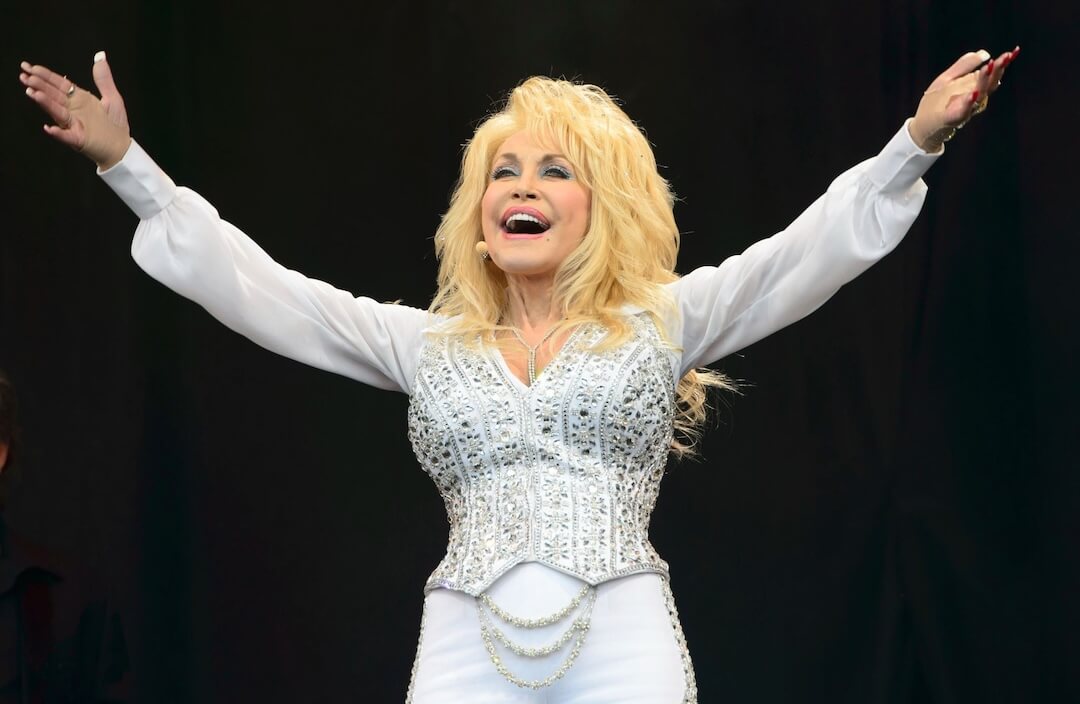
- Dolly Parton’s Legacy Metrics: Parton’s career spanned decades, yielding 10 Grammy Awards, two Academy Award nominations for Best Original Song, a Primetime Emmy, and 10 Country Music Association awards. Her songwriting catalog includes timeless anthems such as "I Will Always Love You" and "Jolene." Raised alongside 11 siblings in a single-room Tennessee cabin devoid of electricity, she built an empire estimated in the hundreds of millions while maintaining a philanthropic footprint that included her pioneering Imagination Library, which has gifted millions of books to children worldwide.
- The Toll on the Press: The joint appeal by Reuters and The Associated Press underscores the catastrophic human cost of modern conflicts for media workers. According to global press freedom watchdogs, the conflict in Gaza has represented one of the deadliest periods for journalists in modern history, complicating logistics, safety protocols, and access for international news bureaus.
- The Cost of Confidentiality: In the Herridge litigation, the daily penalty of $800 represents a symbolic yet practically ruinous figure for independent journalists, though Fox News has continued to underwrite her legal defense. The case underscores a broader chilling effect on national security reporting, where whistleblowers risk prosecution and reporters risk contempt of court.
- The AI Transparency Gap: Industry surveys indicate that while corporate adoption of generative AI tools exceeds 70% across white-collar sectors, newsroom and editorial policies vary wildly. While standard newsroom reporting strictly polices or bans unverified AI text generation, opinion and contributor pages remain vulnerable to unmonitored technological assistance, frequently operating without standardized disclosure mandates.
Official Statements
The events of the week were defined by clear, unvarnished commentary from the primary actors involved:
President Donald Trump on Truth Social:
"Very sad to report that Dolly Parton, one of the greatest Country singers, and far beyond, EVER, has just passed away. This is a true loss for millions of people. There has never been anyone like her, and never will. In her honor, I am lowering the American flag throughout the United States for a one week period beginning tonight at 6:00PM. Rest in Peace, Dolly! The World loves you."Alessandra Galloni (Reuters) and Julie Pace (AP) on the Gaza Strikes:
"The strikes on Aug. 25, 2025, killed five journalists… They were at the hospital in their professional capacity, doing critical work to keep the world informed. A year later, we remain devastated by their deaths and are still searching for answers from the Israeli authorities about what happened that day… We again call on the government of Israel to explain the deaths of these journalists and take every step necessary to protect journalists covering the conflict."Catherine Herridge in Interview with The Guardian:
"I built my career on developing confidential sources, and the day I disclose, my career is over. I mean, I’m finished. How can anyone trust me in the future? But it’s bigger than me. I’m in the last chapter of my career. This is really for people who have another 10 or 20 years ahead of them, and for another generation of journalists. It’s for their benefit."Paul Gigot, Editorial Page Editor, The Wall Street Journal:
"AI is a fact of modern life. People will use it to assist in their work and their writing, including with research, checking grammar, editing and more. The question for us is whether what we publish from contributors reflects an author’s original argument, and if the author has the standing and credibility to make it."
Future Outlook
As the dust settles on an extraordinary news cycle, the ripples of these events will alter media policy, cultural memory, and journalistic practice for years to come.
In the cultural sphere, the mourning of Dolly Parton signals the gradual passing of an irreplaceable mid-century generation of artists who possessed the rare capacity to unify a fractured populace. Her legacy will live on not merely through her extensive catalog of recorded music and cinematic performances, but through institutional philanthropy and the enduring blueprint of self-made American success rooted in authenticity and grit.
In the realm of international reporting, the ongoing fight for accountability in Gaza highlights an increasingly hostile environment for war correspondents. The joint pressure exerted by Reuters and the Associated Press establishes a baseline expectation that military forces must answer for civilian and press casualties, regardless of geopolitical friction. Without substantive structural accountability, international news agencies face escalating crises regarding field safety and operational access.
Domestically, Catherine Herridge’s appeal to the Supreme Court represents a watershed moment for the First Amendment. If the high court declines to hear the case or rules against her, the precedent could permanently alter the landscape of investigative journalism, rendering confidential source protection functionally obsolete under the threat of perpetual financial ruin or imprisonment. Conversely, a favorable ruling could fortify shield laws and reassure future generations of whistleblowers.
Finally, the controversy surrounding Stanley Druckenmiller’s AI-assisted op-ed serves as a wake-up call for publishing houses, opinion editors, and digital platforms. As generative artificial intelligence becomes an ubiquitous writing assistant, major publications will be forced to draft clearer, more transparent disclosure policies. Readers deserve to know not only whether an argument belongs to its purported author, but whether the prose itself was forged by human intellect or synthesized by machine logic. Ultimately, integrity, transparency, and accountability remain the non-negotiable currencies of a free press and a healthy society.
