

Executive Overview
In the contemporary cinematic landscape, few auteurs possess the distinct ability to construct internal emotional architectures quite like Jane Schoenbrun. Following the haunting digital isolation of We’re All Going to the World’s Fair (2021) and the glowing, neon-tinged nostalgic dysphoria of I Saw the TV Glow (2024), Schoenbrun returns with their third major feature film: Teenage Sex and Death at Camp Miasma. Released via MUBI, this bold, surreal, and genre-defying picture has sparked intense discourse across festival circuits and commercial box offices alike.
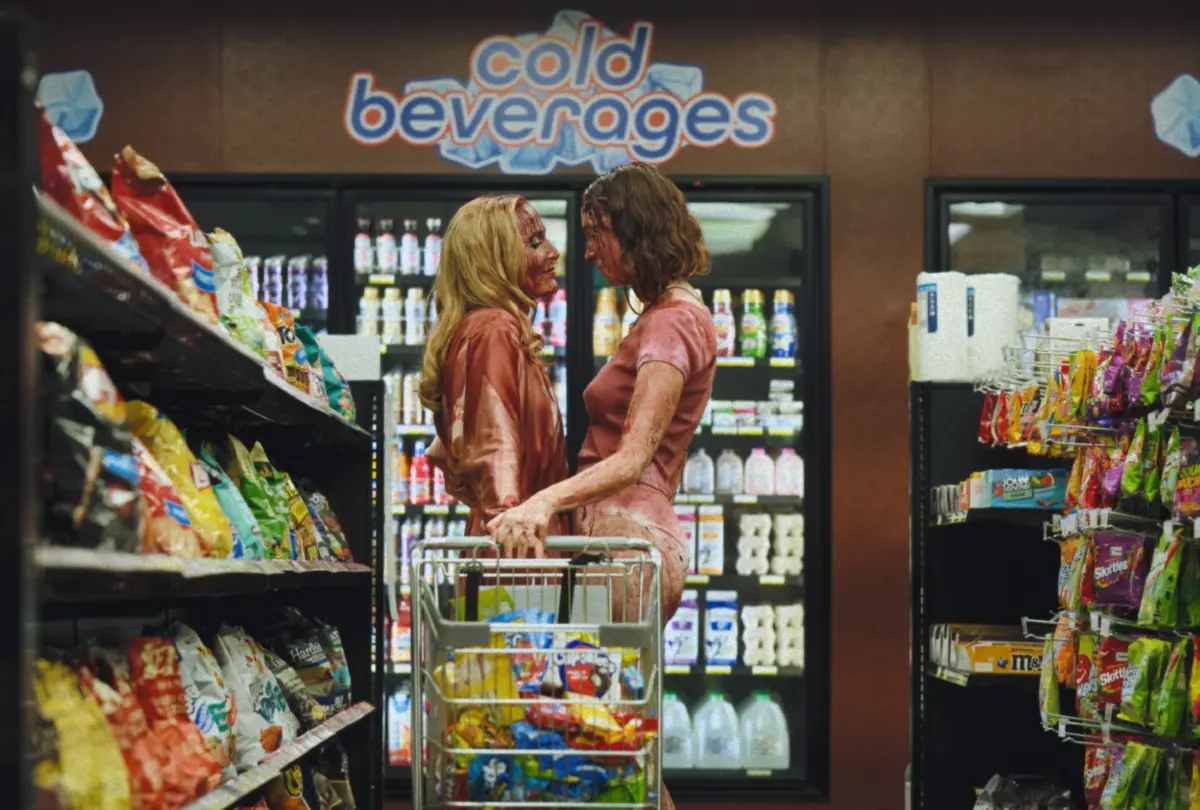
Part meta-slasher, part queer awakening, and entirely sui generis, the film stars Hannah Einbinder as Kris, a queer filmmaker tasked with rebooting a notorious, problematic horror franchise, and Gillian Anderson as Billy Presley, the iconic star of the original, fictional cinematic slasher classic. As the boundaries between horror iconography and deep-seated psychological desire begin to dissolve, the film achieves something remarkably rare for modern cinema: it alters the emotional chemistry of its audience.
For many viewers, cinematic encounters are passive experiences. Yet, Camp Miasma functions as an active catalyst. Moving beyond traditional genre critiques, the film serves as a profound meditation on intimacy, the reclamation of queer desire, and the terrifying, exhilarating prospect of opening oneself back up to love after heartbreak. This piece examines how Schoenbrun’s vision challenges traditional romance tropes, explores the mechanics of "matching each other’s freak," and proves that even within the blood-soaked confines of a midnight horror homage, true emotional resurrection is possible.
Detailed Chronology: The Narrative and Thematic Arc of Camp Miasma
To understand the profound impact Teenage Sex and Death at Camp Miasma holds over its audience, one must trace the meticulous narrative web woven by Schoenbrun. The film operates on dual layers: the meta-textual production of the reboot and the internal, psychological landscapes of its two central figures, Kris Williams and Billy Presley.
Act I: The Deconstruction of the Final Girl
The film opens by leaning heavily into the tropes of the classic 1980s slasher. "Camp Miasma" is introduced as a relic of a bygone cinematic era—a landscape defined by gratuitous violence, the punishment of adolescent desire, and the strict codification of the "final girl." Enter Kris Williams (Einbinder), a contemporary queer filmmaker operating under the weight of cinematic history. Kris’s mission is not merely to remake the film, but to radically redeem it—to strip away the misogynistic and heteronormative gaze that defined the original and replace it with a text that speaks authentically to modern queer experiences.
Early sequences establish Kris’s internal friction. As a creator, she struggles to reconcile her own desires with the sanitized representations historically permitted on screen. Her breakthrough arrives not through intellectualizing the genre, but through radical self-acceptance. In one of the film’s most striking visual sequences, Kris runs through the nocturnal woods at night, dressed only in a T-shirt and underwear. It is a deliberate subversion of the slasher trope: she is not fleeing in terror from an anonymous assailant; rather, she is running toward her own liberation. Kris has finally learned to embrace the dark, complicated corners of her psyche—specifically, the villain-victim fantasies that unlock her capacity for genuine sexual fulfillment.
Act II: Meeting the Icon
The narrative deepens with the introduction of Billy Presley (Anderson), the luminous, enigmatic star of the original Camp Miasma. When Billy enters Kris’s orbit, the film transitions from a clever meta-commentary into a profound psychological duet. Billy is no longer just a memory on a degraded VHS tape; she is a living, breathing collaborator who mirrors Kris’s eccentricities without judgment.
Schoenbrun masterfully handles the evolving dynamic between the two women. Where traditional romantic narratives often demand performance, hesitation, and the exhausting theater of pretense, the relationship between Kris and Billy is built on absolute transparency. They bypass the mundane rituals of modern courtship, trading them for a shared understanding of their deepest, weirdest vulnerabilities. In a standout, wonderfully bizarre scene, Billy treats Kris to a feast of fast-food fried chicken—complete with an intricate, joyous ritual of sharing dipping sauces. It is an absurd image rendered with genuine tenderness, signaling to the viewer that true intimacy often lives far outside the boundaries of conventional romance.
Act III: The Dreamscape of Surrender
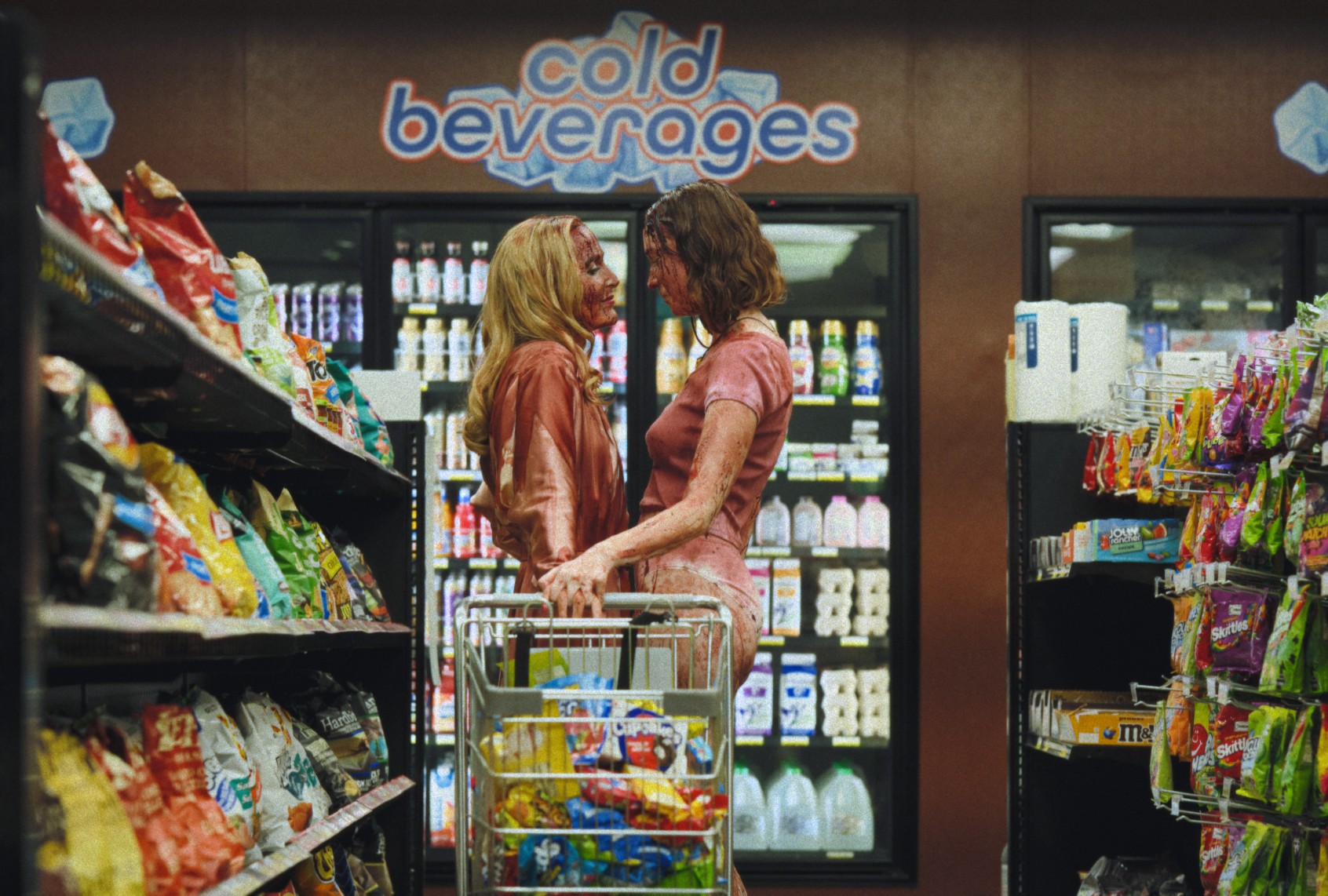
The emotional climax of Teenage Sex and Death at Camp Miasma arrives in its final sequence, a breathtaking stroll through a surreal dreamscape where pleasure and gore intertwine. Hand-in-hand, Kris and Billy walk through a landscape that feels simultaneously threatening and safe.
As they traverse this phantasmagoric environment, the soundtrack swells with Andy Shauf’s 2022 single, "Satan." The song’s melancholic, haunting lyrics—“Don’t watch yourself, watch the movie / This only happens for a little while / Because Satan is waiting / Satan is waiting with Halloween candy”—provide a thematic anchor for the scene. It is a moment that recontextualizes horror not as a vehicle for punishment, but as a space for psychological catharsis. Billy grants Kris the ultimate permission slip: the freedom to be as strange, as intense, and as unapologetic as she needs to be in order to feel alive.
Supporting Context & Metrics: Cultural Reception and Auteurist Trajectory
Teenage Sex and Death at Camp Miasma arrives at a pivotal juncture in Jane Schoenbrun’s career, solidifying their status as one of the most vital and singular voices in contemporary independent cinema.
| Film Title | Release Year | Primary Thematic Focus | Critical & Cultural Impact |
|---|---|---|---|
| We’re All Going to the World’s Fair | 2021 | Digital isolation, creepypasta culture, online identity | Established Schoenbrun as a master of atmospheric, techno-dread; cult classic status. |
| I Saw the TV Glow | 2024 | Trans identity, nostalgic dysphoria, television as reality | Widespread critical acclaim; cemented visionary status; resonated deeply with queer audiences. |
| Teenage Sex and Death at Camp Miasma | 2026 | Queer desire, slasher deconstruction, radical compatibility | Mixed professional reviews, fervent viewer devotion, polarizing box office reception. |
The Polarizing Public Response
True to Schoenbrun’s artistic ethos, Camp Miasma has elicited a deeply fractured response from the broader cinematic ecosystem. Professional film critics remain divided, with some praising its fearless tonal shifts and psychological depth, while others struggle with its intentional narrative slipperiness. Among casual cinema-goers, reactions frequently oscillate between utter bewilderment ("what the hell is this?") and profound emotional identification.

This polarization is precisely the point. Schoenbrun’s films do not invite passive consumption; they demand a psychological trade. By blending the high-art sensibilities of festival horror with the pulpy, campy joy of midnight movies, Camp Miasma creates a cultural fault line. Those willing to surrender to its peculiar wavelength find themselves rewarded with an experience that feels startlingly personal.
Official Statements & Creative Vision
In interviews leading up to the film’s release, Jane Schoenbrun has been remarkably candid about the deceptively simple core driving their maximalist aesthetic. Speaking with The New York Times, Schoenbrun distilled the essence of the project:
"In its simplest form, this is kind of a movie about two women matching each other’s freak."
This succinct framing cuts through layers of academic film theory and genre analysis, landing squarely on the human emotional core of the narrative. The phrase "matching each other’s freak" has since become a rallying cry for viewers—particularly within queer communities—who see in Kris and Billy a rare representation of relationships that do not require the suppression of idiosyncratic desires in order to achieve harmony.
Furthermore, Schoenbrun’s casting choices serve as an intentional bridge between generations of screen icons and modern comedic/dramatic talent. Pairing Gillian Anderson—a titan of prestige television and sci-fi/horror royalty—with Hannah Einbinder, whose sharp comedic timing and grounding presence have made her a modern cultural fixture, creates an electrifying dynamic on screen. Their performances elevate what could have been a purely intellectual exercise into something visceral, grounded in flesh, blood, and mutual recognition.
Future Outlook: The Cinematic Catalyst for Personal Renaissance
Beyond its merits as a work of art, Teenage Sex and Death at Camp Miasma offers a powerful lesson in emotional recovery. For viewers carrying the quiet scars of divorce, serial monogamy, or the modern exhaustion of digital dating apps, the film acts as an unexpected form of exposure therapy.
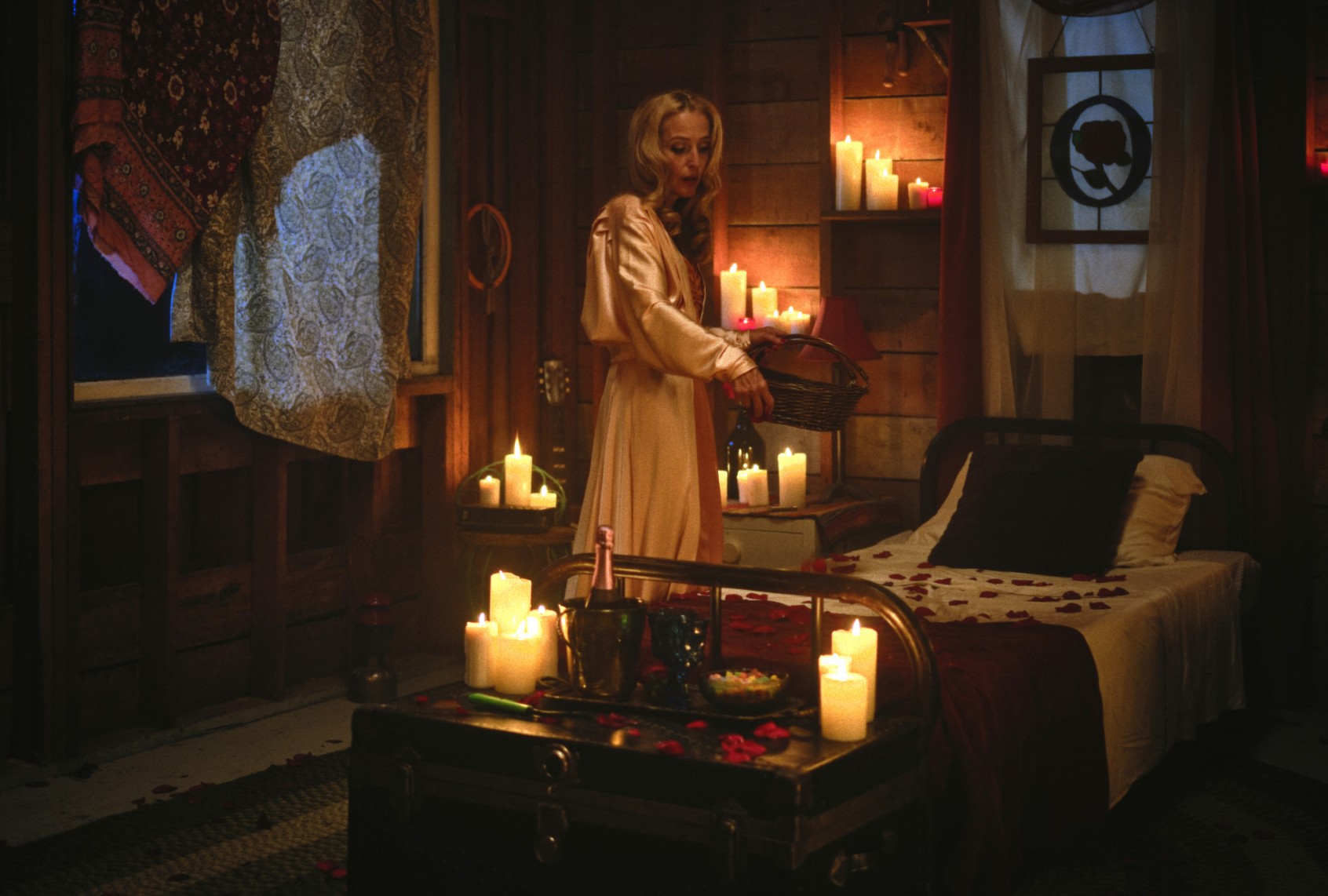
Modern romance culture often encourages an over-sanitized approach to partnership—a series of algorithmic checklists designed to minimize risk and avoid pain. Yet, as Schoenbrun demonstrates, genuine passion is inherently messy, unpredictable, and occasionally terrifying. It requires stepping out of the comfort zone and into the metaphorical woods in your underwear, covered head-to-toe in cinematic blood.
The Reawakening of Desire
The cultural legacy of Camp Miasma will likely be measured not just in box office returns or retrospective essays, but in the micro-reawakenings it triggers in its audience. As demonstrated by viewers walking out of theaters with renewed emotional agency, the film provides a safe harbor to rediscover the sensation of passion for passion’s sake. It reminds us that even when real-life romance feels out of reach—whether due to geographic isolation, the weight of past heartbreaks, or the daily grind of remote work—the capacity for emotional intensity remains entirely within our control.
As Andy Shauf’s haunting refrain echoes in the background— “This only happens for a little while”—the film offers a liberating conclusion. Passion, like cinema itself, is transient. It is not designed to last forever, nor should it be burdened with the expectation of eternal permanence. By accepting that passion is fleeting, we free ourselves to experience it fully, without the armor of cynicism.
In the final analysis, Teenage Sex and Death at Camp Miasma suggests that whether you find your Kris Williams on a dating app or simply find peace in the glow of a midnight movie, the most important thing is to keep the projector running. If the real world gets too heavy, you can always turn it off—but for now, it is far more rewarding to see what the next scene brings.
