

Executive Overview
As the United States approaches the high-stakes 2026 midterm elections—with early mail-in ballots set to be dispatched in a matter of weeks—the national political landscape remains fraught with tension. Donald Trump and his administration continue to press an aggressive campaign aimed at overhauling the machinery of American democracy. This includes demanding sensitive, statewide voter registration databases, threatening local election officials with aggressive legal prosecution, and rewriting procedural frameworks governing mail-in voting. Augmented by recent procedural victories in the Supreme Court that have greenlit elements of the administration’s mail-voting restrictions, the administration’s efforts have galvanized a familiar anxiety among voting rights advocates.
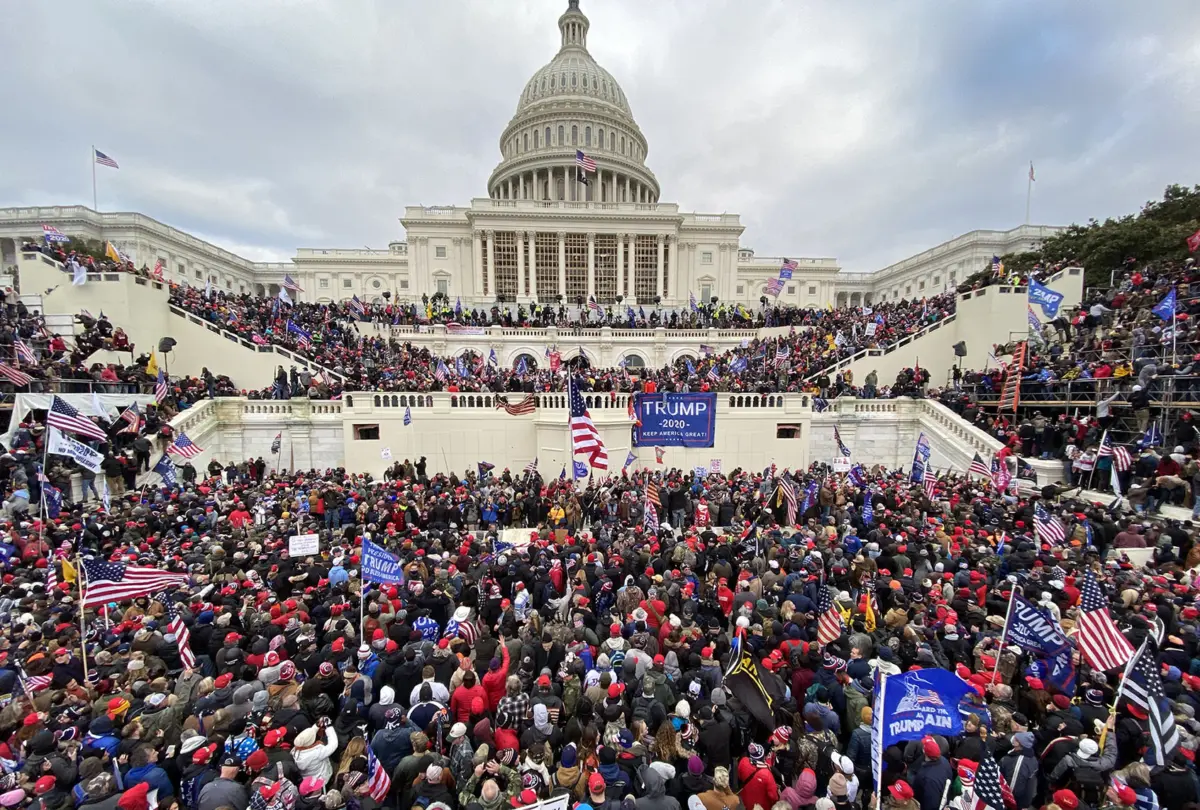
Yet, a parallel narrative has quietly developed away from the daily cycle of federal policy battles: the architects, promoters, and performance artists of the "Big Lie" are finally encountering severe legal and financial liabilities. For years, a cottage industry of conservative commentators, fringe documentary filmmakers, and right-wing political operatives profited handsomely by manufacturing conspiracies regarding the 2020 presidential election. Today, that lucrative ecosystem of fraud theater is collapsing under the weight of civil defamation lawsuits, criminal investigations, and campaign finance complaints.
From Dinesh D’Souza’s humiliating legal retreat over his discredited film 2000 Mules, to James O’Keefe’s undercover polling place stunts in Minnesota that risk felony charges, and Scott Presler’s hidden-spending scandals in Pennsylvania, the purveyors of election denialism are discovering that the democratic systems they sought to delegitimize retain enforceable rules—and steep penalties for breaking them.
Detailed Chronology: The Unraveling of the MAGA Election Fraud Enterprise
The architecture of post-2020 election skepticism was built largely on viral imagery, deceptively edited footage, and unverified allegations. As the years have progressed, the individuals who profited from these narratives have seen their claims systematically dismantled in courts of law.
1. Dinesh D’Souza and the Collapse of 2000 Mules
The unravelling of high-profile election conspiracy theories achieved a major milestone in August 2026, when conservative filmmaker and commentator Dinesh D’Souza settled a high-stakes defamation case on the eve of trial in Atlanta, Georgia.
The lawsuit targeted 2000 Mules, a 2022 "documentary" that became a cornerstone of post-2020 election conspiracy propaganda. The film grossed more than $9 million, found a receptive audience among conservative donors, and was screened approvingly by Donald Trump at Mar-a-Lago. Its central premise claimed that thousands of individuals ("mules") were paid to collect and illegally deposit fraudulent ballots into drop boxes across critical battleground states.
Among those allegedly identified as a "mule" was Mark Andrews, an ordinary IT auditor and resident of Gwinnett County, Georgia. The film utilized a few seconds of surveillance footage showing Andrews returning absentee ballots for himself and four family members ahead of the 2020 election. Without verification, D’Souza’s voice-over declared to viewers: "What you are seeing is a crime. These are fraudulent votes."
In reality, Andrews had committed no crime. After state investigators thoroughly cleared him of any wrongdoing, Andrews launched a defamation lawsuit against D’Souza and associated entities. While the final settlement figures remain confidential, the legal defeat represents a devastating bookend to the film’s credibility. The reckoning began earlier when D’Souza issued a public apology to Andrews in December 2024. Simultaneously, Salem Media Group—the film’s distributor—withdrew 2000 Mules and its companion book from circulation, offering its own formal retraction.
2. James O’Keefe’s Minnesota Polling Place Stunt
While D’Souza’s legal battles took years to materialize, newer iterations of election-fraud theater are unravelling in real time.
Earlier in August 2026, conservative provocateur James O’Keefe—ousted in 2023 from Project Veritas, the right-wing investigative group he founded, amid allegations of financial malfeasance—orchestrated a controversial stunt in Minneapolis. Alongside associate Cam Higby, O’Keefe dressed in traditional garments (including a thobe and a burqa) and entered Minneapolis polling stations during the state’s primary elections.
The objective was to test Minnesota’s decades-old "vouching" law, a statute that permits a registered voter to attest to the identity and residency of a neighbor or newly arrived community member. Adopting a heavily exaggerated accent, O’Keefe utilized the name of a real, registered Minnesota voter—William Pomeranz—without his knowledge or consent. A third operative, Anthony Rubin, reportedly informed election workers that he intended to vouch for individuals he characterized as recently arrived Hamas members from Gaza.
Despite heavy promotion online, the operatives did not actually cast ballots or complete legal registrations. Instead of exposing a loophole in the state’s electoral security, they generated severe legal exposure. Under Minnesota law, falsely signing a voter vouching oath constitutes perjury, which is punishable by up to five years in prison, while misrepresenting one’s identity to obtain a ballot is classified as a separate felony.
Hennepin County local law enforcement swiftly initiated a review of the surveillance footage. Secretary of State Steve Simon condemned the stunt, noting that the viral video—viewed millions of times—ignored statistical realities: fewer than 0.6% of votes cast in Minnesota during the 2024 cycle utilized vouching, and approximately 71% of those instances involved already-registered voters simply updating their residential addresses.
3. Scott Presler and Campaign Finance Violations in Pennsylvania
Another prominent pillar of the modern MAGA political infrastructure, activist Scott Presler and his political action committee, Early Vote Action, have faced concurrent legal scrutiny regarding campaign transparency.
According to a formal complaint filed by the watchdog group Public Citizen, Presler and his organization failed to register or properly disclose financial expenditures tied to an aggressive campaign targeting three Pennsylvania Supreme Court justices during the state’s 2025 retention elections. Under Pennsylvania state law, any political committee spending over $250 to influence an election—including judicial retention races—is legally mandated to register with the state and thoroughly disclose its donors and disbursements.
Despite running a field staff of two dozen paid workers in the state, dispatching tens of thousands of direct-mail postcards to Amish communities, and text-messaging more than 100,000 voters in Bucks County alone, Presler’s operation allegedly left zero trace in the Commonwealth’s official campaign finance disclosure databases. The targeted Democratic justices were ultimately reelected, but Presler subsequently pivoted to Washington, lobbying heavily for the passage of the Trump-endorsed SAVE America Act, which mandates stringent proof-of-citizenship and voter-identification requirements. A secondary Public Citizen complaint alleges that Presler and his affiliated super PAC similarly failed to register mandatory federal lobbying disclosures for their Capitol Hill advocacy.
Supporting Context & Metrics: The Reality of Election Integrity
The legal and financial pressures facing D’Souza, O’Keefe, and Presler occur against a broader backdrop of federal policy initiatives and empirical election data.
- The Noncitizen Voting Myth: The Trump administration continues to build a sprawling federal apparatus aimed at policing an alleged epidemic of noncitizen voting. However, these claims have repeatedly collapsed under judicial review. According to legal trackers, the Department of Justice has struggled to substantiate these claims sufficiently, losing or failing to secure favorable rulings in numerous voter roll challenges across federal courts (including a notable string of unsuccessful legal actions).
- Statistical Guardrails: State election officials emphasize that existing statutory protections—ranging from strict signature verification processes to robust post-election audits—make widespread, undetected voter fraud statistically improbable. In states like Minnesota, procedural safeguards such as voter vouching are utilized by a microscopic fraction of the electorate, and even then, primarily to assist registered voters with administrative address updates rather than to facilitate illicit voting.
- Financial and Reputational Costs: The economic toll on election deniers has created a deterrent effect across right-wing media circles. Defamation litigation, retraction demands, and mounting legal fees have forced distributors and independent creators to distance themselves from unsubstantiated claims regarding electronic voting machines, drop-box surveillance, and noncitizen voting conspiracies.
Official Statements and Institutional Responses
State and local election officials have responded to the latest wave of stunts and legal battles with heightened vigilance, emphasizing that attempts to manufacture sensationalized fraud narratives will be met with uncompromising law enforcement scrutiny.
Minnesota Secretary of State Steve Simon issued a definitive statement following the O’Keefe polling place incident:
"Our elections belong to the voters of Minnesota, not to outside provocateurs seeking to manufacture viral content at the expense of our poll workers and democratic norms. Misrepresenting your identity, deceiving election judges, and abusing laws designed to assist neighbors are not investigative journalism—they are crimes. Local authorities are reviewing the evidence, and individuals who break our laws will face accountability."
Watchdog organizations have similarly underscored the necessity of enforcing existing campaign finance and transparency statutes against outside political committees. Public Citizen representatives noted in their filings against Scott Presler that disclosure laws are foundational to democratic integrity, ensuring that voters know precisely who is funding campaigns designed to influence the judiciary and federal legislation.
Future Outlook: The 2026 Midterms and Beyond
As the United States barrels toward the 2026 midterm elections, political analysts anticipate a renewed wave of manufactured controversies, ominous warnings, and baseless allegations regarding ballot security. The return of Donald Trump to the White House has emboldened national efforts to restrict mail-in voting and alter registration criteria at the federal level.
Nevertheless, the legal trajectories of the past several years offer a clear empirical lesson. The "Big Lie" was never merely a rhetorical grievance or a transient political talking point; it functioned as a lucrative enterprise constructed to erode public trust in democratic institutions. However, as Dinesh D’Souza’s legal settlements, James O’Keefe’s criminal referrals, and Scott Presler’s campaign finance investigations demonstrate, the architects of election denialism are increasingly vulnerable to the very legal systems they sought to undermine.
For election administrators, poll workers, and voters alike, the primary mandate for the upcoming midterms remains unchanged: resist the theatrical distractions of bad-faith actors, uphold the rule of law, and protect the integrity of the ballot box.