

Executive Overview
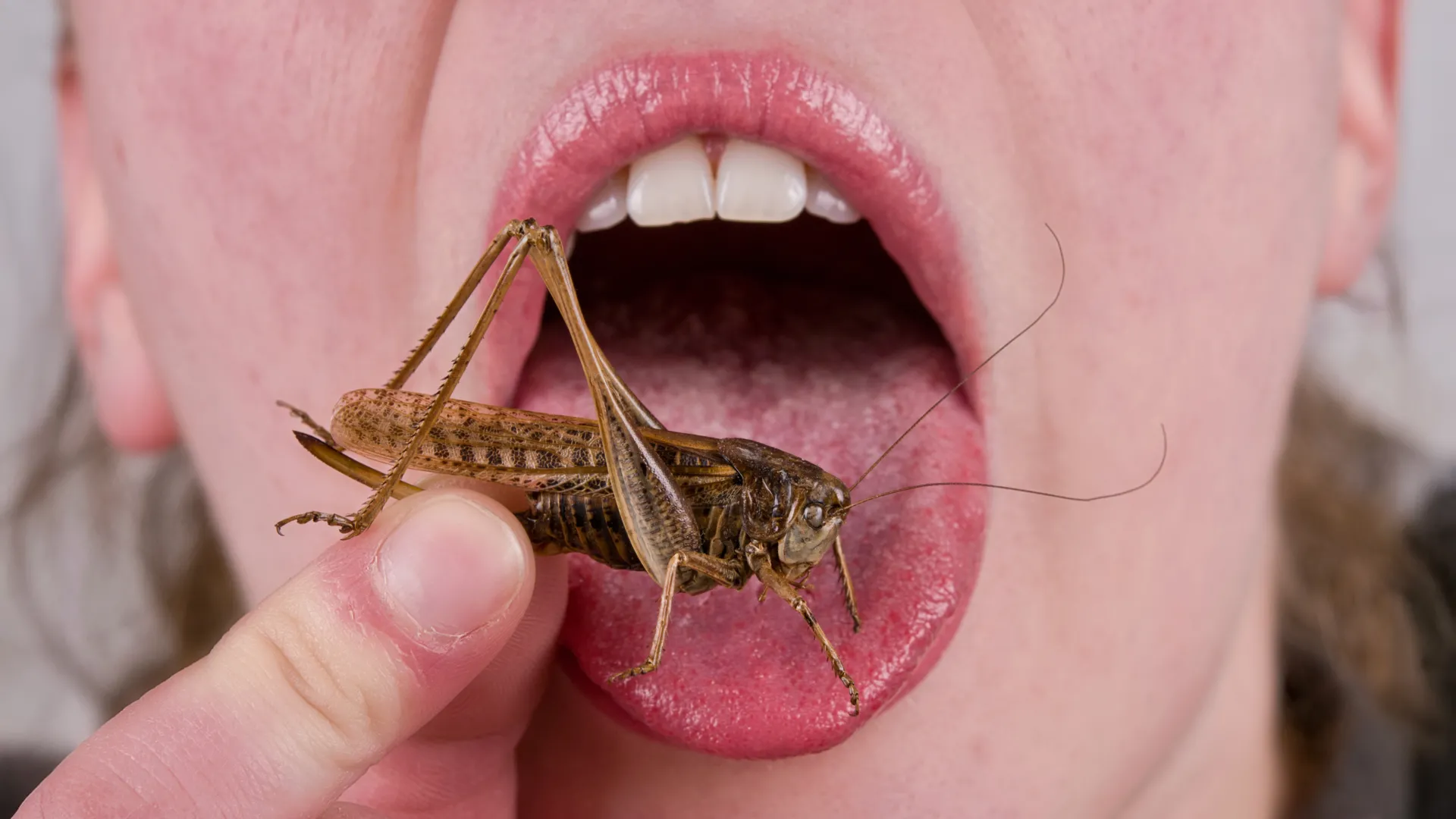
As the global human population races toward an estimated 10 billion by the middle of the 21st century, traditional industrial agriculture faces unprecedented strain. Intensifying climate change, accelerating topsoil degradation, dwindling freshwater reserves, and the heavy carbon footprint of conventional livestock production have forced researchers, ecologists, and international policymakers to look aggressively toward alternative sources of nutrition. Among the most widely touted solutions is entomophagy—the human consumption of insects.
Organizations such as the Food and Agriculture Organization (FAO) of the United Nations have long championed insects as a sustainable, highly efficient, and nutrient-dense food source. With over 1,611 insect species formally classified as edible, these six-legged organisms offer an abundant bounty of high-quality proteins, essential amino acids, micronutrients, and healthy fats, all while requiring a fraction of the land, water, and feed demanded by cattle, pigs, or poultry.
Yet, a stubborn psychological and cultural barrier persists. In many Western societies, the thought of eating an insect triggers visceral disgust. While hundreds of millions of people across Asia, Africa, and Latin America routinely and enthusiastically include insects in their traditional diets, Western populations generally view entomophagy with revulsion or treat it as a passing novelty.
For generations, sociologists, anthropologists, and food historians have attributed this Western aversion primarily to cultural conditioning, deeply ingrained societal taboos, or historical religious frameworks. However, a groundbreaking study published in the prestigious journal Science Advances has upended these assumptions.
Researchers from the Institute of Evolutionary Biology (IBE)—a joint research center of the Spanish National Research Council (CSIC) and Pompeu Fabra University (UPF)—have utilized cutting-edge ancient genomics to reconstruct patterns of human insect consumption stretching back tens of thousands of years. Their findings reveal that the modern Western reluctance to eat insects is not merely a recent cultural artifact. Instead, it is anchored in a profound ecological and evolutionary history that spans millennia, defined by shifting geographic latitudes, ancient dietary adaptations, and the genetic evolution of the human digestive system itself.
Detailed Chronology: Unlocking the Ancient Dental Record
To pierce the veil of prehistory and capture direct evidence of what ancient humans ate, the IBE research team turned to an unconventional yet remarkably well-preserved biological archive: dental calculus, commonly known as dental tartar.
The Preservation Power of Dental Calculus
When humans consume food, microscopic remnants of organic matter, plant fibers, starches, and environmental DNA become trapped within the mineralizing matrix of dental plaque, eventually hardening into tartar. This calcified deposit acts as a biological time capsule, sealing in genetic material from dietary inputs that can survive largely intact for millennia.
The IBE team examined an expansive dataset comprising 745 samples of human dental calculus collected from archaeological sites across Eurasia. These samples spanned an immense chronological window, reaching as far back as 33,000 years into the Upper Paleolithic, encompassing the transition to the Neolithic agricultural revolution, and extending into historical epochs. By extracting and sequencing ancient DNA trapped within this tartar, the researchers were able to map out precisely when, where, and by whom insects were consumed.
The Eurasian Divide: Modern Humans vs. Neanderthals
The genomic analysis revealed a striking dichotomy in dietary habits across ancient Eurasia. Modern humans (Homo sapiens) living in northern and central Eurasia displayed remarkably sparse traces of insect DNA in their dental calculus. For these ancient populations, consuming insects appears to have been rare, opportunistic, and incidental—perhaps consumed inadvertently while foraging for plants or berries rather than targeted as a primary caloric staple.
In stark contrast, samples extracted from Neanderthal remains—even those recovered from the same geographic regions and climatic zones as contemporary modern humans—revealed significantly higher concentrations of insect DNA. The volume of insect genetic material detected in Neanderthal dental calculus closely mirrored levels observed in modern western chimpanzees (Pan troglodytes verus), which routinely exploit insects on the African savanna to supplement their diets, particularly during dry seasons when preferred food sources become scarce.
The Entomological Signatures of Neanderthal Diets
A closer look at the genetic sequences trapped in Neanderthal tartar provided fascinating clues regarding how these archaic hominins hunted or gathered insects. The most prevalent insect DNA signatures belonged to Diptera, the massive order of insects that includes flies, mosquitoes, and gnats.
Notably, mosquito DNA was exceptionally abundant. This genetic footprint strongly bolsters a recent anthropological hypothesis suggesting that Neanderthals may have routinely consumed animal carcasses that had been colonized by fly larvae and maggots. Furthermore, the heavy presence of mosquito remains supports the intriguing ecological theory that Neanderthals may have stored hunted game carcasses in shallow ponds, wetlands, or marshy environments to delay spoilage—environments where female mosquitoes naturally congregate to lay their eggs.
As human populations expanded across the globe and adapted to varying climatic zones, these ancient dietary splits left indelible marks not just in the archaeological record, but directly inside the human genome.
Supporting Context & Metrics: The Genetics of Digestion
Dietary habits do not merely influence culture; over long evolutionary timescales, what we eat actively shapes our biology. To understand why northern Eurasian populations abandoned entomophagy, the IBE researchers investigated the genetic architecture responsible for breaking down insect components.
The Chitin Barrier and the CHIA Gene
The primary biological hurdle to consuming large quantities of insects is chitin, a tough, fibrous polysaccharide that forms the major structural component of insect exoskeletons. Chemically similar to the cellulose found in plant cell walls, chitin is notoriously difficult for standard mammalian digestive systems to break down efficiently.
To digest chitin, the human stomach relies on specialized enzymes known as chitinases, encoded primarily by the CHIA (acidic mammalian chitinase) gene, alongside auxiliary enzymes like CTBS (chitobiase).
The IBE research team analyzed these specific genes across both ancient and modern human genomic datasets. Their findings revealed a clear geographic and evolutionary gradient:
- Tropical and Subtropical Populations: Human populations residing closer to the equator and in tropical climates demonstrated a significantly higher prevalence of genetic variants associated with robust expression and activity of chitinase enzymes.
- Northern and Temperate Populations: Conversely, populations inhabiting higher latitudes displayed genetic mutations that resulted in a markedly reduced capacity to express these digestive enzymes.
A 9,000-Year-Old Genetic Signature
Remarkably, this genetic pattern is not a recent development. The genetic variants associated with a reduced ability to digest insect exoskeletons among North Eurasian populations have persisted for approximately 9,000 years. This timeline synchronizes precisely with the dawn of the Neolithic agricultural revolution, when human societies abandoned nomadic hunter-gatherer lifestyles in favor of settled farming, cultivating cereal crops, and domesticating livestock.
As agriculture took root and reliable caloric surpluses from grains, legumes, and domesticated livestock became the bedrock of European and northern Asian diets, the evolutionary pressure to maintain costly metabolic pathways for digesting tough insect exoskeletons steadily evaporated. Without the daily necessity of breaking down chitin, the human genome drifted, resulting in a diminished biological capacity for entomophagy in these regions.
Official Statements & Expert Insights
The study’s authors emphasize that understanding the deep evolutionary roots of human dietary behavior is critical for reframing modern nutritional debates. The findings bridge the gap between anthropology, molecular genetics, and contemporary food security.
"The scarce presence of insects in the diet of northern Eurasians suggests that the absence of entomophagy is not solely due to recent cultural factors, but also to a long ecological and evolutionary history," explains Dr. Pablo Librado, principal investigator at the Institute of Evolutionary Biology (IBE) who spearheaded the comprehensive study.
Dr. Librado underscores that human biology and environmental ecology have historically operated in tandem to dictate what lands on the plate. When non-tropical environments offered low insect biomass and demanded high caloric expenditures to collect them, early humans naturally shifted their energy toward more rewarding nutritional strategies.
Expanding on the ecological drivers behind these geographic divisions, Manuel Piñeiro, a predoctoral researcher at the IBE and the study’s first author, highlights the unique dynamics of tropical ecosystems:
"Large quantities of insects need to be ingested to compensate for the high caloric expenditure involved in their collection. In the tropics, there is a greater availability of social insects, such as termites and locusts: their biomass and diversity allow for sustainable exploitation throughout the year, which even contributes to pest control."
Piñeiro points out that in lush tropical environments, social insects aggregate in massive colonies, offering a predictable, highly concentrated caloric bounty that makes year-round foraging energetically viable. In contrast, scattered, seasonal insect populations in temperate European zones could never compete with the sheer caloric efficiency offered by agricultural domestication.
Summarizing the overarching implications of the research, Dr. Librado notes:
"Beyond cultural or religious factors, our results suggest that the reduced availability of insects in non-tropical areas may have been a key factor in the abandonment of entomophagy, leading to a reduced capacity to digest insect exoskeletons."
Future Outlook: Reintroducing Insects in the Modern Era
While our ancient European ancestors discarded insect-rich diets due to ecological constraints and the advent of agriculture, 21st-century food science and industrial technology are poised to rewrite this evolutionary script.
The primary biological and cultural barriers that hindered Western entomophagy—difficult-to-digest exoskeletons, unappealing whole-insect textures, and deep-seated ecological detachment—are rapidly being dismantled by modern innovation.
Industrial Processing and Modern Gastronomy
Today, modern food processing bypasses the need for consumers to directly masticate and digest whole chitinous shells. Food tech companies are milling edible insects—such as crickets, mealworms, and black soldier fly larvae—into fine, nutrient-dense protein powders. These powders can be seamlessly integrated into everyday staples such as pasta, protein bars, baked goods, and plant-based meat analogs. By masking the visual appearance of whole insects and reducing digestive strain, industrial processing successfully circumvents both psychological revulsion and evolutionary digestive limitations.
Furthermore, advanced insect farming (minilivestock production) has transformed insect harvesting from erratic wild foraging into highly controlled, highly efficient industrial agriculture. Modern insect farms require minimal square footage, utilize organic food waste as feed, produce negligible greenhouse gas emissions, and convert feed to body mass at rates exponentially higher than cattle or swine.
Ongoing Genomic Research at the IBE
Recognizing the vast potential of insect domestication, the Ancient Population Genomics research group at the IBE is not stopping at ancient history. Dr. Pablo Librado and his team are actively investigating how insect domestication develops in real-time.
By utilizing insect species that have recently received regulatory approval for human consumption as living models, the research group is sequencing and comparing the genomes of modern farmed insects with pre-domestication ancestral specimens preserved in global entomological collections.
This active genomic monitoring serves a dual purpose:
- Optimizing Human Nutrition: Helping food scientists breed hardier, faster-growing, and nutritionally enhanced insect strains optimized for human consumption.
- Advancing Animal Feed: Refining the industrial exploitation of insects as a high-protein, sustainable substitute for fishmeal and soybean meal in global aquaculture and livestock feed supply chains.
Conclusion: Bridging Past and Future
The revelations from the Institute of Evolutionary Biology remind us that human dietary habits are deeply historical constructs, shaped by the interplay of ice ages, agricultural revolutions, and our ancestors’ daily struggles for survival.
The Western world’s reluctance to embrace entomophagy is not a moral failing or a superficial quirk; it is a biological legacy written in our genes over nine millennia. Yet, as humanity confronts the urgent ecological realities of the modern era, science is providing the tools to transcend our evolutionary limitations. By merging ancient genomic insights with 21st-century food technology, society is finally equipped to bring insects back to the global menu—safely, sustainably, and on our own terms.
