

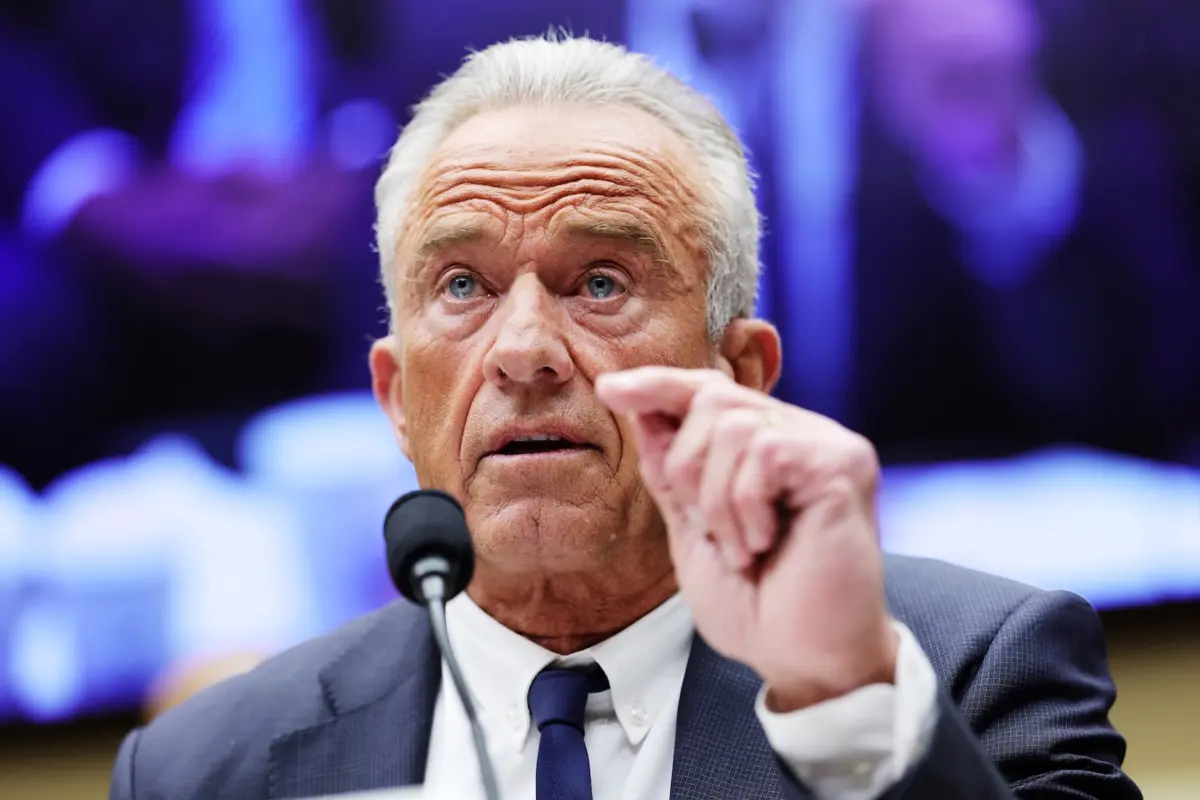
WASHINGTON — U.S. Health and Human Services (HHS) Secretary Robert F. Kennedy Jr. is facing mounting calls for a federal criminal investigation and immediate resignation following the release of investigative reports indicating he allegedly provided false testimony to Congress during his confirmation hearings last year.
The controversy centers on Kennedy’s 2019 trip to Samoa—a Pacific island nation that subsequently suffered a devastating measles epidemic—and whether his prior advocacy and communications directly contradicted statements he made under congressional questioning. As watchdog groups and key Democratic lawmakers demand accountability, the Department of Justice faces intense scrutiny over whether it will act on allegations of false statements made to the legislative branch.
Meanwhile, parallel congressional maneuvers by House Republicans to secure a criminal contempt indictment against former chief medical advisor Dr. Anthony Fauci have encountered major procedural roadblocks within the executive branch, illustrating the sharply contrasting political and legal fortunes defining contemporary health oversight in Washington.
Executive Overview
The convergence of explosive new documentary evidence, rising public health crises, and stalled congressional investigations has intensified political friction across Washington. At the center of the storm is Robert F. Kennedy Jr., who assumed leadership of the nation’s premier health agencies amid widespread controversy regarding his long-standing skepticism toward mainstream vaccine policies.
According to joint reporting by The Guardian and The Associated Press, newly uncovered correspondence demonstrates that Kennedy’s engagement with Samoan health authorities immediately prior to a catastrophic measles outbreak directly conflicted with assertions he made to lawmakers during his Senate confirmation process.
The revelations have prompted swift legislative retaliation and demands for criminal inquiry from prominent Democrats, led by Senator Ron Wyden of Oregon, alongside nonpartisan good-government watchdogs such as American Oversight. However, legal experts note that any potential prosecution under federal statutes regarding statements to Congress requires authorization from the executive branch—a prospect complicated by the current political alignment of the Department of Justice.
Concurrently, Republican lawmakers seeking to penalize Dr. Anthony Fauci for alleged contempt of Congress are discovering that turning political rhetoric into actionable indictments remains a legally treacherous endeavor, with executive branch officials raising serious doubts regarding the procedural viability of such an indictment.
Detailed Chronology: The Samoa Connection and Congressional Testimony
To understand the gravity of the current allegations against Secretary Kennedy, investigators and public health officials have focused heavily on a sequence of events spanning from late 2018 through his confirmation hearings last year.
The 2018–2019 Samoa Measles Crisis
In July 2018, two infants tragically died in Samoa shortly after receiving improperly prepared doses of the Measles, Mumps, and Rubella (MMR) vaccine, which nurses had mistakenly mixed with a muscle relaxant instead of water. Although the Samoan government quickly identified the fatal medical error, the incident triggered widespread panic. Officials temporarily halted the country’s entire MMR vaccination program for approximately 10 months.
Public health experts warned at the time that suspending routine immunizations would leave the island’s population dangerously vulnerable to infectious disease. Those warnings materialized in late 2019 when a severe measles epidemic swept through Samoa. The outbreak infected more than 5,700 people and resulted in 83 deaths, predominantly among infants and children under the age of five.
Kennedy’s 2019 Visit and Correspondence
During the 10-month suspension of the vaccination program—and while heading an influential anti-vaccine organization—Kennedy traveled to Samoa. His visit was widely interpreted by public health officials as an effort to meet with local skeptics and amplify narratives questioning vaccine safety.
For years, Kennedy maintained that his trip had no connection to immunization policies or the MMR vaccine. However, investigative reporting by The Guardian and The Associated Press brought to light two historical letters obtained through public records and archival searches.
According to the AP, Kennedy sent a formal letter to the Samoan prime minister prior to his arrival, explicitly requesting permission to study the island nation’s MMR vaccination program in the wake of the infants’ deaths. Investigators noted that the correspondence used the terms "vaccine" or "vaccination" eight separate times, directly contradicting public statements regarding the nature and intent of his diplomatic and exploratory outreach.
The Confirmation Hearings
During his Senate confirmation hearings last year, lawmakers pressed Kennedy on his historical involvement in international vaccine debates, specifically questioning the true purpose of his 2019 journey to the Pacific.
Under direct questioning, Kennedy insisted that his trip bore no relation to vaccines or immunization advocacy. Armed with the newly discovered archival correspondence, critics argue that these denials constituted materially false statements designed to downplay his anti-vaccine record before lawmakers evaluating his suitability to lead the Department of Health and Human Services.
Supporting Context & Metrics: Public Health Controversies Under the Current Administration
Secretary Kennedy’s tenure overseeing U.S. health agencies has been defined by persistent turmoil, stretching far beyond historical controversies in the South Pacific. Public health infrastructure, regulatory oversight, and consumer safety have faced unprecedented disruption during his administration.
Ongoing Domestic Health Crises
- Measles Resurgence: The United States has continued to grapple with record-breaking measles outbreaks across multiple states, driven in part by declining vaccination rates and amplified vaccine hesitancy. Public health officials have repeatedly tied the erosion of herd immunity to coordinated campaigns questioning the safety and efficacy of standard childhood immunizations.
- Food Safety and Parasite Outbreaks: The administration’s structural and budgetary shifts within regulatory bodies have coincided with notable sanitation challenges. Public health reports highlighted a significant outbreak of waterborne parasites causing severe gastrointestinal illness—frequently characterized by researchers as "explosive diarrhea" outbreaks—linked to gaps in agricultural and food safety enforcement.
- Agency Staff Departures and Morale: Career scientists, epidemiologists, and regulatory experts have departed federal health agencies in significant numbers, citing deep ideological conflicts with political leadership over the handling of infectious diseases, fluoride policies, and nutritional guidelines.
Official Statements and Legal Analysis
The release of the correspondence regarding the Samoa trip has triggered immediate and polarized responses from federal legislators, legal scholars, and government watchdogs.
Congressional and Watchdog Demands for Action
Senator Ron Wyden (D-Ore.) pulled no punches in his public condemnation of the HHS secretary, stating:
"RFK’s platform is built on lies and grifts that leave a trail of dead children in their wake. There are consequences for lying to Congress."
Similarly, the nonpartisan government watchdog group American Oversight formally petitioned the Department of Justice, dispatching a letter to senior officials demanding the immediate opening of a criminal inquiry into whether false statements were made during a congressional proceeding. Other lawmakers, including Senator Angela Alsobrooks (D-Md.), went further, calling for Kennedy’s immediate resignation or termination from the cabinet.
Legal Hurdles to Prosecution
Legal scholars note that providing false material statements to Congress constitutes a federal offense under Title 18 of the United States Code, regardless of whether a witness is formally sworn under oath.
However, practical enforcement remains deeply constrained by the structure of the American constitutional system. Josh Chafetz, a professor of law and politics at the Georgetown University Law Center, observed:
"Lying to Congress is a crime, whether or not the witness is under oath. But this would require the executive branch to prosecute, and Trump’s Justice Department is unlikely to do so."
Because the Department of Justice operates within the executive branch, any decision to indict a sitting cabinet secretary requires prosecutorial initiative from executive leadership—a scenario political analysts view as highly improbable given the administration’s alignment with Kennedy.
Future Outlook: Stalled Republican Pursuits Against Dr. Anthony Fauci
While Democrats and watchdog organizations press forward with accountability efforts against Secretary Kennedy, Republican legislative efforts targeting former public health officials are simultaneously facing severe procedural obstacles.
For months, House Republicans have pursued a criminal contempt of Congress citation against Dr. Anthony Fauci, accusing the veteran immunologist of misleading lawmakers during congressional hearings regarding gain-of-function research and the origins of COVID-19.
However, according to recent reporting by The Wall Street Journal, those efforts have "hit a wall." Administration officials and legal advisors close to the matter have expressed growing skepticism that the current evidentiary and procedural framework is robust enough to sustain a formal federal indictment for failing to answer congressional inquiries.
Sources familiar with the discussions indicate that prosecutors within the executive branch harbor serious doubts about whether the House committee’s questioning met the rigorous technical thresholds required to secure a conviction in federal court. This hesitation underscores the immense legal and evidentiary hurdles required to successfully prosecute high-profile figures for congressional testimony disputes—a reality applying across the political spectrum, whether applied to critics of the current administration or its key officials.
As Congress returns from recess, the intersecting battles over executive accountability, federal oversight, and historical testimony are expected to dominate legislative hearings, ensuring that questions regarding truthfulness, public health policy, and the limits of congressional power remain at the forefront of American politics.
