

Executive Overview
As the gates of the USTA Billie Jean King National Tennis Center swing open for the 2026 US Open, the tournament is serving up more than just elite athletic competition—it is functioning as a high-stakes, multi-million-dollar arena for global corporate warfare and creative brand integration. Running from August 23 through September 13, the 2026 tournament has arrived with an unprecedented slate of high-profile storylines. From the nostalgic, blockbuster return of tennis icons Venus and Serena Williams entering the doubles draw, to Carlos Alcaraz staging a high-stakes comeback to defend his hard-court crown following an injury layoff, the sporting narratives are undeniably rich.
Yet, the court-side drama is increasingly matched by the off-court commercial choreography. In 2026, the US Open has officially transcended its status as a mere two-week athletic contest to become a full-on team sport for corporate sponsors. With the addition of five new major brand partners—bringing the tournament’s total sponsorship roster to an all-time high—the Flushing Meadows fortnight has cemented its reputation as the premier global platform for experiential marketing, digital engagement, and B2B networking.
This deep-dive investigation explores how the intersection of sport and commerce is redefining the business of tennis. Through exclusive insights, comprehensive market metrics, and an analysis of structural shifts within corporate sponsorships, we examine how the US Open has successfully engineered an environment where brands are no longer just passive billboard-holders, but active, integrated participants in the tournament’s cultural fabric.
Detailed Chronology: The Evolution of the 2026 US Open Commercial Landscape
The path to the record-breaking commercial success of the 2026 US Open was paved over several years of strategic pivoting, post-pandemic experiential revamps, and a calculated shift toward immersive, year-round fan engagement.
Q4 2024 – Q1 2025: The Blueprint for Expansion
Following the conclusion of the 2024 tournament, the United States Tennis Association (USTA) corporate partnerships team, led by Managing Director Deanne Pownall, initiated a comprehensive audit of the tournament’s commercial ecosystem. Recognizing that traditional static signage was yielding diminishing returns among younger, digitally native demographics, the USTA crafted a new blueprint for partner integration. The goal was simple yet ambitious: transition from transactional sponsorships to collaborative, multi-platform brand ecosystems.
Q3 2025: Securing the New Guard
By the third quarter of 2025, early renewal discussions with legacy sponsors—including American Express, Chase, and Rolex—paved the way for aggressive recruitment in untapped market sectors. The USTA targeted emerging industries, specifically focusing on fintech, sustainable consumer goods, direct-to-consumer lifestyle brands, and advanced digital infrastructure. This targeted approach bore fruit ahead of the 2026 cycle, resulting in the acquisition of five brand-new corporate partners spanning financial tech, luxury hospitality, and green energy solutions.
August 2026: The Convergence of Narrative and Commerce
As the tournament kicked off on August 23, 2026, the convergence of major athletic storylines and brand activations reached a fever pitch. The announcement that Venus and Serena Williams would reunite for a doubles campaign sent shockwaves through the sports world, instantly multiplying media impressions and driving ticket and broadcast demand to historic highs. Brands quick on their feet immediately pivoted their media buys to capitalize on the nostalgia and cultural gravity of the Williams sisters’ return. Simultaneously, defending champion Carlos Alcaraz’s dramatic return from injury provided luxury watchmakers, athletic apparel giants, and sports recovery brands with a compelling narrative arc to anchor their multi-week campaigns.
Supporting Context & Metrics: The Business Engine Behind Flushing Meadows
To understand why brands are flocking to the US Open in record numbers, one must examine the staggering macroeconomic and demographic metrics driving the tournament’s appeal.
Attendance and Viewership Milestones
The US Open has consistently outpaced its Grand Slam peers in sheer attendance volume. The 2025 tournament shattered previous records by welcoming over 1 million fans across its main draw and qualifying rounds—a milestone no other tennis tournament has achieved. Projections for the 2026 fortnight indicate that this record will not only hold but be surpassed, buoyed by expanded grounds, enhanced hospitality villages, and global broadcast distribution deals reaching over 200 territories.
US Open Attendance Growth (Selected Milestones):
├── 2022: 776,120 attendees
├── 2023: 799,133 attendees
├── 2024: 850,148 attendees
├── 2025: 1,048,669 attendees (First time crossing the 1M threshold)
└── 2026 (Projected): New record highs driven by expanded grounds and star power
The Demographic Advantage for Brands
Unlike golf or Formula 1, which traditionally skew toward specific socioeconomic or gender demographics, tennis boasts one of the most balanced and economically attractive fan bases in global sport.
- Gender Parity: The audience is split nearly 50-50 between male and female fans, making it a prime battleground for both traditionally male-dominated categories (automotive, financial services) and female-centric markets (beauty, wellness, luxury fashion).
- Affluence and Education: US Open attendees and broadcast viewers index significantly higher in household income and higher education attainment compared to the general U.S. population. This makes the tournament a goldmine for premium and luxury brands seeking high-net-worth consumers.
- Global Reach: With fans tuning in from every corner of the globe, the tournament offers brands a dual benefit: hyper-localized, experiential activations on-site in Queens, New York, coupled with massive global digital impressions.
The Evolution of Brand Activation Budgets
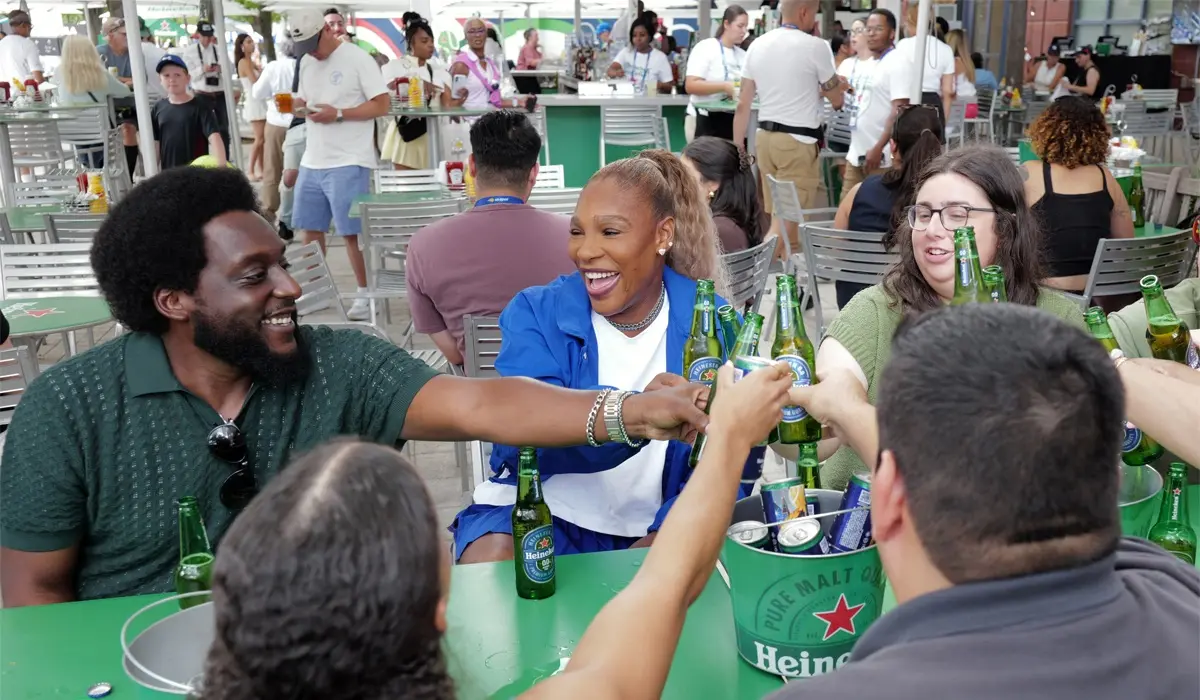
Corporate partners are no longer just paying for logo placement on court nets or baseline signage. Industry data indicates that for every dollar spent on a US Open rights fee in 2026, brands are investing an estimated $2.50 to $3.00 in activation—ranging from custom pop-up installations on the grounds and mobile app integrations to out-of-home (OOH) advertising campaigns across New York City.
Official Statements: Perspectives from the Leadership
The strategic philosophy guiding the 2026 tournament’s commercial success reflects a deliberate effort to balance tradition with cutting-edge modernization.
Deanne Pownall, Managing Director of Corporate Partnerships at the USTA, emphasized the organization’s relentless pursuit of innovation during a recent briefing on the tournament’s commercial strategy:
"Collectively as an organization, we are always looking at how we can continue to deliver the spectacular to all of the segments of the US Open world that matter to us," Pownall stated. "The modern sports consumer—and specifically the tennis fan—does not just want to watch an event; they want to inhabit it, interact with it, and share it. Our approach with our corporate partners this year has been to dissolve the boundary between the brand and the fan experience, creating ecosystems where commerce feels like an organic extension of the sport itself."
Industry analysts have echoed Pownall’s sentiments, noting that the USTA’s willingness to co-create custom activations with brands has set a new benchmark for sports administration.
Mark Thompson, a senior sports marketing analyst at BrandMetrics Global, observed: "What the US Open team has mastered is the art of curation. They haven’t just opened the floodgates to more sponsors; they have engineered a tightly controlled, high-value ecosystem where every new partner brings a distinct experiential layer to the grounds. Whether it’s frictionless digital payments, sustainable waste-reduction initiatives, or immersive fan zones, the brands are enhancing the physical journey of attending the tournament rather than interrupting it."
Future Outlook: The Next Era of Sports Commerce
As the 2026 US Open unfolds over its three-week span, industry insiders are already looking ahead to the future. The success of this year’s tournament—characterized by record-breaking brand integration, five new high-profile partners, and transcendent athletic storylines—provides a clear preview of where sports marketing is headed over the next decade.
1. The Hyper-Personalization of Fan Engagement
Moving forward, physical attendance at Flushing Meadows will increasingly blend with augmented reality (AR) and localized digital ecosystems. Sponsors are already testing real-time, location-based mobile offers that reward fans for visiting specific interactive zones on the grounds. By 2030, expect brand activations to be fully customized to individual user preferences, delivering tailored content, merchandise recommendations, and hospitality perks directly to fans’ devices as they walk the grounds.
2. Sustainability as a Core Commercial Mandate
Environmental consciousness is no longer an optional corporate social responsibility (CSR) checkbox; it is a baseline expectation for US Open partners. The partnerships of the future will increasingly hinge on a brand’s ability to demonstrate tangible sustainability metrics—from zero-waste packaging on-site to carbon-neutral supply chains. Brands that align with the USTA’s aggressive green initiatives will secure a distinct competitive advantage in consumer loyalty.
3. The Blending of Entertainment, Culture, and Sport
The blockbuster narrative of the 2026 tournament—highlighted by the return of the Williams sisters and high-stakes championship defenses—proves that tennis sits at the epicenter of cultural relevance. Going forward, expect sports properties to borrow heavily from the entertainment and fashion industries, treating athletic tournaments as multi-week cultural festivals rather than isolated sporting events. For brands, this means that success at the US Open will require year-round storytelling, agility, and a willingness to merge sport with lifestyle, music, and art.
In summary, the 2026 US Open has definitively proven that tennis is no longer just an individual battle of wills on a 78-foot rectangle of hard court. Through sophisticated partnerships, visionary leadership, and an unwavering commitment to delivering the spectacular, the tournament has established a masterclass in modern sports commerce—ensuring that brands, athletes, and fans alike emerge victorious.
