

Executive Overview
The landscape of commerce media and digital advertising is experiencing a period of profound structural evolution. Driven by the relentless fragmentation of consumer attention, the impending obsolescence of traditional third-party tracking cookies, and the continuous blurring of lines between inspiration and transaction, brands and agencies are re-architecting their operations.
This week’s industry developments underscore a definitive maturity phase in retail media networks (RMNs) and creator-driven commerce. From high-profile executive appointments at retail giants like The Home Depot to strategic talent migrations across holding companies like Dentsu, the talent war for commerce media specialists is intensifying. Simultaneously, long-rumored consolidation is taking tangible shape through high-stakes acquisitions, while legacy apparel brands execute aggressive digital-first turnarounds to reclaim market share.
At the center of this week’s news cycle are three pivotal storylines:
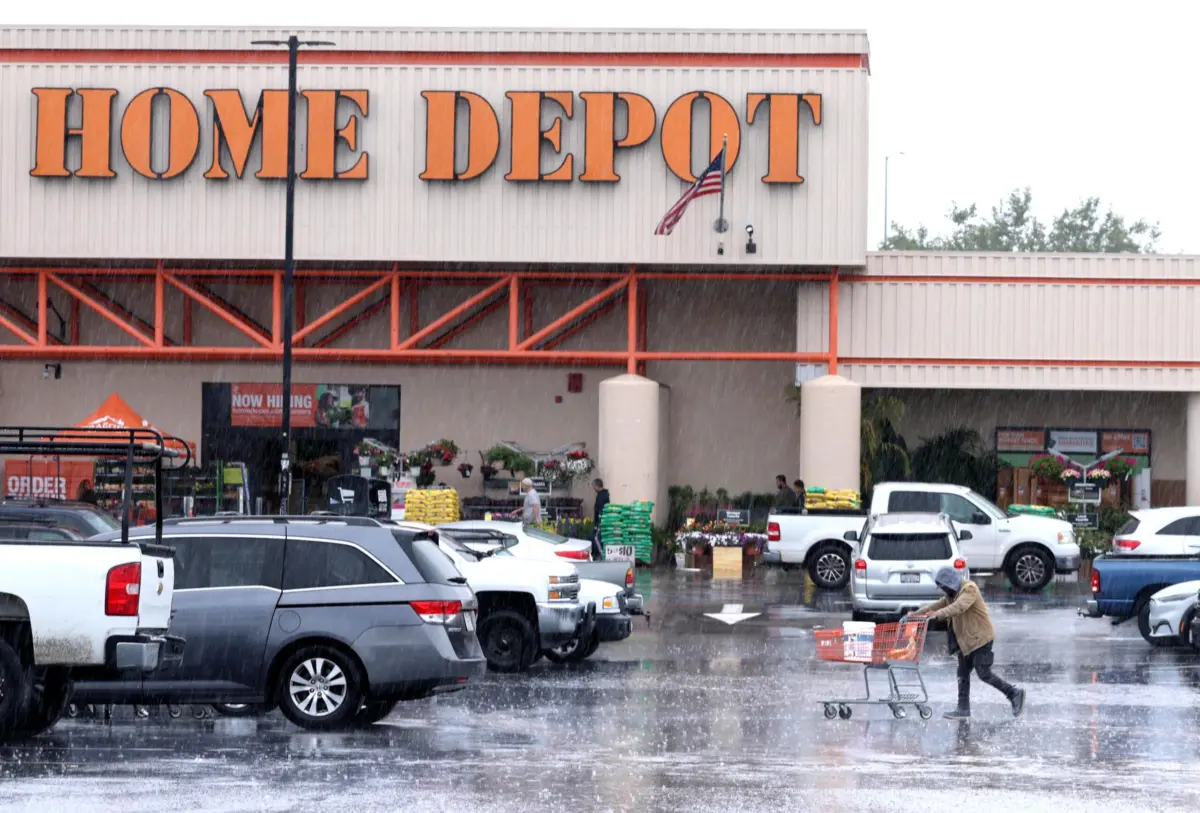
- The Executive Talent Arms Race: Major retail media networks and global agency holding companies are aggressively poaching top-tier talent from grocery and digital giants to scale monetization infrastructure. The Home Depot’s appointment of Kroger Precision Marketing veteran Christine Foster as the new general manager and vice president of Orange Apron Media exemplifies this aggressive recruitment strategy.
- Strategic Consolidation and M&A Activity: Perion’s much-anticipated acquisition signals a broader industry trend toward tech consolidation, offering brands more unified pipelines to target consumers directly at the point of sale.
- Creator Economy Maturation and Brand Turnarounds: Creator marketing continues to secure institutional funding, proving its durability as a primary performance-marketing channel, even as legacy retail brands like Gap’s Athleta pivot toward aggressive repositioning strategies to regain footing in a crowded wellness market.
This report provides a granular examination of these developments, supported by contextual analysis, industry metrics, strategic foresight, and the broader macroeconomic implications shaping the future of commerce media.
Detailed Chronology of the Week’s Events
1. The Home Depot Fortifies Its Retail Media Leadership
- The Appointment: On September 8, The Home Depot officially welcomed Christine Foster as the new general manager and vice president of Orange Apron Media, the home improvement retailer’s in-house retail media network (RMN).
- The Background: Foster transitions to The Home Depot from Kroger Precision Marketing (KPM), where she served as a driving force behind commercial strategy and operations. During her tenure at Kroger, Foster was instrumental in positioning KPM as one of the industry’s most sophisticated, data-rich grocery retail media networks, leveraging first-party purchase data from millions of loyalty program members.
- The Scope: In her new role, Foster assumes command of a massive omnichannel footprint. She will oversee Orange Apron Media’s operations across more than 2,300 brick-and-mortar big-box stores throughout North America, as well as the rapidly expanding e-commerce ecosystem. Her portfolio includes the management and scaling of both managed-service offerings (where brands partner directly with Home Depot’s internal media strategists) and self-service ad platforms (which empower endemic and non-endemic brands to execute automated campaigns).
- The Significance: Home improvement retail media operates under fundamentally different mechanics than fast-moving consumer goods (FMCG) or grocery. Purchase cycles are longer, consideration phases are more deliberative, and project-based buying behavior requires robust cross-category attribution models. By securing an executive of Foster’s caliber from a leading supermarket RMN, Home Depot is signaling its intent to elevate Orange Apron Media from a transactional ad-selling utility into a sophisticated, audience-first data platform.
2. Agency Realignment and Holding Company Shuffles: Dentsu’s Commerce Push
- The Context: Running parallel to brand-side executive moves, global holding companies are restructuring their commerce practices to meet rising client demands for closed-loop measurement. Dentsu announced strategic structural updates and talent acquisitions designed to unify its media, creative, and commerce practices.
- The Mechanics: Modern commerce media requires agencies to break down legacy silos between brand awareness campaigns and performance-driven retail media buys. Dentsu’s recent talent integrations reflect a wider industry mandate: agencies can no longer treat RMNs as an "add-on" channel. Instead, retail media budgets are increasingly commanding double-digit percentages of total brand marketing allocations, necessitating dedicated specialists who understand API integrations, clean rooms, and retail-specific attribution windows.
3. Perion’s Strategic Acquisition: Retail Media Convergence
- The Rumor Mill Realized: For months, retail media circles have buzzed with speculation regarding a major consolidation play by digital advertising technology firm Perion Network. This week, those rumors materialized into an intriguing, high-stakes acquisition.
- The Strategic Fit: As brands demand greater efficiency across fragmented digital touchpoints, ad-tech providers are racing to build unified ecosystems that bridge open-web display, video, connected TV (CTV), and in-store retail media. Perion’s latest maneuver is designed to capture the explosive growth of RMNs by providing technology layers that allow non-endemic brands to advertise across digital retail properties without sacrificing data privacy or campaign transparency.
- Industry Impact: The transaction highlights a broader market truth: stand-alone point solutions are increasingly vulnerable. To survive and thrive in an ecosystem dominated by walled gardens (Amazon, Walmart) and scaled independent networks, ad-tech firms must offer interoperable solutions that simplify the complex plumbing of modern commerce media.
4. Creator Marketing Secures Fresh Capital Injection
- The Funding Wave: While retail media captures the headlines for its proximity to the point of purchase, creator marketing continues to command substantial venture capital and private equity interest. This week saw a fresh infusion of funding directed toward creator-economy platforms designed to streamline influencer identification, contract management, and performance attribution.
- The Shift to Performance: The days of paying creators strictly for top-of-funnel impressions or high follower counts are officially over. The new capital entering the creator marketing ecosystem is explicitly earmarked for technological infrastructure that ties creator content directly to commerce outcomes—utilizing unique discount codes, affiliate tracking links, and live-shopping integrations that convert social media engagement into verifiable retail sales.
5. Gap Inc.’s Athleta: The High-Stakes Turnaround Play
- The Brand Challenge: In the apparel sector, Gap Inc.’s athletic wear brand, Athleta, is executing a high-stakes brand repositioning campaign aimed at reclaiming its market share in the fiercely competitive athleisure category.
- The Strategy: Athleta’s attempted comeback relies heavily on a synchronized commerce media and creator marketing strategy. Facing stiff competition from both legacy athletic giants and digitally native disruptors, Athleta is overhauling its digital marketing funnel. By pairing targeted retail media network placements with authentic creator partnerships, the brand is attempting to re-establish its emotional connection with consumers while optimizing every digital dollar spent for immediate conversion.
Supporting Context & Industry Metrics
To fully appreciate the weight of this week’s developments, one must examine the macroeconomic and structural realities governing the modern commerce media landscape.
The Meteoric Rise of Retail Media Networks (RMNs)
Retail media is no longer a peripheral marketing experiment; it is the fastest-growing sector of the digital advertising economy. According to industry projections from eMarketer and GroupM:
- Global Ad Spend: Global retail media advertising spend is projected to surpass $140 billion, accounting for nearly 20% of all digital ad expenditures worldwide.
- The First-Party Data Imperative: With Google repeatedly delaying its deprecation timeline for third-party cookies—yet signaling an eventual transition toward user choice—and Apple’s App Tracking Transparency (ATT) framework severely limiting device-level tracking, first-party data has become the ultimate corporate currency.
- Why Retailers Win: Retailers possess what publishers and social networks can only approximate: actual transactional truth data. They know not just what users search for or click on, but what they physically or digitally purchase, how often they buy, what items they return, and how promotional pricing impacts their baskets.
| Feature / Metric | Traditional Digital Advertising | Retail Media Networks (RMNs) |
|---|---|---|
| Data Source | Probabilistic behavioral tracking & cookies | Deterministic, first-party transaction data |
| Attribution | Often modeled, probabilistic, multi-touch | Closed-loop (direct link between ad view and purchase) |
| Placement | Open web, social media feeds, publisher sites | Point-of-sale environments (on-site, in-app, in-store) |
| Primary Buyer | Brand marketers & performance buyers | Brand marketers, trade marketing teams, & shopper marketers |
The Home Depot’s Strategic Advantage
Home Depot’s Orange Apron Media occupies a unique niche within this ecosystem. Unlike grocery RMNs (such as Kroger or Albertsons), where purchase frequency is high and basket sizes are relatively modest, home improvement retail is characterized by:
- High-Consideration Purchases: Consumers research appliances, lumber, fixtures, and tools for weeks before executing a transaction.
- Pro vs. DIY Segments: Orange Apron Media must successfully cater to two distinct audiences: professional contractors (who buy in bulk, require reliable job-site fulfillment, and look for efficiency) and do-it-yourself (DIY) consumers (who require inspiration, educational content, and step-by-step guidance).
- The Connected Store: With over 2,300 physical storefronts acting as fulfillment hubs, Home Depot’s retail media capabilities extend beyond the digital screen, integrating digital-out-of-home (DOOH) screens, endcap displays, and in-store audio networks into a unified programmatic buying interface.
Official Statements & Industry Perspectives
The convergence of retail media talent acquisition, ad-tech consolidation, and brand turnarounds has generated considerable dialogue across executive suites.
-
On Executive Talent Migration:
Industry analysts note that the movement of leaders like Christine Foster from grocery RMNs to home improvement giants illustrates the maturation of the trade. “Retail media has graduated from an experimental side-project funded by vendor co-op dollars to a core P&L driver,” noted one senior media agency executive. “When a retailer like Home Depot recruits top-tier operational talent from a powerhouse like Kroger, it signals that the playbook is being standardized. RMNs are no longer just selling digital shelf space; they are building fully fledged media empires powered by enterprise data.” -
On Tech Consolidation (Perion’s Acquisition):
Ad-tech observers have emphasized the necessity of platform unification. Brand marketing teams are suffering from severe "vendor fatigue." Managing disparate point solutions for CTV, programmatic display, retail media attribution, and creator verification has created operational inefficiencies. Strategists suggest that Perion’s recent acquisition reflects an overarching market demand: “Marketers do not want more dashboards; they want fewer, smarter, more integrated pipes. Consolidation is the only logical response to an over-fragmented digital ecosystem.” -
On Brand Turnarounds (Athleta’s Strategy):
Retail analysts monitoring Gap Inc.’s turnaround efforts emphasize that digital execution alone cannot salvage a brand without clear product differentiation. However, effective commerce media deployment can accelerate visibility. “When a brand like Athleta attempts a comeback, they cannot afford wasted media impressions,” stated a retail brand strategist. “By aligning creator marketing authenticity with hyper-targeted retail media networks, heritage brands are finding ways to bypass traditional, inefficient upper-funnel spending and speak directly to high-intent consumers.”
Future Outlook: What’s Next for Commerce Media?
As we look toward the remainder of 2026 and beyond, several critical trends will define the trajectory of commerce media, retail advertising networks, and brand marketing strategies:
1. The Proliferation of In-Store Retail Media (DOOH)
While digital e-commerce retail media has matured rapidly, the final frontier for RMN monetization is the physical store. With the vast majority of retail transactions still occurring within brick-and-mortar locations, networks are aggressively deploying Digital Out-of-Home (DOOH) screens, smart shopping carts, beacon technology, and in-store audio advertising. Executives managing networks like Home Depot’s Orange Apron Media will increasingly focus on bridging the gap between digital ad exposure and physical register checkouts, creating true omnichannel closed-loop measurement.
2. Clean Rooms and Privacy-Safe Collaboration
As regulatory scrutiny intensifies and global privacy laws evolve, the ability to share data between brands, retailers, and publishers without violating consumer privacy is paramount. Enterprise Data Clean Rooms are transitioning from experimental tools to mandatory infrastructure. Retail media networks that offer secure, frictionless clean-room environments will command premium ad dollars from Fortune 500 brands seeking to match their first-party customer lists with retail purchase data safely.
3. The Blurring Lines Between Creator Commerce and RMNs
The wall separating creator marketing and retail media is crumbling. Forward-thinking brands are no longer treating influencer campaigns as isolated brand-awareness initiatives managed by PR agencies. Instead, creators are being integrated directly into retail media supply chains—starring in shoppable video ads hosted directly on retailer websites, driving traffic via affiliate links embedded in RMN sponsored content, and serving as trusted curation voices within specialized retail ecosystems.
4. Heightened Accountability and ROI Scrutiny
In a constrained macroeconomic climate, Chief Marketing Officers (CMOs) face unprecedented pressure from Chief Financial Officers (CFOs) to prove the exact return on investment (ROI) for every marketing dollar spent. Retail media’s inherent advantage—deterministic, closed-loop attribution—will continue to draw budget away from traditional, opaque media channels. Networks that fail to provide transparent, standardized measurement and intuitive self-service platforms will quickly lose market share to sophisticated competitors.
Stay ahead of the curve as the industry’s top marketers converge to debate these shifts, strategies, and solutions. Join industry leaders at upcoming flagship gatherings like Brandweek to secure the insights, connections, and innovative frameworks shaping the future of commerce media.