

Executive Overview
A decade after its initial conception, the Independent Publishers Caucus (IPC) has quietly transformed from an informal alliance into one of the most vital advocacy and operational bodies within modern literary commerce. Founded on the principle that independent presses require a unified voice to survive an increasingly consolidated media landscape, the organization now represents 107 member publishers—a significant expansion from the 69 member presses registered at its five-year milestone.
Operating in an industry dominated by the "Big Five" publishing conglomerates, small and mid-sized presses have historically faced systemic barriers to shelf space, library acquisition, and trade visibility. The IPC’s recent milestones—most notably the launch of its dedicated weekly bestseller list in partnership with the American Booksellers Association (ABA) and the appointment of full-time Executive Director Daniel O’Brien—signal a mature phase of strategic intervention. By establishing shared operational infrastructure while maintaining strict criteria for independent membership, the IPC offers a sustainable model for purpose-driven publishing houses navigating turbulent retail waters.
       [ INDEPENDENT PUBLISHERS CAUCUS: 10-YEAR EVOLUTION ]

  DENVER CONCEPT          5-YEAR MARK             10-YEAR MILESTONE
 (Winter Institute)    (69 Member Presses)      (107 Member Presses)
        │                       │                        │
        ▼                       ▼                        ▼
  • Dan Simon &           • Expanding network      • Full-time Exec Director
    Tom Halleck spark       across mid-tier          (Daniel O'Brien)
    founding idea           indie presses          • IPC Top 40 Lists (ABA Data)
  • Grassroots mission                            • Shared intern curriculum
    to combat isolation                            • POS & D2C tech integration
Detailed Chronology: From Denver Coffee Chat to Industry Coalition
The Denver Genesis (10 Years Ago)
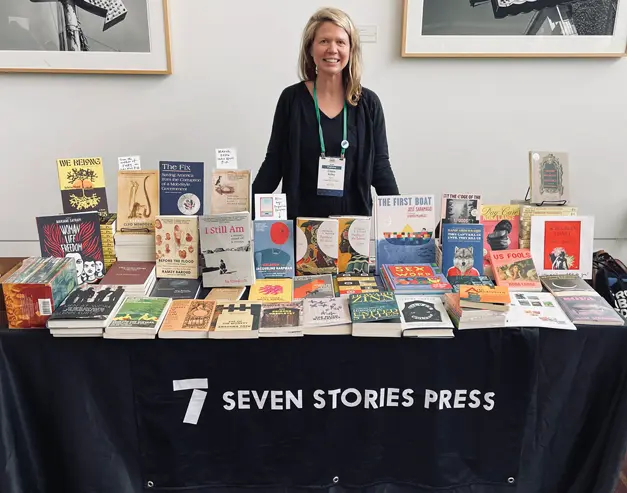
The seeds of the IPC were sown at the American Booksellers Association’s Winter Institute in Denver. Amid panel sessions focused on retail logistics and corporate distribution shifts, Dan Simon, publisher of Seven Stories Press, and Tom Halleck, former associate publisher of Beacon Press, began discussing the structural isolation plaguing mid-sized independent publishers.
While individual houses maintained distinct editorial mandates, they shared identical operational vulnerabilities: lack of bargaining leverage with major distributors, limited access to front-of-store placement in commercial bookstores, and an absence of collective educational resources. Simon and Halleck envisioned an organization that could aggregate the influence of these disparate entities without compromising their editorial autonomy.
+-------------------------------------------------------------------------+
|                    FOUNDING MILESTONES OF THE IPC                       |
+-------------------------------------------------------------------------+
| Denver Winter Institute | Concept birthed by Dan Simon & Tom Halleck    |
+-------------------------+-----------------------------------------------+
| Year 5 Milestone        | Network scales to 69 member presses           |
+-------------------------+-----------------------------------------------+
| Year 10 Milestone       | Reaches 107 members; hires Exec Director      |
+-------------------------+-----------------------------------------------+
| Bestseller Launch       | Debuts IPC Top 40 Adult Fiction/Nonfiction    |
+-------------------------------------------------------------------------+
Strategic Growth and Structural Formalization
Over the next five years, the nascent caucus expanded organically, assembling a membership roster of 69 presses. As the organization grew, informal conversations gave way to institutional governance.
To manage increasing operational complexities, the IPC established a dedicated steering committee and eventually brought on Daniel O’Brien as its full-time Executive Director. O’Brien, who holds a parallel leadership role with the Association of American Literary Agents (AALA), brought vital structural discipline to the caucus.
Today, representing 107 publishers, the IPC has shifted its focus from basic solidarity to actionable market tools, culminating in the launch of the IPC Top 40 bestseller lists—a dedicated metric designed to elevate independent titles within the broader trade bookselling ecosystem.
Supporting Context & Key Industry Metrics
Defining the Boundaries of "Independent"
Because the word independent is frequently co-opted across media industries, the IPC enforces strict governance rules to preserve its core mission. To qualify for membership, a publisher must satisfy specific quantitative criteria:
                  ┌────────────────────────────────────────┐
                  │       IPC MEMBERSHIP QUALIFICATIONS    │
                  └───────────────────┬────────────────────┘
                                      │
         ┌────────────────────────────┼────────────────────────────┐
         ▼                            ▼                            ▼
  [ 10+ Titles ]               [ 3+ Authors ]             [ ≤ 60 Staff ]
Minimum active backlist      Demonstrated catalog         Caps organizational
or frontlist in print authorial diversity scale to guard focus- Catalog Breadth: Must maintain at least 10 books in print.
- Author Diversity: Must publish works by at least three distinct authors.
- Staff Ceiling: Must employ no more than 60 full-time staff members.
These parameters explicitly exclude larger, historically independent entities such as W.W. Norton & Company or Grove Atlantic. By capping staff size at 60 employees, the IPC ensures its programming remains focused on small to mid-sized presses that lack corporate-level administrative safety nets.
Navigating the Post-Pandemic Retail Surge
The strategic necessity of the IPC is underscored by recent shifts in independent bookselling. According to data from the American Booksellers Association, approximately 600 new independent bookstores have opened across the United States since the onset of the COVID-19 pandemic.
               [ POST-PANDEMIC RETAIL BOOKSTORE ECOSYSTEM ]

     ┌───────────────────────────────────────────────────────────┐
     │  ~600 New Indie Bookstores Opened Since Pandemic (ABA)    │
     └─────────────────────────────┬─────────────────────────────┘
                                   │
                                   ▼
     ┌───────────────────────────────────────────────────────────┐
     │ Risk: Defaulting to Big Five Distro Channels for Frontlist │
     └─────────────────────────────┬─────────────────────────────┘
                                   │
                                   ▼
     ┌───────────────────────────────────────────────────────────┐
     │ Solution: IPC Direct Engagement & Top 40 Bestseller Lists │
     └───────────────────────────────────────────────────────────┘
While this retail resurgence offers new sales avenues, it presents a distinct challenge: new booksellers, often operating with lean staffs, frequently rely on automated or centralized ordering pathways. Because many independent presses share distribution channels with Big Five publishers, store managers cannot easily differentiate between a book published by a corporate conglomerate and one produced by a small indie press.
Without proactive outreach, new stores risk defaulting to conglomerate frontlists, leaving indie presses invisible despite robust consumer demand for diverse titles.
The IPC Top 40 Bestseller Infrastructure
To bridge this discovery gap, the IPC collaborated with the ABA to launch its proprietary weekly bestseller lists. Tabulated directly from independent bookstore sales data, the system features:
- Adult Fiction Top 40: Highlighting top-performing narrative works from caucus members.
- Adult Nonfiction Top 40: Tracking memoirs, critical essays, history, and investigative works.
- Upcoming Children’s List: A planned expansion targeting early readers, middle-grade, and young adult literature.
Unlike national trade lists that aggregate mass-market sales heavily influenced by corporate marketing spend, the IPC lists isolate sales performance strictly within independent retail environments.
       [ BESTSELLER LIST COMPARISON: MARKET DYNAMICS ]

   MASS TRADE BESTSELLER LISTS           IPC TOP 40 BESTSELLER LISTS
  ┌─────────────────────────────┐       ┌─────────────────────────────┐
  │ • Driven by multi-million   │       │ • Tabulated via ABA indie   │
  │   dollar marketing budgets  │  VS   │   bookstore sales data      │
  │ • Dominated by Big Five     │       │ • Isolates indie titles from│
  │   conglomerate frontlists   │       │   corporate noise           │
  │ • High mass-market focus    │       │ • Spotlights intellectual & │
  │                             │       │   artistic dynamism         │
  └─────────────────────────────┘       └─────────────────────────────┘
Official Statements & Core Stakeholder Insights
Reclaiming the Cultural Narrative
For founding members, the creation of an independent bestseller list is an intervention against commercial homogenization. Dan Simon, publisher of Seven Stories Press, emphasizes the stark aesthetic and thematic differences between corporate bestseller lists and the IPC rankings:
"Go look at the New York Times bestseller list—mostly it’s things that are selling but aren’t really changing hearts and minds. Now, go look at the IPC Top 40 fiction or nonfiction list, and there’s all this dynamism."
Simon’s observations speak to the underlying philosophy of the caucus: elevating books that prioritize artistic integrity, political courage, and cultural critique over predictable commercial success.
+-----------------------------------------------------------------------------------+
|                        STAKEHOLDER PERSPECTIVES & ROLES                           |
+-------------------+--------------------------------+------------------------------+
| LEADER            | AFFILIATION                    | CORE FOCUS / PERSPECTIVE     |
+-------------------+--------------------------------+------------------------------+
| Dan Simon         | Seven Stories Press            | Cultural dynamism vs.        |
|                   | (Co-Founder)                   | commercial homogenization    |
+-------------------+--------------------------------+------------------------------+
| Christie Henry    | Princeton University Press     | "Purpose before profit";     |
|                   | (Largest Member)               | shared educational value     |
+-------------------+--------------------------------+------------------------------+
| Emily Saer Cook   | Cursor Literary                | Combating isolation and      |
|                   | (Education Committee)          | professional "darkness"      |
+-------------------+--------------------------------+------------------------------+
| Sanj Kharbanda    | Beacon Press                   | Retail distribution clarity; |
|                   | (Steering Committee)           | intentional, non-scaled growth|
+-------------------+--------------------------------+------------------------------+
Defining Purpose-Driven Publishing
That ethos is echoed across the caucus’s diverse membership, which spans nonprofit presses, academic institutions, and commercial indie operations. Christie Henry, director of Princeton University Press—which joined the IPC three years ago and stands as the caucus’s largest member—summarizes the collective mission:
"I think you can summarize it as publishers who put purpose before profit."
Henry notes that this mission extends far beyond ideological alignment into tangible operational benefits. A prominent example is the IPC’s shared internship curriculum, which enables member presses to pool training resources virtually.
Rather than requiring each small press to design an isolated onboarding program, the IPC provides a centralized, high-caliber educational environment. "Our interns loved it," Henry notes, calling it one of the "clearest cases of the caucus creating value that smaller members couldn’t produce alone."
Combating Operational Isolation
For smaller presses operating on razor-thin margins, the caucus serves as a vital professional support system. Emily Saer Cook, founder of Cursor Literary and member of the IPC education committee, describes the psychological and practical strain of independent publishing without a collective framework:
"The IPC has given us language for how strong independent publishing is. Without that cohesion, publishers are left with what she called ‘the darkness’—the isolation of operating alone, in a business where the work is endless, and it’s hard to come up for air."
Through biweekly virtual town halls, dedicated member newsletters, and shared educational programming, the caucus converts isolated operations into an integrated community capable of collective problem-solving.
        [ COLLABORATIVE VALUE CREATION FOR INDIE PRESSES ]

               ┌─────────────────────────────────┐
               │    INDEPENDENT PUBLISHERS       │
               │            CAUCUS               │
               └────────────────┬────────────────┘
                                │
   ┌────────────────────────────┼────────────────────────────┐
   ▼                            ▼                            ▼
[ Resource Pooling ]     [ Mutual Advocacy ]     [ Operational Tech ]
Joint Intern Training    Bestseller Discovery    POS Integration &
Program Curriculum       Lists & Library Forums  Direct-to-Consumer Tools
Strategic Distribution and Retail Integration
From a sales and logistics standpoint, the caucus addresses the friction that occurs at the point of purchase. Sanj Kharbanda, associate publisher and director of sales and marketing at Beacon Press and an IPC steering committee member, highlights how hard it is for booksellers to identify independent books within standard distribution catalogs:
"Booksellers, especially new ones, often can’t tell which titles come from independent presses, since so many are distributed through the same channels as the Big Five."
Kharbanda notes that the IPC’s goal is not unbridled organizational growth, but rather deep engagement among houses committed to mutual aid:
"There is no goal to grow to 150 or 200 members. We’re happy where we are. We just want to make sure that everybody who’s in it is in it for the right reasons. And the right reasons include putting in sweat equity alongside everybody else."
Strategic Roadmap & Future Outlook
As the IPC enters its second decade, its steering committee and executive leadership have outlined several key initiatives to deepen market penetration and streamline operations for member presses.
+-----------------------------------------------------------------------------+
|                        IPC STRATEGIC ROADMAP FOR 2026+                      |
+-----------------------------------------------------------------------------+
| 1. POS System Integration                                                   |
|    Direct software flagging of IPC titles within retail management systems. |
+-----------------------------------------------------------------------------+
| 2. Direct-to-Consumer (D2C) Infrastructure                                  |
|    Shared tech pipelines enabling indie presses to optimize D2C storefronts. |
+-----------------------------------------------------------------------------+
| 3. Expanded Bestseller Metrics                                              |
|    Formal rollout of the IPC Children's Top 40 List via ABA sales data.     |
+-----------------------------------------------------------------------------+
| 4. Virtual Library Ecosystem Engagement                                     |
|    Transitioning the biennial IndieLib Forum to virtual formats for access. |
+-----------------------------------------------------------------------------+
Technical Integration with Bookselling POS Systems
A major priority for the IPC is integrating member metadata directly into bookstore Point-of-Sale (POS) and inventory management systems. By working with vendor software providers, the IPC aims to ensure that when a bookseller searches for titles or processes orders, an "IPC Press" tag automatically appears alongside the entry. This digital flagging system gives front-line booksellers immediate visibility, encouraging intentional ordering from independent houses.
Expanding Institutional Reach: The IndieLib Initiative
Beyond retail bookstores, the IPC is actively strengthening ties with public and academic libraries—a critical revenue stream and public access point for independent literature.
Through its biennial in-person IndieLib Forum, hosted at the Public Library Association (PLA) conference, the caucus brings independent publishers directly into conversation with collection development librarians.
To address mounting municipal budget constraints and travel restrictions affecting library staff, Executive Director Daniel O’Brien indicates that the caucus is developing a hybrid and virtual extension of the IndieLib Forum. Transitioning elements of the forum to digital platforms will allow regional library systems and under-resourced community institutions to interface directly with indie press catalog managers.
                   ┌──────────────────────────────┐
                   │    INDIELIB FORUM EXPANSION  │
                   └──────────────┬───────────────┘
                                  │
         ┌────────────────────────┴────────────────────────┐
         ▼                                                 ▼
  [ Traditional Model ]                             [ Emerging Hybrid ]
In-person PLA conference                         Virtual programming for
programming for metro libraries                  budget-constrained systems
Developing Direct-to-Consumer (D2C) Frameworks
Recognizing the shifting dynamics of consumer discovery, the IPC is exploring shared direct-to-consumer digital infrastructure. While corporate publishers invest millions in proprietary e-commerce engines, small presses often struggle with high platform fees, complex logistics, and fragmented customer data.
By evaluating collective D2C software solutions and shared fulfillment strategies, the caucus aims to help member presses build sustainable, direct relationships with readers without sacrificing operational efficiency.
Conclusion: Sustainable Growth Over Hyper-Scaling
The Independent Publishers Caucus’s ten-year arc reflects a calculated alternative to standard corporate consolidation. By limiting membership to organizations that fit strict operational definitions and requiring active participation from its members, the IPC has built a resilient model for mid-sized independent publishing.
As the caucus rolls out its POS integrations, expands its bestseller tracking systems, and broadens its library engagement, its focus remains fixed on its founding mandate: building a collaborative ecosystem where purpose-driven presses can thrive alongside the readers and booksellers who support them.
