

Executive Overview
Over the past week, technology news cycles have been dominated by urgent warnings regarding "drastic measures," "exorbitant penalties," and "sweeping new artificial intelligence regulations" taking effect under European Union jurisdiction. For product managers, software engineers, and UX designers worldwide, the headlines have sparked a predictable wave of anxiety. However, a rigorous examination of the actual regulatory text reveals a much more targeted, pragmatic, and sensible policy framework.
At its core, the European Union’s latest transparency mandate is not designed to stifle innovation or penalize routine software automation. Instead, it establishes clear, enforceable rules to ensure that when artificial intelligence is used to generate or manipulate content that could reasonably be mistaken for human output, that fact is explicitly, unambiguously disclosed.
Taking full effect on August 2, 2026, these legally binding transparency obligations apply broadly. Much like the General Data Protection Regulation (GDPR) and the European Accessibility Act (EAA), the geographic scope of the mandate is not restricted to organizations headquartered within the EU. Any enterprise globally—whether based in Silicon Valley, Tokyo, or London—that deploys AI outputs destined for or consumed by EU citizens must comply.
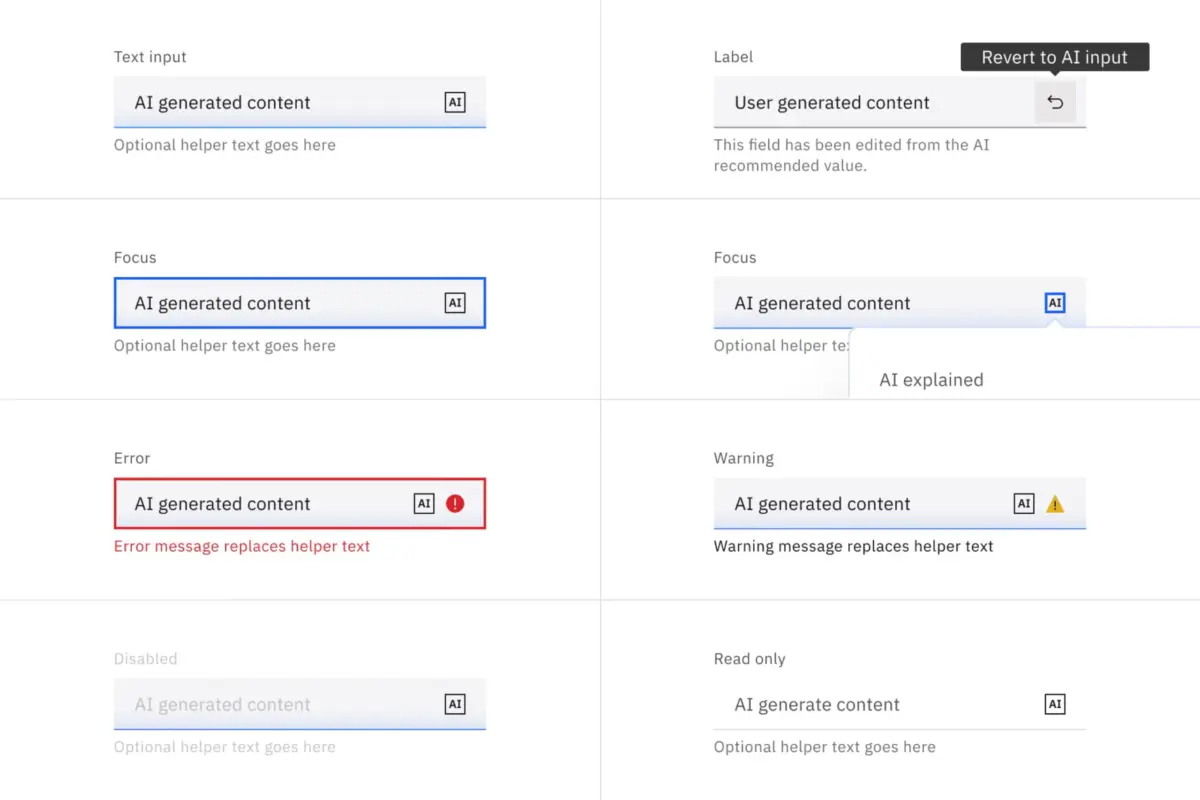
For product teams, this regulatory milestone signals the end of ambiguous UI design patterns. The ubiquitous "sparkle" icon, long used as a catch-all indicator for any AI-powered feature, will no longer suffice. Organizations must adopt explicit, accessible, and standardized labeling systems to distinguish between human-authored work and machine-generated content.
Detailed Chronology and Regulatory Milestones
Understanding how we arrived at the current compliance landscape requires tracing the deliberate, multi-year evolution of European AI governance. The path from conceptual white papers to enforceable legal statutes has been methodical, providing industry stakeholders ample time to adapt—provided they were paying attention.
The Genesis of European AI Governance
- April 2021: The European Commission officially proposed the Artificial Intelligence Act (AI Act), introducing a risk-based framework designed to classify AI applications according to their potential societal impact, ranging from minimal risk to unacceptable risk.
- December 2023: After intense trilogue negotiations between the European Parliament, the Council of the European Union, and the European Commission, a provisional political agreement was reached on the final text of the AI Act.
- March–June 2024: The European Parliament overwhelmingly voted to adopt the AI Act, followed by formal endorsement from the EU Council, cementing the legislation as the world’s first comprehensive legal framework for artificial intelligence.
- August 2024: The AI Act officially entered into force, triggering staggered implementation timelines for different risk categories, governance structures, and foundational compliance obligations.
- Late 2024 to Mid-2025: The European Commission initiated public consultations and industry workshops to draft specialized Codes of Practice, focusing heavily on general-purpose AI models, systemic risk management, and content watermarking standards.
- August 2, 2026: A critical enforcement milestone arrives. The transparency and labelling obligations detailed under Article 50 of the AI Act become fully operational, legally binding providers and deployers to mark synthetic content across digital touchpoints.
This structured rollout underscores that the 2026 transparency mandates are not sudden, reactionary decrees. They represent the culmination of a transparent, highly scrutinized legislative process intended to bring accountability to generative AI systems.

What Actually Needs Labelling? Decoding Article 50
To maintain compliance without over-engineering every digital product, compliance and design teams must understand precisely what the legislation targets. According to Article 50(4) of the EU AI Act, the fundamental objective is to ensure that anyone interacting with artificial intelligence can immediately and unmistakably recognize when content has been artificially generated or manipulated.
Providers vs. Deployers: Shared Legal Responsibilities
The regulations draw a firm line between two distinct actors in the AI ecosystem:
- Providers: Entities that develop an AI system or have an AI system developed and place it on the market under their own name or trademark.
- Deployers: Organizations or individuals that use an AI system under their authority, integrating it into commercial products, internal workflows, or public-facing platforms.
Crucially, much like GDPR compliance, an enterprise cannot bypass its Article 50 obligations simply by licensing an external, third-party foundation model or API. If your company deploys synthetic output to EU end-users, ultimate liability for transparent disclosure rests with you.

Defining the Scope: What Triggers Disclosure?
Not every line of code written with the help of GitHub Copilot or every automated database query requires a prominent visual disclaimer. The transparency rules specifically target:
- Deepfakes and Synthetic Media: Audio, video, and image files that realistically depict persons, places, or events that do not exist or did not occur in the manner portrayed.
- Public Interest Content: Text-based or multimedia content published with the intent to inform the public on matters of recognized public interest (including health, safety, environmental policy, economic affairs, politics, scientific consensus, and cultural commentary).
- Commercial and Promotional Imagery: Realistic AI-generated illustrations, product photographs, and marketing posters that resemble authentic physical items or real individuals.
The Fine Line Between "Edited" and "AI-Generated" Content
One of the most frequent sources of confusion for product teams is determining where human editorial intervention transforms machine output into human work. If an AI generates a baseline draft, but a human editor reviews and revises it, does the disclosure requirement still apply?
Permitted Assistive Edits
According to the European Commission’s updated guidance, routine technical adjustments and basic assistive tools do not constitute AI generation. These exempt categories include:

- Automated spellcheck, grammar correction, and syntax suggestions.
- Basic document formatting, text layout, and structural styling.
- Image cropping, resizing, color correction, and baseline lighting adjustments.
- Machine translation tools used to convert human-authored text into another language.
Substantive AI Generation
Conversely, actions that fundamentally create new semantic value are classified as AI generation. These include:
- Automated text summarization.
- Composite image generation or generative fill (adding or removing objects from a photograph).
- Substantive text rewrites or autonomous content creation from scratch.
Furthermore, the Commission has explicitly clarified that a cursory human glance—often described as "a human skimmed it before publishing"—does not satisfy the threshold for editorial review. For an exemption to apply, the review must be substantive, with a named individual or legal entity taking formal editorial responsibility for the published material. In short: minor editorial polish is exempt, but automated generation requires clear, persistent disclosure.
Why AI "Sparkles" Are No Longer Enough
For years, the software industry has relied on a universal shorthand for artificial intelligence: the sparkle icon ($astvcenter…ast$ or $star$). From mobile operating systems to enterprise SaaS dashboards, sparkles have indicated that a feature was powered by machine learning. However, under the new EU guidelines, this visual trope is officially inadequate.

The Ambiguity of the Sparkle Symbol
Research from organizations such as the Nielsen Norman Group highlights a major UX flaw: the sparkle icon is inherently ambiguous. Users frequently interpret sparkles to mean "this interface element contains an AI-powered assistant or feature," rather than "this specific piece of content was artificially created by a machine."
Because the EU mandate requires a signal that is "clear, distinguishable, and unambiguous," relying on a generic sparkle fails legal muster. A tiny, unlabelled icon hidden in a corner, a disclosure notice buried deep within terms of service, or an ephemeral tooltip that vanishes after two seconds will result in immediate non-compliance.
The Official EU AI Icon Set and Best Practices
To bridge this gap, the European Commission has published an official set of AI transparency icons as part of its Code of Practice. These standardized marks differentiate between:

- Basic AI system interactions.
- Fully AI-generated content.
- Partially modified or edited synthetic content.
However, the Commission emphasizes a vital caveat: simply displaying an icon does not automatically guarantee legal compliance. To meet the standard of transparency, product designers should pair any official AI icon with plain-text language (such as an explicit "AI-generated" tag). Crucially, this metadata and visual label must persist even if the content is downloaded, exported, or reshared across external platforms.
Global Context: A Regulatory Pattern, Not an Isolated Event
While European lawmakers are leading the charge with comprehensive frameworks like the AI Act, the 2026 guidelines are not happening in a vacuum. Product teams operating internationally are witnessing a global convergence on synthetic content transparency:
- United States: While lacking a single comprehensive federal AI law, multiple states have enacted targeted legislation. California, Texas, and New York have introduced strict disclosure mandates concerning synthetic human performers in digital media, deepfakes in political advertising, and automated consumer-facing chatbots.
- Asia-Pacific: Jurisdictions including China and South Korea have aggressively rolled out mandatory watermarking and labelling requirements for generative AI content, penalizing platforms that fail to tag synthetic imagery and video.
This international alignment demonstrates that AI transparency is becoming a foundational baseline for digital products worldwide.

Future Outlook and Actionable Recommendations for Product Teams
Rather than viewing the August 2026 enforcement date as a compliance crisis, forward-thinking organizations are treating it as an opportunity to build trust and improve user experience. Clear labelling helps users filter out low-quality "AI slop," elevating genuinely valuable human-machine collaboration.
To prepare your organization for the new regulatory reality, consider implementing the following steps:
- Audit Your AI Features: Conduct a comprehensive inventory of all software products touching EU citizens to identify where synthetic text, images, or audio are being generated.
- Revise Design Systems: Move away from ambiguous sparkle icons. Integrate accessible, standardized UI components (such as explicit text tags and persistent metadata badges) directly into your company’s design system—similar to the Carbon Design System’s approach to AI labels.
- Establish Editorial Workflows: Define clear internal protocols for human editorial review, ensuring that any content claiming human exemption has traceable accountability.
- Invest in Technical Watermarking: Implement robust cryptographic watermarking and metadata embedding so that AI-generated assets retain their transparency tags even when exported.
By embracing transparency as a core design principle today, product teams can ensure compliance, avoid regulatory penalties, and foster a more honest, trustworthy digital ecosystem.

Meet "Design Patterns For AI Interfaces"
As the software industry navigates these complex UX and regulatory shifts, designers and engineers need practical, battle-tested solutions. Design Patterns For AI Interfaces is a comprehensive video course by Vitaly Friedman, featuring real-world examples from cutting-edge products, expert guidelines, and actionable design strategies.
Whether you are designing conversational agents, generative media tools, or complex data dashboards, this course provides the patterns you need to build compliant, user-friendly AI experiences. Watch a free preview on YouTube or explore the full curriculum at Design Patterns For AI Interfaces.
Useful Resources & Official Documentation
- European Commission Official Statement on AI Transparency (August 2026)
- EU Digital Strategy: Transparency Obligations Under Article 50 of the AI Act
- European Commission Code of Practice on AI-Generated Content
- EU Guidelines on Official Icons for Labelling AI-Generated Content
- Carbon Design System: AI Label Usage Guidelines
- Nielsen Norman Group Research: The AI Sparkles Icon Problem
(yk)