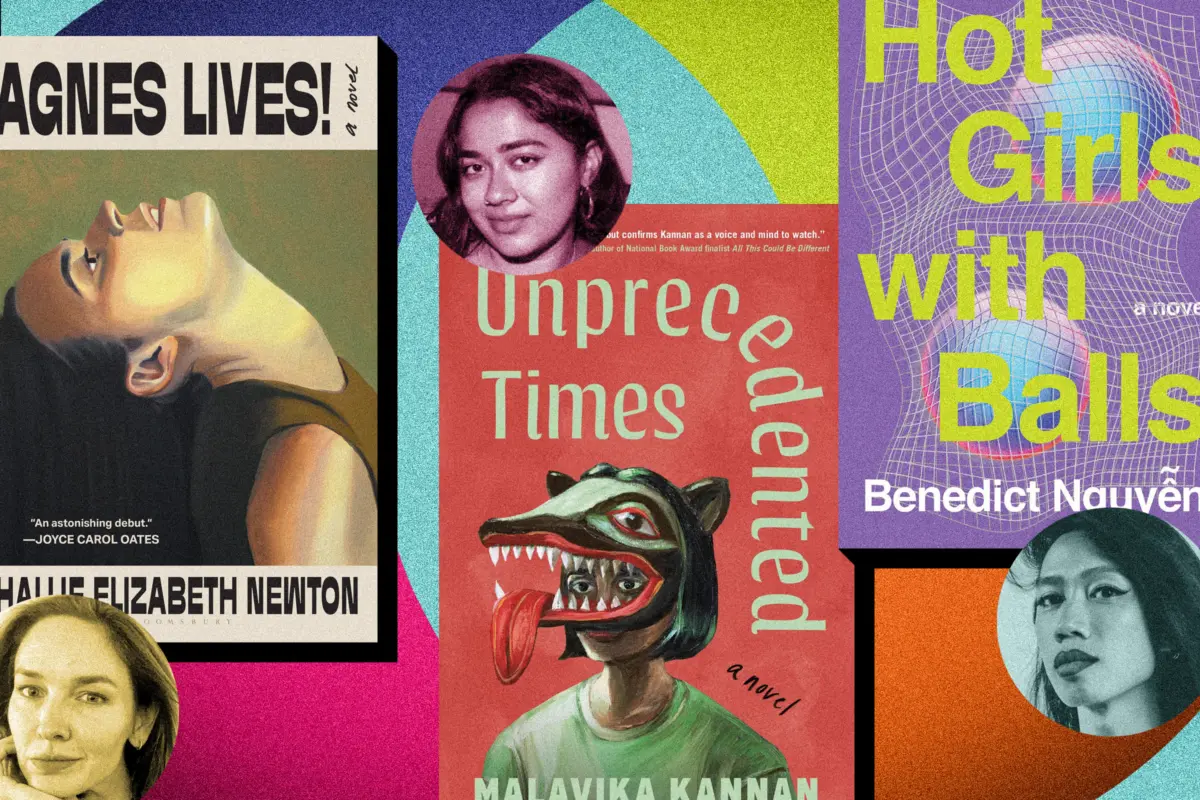
The modern literary landscape is defined by an unprecedented paradox: even as books are increasingly discovered, hyped, and catapulted onto bestseller lists via digital platforms, the psychological weight of those very platforms has become an inescapable burden for authors. Which comes first in the 21st-century publishing ecosystem—the manuscript, the traditional book deal, or the massive, algorithmic social media following required to drive instant sales?
This question haunts a new generation of writers who have come of age alongside the platforms that upend traditional publishing. In recent years, the direct line between social media awareness and commercial viability has transformed the authorial experience. Digital platforms have slowly shifted from being helpful promotional tools to mandatory career requirements. For many, this dynamic breeds a distinct brand of digital alienation and internet anxiety.
Yet, rather than retreating from the digital sphere entirely, contemporary novelists are doing something radically creative: they are treating the internet not merely as a marketing nuisance, but as a primary subject. By channeling the surrealism of online life, the pressure of public performance, and the psychological whiplash of constant connectivity into their fiction, authors like Malavika Kannan, Hallie Elizabeth Newton, Iman Hariri-Kia, and Benedict Nguyễn are turning the anxiety of the "scroll" into profound, resonant art. Literature is no longer just a refuge from the internet; it has become the mirror in which our digital neuroses are finally examined.
Detailed Chronology: The Digital Evolution of Modern Publishing
To understand how contemporary novelists came to write about internet anxiety, one must examine the steady convergence of digital culture and the book industry over the past decade and a half.
2013–2015: The Cautious Inception. Authors begin treating platforms like Instagram, Twitter, and early Tumblr as experimental personal branding tools. While traditional gatekeepers still dictate the pace of publishing through advance reader copies, literary lunches, and print reviews, a vanguard of writers starts maintaining public personas online—though often with a clear, walled boundary between their real lives and their digital handles.
2019–2021: The Pandemic Accelerator. As global lockdowns force human interaction almost entirely online, internet consumption spikes dramatically. The digital space becomes the primary venue for cultural discourse, youth activism, and social connection. For emerging college-age writers like Malavika Kannan, personalities are forged, tested, and validated entirely through screens. The line between physical reality and digital persona begins to fray.
2022–2024: The Rise of BookTok and the Algorithmic Bestseller. Platforms like TikTok transition from casual video-sharing apps into powerful engines of commerce. Print book sales linked directly to online book communities shatter records, with Publishers Weekly reporting nearly 60 million print book sales driven by digital content in 2024 alone. Overnight viral sensations transform unknown titles into massive bestsellers, effectively rewriting the expectations placed on debut authors to come equipped with built-in audiences.
2025–2026: The Reckoning and the Novelist’s Response. By the mid-2020s, the pressure to maintain an online presence reaches a boiling point for writers. Rather than accepting this dynamic passively, a wave of critically acclaimed fiction emerges that confronts digital culture head-on. Books dealing explicitly with internet anxiety, algorithmic loops, and online grief hit the shelves, signaling a cultural shift: the normalization of the internet as an active, breathing character within modern fiction.
Supporting Context & Metrics: The Numbers Behind the Digital Shelf
The anxiety driving these novels is not merely a figment of artistic imagination; it is backed by stark commercial realities. The modern publishing industry operates under the heavy gravitational pull of digital metrics, viewer retention, and viral spikes.
According to data compiled by industry analysts and trade publications, the monetization of reading has undergone a tectonic shift:
59 Million: The number of print-book sales in 2024 that were directly traced back to content generated within digital book communities, particularly on TikTok (BookTok).
The Follower Threshold: Increasingly, literary agents and acquisitions editors evaluate not just the quality of a manuscript, but the author’s "platform"—their existing follower count, engagement rate, and capacity to manufacture viral moments.
The Attention Economy Ratio: As Malavika Kannan points out, artists across all mediums find themselves competing in an intensely saturated attention economy where the digital stakes are alarmingly high. Creators are forced to market themselves relentlessly just to secure baseline financial stability.
This data illustrates why publishing has become an arena of high-stakes performance. For an author trying to focus on prose, the constant demand to optimize oneself for an algorithm can feel fundamentally antithetical to deep, reflective writing. Yet, this very friction is what supplies contemporary fiction with its raw, pulsating energy.
Official Statements and Author Perspectives: Inside the Digital Mind
Navigating this terrain requires a delicate psychological balancing act. Several prominent authors leading this literary wave have opened up about the complex relationship between their online lives and their creative output.
Malavika Kannan on the "Soup We’re Swimming In"
Malavika Kannan, whose debut adult novel Unprecedented Times chronicles a college freshman whose sense of self is severely warped by internet culture before the pandemic interrupts her life, views the digital world as an inescapable environment.
"A lot of Rishi’s sense of self is cultivated on the internet," Kannan reflects. "Throughout the book, the gag is that she sometimes has an over-inflated sense of her own control and agency in the world, just because she has language for it. It’s just the soup that we’re swimming in. As much as I like to imagine literature as a refuge from the internet, the two are super intertwined."
Kannan also speaks candidly about the exhausting financial and emotional precarity facing young artists today:
"A lot of young artists are in this shitty position: ‘Please stream my songs so my cat doesn’t die, or please buy my book.’ There’s a lot of people competing for people’s attention online. I just realized at some point that the internet is a place that I could exist, but it’s not my stage, it’s not my medium. It’s not where I actually want to put my energy."
Hallie Elizabeth Newton on Comfort and Curation
Hallie Elizabeth Newton, author of the chaotic 24-hour New York satire Agnes Lives!, has maintained a presence on Instagram since 2013. She understands the addictive, soothing nature of algorithmic curation—even when it proves detrimental to mental health.
"It has an alluring way of curating exactly what you already know," Newton notes. "And in that way, it can be very comforting. Not necessarily healthy, but definitely comforting."
When faced with the prospect of publicizing her novel, Newton had to confront her own aversion to public exposure:
"There’s this gap between Agnes’s reality and what she’s putting online. We’re seeing what it does to image and what it does to our sense of self and identity… I don’t think I’m pressured to be on social media so much as that I put pressure on myself to promote my book. If people pasted flyers or placed ads in magazines, I’m sure I’d feel pressure to do that."
Iman Hariri-Kia on the Space-Time Continuum of Content
Iman Hariri-Kia, author of Once in a Timeline, drew direct inspiration for her time-loop romance from a moment of mundane digital entrapment on a stalled New York subway car, where her phone refused to load anything except a single influencer’s day-in-the-life video.
"It almost felt like there had been a hole in the space-time continuum, and the only thing that existed was me and this creator," Hariri-Kia recalls. "I could not open my Notes app fast enough."
Reflecting on the psychological trap of equating literary milestones with personal worth, she adds:
"Before I published my debut novel, I had so many voices in my head telling me that if my first book wasn’t a New York Times bestseller, and all these random markers, then I had failed. And then I reached all of those tentpoles, and nothing changed. Now, I’ve realized that thinking of success in that way is extremely counterproductive, because ultimately you’ll have so many voices in your head they’ll start to drown out your own."
Benedict Nguyễn on Anonymous Power and Public Grief
Benedict Nguyễn’s novel Hot Girls With Balls explores the toxic underbelly of internet fandom, public expressions of grief, and the precarious lives of Asian American trans social media stars. Nguyễn emphasizes how online platforms have fundamentally reengineered public discourse.
"The democratization of public speech through social media allows anonymous users to have a disproportionate sway," Nguyễn observes, highlighting how brand management and personal convictions inevitably collide when tragedy meets algorithmic trend tracking.
Future Outlook: Where Literature and the Internet Collide Next
As we look toward the future of publishing, it is clear that the tension between authors and the digital world is not a passing phase; it is the defining paradigm of 21st-century letters. Platforms will continue to evolve, algorithms will shift, and the pressure to perform will mutate into new, unforeseen formats.
However, the emergence of a literary subgenre dedicated dissecting this exact anxiety proves that writers possess a remarkable capacity for cultural alchemy. By taking the toxic residue of internet fandoms, the alienation of curated personas, and the frantic pace of the attention economy, novelists are transforming digital poison into literary medicine.
Ultimately, authors are carving out a sustainable path forward: recognizing social media as a functional tool for community building and basic survival, while fiercely protecting the quiet, offline interior spaces where true stories are born. The internet may be the soup we are swimming in, but as these bold new novels demonstrate, writers are finally learning how to swim against the current without losing themselves in the deep.