

Executive Overview
In an era defined by fractured consumer attention, platform fragmentation, and the notoriously fickle tastes of Gen Z, legacy confectionery brands face an existential imperative: adapt or fade into irrelevance. Few household names feel this pressure as acutely as The Hershey Company. For over a century, Hershey has anchored its legacy in classic milk chocolate, building a multi-billion-dollar empire on heritage, nostalgia, and ubiquity. However, as contemporary consumer demographics shift toward younger, digitally native cohorts who crave novelty, sensory experimentation, and cultural authenticity, traditional marketing playbooks are no longer yielding the desired returns.
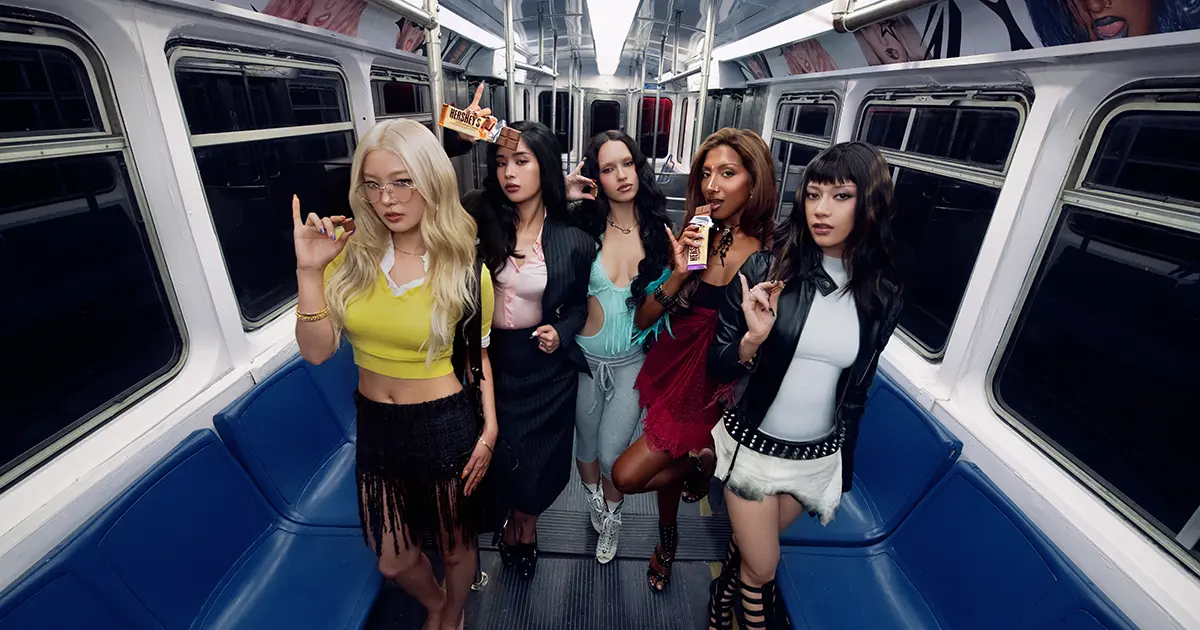
Enter Hershey’s most ambitious product launch of the year: the brand-new Creme Bars, dropping this fall in two decadent, trend-forward flavors—Affogato and Salted Caramel. To ensure this launch transcends a routine grocery store shelf-space addition and becomes a genuine cultural touchstone, Hershey is executing a high-stakes, multi-platform marketing blitz. At the center of this strategy is a powerhouse partnership with Katseye, the intercontinental pop sensation engineered by Geffen Records and HYBE (the powerhouse label behind BTS).
By uniting a legacy American chocolate titan with a hyper-modern, globally diverse girl group whose aesthetic and sound dominate TikTok, Instagram, and Spotify, Hershey is attempting a masterclass in modern cultural alignment. This comprehensive report investigates the genesis of this campaign, the strategic imperative behind the new Creme Bar line, the mechanics of their cinematic subway-set commercial featuring the hit track "Pinky Up," and what this high-profile collaboration reveals about the future of youth-targeted brand marketing.
Detailed Chronology: From Concept to Cultural Crossover
To understand how a legacy brand like Hershey secured a partnership with one of the music industry’s fastest-rising global groups, one must examine the meticulous, months-long timeline that brought the campaign to life.
Phase 1: Identifying the Flavor Gap and the Gen Z Confectionery Paradox
Early in the product development cycle, consumer insights teams at The Hershey Company identified a distinct paradox within the younger demographic. While Gen Z consumers maintain a deep affection for comfort foods and sweet treats, their palates are simultaneously sophisticated, influenced by specialty coffee culture, global dessert trends, and social media food aesthetics.
Traditional solid milk chocolate, while enduringly popular, lacked the multi-textural complexity and experiential novelty that Gen Z associates with a "treat yourself" moment. This realization catalyzed the development of the Creme Bar platform. By blending rich, velvety textures with complex, premium flavor profiles—specifically the espresso-and-ice-cream-inspired Affogato and the sweet-and-savory Salted Caramel—Hershey created a product designed natively for social-first curation.
Phase 2: Casting the Cultural Anchor
Developing a standout product was only half the battle; Hershey faced the daunting task of introducing these new profiles to an audience notoriously skeptical of traditional corporate advertising. Standard commercial spots featuring polished actors eating chocolate in a pristine kitchen were immediately ruled out. The brand needed an authentic cultural vehicle—an entity that commanded immediate, organic authority among Gen Z and Gen Alpha consumers.
The creative agency teams zeroed in on Katseye. Formed through the rigorous global reality competition The Debut: Dream Academy, Katseye represents a groundbreaking hybrid of K-pop training precision and Western pop star power. Comprising members from diverse international backgrounds, the group achieved rapid viral ubiquity with tracks like "Debut" and "Touch," followed by major anthems that flooded social feeds worldwide. Their aesthetic—bold, unapologetic, fashion-forward, and relentlessly energetic—mirrored the exact sensory profile Hershey wanted for its Creme Bars.
Phase 3: Production of the "Pinky Up" Subway Takeover
The centerpiece of the campaign is a high-concept, narrative-driven commercial that bridges the gap between everyday urban life and surrealist pop-star fantasy.
Shot on location in a bustling, hyper-realistic subway car simulation, the ad opens with commuters enduring the standard, gray monotony of daily transit: scrolling on phones, avoiding eye contact, and nursing morning fatigue. Suddenly, the dynamic members of Katseye step into the car, turning the mundane subterranean environment into an impromptu stage.
As the group launches into an electrifying, tightly choreographed performance of their hit song "Pinky Up," the heavy atmosphere begins to shift. The infectious rhythm breaks down the social barriers of the commuters. Soon, everyday passengers are drawn into the performance, their expressions transforming from weary indifference to joyful participation. The narrative climax arrives when a commuter breaks the fourth wall, tasting the new Hershey’s Affogato Creme Bar, which instantly cascades vibrant color and energy throughout the scene. The visual metaphor is unmistakable: the Creme Bar is not merely a snack; it is an immediate antidote to the mundane, capable of transforming an ordinary moment into an extraordinary experience.
Supporting Context & Metrics: The Science of Gen Z Engagement
To contextualize why Hershey is investing heavily in a pop-group partnership for a chocolate bar, industry analysts must examine broader economic and media consumption shifts.
The Attention Economy and the "It" Factor
According to recent industry data, Gen Z consumers spend an average of over four hours daily on social media platforms, with short-form video formats (TikTok, Instagram Reels, YouTube Shorts) acting as the primary engines of cultural discovery. Traditional television ad recall among this cohort has plummeted, replaced by influencer endorsements, musical associations, and viral challenges.
Katrina Vatter, Senior Brand Manager at The Hershey Company, emphasized the psychological positioning of the campaign:
"We aren’t just launching a candy bar; we are introducing the season’s ‘it’ item that everybody’s going to be talking about. To achieve that level of organic conversational dominance, you cannot rely on standard interruption marketing. You have to embed yourself directly into the cultural streams where your target audience already spends their emotional equity."
Flavor Profiling and Premiumization
The choice of Affogato and Salted Caramel reflects a broader macroeconomic trend toward "accessible luxury." Even amid economic tightening, consumers continue to indulge in small, affordable luxuries—a phenomenon economists frequently term the "lipstick effect," which confectionery brands have successfully weaponized.
- Affogato Creme Bar: Tapping into the explosive growth of specialty coffee culture among younger demographics, this bar merges the bitterness of espresso notes with the lush sweetness of white creme.
- Salted Caramel Creme Bar: Capitalizing on the enduring, cross-generational appeal of sweet-and-salty flavor pairings, delivering a rich, buttery profile designed to appeal to texture-focused snackers.
| Campaign Element | Strategic Intent | Target Demographic | Primary Media Channel |
|---|---|---|---|
| Katseye Partnership | Cultural credibility & organic reach | Gen Z / Gen Alpha (Ages 13–27) | TikTok, Spotify, YouTube |
| Affogato & Salted Caramel | Premiumization & sensory novelty | Millennial & Gen Z foodies | Grocery retail, Out-of-Home (OOH) |
| Subway "Pinky Up" Ad | Relatability paired with spectacle | Broad urban consumers | Digital video, Social media ad units |
Official Statements and Industry Insights
The partnership has generated significant buzz within both the advertising and music industries, signaling a maturation in how consumer packaged goods (CPG) brands collaborate with emerging musical talent.
In an exclusive briefing, brand representatives elaborated on the operational philosophy driving the collaboration. The synergy between Hershey’s manufacturing scale and Katseye’s digital footprint creates a self-reinforcing loop of visibility. When fans of the group see their idols interacting with the product in a high-energy narrative format, the barrier between commercial messaging and entertainment dissolves.
Furthermore, industry observers have noted the strategic timing of the release. Hitting shelves in the fall—a period traditionally dominated by back-to-school routines and the ramp-up to the winter holiday season—gives Hershey a distinct advantage. While competitors flood the market with standard seasonal offerings (such as pumpkin spice or traditional Halloween candy), the Creme Bar launch carves out an entirely separate positioning: an upscale, youthful, everyday indulgence.
Creative directors familiar with the campaign note that the subway setting was intentionally chosen to maximize democratic appeal. While Katseye represents global glamour, placing them in a universally recognized public transit space ensures that the narrative remains grounded, allowing the everyday consumer to project themselves directly into the fantasy of the commercial.
Future Outlook: What This Means for CPG Marketing
As we look toward 2026 and beyond, the Hershey-Katseye collaboration serves as a potential blueprint for how legacy brands must approach product launches in an age of hyper-fragmentation. Several key takeaways emerge for industry professionals:
- The Death of the Siloed Product Launch: Future CPG campaigns can no longer treat product formulation, music licensing, influencer partnerships, and digital video production as separate silos. They must be conceived simultaneously as a unified cultural product.
- Global Pop as Brand Infrastructure: As K-pop and globally integrated pop groups like Katseye continue to break down geographic and linguistic barriers, brands will increasingly look to international acts to anchor domestic campaigns, reflecting the multicultural reality of modern consumer bases.
- Experiential Storytelling Over Direct Pitching: Consumers reward brands that entertain them rather than lecture them. By transforming a commercial break into a miniature music video performance, Hershey has proven that emotional resonance drives purchase intent far more effectively than traditional feature-and-benefit advertising.
Conclusion
The rollout of Hershey’s new Creme Bars featuring Katseye is far more than a routine autumn product drop; it is a calculated, highly financed statement of intent from a legacy brand determined to capture the hearts, minds, and digital feeds of a new generation. By fusing premium, trend-informed flavor profiles with the undeniable cultural momentum of a global pop powerhouse, Hershey has successfully bridged the gap between heritage comfort and contemporary edge. As the campaign hits shelves this fall, the confectionery giant has positioned itself not just as a purveyor of chocolate, but as an active participant in modern youth culture.
