


The intersection of media, politics, and elite sports continues to serve as a high-stakes arena where institutional power, regulatory enforcement, and public communication channels collide. Over a consequential eleven-month stretch spanning late 2025 and 2026, a series of tectonic shifts across Washington, D.C., and major sports leagues have exposed the fragility of traditional public relations strategies and corporate governance. From Defense Secretary Pete Hegseth’s conspicuous absence from the airwaves of his former home at Fox News to the NBA’s historic disciplinary hammer falling upon the Los Angeles Clippers, media observers are witnessing an era of heightened accountability and strategic recalibration.
Simultaneously, the media landscape itself is experiencing profound structural transformations. ESPN’s rolling programming overhaul has cleared the runway for rising industry talent Peter Schrager to anchor a major new daytime franchise, while high-profile personalities like CNN’s Scott Jennings navigate the turbulent waters of speculative White House casting. Beneath these developments lies a deeper narrative about information control: as federal agencies clamp down on internal classified document access amid escalating foreign conflicts, and as digital-first investigative reporting dismantles corporate sports dynasties, the mechanisms by which power is exercised and scrutinized are undergoing a radical, permanent evolution.
Detailed Chronology
The Hegseth-Fox News Freeze and Pentagon Information Restrictions
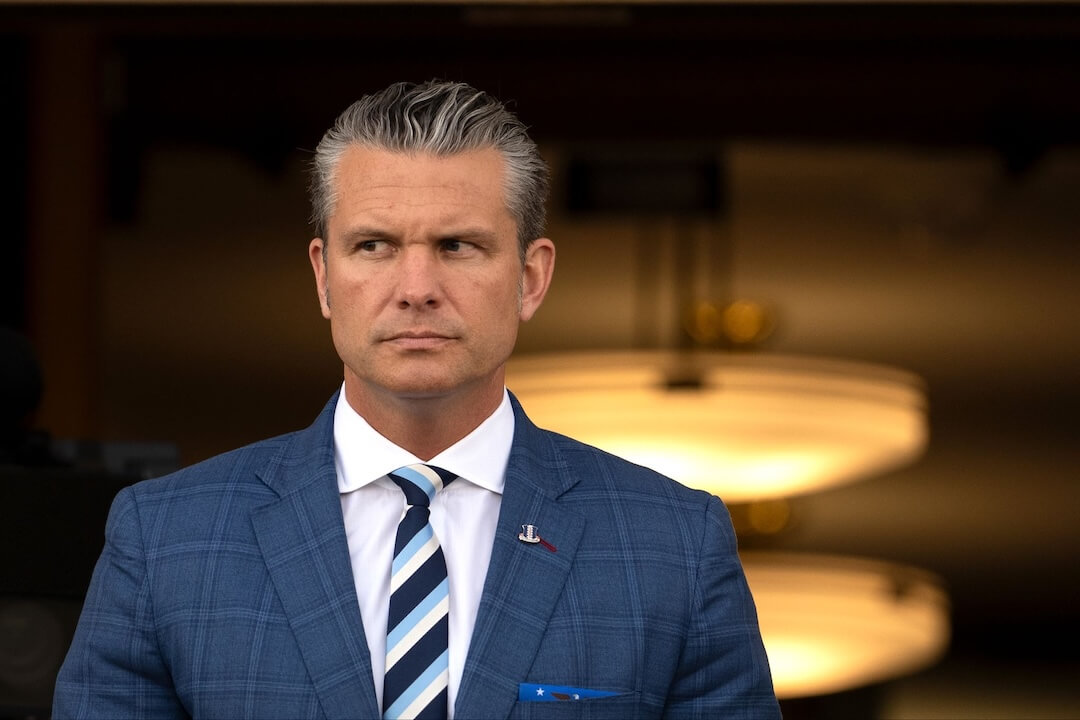
The timeline of Defense Secretary Pete Hegseth’s media engagements reveals a striking divergence between the Trump administration and its most reliable ideological amplifier. According to an extensive tracking report by Media Matters analyst Matt Gertz, Hegseth has not appeared on Fox News in eleven months—a startling statistic given his background as a former weekend co-host of Fox & Friends and the network’s historic role as an uncritical conduit for administration messaging during periods of political adversity.
Hegseth’s last appearance on the network occurred on October 4, during an interview conducted by Peter Doocy on the sidelines of a Navy-Air Force football game. That segment subsequently aired on October 5, 2025, during Doocy’s broadcast of The Sunday Briefing. At that juncture, it marked Hegseth’s 24th appearance on Fox News since assuming office in January 2025. Since that broadcast, however, the door has been firmly shut.
The timing of this media blackout is heavily scrutinized. Gertz notes that just days after Hegseth’s October 5 appearance, Fox News joined a chorus of mainstream media outlets in fiercely condemning the Defense Department’s stringent new restrictions on Pentagon reporters. Over the ensuing eleven months of silence from his former employer, Hegseth’s tenure has been defined by severe geopolitical and institutional friction: the entanglement of the U.S. military in an open-ended conflict with Iran, continued controversial maritime strikes against alleged drug cartels, and an aggressive regime-change operation in Venezuela. Furthermore, the defense secretary has faced relentless congressional and public fire for orchestrating sweeping purges of the armed forces’ top-ranking leadership.
While Hegseth did manage occasional sit-downs with CBS News in January and June of 2026, his complete avoidance of Fox News underscores a chilling of relations. This institutional isolation was compounded further when The Washington Post’s Dan Lamothe and Alex Horton broke a major national security scoop: the Pentagon abruptly purged decades of classified documents from the Secret Internet Protocol Router Network (SIPRNet). Triggered by an earlier Post investigation detailing senior military officers’ deep-seated anxieties over the Iran war, the removal of documents associated with the Secretary of Defense Orders Book (SDOB) signals a desperate internal containment strategy by defense leadership aimed at plugging systemic information leaks.
The NBA Drops the Hammer on the Los Angeles Clippers
In the realm of professional sports governance, the tectonic plates shifted definitively on a Wednesday in September 2026, when the National Basketball Association administered the most severe punitive action in league history. Following an exhaustive investigation, the NBA determined that the Los Angeles Clippers organization and owner Steve Ballmer systematically circumvented league salary cap regulations by orchestrating illicit, off-the-books financial compensation packages for star forward Kawhi Leonard.
The penalties levied by commissioner Adam Silver were unprecedented in their severity:
- The Franchise: Stripped of five future first-round draft picks and hit with a mandatory $30 million corporate fine.
- Steve Ballmer: Suspended from all team operations and ownership duties for one full calendar year "for knowingly seeking to help Mr. Leonard obtain off-court income opportunities."
- Front Office Leadership: Team President Gillian Zucker was slapped with a one-year suspension, while President of Basketball Operations Lawrence Frank received a six-month suspension.
- The Player: Kawhi Leonard was ordered to pay $700,000 in financial restitution.
The investigation was born directly out of groundbreaking investigative reporting executed by journalist and podcaster Pablo Torre. Torre’s Pulitzer Prize-winning audio series, Pablo Torre Finds Out, exposed that Leonard had accepted a lucrative $28 million, no-show contract with Aspiration—a California-based environmental technology firm that also maintained corporate sponsorship ties with the Clippers, and in which Ballmer was an active investor. This intricate corporate shell game effectively channeled millions of dollars to Leonard outside the strict confines of the NBA collective bargaining agreement.
While the Clippers’ corporate communications team immediately vowed to contest the findings and "fight to prove its innocence," the sports world reacted with immediate validation for Torre’s painstaking investigative rigor. Former NBA owner Mark Cuban took to social media to publicly congratulate Torre, while Torre himself offered a characteristically understated reaction: a digital hamburger emoji, nodding to a viral segment from his podcast regarding comedian Alonzo "Hamburger" Jones.
Supporting Context & Metrics
To fully grasp the magnitude of these parallel media and institutional developments, it is vital to examine the quantitative and qualitative metrics underpinning them:
- 11 Months: The duration of the broadcast embargo between Defense Secretary Pete Hegseth and Fox News, breaking a streak of 24 television appearances during his first nine months in office.
- 5 First-Round Draft Picks: The historic capital forfeiture levied against the Los Angeles Clippers by the NBA—representing the harshest draft-related penalty in league history.
- $30 Million & $700,000: The institutional fine imposed on the Clippers franchise, alongside the individual financial restitution ordered for Kawhi Leonard.
- September 10, 2026: The launch date for ESPN’s high-profile new daytime program, Big Day with Peter Schrager, marking the permanent replacement of SportsCenter blocks in the network’s afternoon grid following the cancellation of Around the Horn.
These metrics reflect an ecosystem under immense stress. Whether measured by the billions of dollars circulating through elite sports franchises seeking regulatory loopholes, or the millions of citizens impacted by opaque defense policies and guarded national security files, transparency has become the primary casualty in contemporary institutional management.
Official Statements
The fallout from these intersecting controversies has prompted sharp rhetoric from corporate executives, institutional watchdogs, and media figures alike:
- The Los Angeles Clippers Organization: In response to the historic league penalties, team representatives issued a defiant statement: "The organization categorically rejects the conclusions drawn by the league office’s preliminary findings. We maintain our absolute innocence and will utilize every available resource to vigorously contest these unprecedented and unwarranted punitive measures."
- Bill Simmons on Proxy Betting Missteps: Following regulatory inquiries by the Massachusetts Gaming Commission regarding unlawful sports betting practices via his daughter’s boyfriend, The Ringer founder addressed his audience with candid contrition: "I talked about how I got my daughter’s boyfriend to place some bets for me in Massachusetts because I was in L.A. Did not know about the proxy rules. Yeah, there’s some real rules with this stuff. I learned my lesson; apparently, proxy betting—not allowed. I actually thought it was, but that’s fine… Lesson learned."
- CNN Anchor Kasie Hunt on White House Rumors: Highlighting the surreal convergence of media commentary and political speculation surrounding contributor Scott Jennings, Hunt deployed a dry on-air disclaimer during a panel segment: "We have to mention to our viewers that Mr. Jennings is reportedly being considered for the role of the next White House press secretary… You can continue your audition." Jennings responded with a dismissive smirk and head shake, signaling neither confirmation nor denial.
Future Outlook
As the media and political landscapes barrel forward through the remainder of 2026, the long-term ramifications of these events are beginning to take shape.
In Washington, the widening chasm between the Department of Defense and traditional conservative media outlets like Fox News suggests that the Trump administration is increasingly comfortable bypassing friendly ideological networks when institutional friction arises. Coupled with the Pentagon’s aggressive purge of SIPRNet classified documents, public oversight of military strategy in ongoing conflicts—such as the open-ended engagement with Iran and operations in Venezuela—will likely face unprecedented roadblocks. Investigative journalists will be forced to rely more heavily on anonymous whistleblowers and cross-jurisdictional leaks rather than institutional access.
In the corporate sports and media complex, the NBA’s decisive punishment of the Clippers marks a watershed moment for salary cap enforcement. Owners and executives across all major professional leagues are now on high alert; creative corporate partnerships and third-party endorsement structures designed to supplement player compensation will face microscopic scrutiny from league compliance officers. For investigative journalists like Pablo Torre, this victory solidifies the immense economic and cultural power of independent, deep-dive audio and digital reporting.
Finally, within the broadcast media industry itself, ESPN’s gamble on personality-driven daily programming—cemented by the high-profile launch of Big Day with Peter Schrager—demonstrates a commitment to anchoring its daytime identity around distinct individual brands. As traditional format staples continue to fade, the success or failure of Schrager’s unfiltered, sports-centric forum will serve as a bellwether for the future of cable and digital sports broadcasting. Ultimately, whether analyzing the corridors of the Pentagon, the hardwood of Staples Center, or the television studios of Manhattan and Atlanta, the mandate for institutional accountability has never been more urgent, nor more fiercely contested.
