

Executive Overview
The U.S. Open has long worn its identity as New York’s loudest, most vibrant Grand Slam with pride. Unlike the hushed, aristocratic reverence of Wimbledon or the formal European clay of Roland Garros, Flushing Meadows has traditionally thrived on the gritty, electric energy of the outer boroughs. But at the 2026 tournament, that boundary-pushing atmosphere crossed from vibrant to volatile.
As the number of credentialed social media content creators doubled from the previous year, players, traditional fans, and tournament organizers found themselves reckoning with a modern sports paradox: What happens when you successfully market a sacred athletic competition as the ultimate social media accessory?
The answer, as manifested over a chaotic fortnight in September 2026, was a masterclass in unintended consequences. Matches were disrupted by impromptu luxury suite photo shoots, players were blinded by intrusive ring lights, and the sacred rules of tennis etiquette were routinely traded for algorithmic engagement. To top it all off, world No. 1 Aryna Sabalenka was forced to briefly halt her third-round match due to a quintessentially New York olfactory distraction—the unmistakable aroma of recreational marijuana wafting down from the stands.
While the United States Tennis Association (USTA) has deliberately leaned into the Open’s evolution as a high-fashion, high-profile cultural hub, this year’s friction has ignited a global debate. At stake is the core identity of professional tennis: Can a sport that demands absolute silence and razor-sharp concentration peacefully coexist with an attention economy built entirely on disruption, spectacle, and self-promotion?
Detailed Chronology: A Fortnight of On- and Off-Court Flashpoints
The friction between athletic rigor and digital distraction did not build slowly; it exploded into public view during the opening week of the tournament, accumulating a series of bizarre and contentious incidents that commanded headlines across mainstream news and social media feeds alike.
The Luxury Suite Photo Shoot
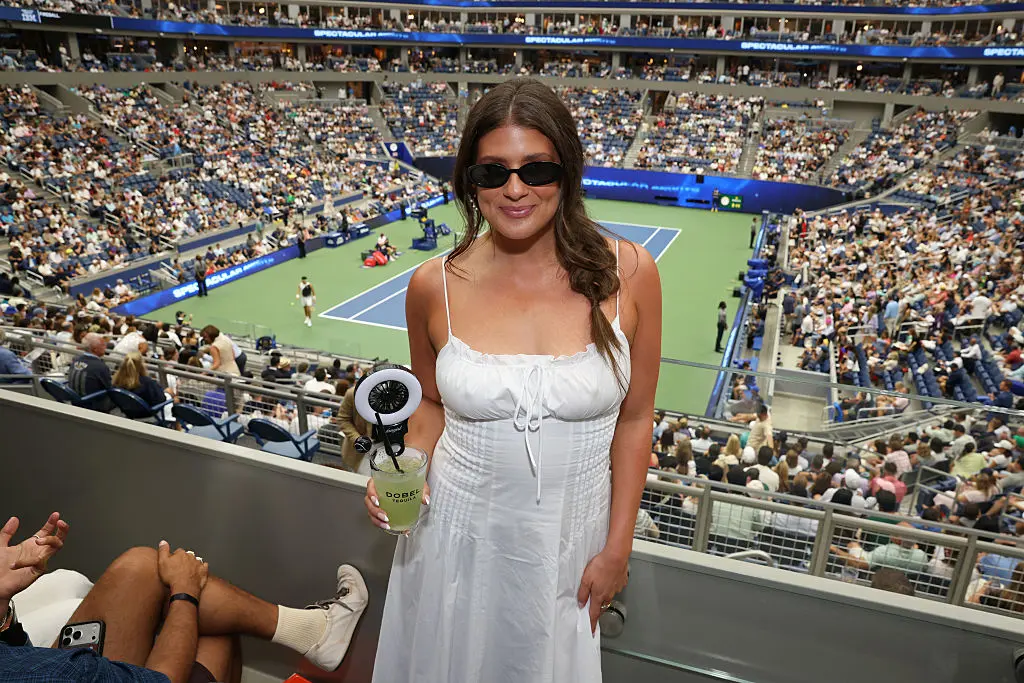
The tension first boiled over during Naomi Osaka’s high-stakes match against Anastasia Zakharova at Louis Armstrong Stadium. While Osaka prepared to execute a critical baseline rally, a group of influencers and brand-invited guests occupying a nearby luxury suite decided that the dramatic lighting of the stadium at dusk offered the perfect backdrop for a content creation session.
Complete with portable ring lights and continuous video recording, the impromptu photo shoot flashed directly into the line of sight of players and officials. The disruption was so blatant that the chair umpire was forced to temporarily halt play, demanding that security intervene and compel the suite occupants to put down their devices. The incident drew immediate ire from spectators and catalyzed an online backlash, with viral clips generating millions of views and reigniting debates over stadium behavior.
Sabalenka’s Mid-Match Obstruction
Just days later, world No. 1 Aryna Sabalenka experienced a uniquely local disruption during her third-round clash against Kamilla Rakhimova. Mid-game, Sabalenka paused, visibly irritated, and addressed the chair umpire at Louis Armstrong Stadium.
"Someone is smoking weed," Sabalenka announced across the court, bringing the match to a temporary standstill.
The complaint highlighted the collision between open-air New York culture—where recreational cannabis use is legally protected—and the hyper-controlled environment of a professional sports arena. Stadium security searched the surrounding rows, though no individual was apprehended. With the matter addressed, play resumed, and Sabalenka dispatched Rakhimova in straight sets, 6-3, 6-4. While the Belarusian champion did not harbor lingering resentment toward the state’s legal freedoms, the incident underscored the distinct challenges of staging a major international tournament in the heart of an untamed urban metropolis.
The Digital Backlash
As the week progressed, the digital sphere became an echo chamber of discontent. Traditional tennis purists took to platforms like X (formerly Twitter) and TikTok to post footage of distracted fans scrolling through feeds, filming themselves during match points, and treating historic athletic feats as mere background noise. Prominent sports commentators and influencers-turned-critics alike argued that the traditional viewing experience was being cannibalized by digital opportunists who cared more about a geotagged selfie than a championship tiebreak.
Supporting Context & Metrics: The Business of Spectacle vs. The Integrity of Sport
To understand how the U.S. Open reached this cultural tipping point, one must examine the calculated financial and marketing strategies of the USTA over the past decade.
The Metrics of Expansion
The U.S. Open has long been the most financially lucrative of the four Grand Slams, generating massive revenue through corporate sponsorships, high-tier hospitality packages, and broadcasting rights. In recent years, tournament executives actively courted fashion houses, lifestyle brands, and digital creators to capture younger demographic cohorts—specifically Gen Z and Millennial audiences.
Credentialed content creators at the 2026 tournament saw a staggering 100% year-over-year increase compared to 2025. This influx was not accidental; it was the result of dedicated press-access tiers, VIP influencer lounges, and strategic partnerships designed to make the U.S. Open a fixture on lifestyle feeds alongside New York Fashion Week and the Met Gala.
The Economics of Engagement
From a pure metrics standpoint, the strategy worked. Hashtags related to the tournament dominated social media algorithms, driving record-breaking engagement and elevating players’ personal brands. However, this strategy created a fundamental misalignment of incentives.
- The Fan Incentive: Traditional sports fans invest emotionally and financially to witness athletic excellence in an atmosphere of focused intensity.
- The Creator Incentive: Influencers and brand partners invest their time to maximize personal visibility, algorithmic reach, and audience conversion, viewing the physical space not as a temple of sport, but as an interactive studio.
When these two worlds collide in tightly packed stadium seating, the friction is inevitable. The physical architecture of tennis venues—where spectators sit remarkably close to the court compared to American football or baseball stadiums—magnifies every distraction, making a glowing ring light or a ringing phone an active impediment to athletic performance.
Official Statements and Player Perspectives
As the discourse intensified off the court, the sport’s biggest stars did not shy away from sharing their candid frustrations, balancing an appreciation for growing the game with a firm demand for baseline respect.
Coco Gauff: The Call for Education
American superstar Coco Gauff took a diplomatic yet firm stance on the controversy. While acknowledging that digital creators and influencers bring valuable new eyes to a sport that desperately needs youth engagement, Gauff pointed the finger directly at the corporate entities orchestrating their attendance.
"I think the brands should just educate them on tennis etiquette," Gauff remarked during her post-match press availability.
Gauff’s perspective highlights a pragmatic middle ground: influencers are not inherently malicious actors; rather, they are often operating under corporate sponsorships without a fundamental understanding of the unwritten rules of tennis—such as remaining completely silent and stationary during active points.
Jessica Pegula: Condemning "Disrespectful" Behavior
Fellow American top-tier player Jessica Pegula was far less forgiving of the antics witnessed in the stands. Pegula did not mince words when assessing the behavior of certain attendees, labeling their disruptive actions as outright "disrespectful" to athletes who dedicate their entire lives to peaking at a Grand Slam.
The USTA’s Tightrope Walk
Tournament organizers face a delicate balancing act. On one hand, the USTA relies heavily on the cultural cachet, ticket sales, and media buzz generated by celebrities and digital creators. On the other hand, safeguarding the competitive integrity of the tournament is an existential requirement. As player complaints mount, tournament officials have faced mounting pressure to enforce existing stadium regulations regarding flash photography, unauthorized recording equipment, and lighting devices with far greater stringency.
Future Outlook: Can Tennis and the Attention Economy Coexist?
As the 2026 U.S. Open draws toward its climax, the tournament serves as a cautionary tale—and a crystal ball—for the broader sports and entertainment industry. The collision of live athletics with the relentless demands of the creator economy is not unique to tennis; golf, Formula 1, and the NBA have all wrestled with how to monetize the "influencer era" without alienating their core fanbases.
For tennis, the path forward will require proactive intervention rather than passive accommodation. Several potential solutions are already being discussed within sports administration circles:
- Mandatory Etiquette Briefings: Brands and PR agencies purchasing luxury suites or distributing creator credentials could be required to provide incoming guests with a standardized briefing on basic tennis etiquette, outlining clear penalties for flash photography, sudden movements, and light disruptions during play.
- Designated Content Zones: Rather than scattering influencers throughout prime lower-bowl seating where their activities disrupt players and purists, tournaments may establish designated, acoustically and visually buffered "creator zones" where content generation is welcomed without impacting the field of play.
- Stricter Enforcement of Venue Rules: Chair umpires and court security must be empowered to act swiftly against disruptive behavior, confiscating intrusive lighting equipment and ejecting repeat offenders regardless of their VIP status or follower count.
The opera houses of 19th-century New York were famously designed as much for social posturing and high-society visibility as they were for the appreciation of high art. But as cultural critics have noted, those grand halls did not have TikTok algorithms pushing for constant, real-time stimulation.
The U.S. Open has successfully transformed itself into the hippest ticket in town, but it now faces a defining test. If the USTA fails to establish firm boundaries between the spectacle in the stands and the sport on the court, it risks alienating the very athletes who make the tournament worth watching in the first place. After all, the world’s best tennis players can tune out the noise of New York City—they just shouldn’t have to dodge a ring light to do it.
