

Executive Overview
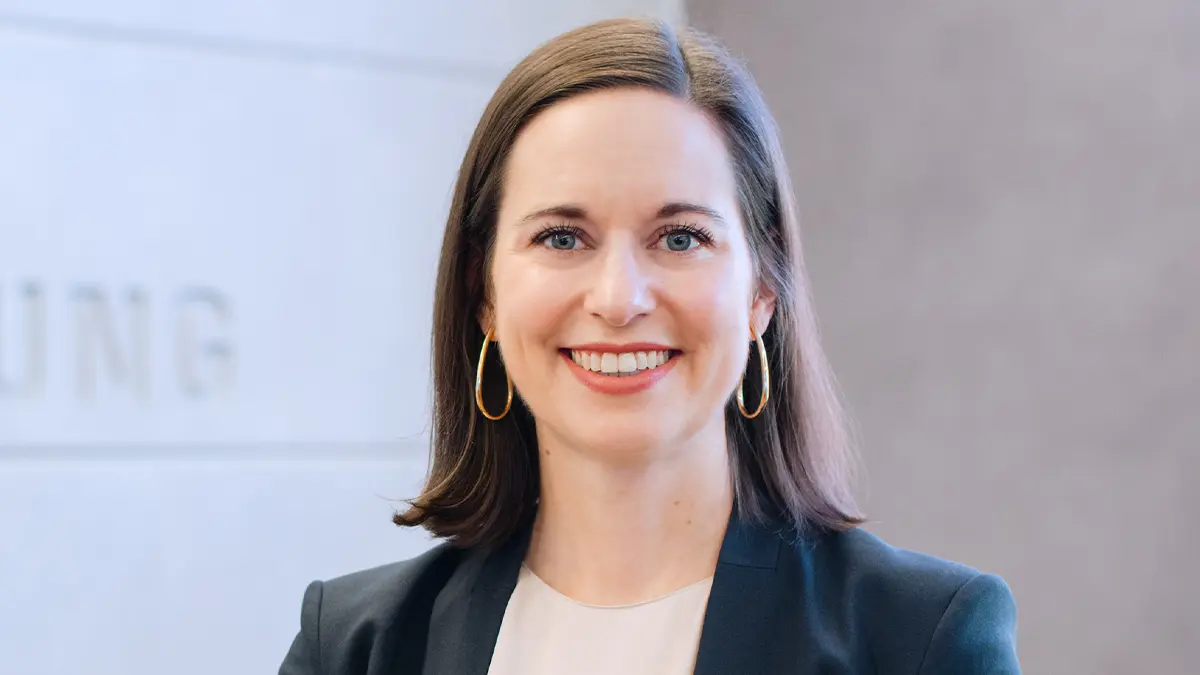
In a high-profile leadership transition within the consumer-packaged-goods sector, The Boston Beer Company has officially named Samsung U.S. Chief Marketing Officer Allison Stransky as its new Chief Marketing Officer, effective October 12. Stransky steps into the role at a critical juncture for the beverage pioneer, which has spent much of the past year navigating profound shifts in American drinking habits, softening demand for flagship offerings, and mounting pressure from a diversified, highly competitive alcohol market.
Reporting directly to Boston Beer co-founder and CEO Jim Koch and Chief Operating Officer Phil Hodges, Stransky assumes control of a marketing apparatus that has lacked a permanent leader since March, when longtime marketing chief Lesya Lysyj stepped down. During the intervening months, COO Phil Hodges managed interim marketing duties. Stransky’s arrival brings an end to a six-month vacancy, injecting top-tier consumer technology pedigree into an organization desperately seeking fresh pathways to consumer relevance.
Stransky departs Samsung U.S. after a high-impact three-year tenure defined by expansive mandates across mobile devices, connected home appliances, and ecosystem-wide software services. At Boston Beer—the corporate home behind iconic names like Samuel Adams, Twisted Tea, Truly Hard Seltzer, and the non-alcoholic brand General Admission—she will pivot from managing silicon and software to steering malt, hops, and fermentation. Her mandate is as clear as it is formidable: revitalize slowing legacy properties, defend market share against aggressive new category entrants, and align the company’s marketing spend with high-efficiency returns.
As the American palate continues to evolve away from traditional beer and toward spirits-based alternatives, ready-to-drink (RTD) cocktails, and non-alcoholic options, Stransky’s strategic agility will be tested immediately. With the company already trimming millions in underperforming media budgets—particularly within the beleaguered Truly portfolio—the new CMO’s blueprint for brand storytelling, creative innovation, and portfolio modernization will ultimately dictate the next chapter of Boston Beer’s storied history.
Detailed Chronology of Leadership and Market Shifts
To understand the weight of Allison Stransky’s appointment, one must examine the timeline of operational turbulence, leadership gaps, and market recalibrations that have defined The Boston Beer Company over the past several quarters.
The structural foundation for this leadership change began to shift in early 2024, when the broader alcoholic beverage landscape experienced accelerated post-pandemic stabilization trends that fundamentally favored spirits-based beverages over traditional malt alternatives. Internally, Boston Beer was grappling with the maturation of its once-explosive hard seltzer business and the shifting plateau of its hard tea dominance.
By March of this year, the company faced a significant executive vacuum when Lesya Lysyj, who had steered Boston Beer’s marketing strategy through massive cultural shifts and turbulent market cycles, officially stepped down from her role as CMO. Lysyj’s departure left a gaping strategic hole within the executive suite. To maintain continuity during a pivotal planning season, Chief Operating Officer Phil Hodges stepped into the breach, serving concurrently as interim CMO while the executive search committee scoured external sectors for a transformative leader.
For nearly six months, Hodges managed day-to-day operations and marketing strategies, maintaining stability while the executive team monitored the shifting preferences of American consumers. During a crucial earnings call in July, co-founder Jim Koch and executive leadership laid bare the stark realities facing the company’s core brands. They revealed that while consumer demand for Truly Hard Seltzer continued to lag far behind internal projections, Twisted Tea—the undisputed king of malt-based hard tea—was suddenly confronting serious headwinds from a wave of new spirits-based competitors and canned cocktail alternatives.
Faced with these persistent headwinds, leadership made the calculated decision to pull back on inefficient expenditures. The company initiated a targeted $20 million reduction in media spending, systematically cutting campaigns that failed to deliver measurable return on investment, with the reductions landing most heavily on the Truly portfolio.
Against this backdrop of financial discipline and strategic evaluation, the search for a permanent CMO intensified. The board and executive leadership sought someone untraditional—an executive whose expertise transcended legacy beverage marketing and extended into the realm of modern digital ecosystems, consumer data, and multi-platform storytelling. This search ultimately led them outside the beverage sector entirely, culminating in the recruitment of Samsung’s Allison Stransky. Her appointment on October 12 closes the interim chapter overseen by Hodges and inaugurates a new operational phase focused entirely on modernizing Boston Beer’s go-to-market strategies.
Supporting Context & Metrics: Decoding Boston Beer’s Portfolio Pressures
Allison Stransky inherits a brand stable defined by deep historic prestige alongside contemporary operational vulnerabilities. While Boston Beer remains a titan of the American craft and alternative beverage space, its financial health and growth trajectory are intrinsically tied to the performance of two massive pillars: Twisted Tea and Truly Hard Seltzer.
The Twisted Tea Paradox: Dominance Meets Disruption
For years, Twisted Tea has stood as an unassailable fortress within the malt-based hard tea niche. Its cultural footprint, particularly across suburban and regional American markets, created a formidable moat that traditional competitors struggled to breach. However, during the July earnings call, executives cautioned that the brand’s dominance is facing a sophisticated, multi-front challenge.
The modern consumer is increasingly migrating toward spirits-based hard teas rather than malt-based formulations, drawn by perceptions of higher quality and authentic spirit infusions. Furthermore, an explosion of craft canned cocktails has crowded retail shelf space. For Stransky, the challenge with Twisted Tea is not about sparking awareness—it is about retention, premiumization, and defending turf against an army of nimble upstarts backed by major spirits conglomerates.
Truly Hard Seltzer: The Reality of Re-calibration
The trajectory of Truly Hard Seltzer remains one of the most closely watched case studies in the modern beverage industry. After capitalizing on the initial hard seltzer gold rush that fundamentally reshaped the late 2010s, Truly experienced a steep market correction as consumer enthusiasm normalized and competitors flooded the category.
Despite numerous formulation tweaks, packaging redesigns, and high-profile marketing campaigns, consumer demand for Truly has consistently failed to meet the ambitious internal expectations set by Boston Beer executives. This persistent gap between projection and performance forced management to make hard choices. The decision to slash approximately $20 million in underperforming media spend—focused squarely on Truly—signals a definitive shift away from "spray-and-pray" mass advertising toward hyper-targeted, high-efficiency customer acquisition. Stransky will need to determine whether Truly can be successfully repositioned for a mature, crowded market or if resources should be reallocated toward emerging growth vectors.
Diversification and the Search for Next-Gen Consumers
Recognizing the volatility of seltzers and malt teas, Boston Beer has actively diversified its portfolio to capture shifting American drinking habits. Samuel Adams remains the spiritual heartbeat of the company, anchoring its craft brewing credentials, while newer plays like General Admission—a non-alcoholic beer—reflect a strategic pivot toward the booming sober-curious and moderation lifestyle movements sweeping younger demographics.
Stransky’s experience at Samsung—where she managed marketing campaigns spanning complex ecosystems of mobile hardware, home appliances, and interconnected digital services—will be directly applicable here. The modern beverage consumer expects seamless brand interactions across digital touchpoints, retail environments, social platforms, and experiential events. Stransky’s background in building cohesive narratives across disparate product categories positions her uniquely to harmonize Boston Beer’s legacy craft identity with its modern, health-conscious, and non-alcoholic innovations.
Official Statements and Industry Reactions
The appointment of Allison Stransky has generated significant commentary across the marketing and beverage sectors, underscoring the high stakes of her transition from consumer electronics to consumer packaged goods.
In her official statement announcing the move, Stransky expressed deep enthusiasm for the legacy and creative potential of her new employer:
"I’ve long admired its ability to blend creativity, innovation, and storytelling to connect with consumers, and I’m excited to join this talented team and help build on the company’s strong foundation and drive future growth."
Her words highlight an intention to lean into Boston Beer’s historical mastery of brand storytelling while applying modern analytical and creative frameworks to navigate current market frictions.
Corporate leadership similarly emphasized the strategic rationale behind recruiting an executive from outside the traditional beverage mold. Jim Koch, co-founder and chief executive officer of The Boston Beer Company, underscored the value of Stransky’s cross-industry expertise in a public statement:
"Allison brings a fresh perspective shaped by experience at some of the world’s leading companies, along with a genuine passion for brand building and innovation, and we look forward to welcoming her to Boston Beer."
This sentiment was reinforced by the executive team’s acknowledgment of Phil Hodges’ steady hand during the multi-month transition period following Lesya Lysyj’s departure. By bringing in a CMO with a digital-first, ecosystem-wide pedigree from Samsung—where she oversaw massive marketing campaigns for mobile devices and smart home technology—Boston Beer is signaling that its next phase of growth will rely as heavily on data-driven consumer engagement and cross-platform synergy as it does on traditional broadcast and point-of-sale activations.
As of publication, representatives for The Boston Beer Company declined to comment further beyond their official press releases, while Samsung U.S. did not respond in time to media requests regarding Stransky’s departure and succession plans.
Future Outlook: The Road Ahead for Stransky and Boston Beer
As Allison Stransky steps into her corner office on October 12, her initial hundred days will establish the operational and creative tone for Boston Beer’s immediate future. The challenges before her are systemic, complex, and tied to deeply entrenched changes in consumer behavior, yet they present a rare canvas for a transformative marketing leader.
1. Re-engineering the Media Playbook
With the company having already pruned $20 million in ineffective media spend, Stransky’s first major task will be optimizing the remaining capital allocation. Rather than relying on broad, top-of-funnel reach that fails to convert in a fragmented market, she is expected to introduce data-centric attribution models akin to those utilized in the consumer electronics space. By leveraging precise consumer insights, Stransky can ensure every marketing dollar spent on Truly, Twisted Tea, and Samuel Adams delivers measurable conversion lifts at the retail level.
2. Revitalizing the Truly Brand Identity
Truly requires a definitive strategic identity check. Stransky must decide whether to lean into functional benefits (such as hydration, lower calories, or natural ingredients) or pivot the brand’s emotional resonance to capture a younger, more cynical demographic that has largely tuned out traditional seltzer advertising. Crafting a narrative that resonates in a saturated market will require the exact blend of creative storytelling and rigorous consumer segmentation that defined her tenure at Samsung.
3. Defending and Expanding the Twisted Tea Moat
To counter the existential threat posed by spirits-based hard teas and ready-to-drink cocktail competitors, Twisted Tea cannot rest on its historic laurels. Stransky’s marketing strategy will likely need to emphasize experiential marketing, localized community building, and digital engagement that reinforces Twisted Tea’s cultural ubiquity while highlighting its unique malt heritage against new, spirit-infused market entrants.
4. Accelerating Non-Alcoholic and Emerging Innovations
The rise of products like General Admission demonstrates that Boston Beer understands the long-term demographic shift toward moderation. Stransky will be tasked with scaling the marketing for non-alcoholic and alternative-beverage offerings, ensuring they capture mainstream retail distribution and cultural relevance without cannibalizing the core alcohol business.
Ultimately, Stransky’s transition from smartphones and smart appliances to hard seltzers and craft brews represents a fascinating cross-pollination of industries. If she can successfully apply the lessons of ecosystem marketing, digital integration, and disciplined efficiency to Boston Beer’s rich, century-old brewing tradition, she will not only stabilize the company’s current brand portfolios but chart a resilient course for the future of American drinking culture.
