

Executive Overview
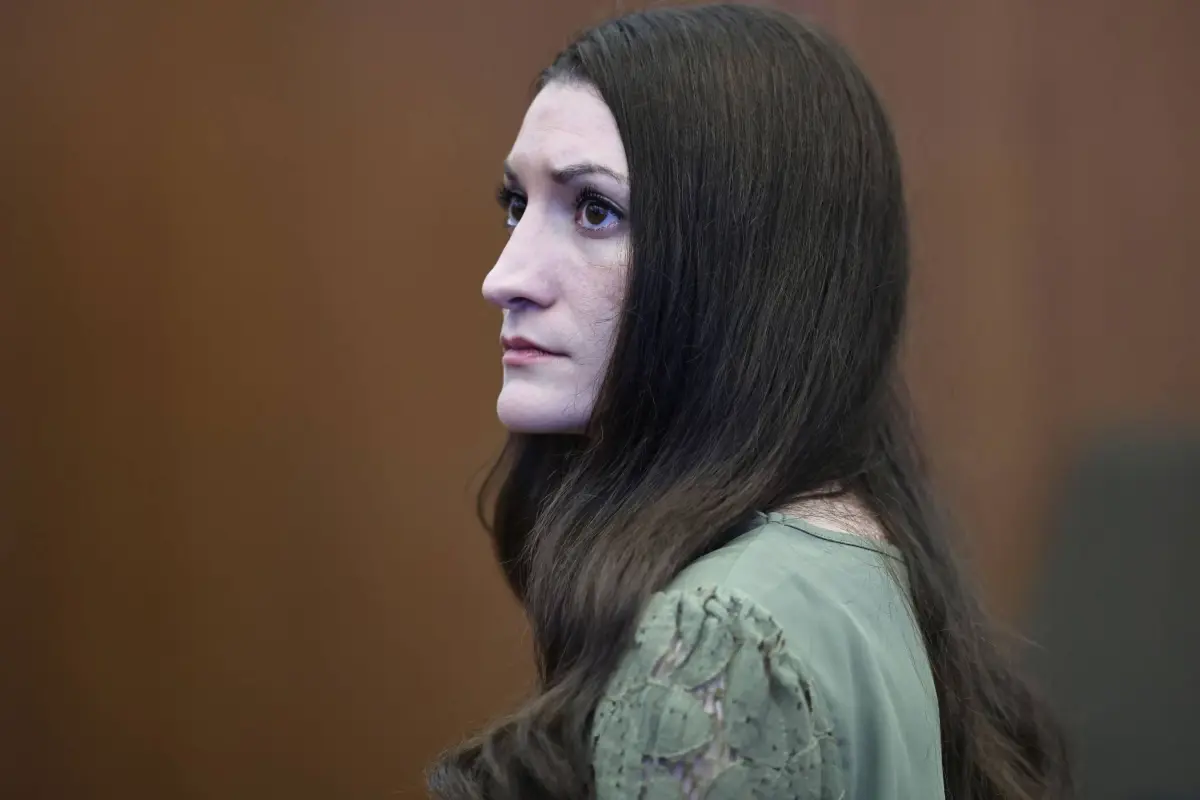
The high-profile Massachusetts triple-murder trial of Lindsay Clancy—a case that has transfixed and deeply divided the public—ended in a mistrial last week following a grueling week of jury deliberations. Clancy, a former labor and delivery nurse from Duxbury, Massachusetts, stands accused of strangling her three young children—5-year-old Cora, 3-year-old Dawson, and 8-month-old Callan—in January 2023. The legal proceedings have forced a harrowing national conversation into the open regarding postpartum mental health, the limits of the criminal justice system when dealing with severe psychiatric crises, and the agonizing complexities of moral versus legal culpability.
In unprecedented post-verdict interviews with NBC10 Boston, three members of the twelve-person jury stepped forward to discuss the intense, emotionally fraught atmosphere inside the deliberation room. Their accounts paint a picture of a panel pushed to its absolute psychological limits. Jurors recounted weeping as they repeatedly listened to the raw, harrowing 911 call placed by Clancy’s husband, Patrick Clancy, on the night of the tragedy. They described a room divided not by whether Lindsay Clancy committed the acts—a fact conceded by her defense from the outset—but by whether she possessed the cognitive capacity to understand the nature of her actions amidst what her defense terms a catastrophic postpartum psychotic break.
While the jury spent days attempting to find consensus, negotiations ultimately broke down over a single, immovable holdout. According to the jurors who spoke out, this lone holdout acknowledged experiencing reasonable doubt regarding Clancy’s sanity at the time of the killings, yet ultimately refused to sign off on a verdict of not guilty by reason of insanity. The resulting deadlock forced the presiding judge to declare a mistrial, leaving the legal system, the grieving family, and a polarized public bracing for a potential retrial.
Detailed Chronology: From the Tragic Night to the Mistrial
To fully understand the gravity of the jury’s deadlock, it is essential to trace the arc of the tragedy and the subsequent legal battle that culminated in last week’s mistrial.
The Events of January 24, 2023
On the evening of January 24, 2023, emergency responders arrived at a quiet suburban home in Duxbury, Massachusetts, following a frantic 911 call placed by Patrick Clancy. Patrick had returned home from picking up takeout to find a scene of unimaginable horror. His wife, Lindsay, had slashed her own throat and wrists and jumped from a second-story window in an apparent suicide attempt. Inside the home, their three children—Cora, Dawson, and infant Callan—were found unresponsive, having been strangled with exercise resistance bands.
While Cora and Dawson were pronounced dead at the scene, baby Callan succumbed to his injuries days later at a Boston hospital. Lindsay Clancy survived the fall, though the severe trauma left her permanently paralyzed from the waist down.
The Legal Strategy and Arguments in Court
As the legal proceedings unfolded, the core of the case shifted away from physical evidence toward the inner workings of Clancy’s mind during the weeks and months leading up to the tragedy.
- The Prosecution’s Case: State prosecutors argued that Clancy acted with premeditation and malice. They presented evidence intended to show that Clancy was deeply troubled and overwhelmed, but nevertheless understood the wrongfulness of her actions when she methodically ended her children’s lives. The prosecution maintained that Clancy should be convicted on three counts of first-degree murder, portraying the tragedy as the calculated act of an overburdened mother rather than the symptom of a psychotic episode.
- The Defense’s Case: Defense attorney Kevin Reddington mounted a defense centered on severe, untreated, and improperly managed postpartum mental illness—specifically, postpartum psychosis. The defense presented expert testimony arguing that Clancy was suffering from a psychotic break, hearing commanding internal voices instructing her to kill her children to "save" them, before attempting to take her own life. Reddington urged the jury to return a verdict of not criminally responsible (NCR). Under Massachusetts law, such a verdict would not mean freedom; rather, it would result in Clancy’s indefinite commitment to a secure forensic psychiatric facility for treatment.
The Deliberation Room and the Deadlock
After weeks of harrowing testimony, graphic medical evidence, and detailed psychological evaluations, the case was handed over to the jury. What followed was a week of intense, emotionally draining deliberations.
According to the jurors, the panel quickly moved past the physical acts themselves. Instead, they grappled exclusively with Clancy’s mental state. As the days wore on, the debate grew fierce. Tensions ran high, marked by passionate disagreements, occasional name-calling, and moments of profound emotional exhaustion. Despite these fractures, support systems emerged organically among the jurors, with members offering hugs, words of encouragement, and mandatory self-care breaks.
Ultimately, three jurors were persuaded that Clancy met the criteria for a verdict of not guilty by reason of insanity. However, the remaining jurors were split, and one individual proved completely immovable. When the jury informed the judge that they were hopelessly deadlocked, a mistrial was officially declared, setting the stage for renewed legal battles.
Supporting Context & Metrics: The Postpartum Mental Health Crisis
The Lindsay Clancy case has served as a grim catalyst for a broader societal examination of postpartum mood and anxiety disorders (PMADs), particularly the rare and frequently misunderstood condition known as postpartum psychosis.
Understanding Postpartum Psychosis
According to medical experts and maternal mental health organizations, postpartum psychosis affects approximately 1 to 2 out of every 1,000 deliveries. It is a medical emergency characterized by a sudden onset of symptoms that can include:
- Hallucinations (such as hearing or seeing things that are not there)
- Delusions (often centered around the infant)
- Manic mood states and severe confusion
- Insomnia and extreme agitation
- Paranoia or suspiciousness
Unlike standard postpartum depression—which involves persistent sadness, fatigue, and anxiety but leaves a mother’s grasp on reality largely intact—postpartum psychosis represents a complete detachment from reality. Sufferers frequently experience command hallucinations, believing under the weight of their delusions that they are protecting their children from perceived catastrophic harm.
The Medical and Legal Dilemma
The defense’s narrative during the trial highlighted a systemic failure in maternal mental health care. Reports indicated that in the months preceding the tragedy, Clancy had sought help from numerous medical professionals, cycling through various pharmaceutical medications in search of relief from debilitating anxiety and depression. Critics of the mental health infrastructure argue that warning signs were missed, and that the medical community frequently underestimates the volatile combination of over-medication and postpartum psychiatric distress.
From a judicial perspective, cases involving postpartum psychosis place juries in an extraordinary position. Jurors are asked to peer backward through layers of tragedy to reconstruct the cognitive landscape of an individual whose brain was allegedly hijacked by severe medical illness. The central legal question—Did she know right from wrong at that critical juncture?—often defies straightforward categorization, pitting clinical definitions of psychosis against traditional legal definitions of criminal responsibility.
Official Statements and Juror Revelations
The post-trial disclosures by jurors Kellie Farina, Roni Carlson, and Paula Devlin offer a rare, unvarnished look at the psychological toll of serving on a high-profile murder trial. Their interviews with NBC10 Boston shed light on the intense internal debate that prevented a unified verdict.
The Haunting Impact of the Evidence
Speaking to Sue O’Connell of NBC10 Boston, juror Kellie Farina described the visceral impact of the evidence presented in the courtroom, singling out the 911 call made by Patrick Clancy on the night of the tragedy.
"It’s something that I will never not hear if I think about it," Farina said. "It was the most horrific thing, and when we heard it again in the jury room, we were crying again. The desperation, the despair in Patrick’s voice… it was absolutely genuine. There’s no doubt about that."
The Shift in Focus: Love Versus Culpability
Roni Carlson, the jury foreperson, emphasized that the panel never wasted time debating whether Clancy physically carried out the killings.
"We weren’t trying to figure out if she murdered the children. She did, and she’s admitting that," Carlson explained. "We’re trying to figure out: Did she know right from wrong at that time?"
Carlson pointed to the overwhelming volume of evidence demonstrating Clancy’s devotion to her children prior to the incident.
"Everything proved she loved her children—from her journals to her mother-in-law—everything proved that she loved her children, so she had to have snapped."
The Breaking Point with the Lone Holdout
As deliberations neared their conclusion, the internal dynamics of the jury room reached a boiling point. While O’Connell reported that the room featured moments of compassion, hugs, and self-care, divisions over Clancy’s sanity proved too wide to bridge.
According to juror Paula Devlin, three jurors were ultimately swayed toward a verdict of not guilty by reason of insanity, but one male juror remained obstinate. Devlin characterized the lone holdout as "very arrogant," noting that despite his intransigence, even he acknowledged the existence of doubt.
Foreperson Roni Carlson recalled the exact moment negotiations collapsed:
"He admitted he had reasonable doubt and I started filling out the forms, I was so excited. I wrote my signature on each one, and then he said, ‘But I’m still not going to say that she’s not guilty by reason of insanity.’"
Unable to bridge this ideological divide after a full week of deliberation, the jury formally notified the trial judge that they were deadlocked, prompting the declaration of a mistrial.
Future Outlook: What Lies Ahead for the Case
The declaration of a mistrial leaves the legal system and the families involved in a state of legal purgatory. The prosecution and defense must now prepare for the next phase of a deeply painful judicial process.
The Prospect of a Retrial
Under Massachusetts law, the District Attorney’s office holds the discretion to retry the case. Given the gravity of the charges—three counts of first-degree murder—legal analysts suggest that prosecutors are statistically likely to seek a new trial rather than dismiss the charges or offer a plea deal that avoids incarceration.
However, a retrial presents significant logistical and emotional challenges:
- Juror Fatigue and Public Scrutiny: Finding an unbiased jury pool will prove exponentially more difficult given the intense national media coverage and the public airing of jury deliberations.
- Emotional Toll on the Family: Patrick Clancy, who has navigated the unimaginable loss of his three children while publicly supporting his wife’s battle with mental illness, will once again be pulled into the glaring spotlight of a courtroom trial.
- Evolving Defense Strategies: Defense attorneys will likely refine their expert testimony on postpartum psychosis, attempting to address the specific points of reasonable doubt that prevented a consensus during the first trial.
Broader Societal and Legislative Implications
Beyond the courtroom, the Lindsay Clancy case continues to reverberate across legislative and healthcare landscapes. Advocacy groups are redoubling efforts to mandate comprehensive screening, education, and specialized psychiatric care for mothers during the prenatal and postnatal periods.
Healthcare providers are increasingly scrutinizing how hospitals handle severe perinatal mood disorders, pushing for specialized mother-baby psychiatric units where women experiencing severe psychosis can receive intensive inpatient care without being separated from their infants or forced to navigate outpatient care systems that critics argue are ill-equipped for acute crises.
As the legal system prepares for the next chapter in the Lindsay Clancy case, the echoes of the jury room—marked by tears, fierce debate, and an agonizing struggle over the nature of human culpability—will continue to shape the conversation around mental health, justice, and the darkest corners of the human mind.
