

Executive Overview
The fragile architecture of an Egyptian-brokered cease-fire collapsed in the early hours of Wednesday as Israeli fighter jets struck multiple targets in the northern Gaza Strip. The renewed military operations underscore the precarious nature of stability along the border, just hours after both Israeli defense officials and Palestinian militant factions declared an end to four days of intense cross-border violence.
The latest escalation—described by the Israel Defense Forces (IDF) as a direct response to ongoing rocket fire—shattered hopes for a lasting calm following the deadliest flare-up of the year. The four-day conflict, ignited by a targeted Israeli airstrike that killed a senior militant leader, resulted in the deaths of 25 Palestinians and injured scores of others, while hundreds of rockets rained down on southern Israeli civilian centers.
Compounding the security crisis on the ground, the geopolitical landscape has grown increasingly volatile. In a dramatic, albeit nonbinding, display of political defiance, Egypt’s newly empowered Islamist-dominated parliament voted unanimously to suspend diplomatic relations with Israel and halt natural gas exports. Although the vote lacks immediate executive power under Egypt’s ruling military council, it highlights the shifting regional dynamics and the mounting domestic pressures facing Cairo’s mediators. As diplomatic channels strain and military commanders on both sides warn of further retaliation, the international community watches anxiously, fearing that a single miscalculated strike could plunge the region into a wider, more devastating conflict.
Detailed Chronology of Events
The latest cycle of violence began late last week and unfolded in a rapid sequence of military actions, diplomatic maneuvering, and public messaging.
Friday: The Catalyst and Initial Casualties
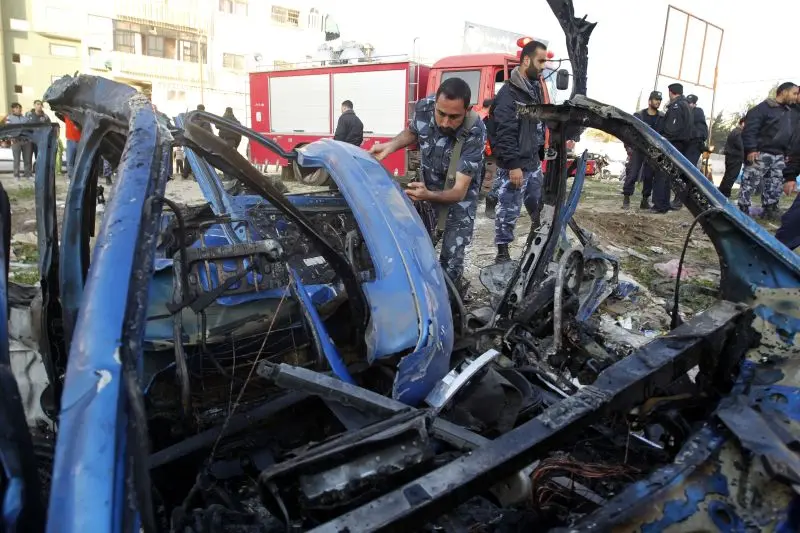
The crisis was triggered on Friday when the Israeli military launched a precise missile strike targeting a vehicle carrying Zuhair al-Qaisy, a high-ranking commander in the Popular Resistance Committees (PRC), operating in the Gaza Strip. According to senior Israeli defense officials, al-Qaisy was actively planning an imminent cross-border terrorist attack against Israeli civilians and military personnel.
The targeted assassination immediately provoked a furious response from Gaza-based militant groups. Within hours, the Islamic Jihad—an Iran-backed militant faction—alongside other armed groups, began unleashing a barrage of rockets and mortar shells toward southern Israeli population centers. The sudden onslaught caught communities off guard, forcing thousands of Israeli civilians into bomb shelters.
Saturday through Monday: Four Days of Intensive Hostilities
Over the subsequent four days, the border region descended into one of the most intense rounds of cross-border fighting seen in months. The IDF retaliated with wave after wave of targeted airstrikes aimed at rocket-launching squads, weapons depots, and infrastructural sites linked to militant activities across the Gaza Strip.
The human toll mounted rapidly on the Palestinian side. By Tuesday, local health officials reported that 25 Palestinians had been killed in the hostilities, with 14 of the deceased identified as members of Islamic Jihad. At least 80 other individuals sustained injuries ranging from moderate to severe. Meanwhile, sirens wailed constantly across southern Israeli towns, including Sderot, Ashkelon, and Beersheba, as hundreds of rockets tested the limits of civilian endurance and air defense systems.
Amid the chaos, an incident at a funeral procession east of Jabaliya in northern Gaza added to the friction. According to the Palestinian news agency WAFA, witnesses claimed that the Israeli army opened fire at a crowd gathering for a funeral near the Jabaliya cemetery close to the security fence, wounding three people.
The IDF offered a contrasting account of the incident. An anonymous IDF spokeswoman explained that soldiers operating along the security fence identified approximately 50 Palestinians gathering suspiciously close to the barrier. In strict accordance with standard military rules of engagement, troops fired warning shots to disperse the crowd. Initial military reports indicated that the warning shots resulted in no injuries to the individuals present.
Tuesday: The Shaky Truce and Contradictory Interpretations
By Tuesday morning, mediation efforts led by Egyptian intelligence officials appeared to bear fruit. An Egyptian official confirmed that a cease-fire agreement had been struck, prompting a temporary lull in hostilities.
Israeli Defense Minister Ehud Barak acknowledged the apparent halt in fighting during a morning broadcast. "It appears that we have reached the end of this round of violence," Barak stated, adding that the IDF had "demonstrated once again that we will take out anyone who tries to act against us."
Similarly, IDF Chief of the General Staff Lt. Gen. Benny Gantz emphasized a policy of measured deterrence: "We must appreciate the public’s endurance and cooperation while following the ongoing situation. Calm will be reciprocated with calm, and fire will be reciprocated with fire."
However, the fragile truce was built on a foundation of contradictory understandings.
- The Palestinian Perspective: Khaled al-Batsh, a prominent Gaza-based leader of Islamic Jihad, asserted that the militant factions agreed to the cease-fire only after receiving Egyptian assurances that Israel had committed to ending its campaigns of airstrikes and targeted assassinations of militant leaders. "When Israel agreed to these two conditions with Egyptian assurances and mediation, then Islamic Jihad and all the Palestinian resistance factions agreed on a reciprocal cease-fire in the Gaza Strip," al-Batsh declared.
- The Israeli Perspective: Israel flatly rejected the notion that it had abandoned targeted killings. Senior defense official Amos Gilad defended the practice as an indispensable security tool. "Targeting such mega-terrorists is the best way to save lives," Gilad stated, signaling that Israel reserved the right to strike high-value targets whenever imminent threats emerged.
Wednesday: The Truce Collapses
The dissonance between the two sides quickly manifested on the ground. Despite the diplomatic announcement, suspected militants fired three rockets and mortar shells into southern Israel early Tuesday, signaling that the cease-fire was fracturing.
By early Wednesday, the IDF announced that Israeli aircraft had carried out fresh retaliatory airstrikes targeting two "terror activity sites" in northern Gaza. "Direct hits were confirmed," the IDF said in an official statement, reiterating that the military "will not tolerate any attempt to harm Israeli civilians or IDF soldiers, and will continue to operate with determination at any given time against anyone who uses terror against the State of Israel." The military placed the sole blame for the renewed violence on Hamas, the Islamist group governing the Gaza Strip.
Supporting Context & Metrics
To fully understand the gravity of the recent escalation, it is necessary to examine the broader operational metrics and the concurrent geopolitical developments occurring outside the immediate conflict zone.
Conflict Metrics at a Glance
- Duration of Hostilities: 4 intensive days of cross-border fire (Friday through Tuesday).
- Palestinian Fatalities: 25 individuals killed, including 14 members of the Iran-backed Islamic Jihad.
- Palestinian Injuries: At least 80 individuals wounded across various airstrikes and border incidents.
- Militant Activity: Hundreds of rockets and mortar shells launched from the Gaza Strip toward civilian population centers in southern Israel.
- Israeli Response: Dozens of targeted airstrikes hitting rocket squads, operational infrastructure, and designated "terror activity sites."
The Egyptian Parliamentary Vote and Diplomatic Aftershocks
While Egyptian intelligence operatives were successfully brokering the cease-fire in Cairo, Egypt’s newly elected, Islamist-dominated parliament engaged in a dramatic symbolic rebuke of Israel. In a unanimous show of hands, lawmakers voted to suspend diplomatic relations with Israel and immediately halt the export of Egyptian natural gas to its neighbor.
The move sent shockwaves through regional diplomatic channels. However, foreign policy analysts were quick to note the limitations of the parliamentary vote. Under Egypt’s transitional governance structure following the ouster of former President Hosni Mubarak, the Supreme Council of the Armed Forces (SCAF) retains exclusive authority over foreign policy and state-to-state relations. Consequently, the parliamentary resolution will not alter existing political or diplomatic ties, though it highlights the growing populist and anti-Israel sentiment within Egypt’s evolving political establishment.
International Diplomacy and the United Nations
Frustrated by what it perceived as international inaction, Israel took its grievances to the United Nations. Israel’s ambassador to the U.N., Ron Prosor, submitted a formal letter to Secretary-General Ban Ki-moon criticizing the Security Council’s failure to condemn or take decisive action against the relentless rocket fire originating from Gaza.
"It is time for the Security Council to speak with one voice against the terrorism that continues to flow from Gaza," Prosor wrote. Highlighting the extreme volatility of the situation, he added a stark warning: "The situation is grave. If one rocket lands in the wrong place at the wrong time, Israel will be forced to respond in a completely different manner."
Official Statements and Responses
The multi-sided nature of the conflict elicited sharp rhetoric from military commanders, political leaders, and militant spokespersons:
- The Israeli Defense Forces (IDF): Emphasized zero tolerance for border provocations. In its official statements, the military maintained that "The Hamas terror organization is solely responsible for any terrorist activity emanating from the Gaza Strip," holding the governing authority accountable for the actions of splinter factions like Islamic Jihad and the Popular Resistance Committees.
- Islamic Jihad Leadership: Khaled al-Batsh defended the militant group’s rocket campaigns as a legitimate reaction to Israeli aggression, insisting that the resistance factions entered the Egyptian-brokered cease-fire under the explicit understanding that targeted assassinations would cease.
- Senior Israeli Defense Official Amos Gilad: Defended Israel’s operational strategy of targeted killings, asserting that eliminating key militant planners before they can execute attacks remains the most effective counterterrorism strategy available to save Israeli lives.
- Egyptian Mediation Officials: Stressed the delicate nature of their diplomatic intervention, noting that while a framework for calm was established, maintaining it requires constant communication with both Israeli security chiefs and Palestinian faction leaders to prevent localized misunderstandings from erupting into full-scale war.
Future Outlook
As the dust settles from the latest round of airstrikes, the immediate outlook for the Gaza border remains precarious. The fundamental disagreement over the terms of the Egyptian-brokered cease-fire—specifically regarding Israel’s insistence on retaining the right to conduct targeted killings versus militant demands for an absolute halt to such operations—creates a permanent structural vulnerability in the truce.
Furthermore, several critical factors will dictate whether the region slips back into sustained warfare or manages to maintain a cold peace in the coming weeks:
- Enforcement by Governing Authorities: The ability—and willingness—of Hamas to enforce discipline among smaller, more radical militant factions such as Islamic Jihad and the Popular Resistance Committees will be heavily scrutinized by Israeli intelligence. If rogue rocket fire continues, the IDF has signaled it will escalate its retaliatory footprint.
- The Domestic Political Landscape in Egypt: As Egypt continues its turbulent democratic transition, populist pressures from parliament regarding relations with Israel could complicate Cairo’s role as a trusted, neutral mediator between the two sides.
- Broader Regional Distractions: While global attention has been disproportionately absorbed by the bloody civil conflict in Syria and the intensifying international showdown over Iran’s nuclear ambitions, the Gaza-Israel flashpoint demonstrates that localized Israeli-Palestinian dynamics retain the explosive capacity to capture international headlines at a moment’s notice.
Ultimately, as Lt. Gen. Benny Gantz succinctly noted, the future of the border depends entirely on reciprocal actions: calm will be met with calm, but any resumption of violence will inevitably be answered with overwhelming military force. Until a more durable political arrangement is forged, the residents on both sides of the security fence must continue to live in the shadow of an uncertain and fragile peace.
