

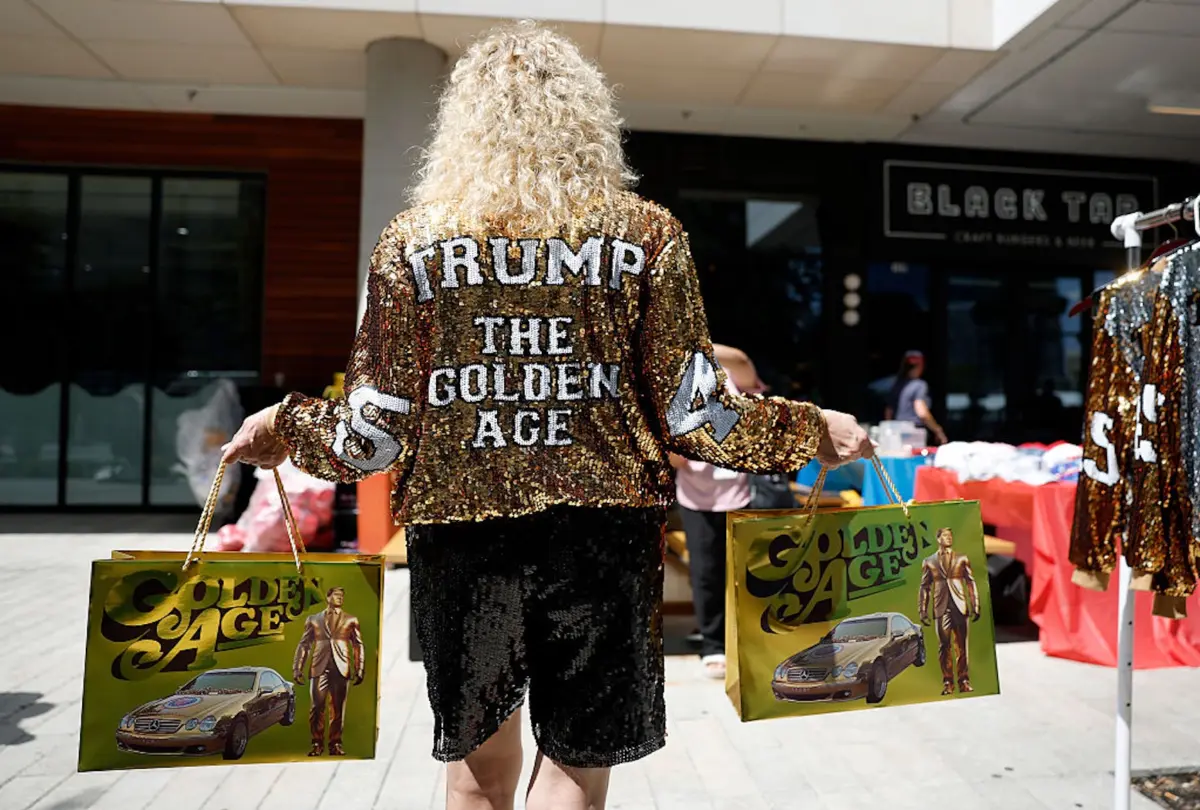
In modern American politics, few spectacles rival the convergence of personal sycophancy and institutional self-preservation. This week, the Republican National Committee (RNC) has transformed the American Airlines Center in Dallas into ground zero for what insiders have aptly dubbed "Trumpapalooza"—the inaugural Republican Midterm Convention. Promoted as a massive strategic rally ahead of a high-stakes electoral season, the multi-day gathering serves a singular, unmistakable purpose: functioning as an elaborate, high-cost ego massage for President Donald Trump.
Historically, midterm conventions do not exist within the operational playbook of the Republican Party. Yet, this hastily assembled affair has been forced onto the calendar to manage the fragile political psychology of an increasingly unpopular president. With tickets starting at a steep $25,000, candidates and party faithful are expected to pay a heavy toll—both financially and through public prostration—to demonstrate ritual loyalty.
However, the event has laid bare a profound fracturing within the GOP ranks. Rather than rushing to Dallas to bask in the MAGA limelight, a striking number of Republican lawmakers and midterm candidates have suddenly discovered pressing scheduling conflicts. Investigative outreach reveals that a majority of surveyed party leaders have opted out of attendance, quietly fleeing an association with a president whose plunging approval ratings threaten to sink their own electoral prospects.
Compounding the embarrassment, the RNC has resorted to desperate measures—including public ticket lotteries and text-message giveaways—to fill the cavernous arena seats. As the party attempts to placate an isolated leader trapped within an impenetrable information bubble of AI-generated self-aggrandizement, the Dallas convention stands as a costly, counterproductive symbol of a party desperately trying to mask its own gathering internal crisis.
Detailed Chronology: The Road to Dallas and the Mass Exodus
The trajectory toward the Dallas convention began months ago, conceived not out of strategic electoral necessity, but out of an acute executive demand for continuous adulation. Following the playbook established during the 2024 Republican National Convention in Milwaukee—where Trump broke tradition by occupying a front-row seat every evening to absorb endless flattery—party leadership sought to institutionalize that environment for the midterms.
- July 2026: The RNC officially rolls out plans for the first-ever Midterm Convention, branding it as a premier candidate fundraiser with elite ticket tiers scaling up to $20,000 and beyond depending on the state delegation.
- Labor Day Weekend 2026: While campaigns traditionally use the holiday weekend to launch aggressive ground games, President Trump spends his time flooding Truth Social with a surreal array of AI-generated content. These digital artifacts depict him alongside George Washington, serving as the DC Comics hero Green Lantern, leading an ominous robot army, and staring down an absurdly enlarged map showcasing an expanded North American empire.
- Early September 2026: Political outlets begin publishing attendance tracking data. POLITICO contacts 70 high-ranking Republican leaders, discovering that 45 have already formally declined invitations, while the remainder remain non-committal. Concurrently, congressional reporters note a palpable dread among Capitol Hill Republicans eager to distance themselves from the event.
- September 7–8, 2026: Major television networks signal their non-committal stance toward broadcasting the proceedings, choosing instead to prioritize the opening games of the NFL season. In a frantic pivot to prevent empty optics, the RNC launches a public ticket lottery, texting donors across the country offering "FREE TICKETS" to an event that was originally billed as an exclusive, high-dollar donor summit.
- September 8–9, 2026: The convention officially opens at the American Airlines Center in Dallas. Amid sparse national media coverage and a noticeable absence of mainstream legislative heavy-hitters, the stage is set for a series of uninspiring speeches culminating in the president’s address.
Supporting Context & Metrics: Bubbles, Polls, and Plummeting Retail
To understand why the RNC is willing to risk public embarrassment by begging for seat-fillers, one must examine the insular ecosystem surrounding the executive branch. According to veteran political journalists Maggie Haberman and Jonathan Swan, Trump operates inside a heavily curated "information bubble." Daily operations are managed in part by loyal aides like Natalie Harp, who reportedly follows the president around the clock, supplying him with printouts of sympathetic, often fabricated, headlines from right-wing digital outlets.
This shielding mechanism is designed to prevent the president from confronting a harsh statistical reality:
- Plunging Approval Ratings: Current polling metrics place Trump’s public approval at historic lows, with intra-party dissatisfaction rising significantly among suburban and independent voters who previously leaned conservative.
- The Retail Indicator: Beyond traditional polling, the economic health of the MAGA movement offers a stark empirical warning. A comprehensive Wall Street Journal report released just prior to the convention revealed that sales for MAGA merchandise and apparel have hit a steep downward trajectory. Retailers report that consumer enthusiasm peaked around the presidential re-election and took a catastrophic nosedive roughly six months prior, coinciding with foreign policy entanglements such as the Iran war.
- Scheduling Competition: The RNC’s decision to schedule the marquee event on Wednesday and Thursday nights places it in direct competition with prime-time NFL broadcasts, virtually guaranteeing an anemic television viewing audience—a metric the president historically scrutinizes above all others.
The convergence of these metrics paints a vivid picture of a political brand facing severe consumer fatigue, a reality that the Dallas convention’s organizers are attempting to cure through artificial pageantry.
Official Statements and Behind-the-Scenes Reactions
Publicly, party functionaries have spun the convention as an indispensable pep rally designed to galvanize the base. The RNC officially defended its frantic outreach efforts—including the viral text-message ticket lottery—after initial confusion led many recipients to dismiss the promotion as a phishing scam.
"The response has been overwhelmingly enthusiastic, and we are opening up opportunities for grass-roots patriots to join us in Dallas," an RNC spokesperson insisted to local media outlets in Dallas, pushing back against characterizations of the event as desperate.
Yet, off the record, the sentiment among congressional Republicans and campaign operatives is radically different. Speaking to independent analysts and political commentators, numerous GOP lawmakers offered transparently flimsy excuses for their absence.
"Sorry, Mr. President, I have a thing," has become the unofficial refrain among vulnerable incumbents. As political writer Joe Perticone observed, congressional Republicans are acutely aware that appearing alongside an unpopular president in a forced loyalty pageant is an electoral death warrant in swing districts.
Privately, senior aides acknowledge the delicate tightrope they must walk. Fearful of the president’s notoriously swift and vengeful retribution against any official who dares deliver bad news, staffers treat his morale management as a matter of national security. Dissent is systematically scrubbed from his immediate environment, leaving events like "Trumpapalooza" as the only remaining mechanism to artificially sustain his confidence before the electorate casts its midterm ballots.
Future Outlook: The Reckoning Ahead
As the Dallas convention draws to a close, the Republican Party faces a sobering post-event reality. The temporary high of stadium applause and carefully managed cheerlines will do little to alter the structural headwinds facing the GOP in the upcoming midterm elections.
Political prognosticators widely anticipate a difficult cycle for the incumbent party, with independent forecasters projecting potential Democratic pickups in the House and possibly the Senate, despite aggressive partisan redistricting efforts. When the artificial bubble of the Dallas arena pops, the cold realities of inflation, foreign policy fatigue, and voter backlash will rush back in.
If, as expected, the midterms result in significant losses for the Republican Party, the burden on Trump’s inner circle will multiply exponentially. Handlers like Natalie Harp and remaining loyalists will be forced to redouble their efforts, leaning heavier on AI-generated fantasies of imperial conquest and heroic mythology to shield the president from blame.
Ultimately, the RNC Midterm Convention will be remembered not as a turning point for conservative electoral strategy, but as an expensive, transparently nervous exercise in political theater—a multi-million-dollar pacifier handed to an executive who refuses to look reality in the eye, and a cautionary tale for a political party held hostage by the fragility of its leader.
