

Executive Overview
In the grand pantheon of culinary traditions, few dishes are as unjustly pigeonholed as stuffing—or, more accurately, dressing. For generations, this humble combination of torn bread, aromatic vegetables, fat, and broth has been locked behind the velvet rope of the Thanksgiving holiday, viewed by home cooks as a labor-intensive, once-a-year ceremonial side dish. But as grocery inflation bites, household food waste climbs, and the modern weeknight dinner demands both speed and resourcefulness, a quiet culinary rebellion is underway.
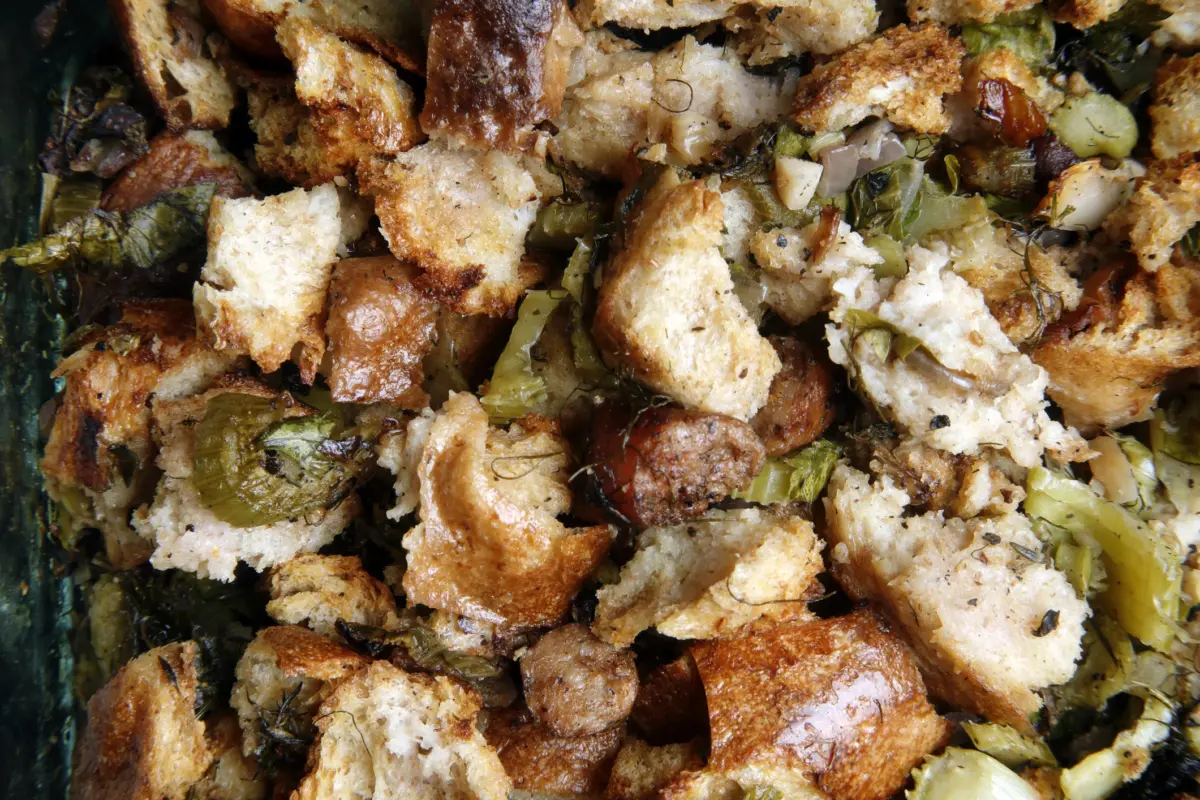
Food writers and home chefs are stripping stuffing of its holiday obligations and reimagining it as a versatile, highly adaptive weeknight pantry staple. Much like a strata, a panzanella, or a trusty rice bowl, weeknight stuffing—or its faster cousin, the skillet "bread stir-fry"—offers an ingenious vehicle for cleaning out the refrigerator. By utilizing stale loaves, leftover sausage, limp vegetables, and a splash of stock, home cooks can produce a deeply satisfying, comforting dinner in under antegrade time constraints, often punctuated by the ultimate weeknight luxury: a crispy fried egg on top.
This piece explores the liberation of stuffing from seasonal constraints, examining the culinary mechanics of transforming leftover carbs into weeknight centerpieces, and offering a blueprint for improvisational, no-recipe cooking that honors both the palate and the grocery budget.
Detailed Chronology: The Evolution of a Holiday Relic
To understand how stuffing became confined to the November table, one must look at the history of bread-based dishes throughout European and American culinary evolution. Stretching bread with scraps, offal, and broths was historically a peasant strategy for survival. Stale loaves, which would otherwise be discarded, were revived through liquid absorption and baked or fried to feed large households economically.
When European settlers brought these traditions to North America, stuffing became intertwined with large roasted game and poultry, eventually finding its permanent national anchor in the Thanksgiving turkey. Over the decades, commercial interests—most notably the rise of boxed, shelf-stable "stovetop" stuffing mixes in the 1970s—cemented the dish’s identity as a quick-fix holiday side rather than an autonomous meal. The linguistic collapse between "stuffing" (historically cooked inside a cavity) and "dressing" (baked in a separate dish) largely blurred in the American consciousness, thanks in part to the convenience of cardboard boxes and poultry seasoning packets.
However, the modern pivot away from strict seasonal eating began gaining digital traction in the late 2010s and early 2020s. Food culture on social media platforms democratized the idea of culinary breaking the rules—popularized by viral sentiments like the comedic realization that adults can simply buy a birthday cake whenever they want, with no "cake authority" to stop them.
Applying this same irreverent logic to savory cooking, home cooks began questioning why other comforting bread dishes (like crouton-heavy salads or savory bread puddings) are enjoyed year-round while stuffing remains sequestered. The turning point arrived as home cooks faced post-pandemic inflation and a renewed focus on reducing household food waste. Stale sourdough, day-old baguettes, leftover cornbread muffins, and the lonely ends of sandwich loaves stopped being viewed as garbage. Instead, they were recognized as the structural foundation for fast, creative weeknight casseroles and skillet meals.
Supporting Context & Metrics: The Economics of the Pantry Clean-Out
The resurgence of weeknight stuffing aligns neatly with broader socioeconomic shifts in home kitchens. According to recent food waste and consumer spending data, the average American household discards a significant percentage of purchased groceries annually, with bakery and bread products ranking among the most frequently wasted items due to rapid staling.
| Ingredient Category | Traditional Holiday Role | Weeknight Pantry Application | Waste-Reduction Impact |
|---|---|---|---|
| Stale Bread | Turkey cavity filler / Casserole base | Strata, skillet croutons, base for weeknight stuffing | Diverts dry loaves from landfills; saves $3–$5 per loaf |
| Alliums (Onions, Shallots) | Flavor base for gravy and sides | Core aromatics, caramelized skillet foundations | Utilizes sprouting or softening produce |
| Meats & Proteins | Sausage crumbles, giblets | Chorizo, bacon ends, soy crumbles, mushrooms | Clears out fractional package remnants |
| Broth & Stock | Turkey basting and moisture binder | Rehydration element, gravy base | Uses up open cartons and bouillon pastes |
From an economic perspective, weeknight stuffing requires virtually zero specialized grocery trips. It relies on the "odds and ends" accumulation phase that typically occurs by midweek:
- The half-tub of Mexican chorizo lingering at the bottom of the meat drawer.
- The slightly sad, bendable carrots and bell peppers hiding in the crisper.
- The remnants of chicken stock or an emergency spoonful of bouillon paste.
By treating these ingredients with "casserole logic"—the understanding that almost any savory vegetable, fat, and protein will harmonize when bound by starch and liquid—cooks can pull together a gourmet-adjacent meal for pennies on the dollar. Furthermore, incorporating a protein ballast (such as pork sausage or seasoned mushrooms) and topping the finished dish with a fried egg transforms a side dish into a nutritionally complete, highly satisfying dinner.
Official Perspectives: The Philosophy of Improvised Comfort
Culinary minimalists and food writers have long championed the philosophy of "cooking without recipes," but the weeknight stuffing phenomenon takes this ethos a step further by establishing a reliable framework built entirely on flexibility.
"The point is not to recreate Thanksgiving dinner on a Tuesday," notes culinary observers who advocate for breaking seasonal boundaries. "The point is to notice that stuffing, stripped of its ceremonial duties, is an exceptionally forgiving way to turn bread and whatever else you have into dinner."
Professional kitchens have long understood this principle. Bread is fundamentally an absorbent sponge, designed to capture cooking fats and flavor profiles. When liberated from sage-and-celery orthodoxy, stuffing opens up to global flavor profiles. Home cooks are increasingly swapping traditional poultry seasoning for:
- Spanish or Mexican Chorizo paired with cilantro, cotija cheese, and lime zest.
- Italian Sausage combined with fennel seeds, red pepper flakes, and an abundance of Parmesan.
- Asian-inspired aromatics, utilizing ginger, scallions, soy sauce, and sesame oil to toast torn bread in a skillet.
This modular approach removes the intimidation factor of traditional baking. If a home cook does not want to wait for a casserole to bake in the oven, the method easily translates into a stovetop "bread stir-fry"—a rapid technique where torn bread chunks are crisped directly in fat alongside aromatics and vegetables.
Future Outlook: Where Weeknight Comfort Cooking is Headed
As consumers look for sustainable, comforting, and budget-friendly ways to navigate busy work weeks, the rehabilitation of seasonal foods into everyday staples is poised to accelerate. The success of weeknight stuffing points to a broader culinary trend: the de-formalization of comfort food.
We are moving away from rigid meal plans that require hyper-specific grocery lists and toward intuitive, pantry-driven cooking. The kitchen of the future values adaptability over adherence to tradition. Just as no one polices when a person can buy a birthday cake, the modern kitchen recognizes no calendar restrictions on when bread, fat, stock, and vegetables can be combined into a bubbling, golden casserole.
Whether baked in a dish with a crisp, buttery top or tossed quickly in a skillet and crowned with a runny fried egg, weeknight stuffing has successfully claimed its rightful place outside the holiday shadow. It is no longer a dish reserved for once a year; it is a masterclass in resourcefulness—and a deeply comforting answer to the eternal question: What’s for dinner?
Bonus Reference: The Blueprint for Chorizo and Cornbread Weeknight Stuffing
For those looking to test the boundaries of year-round stuffing, here is an unstructured blueprint based on improvisational kitchen logic:
- Start with the Bread: Gather stale hunks of cornbread, sourdough, or sandwich loaf. Tear them into unruly, rough-hewn croutons rather than fine crumbs.
- Choose Your Fat: Render down spicy Mexican chorizo, pork sausage, or heat a generous amount of olive oil and salted butter in a heavy skillet.
- Add Aromatics & Veggies: Toss in diced bell peppers, scallions, carrots, or whatever vegetables need rescuing from the crisper. Season aggressively with garlic powder, onion powder, and fennel seeds.
- Bind and Bake (or Skillet-Fry): Whisk an egg with chicken stock and a splash of buttermilk or cream. Pour over the bread mixture just enough to moisten the interior while leaving edges exposed for crisping. Bake in a casserole dish until golden, or keep it on the stovetop for a rapid stir-fry.
- Finish with Vigor: Shower the finished dish with lemon zest, fresh herbs (parsley, cilantro, or chives), a grating of cheese (cotija or Parmesan), and top with a freshly fried egg.