

Executive Overview
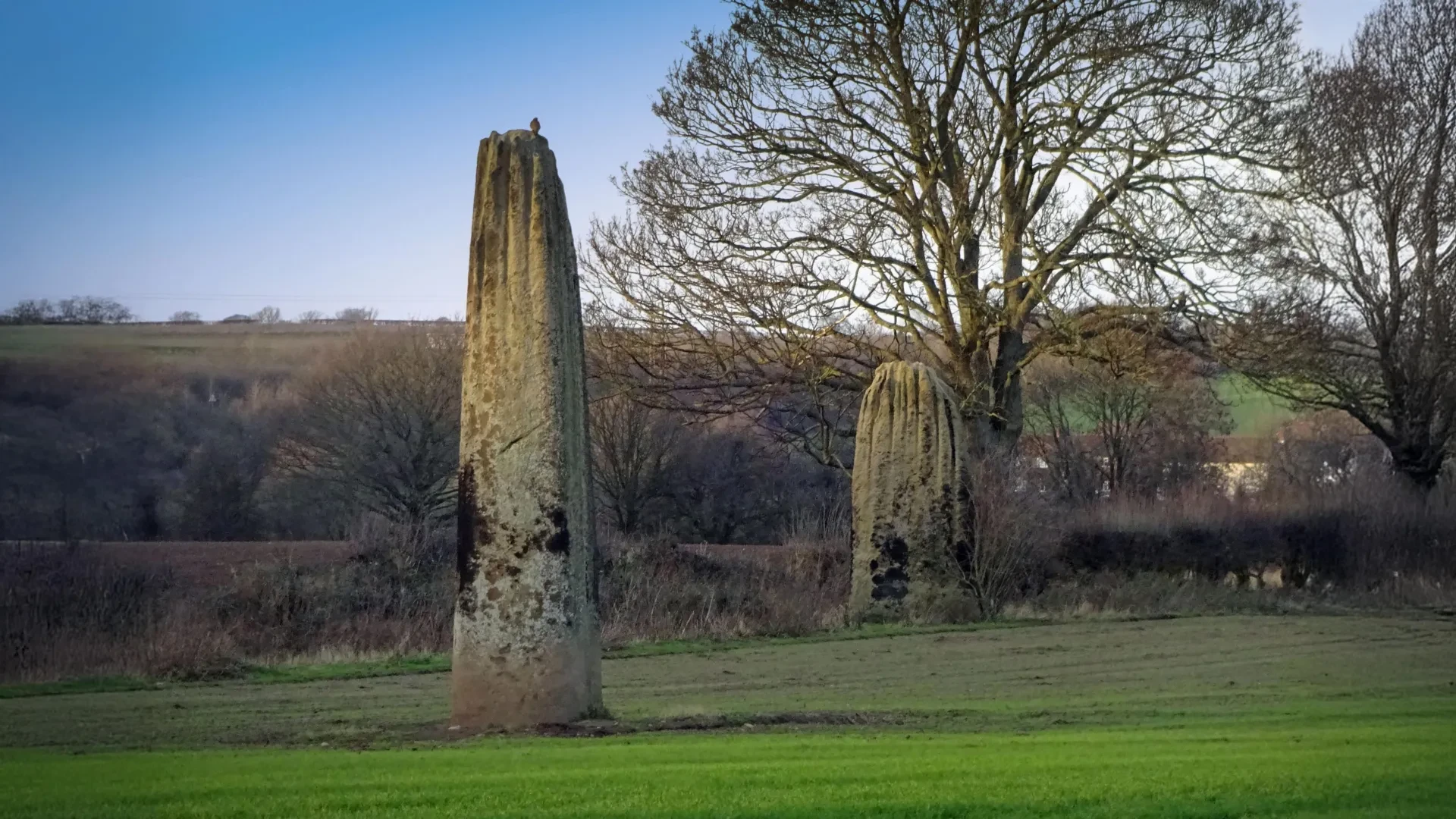
In a groundbreaking archaeological discovery that reshapes our understanding of prehistoric engineering and cultural values, researchers have successfully traced the origin of Britain’s tallest surviving prehistoric stone row: the iconic Devil’s Arrows. Standing proudly in the lowland landscape near Boroughbridge in North Yorkshire, these towering megaliths reach heights of up to seven meters (23 feet). For centuries, historians, geologists, and archaeologists have debated the provenance of these massive stone pillars, which weigh an astonishing 25 tonnes (55,000 pounds) each.
A collaborative study led by Curtin University, in partnership with the University of York, has finally solved this ancient mystery. Utilizing an innovative, non-invasive mineral-dating technique, the research team pinned down the geological birthplace of the stones to Brimham Rocks, a rugged, elevated area located at least 18 kilometers (11 miles) away.
Published in the Proceedings of the Royal Society A under the title "Deliberate Prehistoric Sourcing of the Devil’s Arrows, Britain’s Tallest Stone Row," this study fundamentally challenges long-held assumptions about Neolithic and Early Bronze Age construction. Rather than selecting the nearest available material for convenience, ancient builders deliberately bypassed closer alternatives—such as Plumpton Rocks—to procure stones from a distant, rugged landscape. This monumental undertaking required extraordinary planning, advanced social coordination, and considerable muscle, signaling that the source location of the stones held deep cultural, symbolic, or spiritual significance for the people who moved them.
Detailed Chronology and Investigation
The Historical Enigma of the Devil’s Arrows
Rising sharply from the flat plains of northern England, the Devil’s Arrows have captivated travelers, antiquarians, and scientists for generations. Believed to have been erected during the Late Neolithic or Early Bronze Age—roughly around 2000 BC—the monument comprises a vanishingly rare alignment of giant stones in a lowland setting. Despite their unmistakable presence and historical importance, the exact geographical origin of the stone blocks had remained an enduring puzzle.
Previous scholarly consensus frequently pointed toward Plumpton Rocks, a site located significantly closer to the monument’s current home, as the most probable quarry source. However, comprehensive geological verification was lacking, leaving the true narrative of the stones shrouded in speculation. Was convenience the primary driver of prehistoric monument building, or did ancient communities factor in other, more abstract variables?
A Non-Invasive Breakthrough: Mineral Fingerprints
To definitively answer this question without damaging a cherished historical monument, the research team—spearheaded by lead author Dr. Anthony Clarke from the Timescales of Mineral Systems Group within Curtin’s School of Earth and Planetary Sciences—pioneered a novel, low-impact sampling methodology.
Rather than chipping away large fragments from the megaliths, the scientists utilized specialized adhesive tape to gently harvest tiny mineral grains directly from the surfaces of the stones. This non-destructive approach allowed them to capture microscopic physical and chemical data without compromising the structural integrity of the ancient pillars.
Back in the laboratory, researchers conducted sophisticated radiometric dating to determine the geological age "fingerprints" of these extracted mineral grains. By cross-referencing these unique signatures against geological surveys and rock samples gathered from various potential source locations across Yorkshire, the team successfully matched the mineral profile of the Devil’s Arrows exclusively to Brimham Rocks.
Furthermore, this rigorous analysis enabled the team to decisively rule out alternative natural hypotheses, such as the natural transport of the stones via ancient glacial movement. The data confirmed beyond doubt that the massive monoliths were intentionally extracted, transported, and raised by human hands.
Supporting Context & Metrics
To fully comprehend the sheer scale of the achievement behind the Devil’s Arrows, one must examine the hard metrics and geographic realities of the operation:
- Weight per Megalith: Each of the surviving stones weighs in excess of 25 tonnes (55,000 pounds).
- Distance Traveled: Stones were hauled across a rugged, challenging terrain spanning a minimum of 18 kilometers (11 miles).
- Monument Height: Standing up to 7 meters (23 feet) tall, they form the tallest surviving prehistoric stone alignment in the British Isles.
- Estimated Timeline: Erected during the transitionary period of the Late Neolithic to the Early Bronze Age, approximately 2000 BC.
- Alternative Sourced Proximity: Plumpton Rocks, previously thought to be the source, is situated significantly closer to the monument site, highlighting the deliberate decision to bypass it for Brimham Rocks.
Re-Evaluating Prehistoric Engineering and Motivation
The revelation that ancient Britons transported 25-tonne blocks over an 18-kilometer stretch challenges deeply ingrained modern biases regarding ancient capabilities and pragmatism. Modern industrial society often assumes that early human groups operated under strict constraints of efficiency, seeking out the path of least resistance for labor-intensive projects.
However, the findings at the Devil’s Arrows prove otherwise. By choosing Brimham Rocks over closer geographical options, prehistoric communities deliberately elected a much harder path. This choice underscores a profound connection between the builders and their environment.
The rugged terrain of Brimham Rocks was not merely a rock quarry; it was likely viewed as a sacred landscape. The act of extracting stone from a specific, distant location infused the resulting monument with symbolic power, linking the spiritual essence of the origin landscape to the ceremonial destination point near Boroughbridge.
Official Statements and Expert Perspectives
The academic and heritage sectors have responded to the study with immense enthusiasm, emphasizing how it bridges gaps in British prehistory.
Dr. Anthony Clarke reflected on the broader philosophical implications of the discovery for our understanding of ancient societies:
"Our research shows these stones weren’t simply taken from the nearest available source—they were deliberately chosen from a challenging landscape 18 kilometers away. Each stone weighs more than 25 tonnes, so moving them would have required incredible planning, coordination, and engineering skill. This tells us prehistoric people placed real importance on the landscape itself. It wasn’t just about convenience—the location the stones came from likely held meaning for them."
Co-author Dr. Jim Leary, representing the University of York, noted how the study transforms methodological frameworks for interpreting ancient monuments:
"These results show that ancient communities were making deliberate and meaningful choices about where their stones came from. It highlights the importance of landscape and shared belief systems, as well as the remarkable effort involved in transporting and raising stones of this size."
The findings also resonate strongly with land stewards and heritage managers tasked with protecting these cultural touchstones. Justin Scully, National Trust General Manager for Fountains Abbey & Studley Royal and Brimham Rocks, highlighted the tangible link the study creates between distinct Yorkshire geographies:
"We’re incredibly grateful to the researchers for helping us uncover this new chapter in the stones’ story and deepen our understanding of the people who shaped this landscape thousands of years ago. The Devil’s Arrows are deeply cherished by local communities, and we’re delighted that this discovery adds a new chapter to their story."
Future Outlook: Expanding the Archaeological Horizon
The successful application of the non-invasive tape-sampling technique marks a watershed moment for archaeological science. Rather than hitting a methodological wall when studying monolithic structures whose quarries remain unknown, researchers now possess a precise, safe tool to uncover geological origins globally.
Building on this momentum, Dr. Clarke and his team have laid out an ambitious roadmap for future research. Their immediate objectives include:
- Deploying the Non-Invasive Technique Globally: The research team plans to apply their adhesive-tape mineral-dating method to other enigmatic standing stones and megalithic monuments throughout the UK and Europe whose origins remain a mystery.
- Targeted Archaeological Excavations: Scientists hope to secure funding and permissions to execute precise, low-impact excavations at both the Devil’s Arrows site and the newly confirmed source area at Brimham Rocks.
- Refining the Chronology: Further stratigraphic and material analyses will be directed at narrowing down the exact timeframe of extraction, transport, and erection, shedding light on the social structures and seasonal labor patterns of Late Neolithic and Early Bronze Age communities.
As these future studies unfold, the story of the Devil’s Arrows will continue to evolve. What was once viewed simply as a striking geological anomaly on a Yorkshire lowland has now transformed into a vibrant testament to ancient human ingenuity, communal grit, and a profound, spiritual reverence for the natural world.
