In the world of brand identity design, the moment a designer opens Figma or Illustrator is often treated as the true starting line. However, industry veterans know a fundamental truth: when a branding project fails, the cracks almost always form long before a single vector is drawn or a color palette is sampled. They occur in the strategy phase, where vague adjectives—such as "modern," "trustworthy," "premium," "friendly," and "disruptive"—are accepted at face value without being rigorously defined.
This linguistic ambiguity creates a dangerous chasm between what a brand intends to communicate and what a designer is ultimately tasked with creating. To bridge this divide, design teams must master the "pre-concept" phase.
This critical window of work takes place after the project kickoff but prior to the development of the first visual direction. By systematically researching brand context, uncovering hidden assumptions among stakeholders, and transforming abstract strategic directions into concrete visual foundations, organizations can eliminate guesswork. Ultimately, the pre-concept phase ensures that the first design concepts are not blind guesses, but precise, strategic responses to well-defined design problems.
Detailed Chronology: Navigating the Pre-Concept Roadmap
A successful brand identity project does not happen by accident. It follows a disciplined chronological evolution, moving from broad discovery to sharp visual parameters before any original design work begins.
Stage 1: Researching the Brand Context and Perception
A standard brand workshop naturally covers foundational discovery topics: the nature of the business, growth goals, product offerings, the competitive landscape, and target demographics. Yet, the most valuable insights emerge from exploring perception.
As iconic brand strategist Marty Neumeier notes in The Brand Gap, "A brand is a person’s gut feeling about a product, service, or company." Because a brand lives entirely in the mind of the audience, discovery sessions must actively clarify what perception the team is trying to forge.
Ambiguous adjectives frequently derail projects because stakeholders assume shared understanding where none exists. For instance, consider a health tech company whose leadership team unanimously agreed they wanted their brand to look "disruptive." Initially, the word conjured images of bold, unconventional, and rebellious design. However, deep-dive discussions revealed that their core clientele consisted of conservative government medical institutions. In that strict context, a visually loud or overly experimental identity would actively destroy trust. Their version of "disruptive" actually demanded extreme clarity, institutional efficiency, and quiet confidence—values visually closer to traditional reliability than rebellion.
Stage 2: Facilitating Stakeholder Alignment via Interactive Exercises
Words alone are rarely enough to bridge strategy and visual execution. To move effectively from language to imagery, designers must employ interactive frameworks that force stakeholders to externalize their assumptions. As Jake Knapp outlines in GV’s Three-Hour Brand Sprint, the primary objective of these exercises is to transform the abstract concept of "our brand" into something concrete.
Exercise A: Competitor Perception Mapping
Before entering a workshop, designers should curate a diverse collection of competitor touchpoints—websites, user interfaces, social media graphics, and marketing collateral. During the session, the client team plots these entities onto a two-axis map.
The Goal: This exercise bypasses superficial debates over "good" or "bad" design, focusing instead on category navigation.
The Axes: Tailored to the project’s core tensions. For a fintech startup aiming to stand out without sacrificing security, the axes might range from Understated to Bold and Accessible to Exclusive.
The Value: Disagreements in placement expose fundamental fractures in how stakeholders perceive their market environment, allowing the design team to resolve these conflicts early.
Exercise B: The Visual Brand Driver
To move the lens inward, teams can utilize the "Visual Brand Driver" exercise. Stakeholders select images representing the company across unrelated categories: transport, typography, activities, furniture, moods, objects, animals, architecture, and beverages.
Crucially, these selections must reflect the company, not personal aesthetic preferences. By pairing these chosen images with four or five descriptive adjectives, stakeholders are forced to think through metaphor and association. A high-speed train, a quiet electric vehicle, and a heavy boardroom table all communicate vastly different organizational truths. This exercise effectively decouples ego and personal taste from strategic evaluation.
Stage 3: Building the Visual Foundation
Once discovery insights and stakeholder assumptions are mapped out, the next milestone involves translating shared understanding into a tangible visual foundation through three interconnected layers:
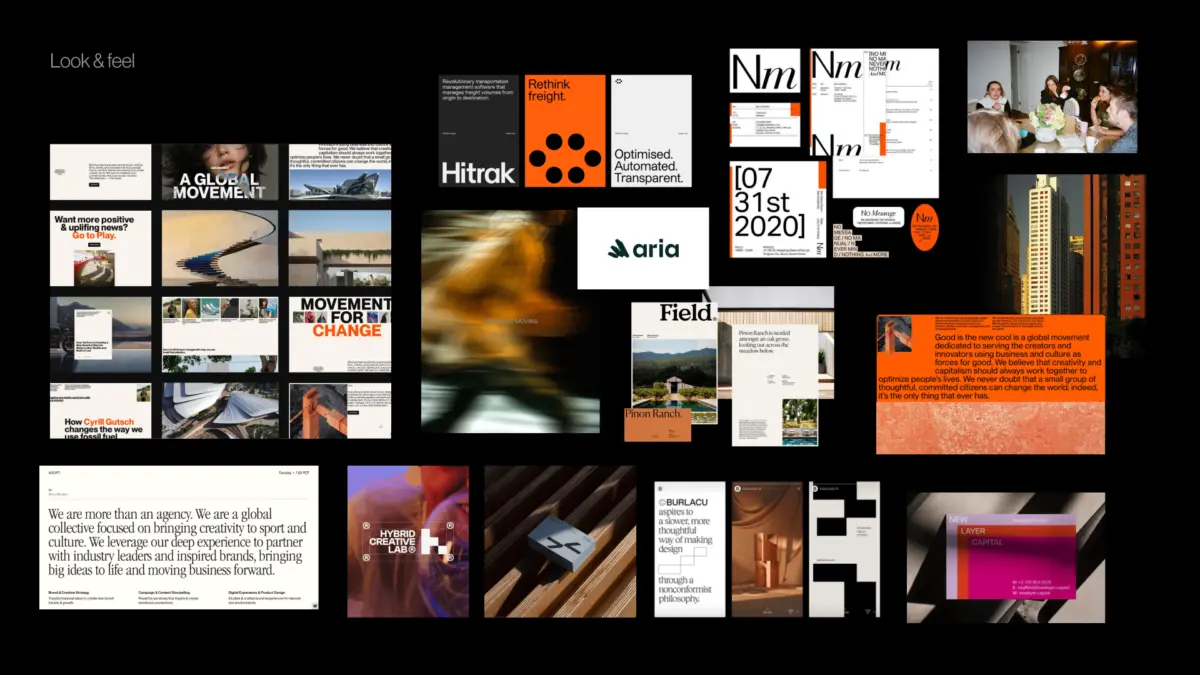
Look and Feel (Perception Boards): Moving beyond simple aesthetic mood boards, these curation boards address specific brand traits—such as whether a brand’s version of "humanity" leans warm and conversational or clinical and precise.
Design Code: This layer translates high-level brand pillars into actionable visual principles. For example, a core pillar like "Research-backed support for real life" for a parenting application might manifest visually through clinical conference photography, data-driven infographics, and clean editorial layouts.
Brand Assets: The final preparatory layer addresses foundational building blocks—typography, color theory, logo styling, and graphic language—establishing firm operational boundaries before original concept design commences.
Supporting Context & Metrics
The financial and operational implications of skipping the pre-concept phase are severe. Industry benchmarks indicate that design revisions stemming from unaligned stakeholder expectations consume up to 40% of billable hours in standard branding engagements. Furthermore, re-branding initiatives that fail to properly define categorical parameters experience a 60% higher rate of market rejection within their first eighteen months of deployment.
Project Phase
Focus Area
Primary Deliverable
Risk of Omission
Traditional Kickoff
Business goals, budgets, timelines
Executive brief
Misaligned expectations on day one
Pre-Concept Phase
Perception, semantic audits, visual metaphors
Look & Feel / Design Code boards
Endless subjective revisions in Figma
Execution Phase
Logo marks, UI systems, design systems
Final brand asset library
Market rejection and brand dilution
By investing time upfront in semantic clarity and visual coding, creative agencies report a 35% reduction in client feedback cycles and significantly higher stakeholder satisfaction scores during formal concept presentations.
Official Statements and Expert Insights
Industry leaders continually emphasize that design is fundamentally an act of strategic translation rather than mere decoration.
"The point of these exercises is to make the abstract idea of ‘our brand’ into something concrete."
— Jake Knapp, Author and Design Partner, GV
When stakeholders are actively engaged through structural exercises—such as perception mapping and visual drivers—they transition from passive reviewers to active co-creators. This psychological shift drastically alters project dynamics.
"When clients only receive a polished strategy presentation, they remain passive. They nod along in the meeting without realizing the hidden assumptions they are bringing to the table," notes lead brand identity strategist and design educator. "When they are forced to justify why a specific reference feels credible, their attitudes and potential disagreements become visible before they can derail a concept review."
Future Outlook: The Evolution of Brand Strategy in Digital Product Design
As digital products become increasingly complex—spanning multi-platform ecosystems, automated interfaces, and AI-driven brand touchpoints—the tolerance for ambiguous visual branding is shrinking rapidly. The future of brand identity design relies heavily on structured methodologies that bridge abstract corporate strategy with tangible digital execution.
Organizations that master the pre-concept phase will consistently produce resilient identities capable of scaling across dynamic digital channels. By treating the pre-stage not as a preliminary checkbox, but as the engine room of brand creation, teams ensure that their first creative steps are built on unshakeable ground. When the pre-concept work is thorough, the first visual concept ceases to be a gamble; it becomes the inevitable, elegant answer to a clearly defined problem.