

Executive Overview
For decades, the cultural zeitgeist has been periodically electrified by breathless media announcements declaring that humanity stands upon the precipice of answering the ultimate cosmic question: Are we alone in the universe?
From sensationalized press releases about distant exoplanets to high-profile statements by space agency administrators regarding Martian geology, modern science journalism frequently portrays the search for extraterrestrial life as a series of dramatic, high-stakes breakthroughs. When NASA or major academic institutions broadcast hints of biological activity light-years away, or potential biosignatures locked inside ancient red rocks, the public is often left with a singular, overriding impression: the discovery of alien life is imminent, and the scientific community is closing in on the truth.
Yet, these captivating narratives obscure a fundamental and rarely addressed question: What does the broader scientific community actually think?
When a scientific controversy or historic breakthrough dominates global headlines, science journalists and institutional press officers typically rely on a familiar playbook. They quote a handful of vocal, highly visible experts—astrophysicists, planetary geologists, or senior mission leads. While these insights are often valuable, they rarely reflect the nuanced, deeply divided, or cautious views of the wider scientific community. Nevertheless, public discussions, political debates, and policy decisions frequently lean on blanket assertions like "the science says" or "scientists believe," treating complex fields of inquiry as monolithic entities with clear, binary answers.
To bridge this empirical gap, a team of researchers recently undertook a pioneering study within astrobiology. Capitalizing on two major, headline-grabbing announcements in 2025 regarding potential extraterrestrial life—one concerning the distant exoplanet K2-18b, and the other involving a uniquely patterned rock on Mars named "Cheyava Falls"—these researchers surveyed hundreds of active astrobiologists globally.
The findings upend the simplistic narrative of media reports. Rather than rallying behind sensational claims, the global astrobiology community responded with profound caution, methodological skepticism, and widespread neutrality. This comprehensive investigation not only illuminates the true state of expert opinion regarding 2025’s biggest astrobiological claims, but it also exposes the urgent need for more systematic, data-driven approaches to understanding expert consensus across all major scientific disciplines.
Detailed Chronology: Two Watershed Moments in 2025
To understand the gap between public perception and expert reality, one must examine the two distinct events that shaped the astrobiological landscape in 2025. Each case presented a different kind of evidence, captured the global imagination, and tested the analytical rigor of the scientific community in unique ways.
The K2-18b Exoplanet Announcement (April 2025)
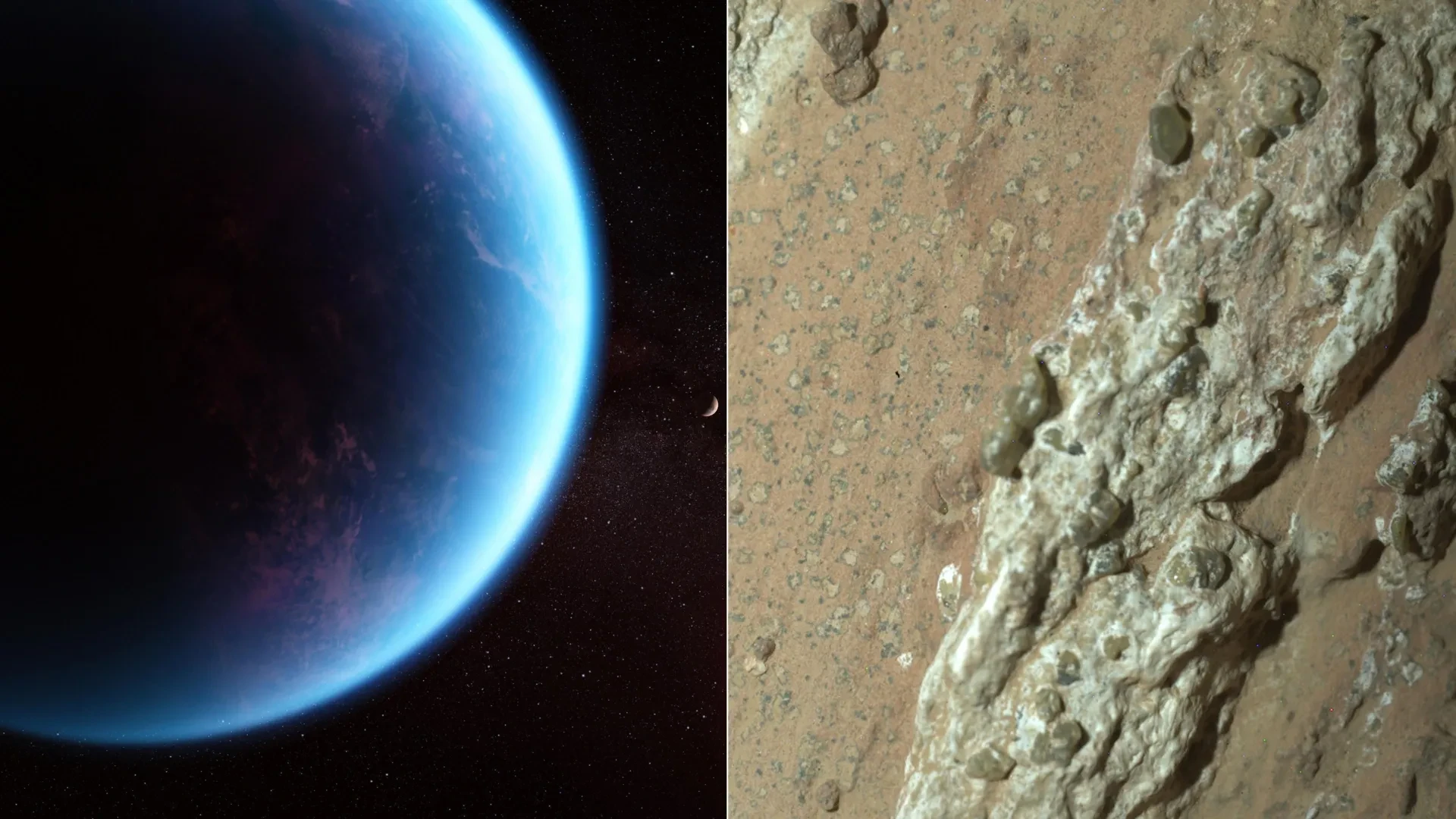
In April 2025, the scientific and public spheres were set abuzz when researchers published a landmark study regarding K2-18b, a sub-Neptune exoplanet located roughly 120 light-years away from Earth in the constellation Leo. Utilizing advanced spectroscopic data—primarily from space-based observatories—the research team reported the detection of tentative traces of specific molecules: dimethyl sulfide (DMS) and/or dimethyl disulfide (DMDS).
On Earth, these sulfur-containing organic compounds are almost exclusively produced by biological activity, most notably by marine phytoplankton. The implications were immediately seized upon by the media. Press releases from academic institutions framed the findings as some of the "strongest hints yet" of extraterrestrial life.
Major news outlets ran front-page stories exploring what an inhabited sub-Neptune world might look like. The narrative constructed for the public was one of extraordinary, paradigm-shifting progress. The atmospheric detection of a potential biogenic gas across interstellar distances felt, to the layperson, like a smoking gun.
The Mars "Cheyava Falls" Discovery (September 2025)
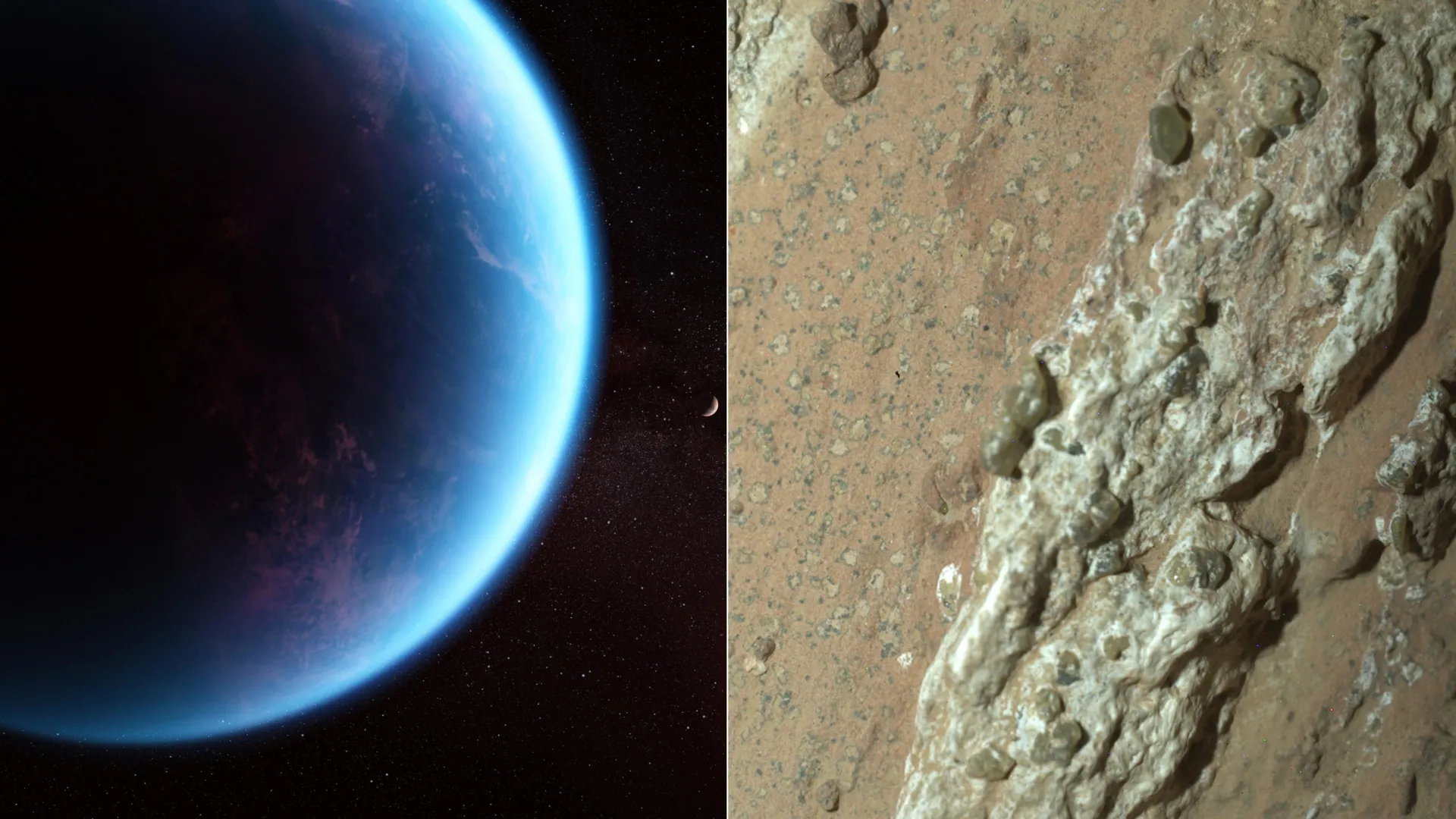
Just as the excitement surrounding K2-18b began to settle into academic debate, a second major announcement arrived from our own solar system in September 2025. NASA’s Perseverance rover, operating within the Jezero Crater on Mars, successfully collected and analyzed a sample from an arrowhead-shaped rock nicknamed "Cheyava Falls."
During a high-profile mission update, NASA announced that Cheyava Falls appeared to preserve a compelling potential biosignature. Specifically, the rock featured distinctive, circular mineral rings colloquially known as "leopard spots." On Earth, similar chemical reduction-oxidation reactions that form such distinct mineral patterns are frequently driven by microbial activity.
The visual appeal of the leopard spots, combined with the direct, boots-on-the-ground (or wheels-on-the-dirt) nature of planetary rover science, supercharged public interest. NASA Administrator Sean Duffy publicly remarked that the discovery represented the "closest we have ever come" to finding life on the Red Planet. Once again, the media machinery swung into high gear, transforming a fascinating astrobiological anomaly into a near-confirmation of Martian history.
Supporting Context & Metrics: What Scientists Actually Thought
Faced with these dueling announcements, researchers recognized a golden opportunity to test the pulse of the global astrobiological community. Within days of each respective announcement, a team of scientists launched a systematic survey targeting hundreds of professional astrobiologists worldwide.
The objective was straightforward: to bypass selective quoting and measure the true distribution of expert judgment. The primary question posed to the respondents was direct: Do you think scientists have probably found extraterrestrial life?
The Statistical Reality of K2-18b
The survey results for the K2-18b exoplanet revelation painted a picture of deep skepticism rather than unbridled optimism.
- Agreement: Only 6.6% of surveyed astrobiologists agreed that scientists had probably found extraterrestrial life based on the K2-18b data.
- Disagreement: Nearly two-thirds (approx. 64%) explicitly disagreed with the proposition.
- Neutrality: The remaining 28.0% maintained a neutral stance, indicating that the data was profoundly inconclusive.
Despite the sweeping, enthusiastic tone of the headlines, the overwhelming majority of experts remained unconvinced that a biosignature had been definitively detected across interstellar space.
The Nuanced Shift Toward Mars (Cheyava Falls)
When researchers evaluated the responses concerning the Martian Cheyava Falls sample, the data revealed a measurable shift in expert confidence, though caution remained the dominant theme.
- Agreement: Confidence rose to 15.1% of respondents agreeing that life had probably been found.
- Disagreement: Disagreement dropped significantly to 44.6%.
- Neutrality: Neutrality surged to 40.3%.
At first glance, one might view this simply as an increase in "yes" votes. However, a deeper statistical analysis of the shifts reveals a far more sophisticated narrative about how scientific opinion evolves.
+------------------------------------------------------------------------+
|                      EXPERT OPINION DISTRIBUTION                       |
|                                                                        |
|  K2-18b Exoplanet:                                                     |
|  [Strong Disagree: 35.1%] [Disagree/Neutral/Agree: 64.9%]               |
|                                                                        |
|  Mars "Cheyava Falls":                                                 |
|  [Strong Disagree: 11.1%] [Disagree/Neutral/Agree: 88.9%]               |
|                                                                        |
|  *Note: Movement was primarily from "Strong Disagreement" toward       |
|   tentative/neutral positions, rather than immediate endorsement.*     |
+------------------------------------------------------------------------+
The most dramatic change between the two surveys was not a massive migration from "no" to "yes," but rather a collapse in strong opposition. The proportion of astrobiologists who strongly disagreed with the claim plummeted from 35.1% in the K2-18b case to just 11.1% for the Mars sample.
Rather than entrenching themselves in outright rejection, experts shifted toward more tentative, nuanced positions. They moved from flatly dismissing the claims to acknowledging that, while the evidence was not definitive, it warranted serious, open-minded investigation.
Why the Divergence? Evidence, Distance, and False Biosignatures
Why did expert opinion differ between the two cases, and why did both elicit such widespread caution?
- Nature of the Evidence: The K2-18b claim relied entirely on remote atmospheric spectroscopy—detecting faint chemical signatures across 120 light-years of space. Conversely, the Martian case involved physical rock samples that could be analyzed in localized detail for structural, chemical, and mineralogical contexts.
- The Problem of False Biosignatures: Astrobiologists are acutely aware of the historical pitfalls of astrobiology. For decades, the field has grappled with abiotic (non-biological) processes that can mimic the hallmarks of life. The primary intellectual challenge in modern astrobiology is rarely imagining how life could produce a specific signal, but rather cataloging and understanding all the ways nature can produce identical phenomena without life.
When mineral rings or sulfur compounds are discovered, seasoned researchers immediately look for geological, photochemical, or geochemical alternatives. This ingrained skepticism explains why large neutral blocs persisted: scientists recognize that ambiguity is the default state of frontier science.
Official Statements and Institutional Framing
The divide between institutional messaging and scientific consensus highlights a persistent tension in modern science communication.
When space agencies and academic institutions issue press releases, they walk a delicate tightrope. On one hand, institutions rely on public enthusiasm, taxpayer funding, and philanthropic support to justify multi-billion-dollar missions like the James Webb Space Telescope or the Perseverance rover. Framing discoveries in exciting, high-stakes terms is an effective way to capture public attention and secure political backing.
On the other hand, this promotional language can inadvertently distort the nature of the scientific process. When NASA Administrator Sean Duffy describes a rock sample as the "closest we have ever come" to finding life, or when university press offices highlight "strongest hints yet," they are speaking in terms of mission milestones and programmatic momentum.
However, the working scientist operates on a framework of rigorous falsification and incremental validation. To an astrobiologist, being "the closest we have ever come" does not mean life has been found; it means the noise-to-signal ratio has improved, or a new confounding variable has been identified. When public discourse conflates mission milestones with established consensus, it sets unrealistic expectations and risks eroding public trust when subsequent follow-up studies inevitably complicate or debunk initial claims.
Future Outlook: The Science of Scientific Opinion
The lessons learned from the 2025 astrobiology surveys extend far beyond the search for alien microbes. In an era defined by complex, high-stakes crises—ranging from climate modeling and pandemic responses to artificial intelligence regulation and advanced medical breakthroughs—public conversations constantly invoke the concept of "scientific consensus."
Yet, as the astrobiology data demonstrates, assuming that a scientific community speaks with one voice, or treating expert opinion as a simple binary ("for" or "against"), is profoundly misleading. Evidence is frequently emerging, uncertainty is often substantial, and expert opinion is distributed across a complex spectrum of agreement, neutrality, and skepticism.
The Rise of Systematic Opinion Polling
Recognizing this methodological blind spot, academic institutions are beginning to pioneer new ways of studying scientific communities. Initiatives such as C-Scope (the Centre for Scientific Community Opinion Polling and Evaluation) at Durham University are spearheading efforts to systematically map how expert opinion is distributed and how it shifts over time in response to new data.
It is vital to clarify the purpose of such research: these efforts are not designed to replace empirical evidence with polling, nor are they intended to treat majority opinion as absolute truth. Science is not a democracy; a consensus view can still be overturned by a single anomalous data point. Rather, the goal of systematic opinion evaluation is to provide sociologists, policymakers, and science communicators with an accurate, granular understanding of how expert communities process uncertainty.
Embracing Uncertainty in Public Discourse
As humanity pushes deeper into the cosmos—preparing for sample-return missions from Mars, launching next-generation space telescopes, and probing the atmospheres of distant worlds—the frequency of ambiguous, tantalizing discoveries will only increase.
If public discussions, educational curricula, and political decisions are to be built on a foundation of genuine scientific literacy, we must move past the era of the soundbite and the breathless headline. We must learn to embrace the gray areas.
Scientific knowledge does not advance through sudden, miraculous leaps of unanimous agreement; it grinds forward through rigorous debate, methodological skepticism, and the gradual, painstaking revision of hypotheses in the face of uncertainty. If public discourse increasingly turns on claims about what scientists think, it is past time that we made a systematic effort to find out what they actually think.