

Executive Overview
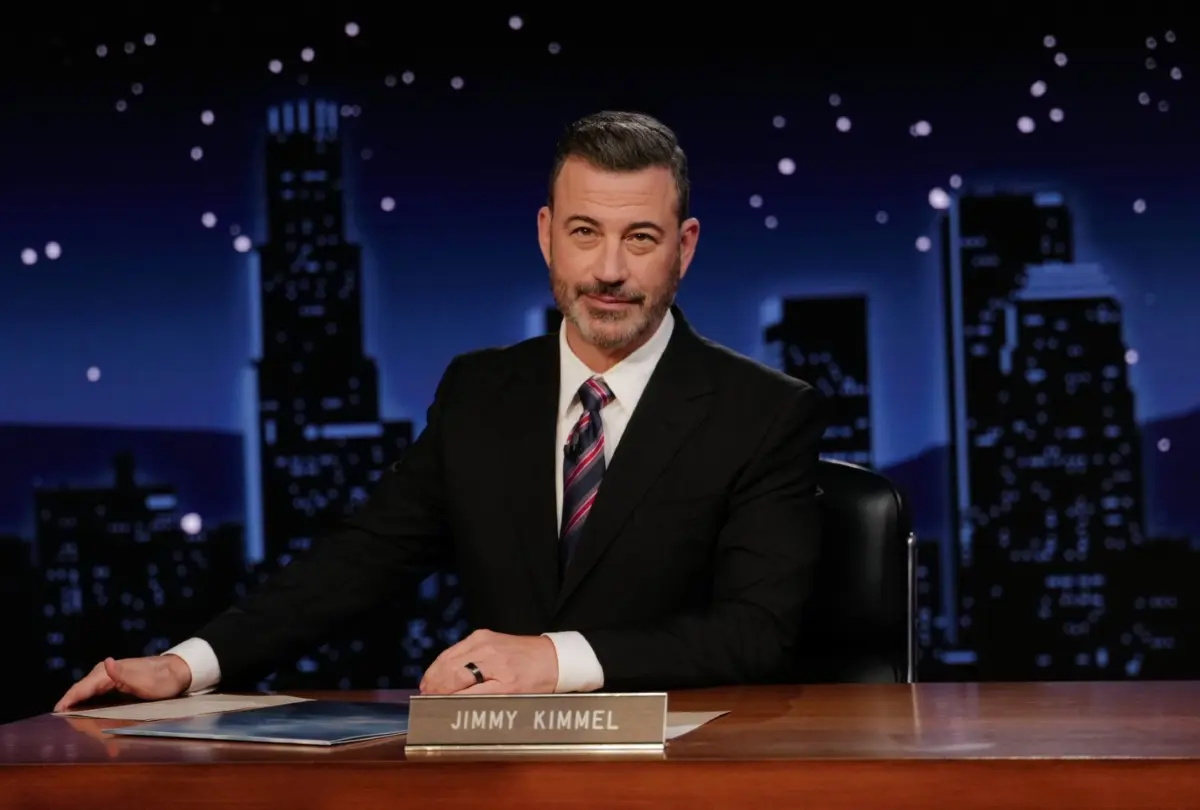
Late-night television is once again caught in the crosshairs of an escalating political and regulatory battleground. In a strategic maneuver that highlights the fragile intersection of broadcast media, federal oversight, and political campaigning, late-night host Jimmy Kimmel announced that his scheduled Thursday night interview with Texas State Representative James Talarico would bypass traditional television entirely. Instead, the segment will be relegated exclusively to the show’s YouTube channel.
Kimmel’s decision is not merely a programming choice; it is a direct rebuke of the intensifying pressure campaign waged by the Federal Communications Commission (FCC) and the Trump administration against major broadcast networks. By pulling the interview from ABC’s linear schedule, Kimmel aims to shield local affiliates—particularly those in Texas—from regulatory blowback and legal intimidation. Yet, far from burying the interview, the move has achieved the exact opposite effect. By spotlighting the censorship during his Wednesday night monologue, Kimmel transformed a standard political interview into a headline-grabbing media event, inadvertently granting Talarico unprecedented visibility and handing critics of the FCC another potent example of federal overreach.
This latest flashpoint illustrates a fundamental misunderstanding by regulatory authorities of how modern media consumption and political campaigns operate. In the digital age, attempts to suppress political discourse on traditional platforms rarely succeed in silencing the message; instead, they supercharge it across digital channels, driving engagement, viral viewership, and campaign fundraising to historic heights.
Detailed Chronology: The Escalating War Between Late-Night and the FCC
To understand the weight of Kimmel’s recent announcement, one must examine the rapid deterioration of relations between broadcast networks and the federal government over the past several years.
- September 2025: Tensions boil over when ABC makes the pre-emptive decision to bench "Jimmy Kimmel Live!" for a full week. The suspension follows aggressive threats from FCC leadership directed at the network over Kimmel’s satirical commentary regarding the right-wing media’s reaction to the death of conservative activist Charlie Kirk. Rather than quelling the controversy, the suspension sparks massive public outrage, leading media analysts and viewers alike to accuse the network of capitulating to political pressure. The subsequent return of the show serves as a major defeat for censorship advocates, demonstrating the potent mobilizing power of public backlash.
- January 2026: The FCC issues formal guidance narrowing the scope of the "bona fide news exemption," signaling that daytime talk shows and late-night programs may no longer qualify for protections historically shielding them from equal-time rules and federal scrutiny. This guidance opens the floodgates for targeted investigations into major network programming.
- February 2026: The phenomenon of regulatory pre-emption meets the digital workaround. When CBS lawyers bar Stephen Colbert from airing an interview with Texas Democratic Senate candidate James Talarico on "The Late Show," the production team posts the segment online. The clip explodes on digital platforms, eventually amassing over 9.5 million views and reportedly helping Talarico’s campaign rake in $2.5 million in post-broadcast donations.
- Summer 2026: FCC Chairman Brendan Carr escalates the pressure campaign by demanding that ABC file for license renewals for eight of its owned-and-operated stations years ahead of the statutory schedule. Simultaneously, daytime institutions like ABC’s "The View" face relentless scrutiny over whether their political commentary violates the newly reinterpreted FCC guidelines.
- August 2026: Pushed to the brink, ABC and its parent company, The Walt Disney Company, push back legally. They file a landmark First Amendment lawsuit in federal court against the FCC, accompanied by a motion for a temporary restraining order to halt the agency’s coercive early review of their broadcast licenses.
- Late August/Early September 2026: The FCC formally requests that the federal court dismiss ABC’s First Amendment lawsuit, maintaining its authority to enforce broadcast compliance standards.
- September 10, 2026: Against this volatile backdrop, Jimmy Kimmel announces that his upcoming Thursday interview with James Talarico—who is locked in a high-stakes, tight Senate race against Texas Attorney General and prominent Trump ally Ken Paxton—will air exclusively on YouTube. Kimmel cites a desire to protect local affiliates from administrative harassment, setting off a new wave of national debate over free expression in broadcasting.
Supporting Context & Metrics: The Anatomy of Digital Resistance
The confrontation between ABC and the FCC exposes a profound generational and structural disconnect. Regulators operating under mid-20th-century broadcast frameworks view television as a centralized medium controlled by a handful of gatekeepers. If an FCC chairman threatens a network’s broadcast licenses, the traditional assumption is that the network will fall in line to protect its commercial interests.
However, the 2026 media landscape operates under entirely different rules.
The Economics of the "Streisand Effect"
When regulatory bodies or nervous corporate lawyers suppress content, they inadvertently assign it maximum cultural value. The metrics from earlier instances of this phenomenon speak for themselves:
- 9.5 Million+ Views: The viewership threshold crossed by Stephen Colbert’s censored Talarico interview after it was migrated exclusively to digital platforms.
- $2.5 Million: The financial windfall secured by Talarico’s Senate campaign in the immediate wake of the digital release, as reported by Variety. This proves that digital censorship often yields a higher return on investment for political candidates than a standard, scheduled late-night television appearance ever could.
- Monopolizing the Monologue: By addressing the controversy during his Wednesday night monologue—traditionally the most-watched segment of any late-night program—Kimmel ensured that millions of linear television viewers learned why the interview was missing from their screens, driving them directly to YouTube to seek it out.
The Regulatory Weaponization of Licenses
At the heart of the legal battle is Brendan Carr’s demand for early license renewals for ABC’s owned-and-operated stations. Broadcast licenses are granted under the statutory obligation to serve the "public interest, convenience, and necessity." By weaponizing the renewal process—forcing stations to expend millions in legal fees and endure years of administrative limbo—the FCC creates a chilling effect.
Local station managers, particularly those operating in conservative strongholds like Texas, face immense financial and operational vulnerability. Kimmel explicitly acknowledged this reality in his announcement, stating that he moved the interview to YouTube out of consideration for local affiliates "who would have to deal with this nonsense."
Official Statements and Legal Posturing
The legal filings and public remarks surrounding the dispute reveal two deeply entrenched factions locked in a constitutional standoff over the boundaries of the First Amendment.
In his Wednesday night broadcast, Kimmel did not mince words regarding the hypocrisy of the current administration’s posture toward late-night comedy. Pointing out the historical precedent of political candidates—including Donald Trump himself—frequenting late-night couch interviews for decades, Kimmel remarked:
"When [Trump] was the one sitting next to me, he seemed to have no problem with the idea of talk show hosts interviewing candidates… But for some reason, and I can’t seem to figure out what that reason is, something has changed now that he is president."
This sentiment echoes the core arguments laid out in the August 2026 federal lawsuit filed by ABC and Disney. The complaint asserts that the FCC’s sudden targeting of network licenses is a retaliatory, viewpoint-based assault designed to chill protected speech and punish broadcasters for critical commentary.
Conversely, the FCC’s legal team maintains that the agency is strictly enforcing statutory mandates regarding fair political broadcasting, equal time, and the operational responsibilities of public airwaves. In their motion to dismiss ABC’s lawsuit, government attorneys argue that routine regulatory oversight and inquiries into programming exemptions do not constitute unconstitutional censorship, but rather represent legitimate enforcement of federal communications law.
Future Outlook: What This Means for the Future of Broadcast and Politics
As the legal battle between Disney/ABC and the FCC winds its way through the federal court system, the fallout from the Kimmel-Talarico controversy will likely reshape the contours of media and politics for years to come.
- The Erosion of Linear Gatekeeping: As networks face mounting regulatory pressure, they may increasingly choose to offload politically sensitive or controversial content entirely to digital platforms. This creates a bifurcated media ecosystem where traditional broadcast television becomes increasingly sanitized and risk-averse, while streaming and video-sharing platforms serve as the unvarnished frontier for political discourse.
- The Legal Precedent: The outcome of the ABC v. FCC lawsuit will establish a critical constitutional benchmark. If the courts rule in favor of the network, it will establish a robust First Amendment shield protecting broadcasters from politically motivated regulatory harassment. If the FCC prevails, it could embolden federal agencies to exert unprecedented leverage over broadcast content, fundamentally altering the relationship between the state and the media.
- A Winning Formula for Insurgent Campaigns: For candidates like James Talarico, being targeted by federal regulators or censored by risk-averse networks has paradoxically become one of the most effective fundraising and marketing tools available. As long as digital platforms exist to bypass traditional broadcast bottlenecks, attempts to silence political figures through bureaucratic pressure will continue to backfire, transforming local political figures into national viral sensations.
Ultimately, Jimmy Kimmel’s decision to take his interview with James Talarico to YouTube demonstrates that in the modern era, you cannot successfully censor ideas—you can only relocate them to platforms where they burn twice as bright.
