

Executive Overview
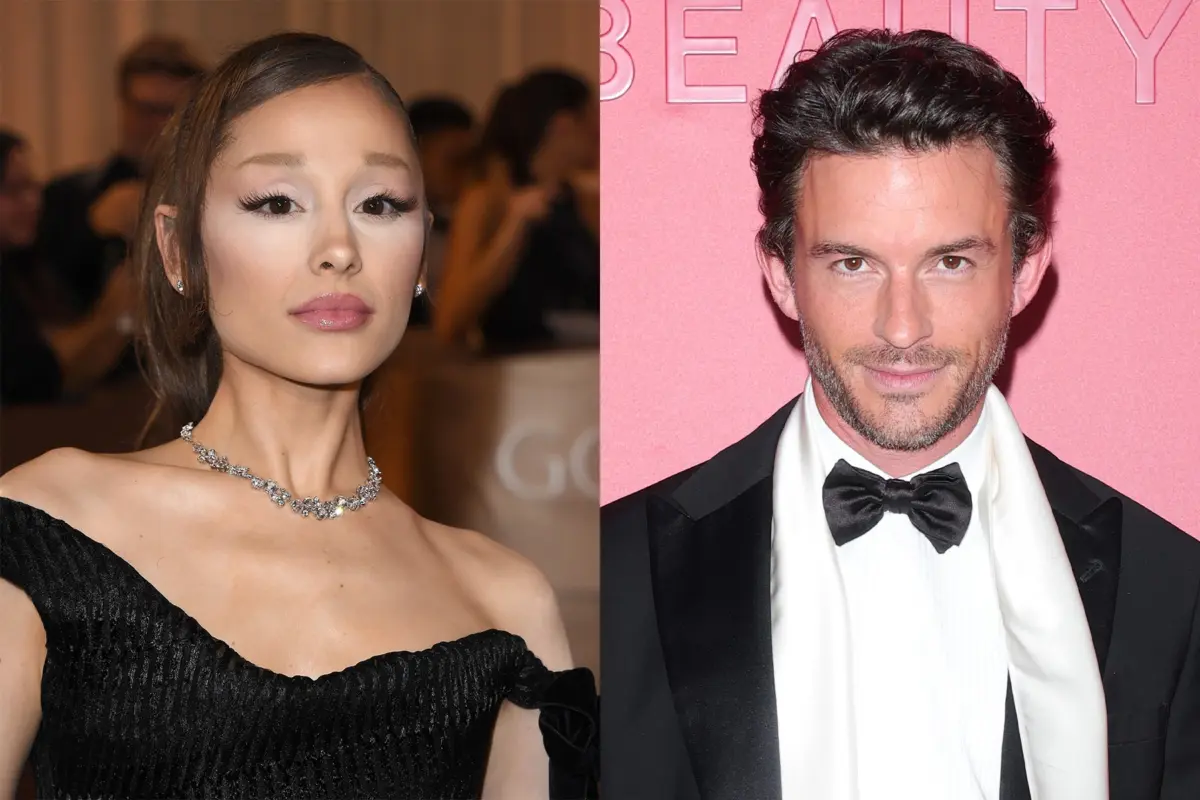
The planned high-profile 2027 West End revival of Stephen Sondheim and James Lapine’s masterwork Sunday in the Park With George at the Barbican has been officially canceled. The production, which was set to reunite critically acclaimed stars Ariana Grande and Jonathan Bailey following their cinematic chemistry in the Wicked film adaptations, collapsed following a cascading series of high-profile talent departures, persistent ticket-sale delays, and mounting logistical hurdles.
Initially heralded as one of the most anticipated theatrical events of the decade, the revival was positioned to bring two of entertainment’s most bankable and versatile performers back to the live stage. However, the departure of Ariana Grande—prompted by her stated need to step back from public life following an exhausting touring and promotional cycle—triggered an inevitable domino effect. When co-star Jonathan Bailey subsequently exited the project weeks later, Empire Street Productions initially attempted to salvage the staging by actively auditioning replacements. Yet, the insurmountable challenge of replacing two generational talents proved too great.
While Empire Street Productions confirmed that the scheduled 2027 run will no longer proceed, theater enthusiasts can take solace in the fact that the company retains the rights to Sondheim’s musical, with exploratory discussions already underway for a potential 2028 staging. This report provides a comprehensive, investigative look into the timeline of the cancellation, the implications for West End producing models, the legacy of the Stephen Sondheim masterpiece, and what lies ahead for the production team.
Detailed Chronology: From Anticipation to Abrupt Cancellation
The trajectory of this ill-fated revival illustrates the delicate balancing act modern commercial theater must maintain when casting mega-celebrities whose schedules and personal well-being are subject to intense global scrutiny.
The Genesis of a Dream Casting
The pairing of Ariana Grande and Jonathan Bailey was viewed by industry insiders as a theatrical coup. Having forged a deep professional and personal bond while filming the cinematic adaptation of Wicked, the duo represented a rare crossover appeal capable of drawing both traditional theatergoers and a massive, digitally native pop culture audience to the Barbican Centre.
The production was formally announced to great fanfare, locking in a projected summer 2027 preview window. Yet, warning signs emerged early in the developmental pipeline. Ticket sales—traditionally a day-one frenzy for productions of this magnitude—were pushed back twice, signaling behind-the-scenes uncertainty regarding staging, scheduling, or budget alignments.
Grande’s Exit and the Call for Reprieve
The foundational blow to the production arrived in August, when representatives for Ariana Grande announced that the Grammy-winning pop superstar and actress would be taking an indefinite, much-needed break from public-facing work. The decision followed a grueling, high-pressure year that included the release of her critically acclaimed album Petal, the massive logistical undertaking of the Eternal Sunshine Tour, and intense, relentless media scrutiny regarding her personal life and physical well-being.
Grande’s team emphasized that her primary objective was to finish her current commitments on a healthy, joyful note before stepping away from the relentless spotlight. Empire Street Productions responded with swift, compassionate support, acknowledging the immense pressure the artist faced and validating her decision to step down from the demanding, emotionally taxing role of Dot.
Bailey’s Solidarity and the Search for Replacements
The stability of the production was further tested roughly a month later when Jonathan Bailey announced his own departure from the revival. In a heartfelt statement shared across social media and through his representation, Bailey made it clear that his loyalty to his co-star superseded his commitment to the project.
"Ari is one of my dearest friends, and my support for her is unwavering," Bailey stated. "This brilliant, introspective musical has been a real passion project for me, and I feel incredibly lucky to have shared in its journey with this team."
Despite their exits, Empire Street Productions initially signaled optimism. Recognizing the commercial and artistic value of the property, the production house launched an exhaustive, global search for replacements to fill the formidable shoes of George and Dot. Bailey himself nodded to this ongoing transition in his exit statement, expressing excitement for "the two actors who will now take on these roles."
The Final Blow: Cancellation of the 2027 Run
Despite active scouting and preliminary discussions with alternative talent, the logistics of recasting two lead roles of this caliber with equal international draw proved impossible within the strict parameters of the 2027 Barbican calendar. Faced with the choice of rushing a compromised production or pulling the plug to preserve the artistic integrity of Sondheim’s work, producers made the difficult decision to scrap the 2027 engagement entirely.
Supporting Context & Metrics: The Economics and Legacy of Sunday in the Park With George
To fully understand the gravity of this cancellation, one must examine the towering artistic legacy of Sunday in the Park With George and the unique economic pressures governing contemporary West End productions.
The Anatomy of a Masterpiece
First premiering off-Broadway in 1983 before transferring to Broadway in 1984, Sunday in the Park With George is widely regarded as one of the most structurally and musically innovative works in musical theater history. Conceived by composer-lyricist Stephen Sondheim and librettist James Lapine, the musical serves as a profound meditation on art, connection, and the relentless pursuit of creation.
- Act I dramatizes the intense, obsessive creative process of French pointillist painter Georges Seurat as he painstakingly builds his magnum opus, A Sunday Afternoon on the Island of La Grande Jatte. Seurat navigates a crumbling relationship with his primary muse and lover, Dot, all while sacrificing personal warmth for artistic immortality.
- Act II leaps forward a century into the hyper-commercialized art world of 1984, following Seurat’s fictional great-grandson, also named George, a contemporary light-artist struggling with cynicism, burnout, and the commercialization of his craft.
The original Broadway production featured definitive performances by Mandy Patinkin as Seurat and Bernadette Peters as Dot, earning critical acclaim and capturing the 1985 Pulitzer Prize for Drama—a rare and prestigious accolade for a musical. Subsequent revivals, most notably the 2017 Broadway staging starring Jake Gyllenhaal and Annaleigh Ashford, proved that the material remains endlessly malleable and deeply resonant for modern audiences.
The Modern West End Ecosystem
The canceled Barbican production highlights a growing tension within the modern commercial theater ecosystem. West End and Broadway producers increasingly rely on "name" talent—film stars, pop icons, and global television luminaries—to secure advance ticket sales, attract institutional financing, and justify steep ticket prices in an inflationary economy.
However, aligning the schedules of hyper-in-demand multimedia superstars carries inherent volatility. When a marquee star needs to step back for mental health or physical well-being—as Grande did—the production structure can experience catastrophic ripple effects. The Barbican, a massive and prestigious multidisciplinary arts center in London, operates on tightly locked programming schedules, making sudden multi-month delays exceptionally difficult to absorb without complete cancellation.
Official Statements and Industry Reactions
The theater community has responded to the cancellation with a mixture of disappointment and profound empathy for the artists involved.
Empire Street Productions
In their official statement issued to The Hollywood Reporter, Empire Street Productions confirmed the status of the engagement:
"The planned 2027 production of Sunday in the Park With George at the Barbican will no longer proceed as scheduled. We know this cannot have been an easy decision [for Grande], and she makes it with our complete understanding and support."
Crucially, the production company underscored its long-term commitment to the title, signaling that the creative team is already looking toward the horizon.
Jonathan Bailey’s Perspective
Bailey’s reflections on the project offered a poignant glimpse into the collaborative spirit that defined the early development phase. Highlighting the timeless themes of the show, Bailey noted:
"Among many things, the story explores the deep connection between George and Dot, a beautiful, devoted pairing, and I so look forward to seeing what the team, and the two actors who will now take on these roles, will create with it."
Industry analysts have praised Bailey for handling his departure with grace, noting that his public support of Grande reinforces a growing industry standard of prioritizing performer welfare over corporate output.
Future Outlook: Looking Ahead to 2028 and Beyond
While the cancellation of the 2027 engagement is undeniably a crushing disappointment for West End patrons who secured early interest, the story of this revival is far from over.
The Road to 2028
According to industry reports confirmed by The Hollywood Reporter, Empire Street Productions retains the rights to Stephen Sondheim and James Lapine’s musical. Rather than forcing a rushed alternative into the 2027 slot, producers have pivoted their timeline toward a potential 2028 production.
This extended runway affords the creative team several distinct advantages:
- Unrushed Casting: Freed from the immediate pressure of finding emergency replacements for Grande and Bailey, casting directors can conduct a comprehensive, deliberate search for the next generation of George and Dot.
- Refined Design and Staging: The delay allows the creative and design teams ample time to realize the complex visual demands of bringing Seurat’s pointillism to life on the Barbican stage without the compression of an emergency schedule.
- Calendar Alignment: Securing a clear, uncompromised slot at the Barbican Centre for 2028 ensures that the production will have the uninterrupted run it requires to achieve both artistic excellence and commercial stability.
The Enduring Resonance of Sondheim
In the wake of Stephen Sondheim’s passing in 2021, the global theatrical appetite for his catalog has only intensified. Productions of Company, Merrily We Roll Along, and Sweeney Todd have demonstrated that contemporary audiences crave the intellectual rigor, emotional depth, and lyrical brilliance of his work.
While the 2027 iteration of Sunday in the Park With George will go down as one of the great "what-ifs" of modern West End history, the foundation has been laid for a triumphant return. As the dust settles on this chapter, producers, fans, and performers alike will keep their eyes fixed on 2028, trusting that when George finally picks up his brush at the Barbican, the wait will have been well worth it.
