

Executive Overview
The landscape of modern retail is undergoing a seismic shift, migrating away from static product pages and traditional brick-and-mortar storefronts toward dynamic, personality-driven, real-time video engagement. At the forefront of this revolution is Kim Gravel—a household name forged in the high-stakes crucible of live television shopping. Long before social media algorithms popularized the concept of "social commerce," Gravel was mastering the art of instantaneous connection, persuasion, and conversion on QVC. Today, she is leveraging decades of broadcast mastery to build an independent, scalable platform designed to empower a new generation of digital sellers.
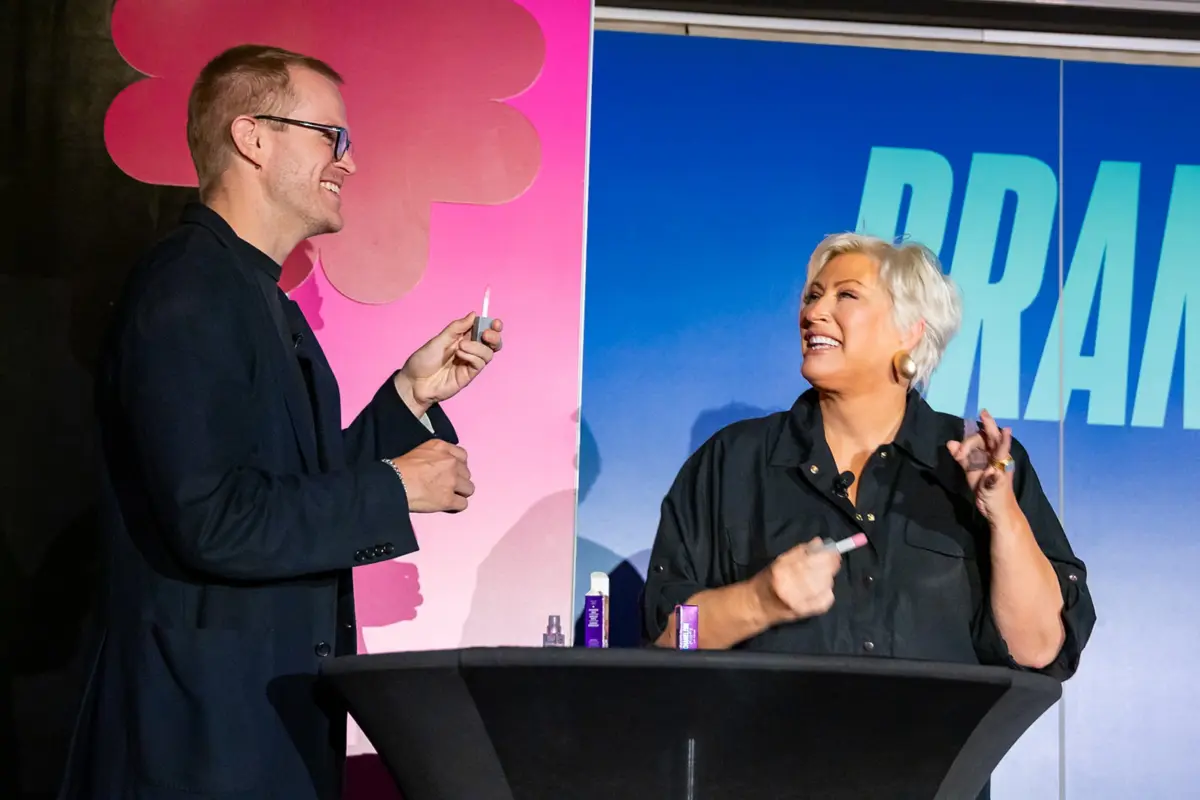
Appearing at Adweek’s prestigious Brandweek event, Gravel delivered a masterclass on the evolution of modern retail, detailing her transition from traditional cable powerhouse to multifaceted founder, media personality, and digital entrepreneur. Her journey offers an instructive blueprint for brands, creators, and marketers navigating the convergence of entertainment and commerce—a space increasingly known as live-stream shopping.
This article explores the trajectory of Gravel’s career, examining how she translated traditional broadcast success into digital equity, the strategic lessons of her early days under the mentorship of retail legends like Joan Rivers, and the broader economic implications of the live-stream commerce boom. As brands increasingly seek authentic ways to capture consumer attention in an oversaturated digital economy, Gravel’s venture stands as a case study in audience trust, real-time storytelling, and the enduring power of human connection in commerce.
Detailed Chronology: From Pageants to QVC and Beyond
To understand Kim Gravel’s current dominance in the live commerce arena, one must examine the foundational steps of a career built on resilience, adaptability, and an innate understanding of consumer psychology.
The Early Years and Broadcast Foundations
Long before commanding millions of viewers on national television, Gravel’s early career was defined by high-performance environments. Winning the title of Miss Georgia in 1991, she developed an early appreciation for public presentation, poise, and audience engagement. However, her transition from the pageant stage to the corporate and media world was marked by the same grit that would later define her television career.
Gravel cut her teeth in traditional media and communications, realizing early on that her greatest asset was her ability to communicate directly, authentically, and compellingly with everyday consumers. This skill set laid the groundwork for her eventual entry into the world of electronic retailing—a medium that requires absolute authenticity, as viewers can instantly detect scripted disingenuousness through the lens of a live camera.
The Joan Rivers Inspiration and the QVC Breakthrough
Every iconic career has a catalyst. For Gravel, that turning point arrived when she witnessed the trailblazing success of comedy and retail icon Joan Rivers on QVC. Rivers had successfully transformed her personal brand into a multi-million-dollar retail empire on the network, most notably through her iconic, highly collectible bee pins—sparked by a sentimental piece given to her by her husband.
Inspired by Rivers’ ability to weave personal narrative into product sales, Gravel identified a gap in the market. She did not approach QVC merely as an applicant seeking a hosting gig; she came as an entrepreneur with proprietary product concepts. Armed with two distinct ideas—Flexibelle, an innovative knit fabric that replicated the look of rigid denim with the comfort of activewear, and a high-performance plumping lip gloss—Gravel pitched network executives for the chance to sell them herself.
Her pitch was successful. Stepping onto the QVC set as both product creator and on-air host, Gravel demonstrated an immediate, magnetic rapport with the viewing audience. Her signature blend of southern charm, radical honesty, and product expertise translated into record-breaking sales volumes. Over the years, she expanded her footprint on the network, launching apparel, beauty, and lifestyle lines that consistently outperformed expectations and cemented her status as a top-tier QVC personality.
The Pivot to Independent Digital Platforms
While traditional cable television networks like QVC remain powerhouse retail engines, the media consumption habits of consumers—particularly younger demographics—have irrevocably shifted toward digital and mobile platforms. Recognizing this macro trend, Gravel has embarked on her most ambitious chapter yet: building her own independent digital ecosystem.
Rather than relying solely on legacy broadcast infrastructure, Gravel is currently developing proprietary digital platforms designed to equip emerging sellers, creators, and entrepreneurs with the exact tools, psychological frameworks, and broadcast techniques she spent decades refining. By decentralizing the live-selling model, she aims to democratize access to high-conversion retail technology, allowing independent brands to bypass traditional gatekeepers and connect directly with consumers via live video.
Supporting Context & Metrics: The Rise of Live-Stream Commerce
Gravel’s strategic pivot is timed against a backdrop of explosive global growth in live-stream commerce. While the phenomenon has been a trillion-dollar industry in Asian markets—particularly China, where platforms like Taobao Live dominate retail—Western markets are rapidly accelerating to catch up.
The Numbers Behind the Boom
- Market Projections: According to industry analysts, the social commerce market in the United States alone is projected to reach hundreds of billions of dollars over the next five years, with live video shopping accounting for a rapidly expanding share of that revenue.
- Conversion Rates: Traditional static e-commerce typically yields conversion rates between 1% and 3%. In stark contrast, well-executed live-stream shopping events frequently report conversion rates ranging from 10% to 30%, driven by the urgency of the live format, real-time Q&A, and peer-to-peer social proof.
- Consumer Demographics: While older generations were introduced to live shopping via cable television, Gen Z and Millennial consumers are driving the digital live-stream revolution through platforms like TikTok, Instagram, Amazon Live, and specialized standalone creator apps.
The Psychology of Live Selling
What makes live-stream commerce so uniquely effective—and why veterans like Kim Gravel excel at it—lies in the removal of friction between discovery and purchase. In a traditional e-commerce environment, a consumer must search for a product, read reviews, evaluate sizing charts, and make a solitary decision.
In a live-stream environment, the host acts as a trusted shopping companion. They address customer objections in real time, demonstrate product performance under unedited conditions, and foster a sense of community among viewers in the chat room. Gravel’s enduring appeal stems from her mastery of this psychological dynamic. She treats her audience not as a faceless demographic, but as an extension of her living room, building an unbreakable bond of trust that directly correlates with low return rates and high customer lifetime value (LTV).
Official Statements and Industry Perspectives
At Brandweek, industry leaders and commentators weighed in on the profound implications of Gravel’s career evolution and the broader shift toward creator-led commerce.
Reflecting on her foundational philosophy during her panel appearance, Kim Gravel emphasized the immutable nature of consumer trust in an increasingly automated world:
"You can fake a lot of things in marketing, but you cannot fake authenticity on a live camera for two hours. People buy from people they trust, people who understand their struggles, and people who make them feel seen. That is the core of selling—it’s not about the product; it’s about the connection."
Media analysts observing the session noted that Gravel’s transition serves as a vital lesson for legacy brands struggling to engage modern consumers. Marcus Vance, a senior retail technology strategist, remarked:
"For years, traditional brands viewed QVC and home shopping as a niche subset of media. Today, every major tech and retail platform—from Amazon to TikTok—is trying to replicate the interactive, real-time conversion mechanics that Kim Gravel has mastered for decades. She isn’t just a TV star; she is a pioneer of the exact retail format that the entire digital economy is pivoting toward."
Furthermore, digital marketing experts attending Brandweek highlighted how creators are increasingly evolving from promotional mouthpieces into fully integrated business owners and platform architects—a trend that Gravel’s new venture actively champions.
Future Outlook: What Gravel’s Venture Means for the Future of Retail
As we look toward the horizon of commerce, several key trends will dictate how brands and creators leverage the path paved by innovators like Kim Gravel.
1. The Democratization of Live-Stream Infrastructure
Historically, launching a live-selling operation required massive capital expenditure, studio leases, and distribution deals with major cable networks. The future, championed by Gravel’s upcoming initiatives, belongs to software-as-a-service (SaaS) platforms and turnkey solutions that allow independent creators and mid-market brands to launch their own high-definition live-selling channels with minimal overhead.
2. The Rise of the "Founder-Led" Digital Brand
Consumers are increasingly skeptical of faceless corporate entities. Brands that feature real founders, authentic personalities, and transparent behind-the-scenes narratives consistently outperform sterile, highly polished competitors. Gravel’s model proves that the personal brand is the business engine, and empowering other sellers to build their personal equity will be a dominant venture capital thesis in the coming years.
3. Convergence of Entertainment and Utility ("Shoppertainment")
The boundary between streaming entertainment and transactional retail will continue to dissolve. Whether through shoppable television integrations, interactive mobile apps, or immersive social media feeds, the consumer journey will increasingly integrate immediate purchasing capabilities into every form of digital media consumption.
Conclusion
Kim Gravel’s evolution from a pageant contestant and QVC icon to a visionary digital platform builder encapsulates the exact evolution modern retail is undergoing. By combining the timeless art of human persuasion with scalable digital technology, she is not only future-proofing her own enterprise but providing a masterclass for the entire advertising and commerce ecosystem. As the industry gathers for landmark events like ADWEEK House and Brandweek, figures like Gravel remind us that no matter how advanced technology becomes, the heartbeat of commerce remains remarkably human.