

Executive Overview
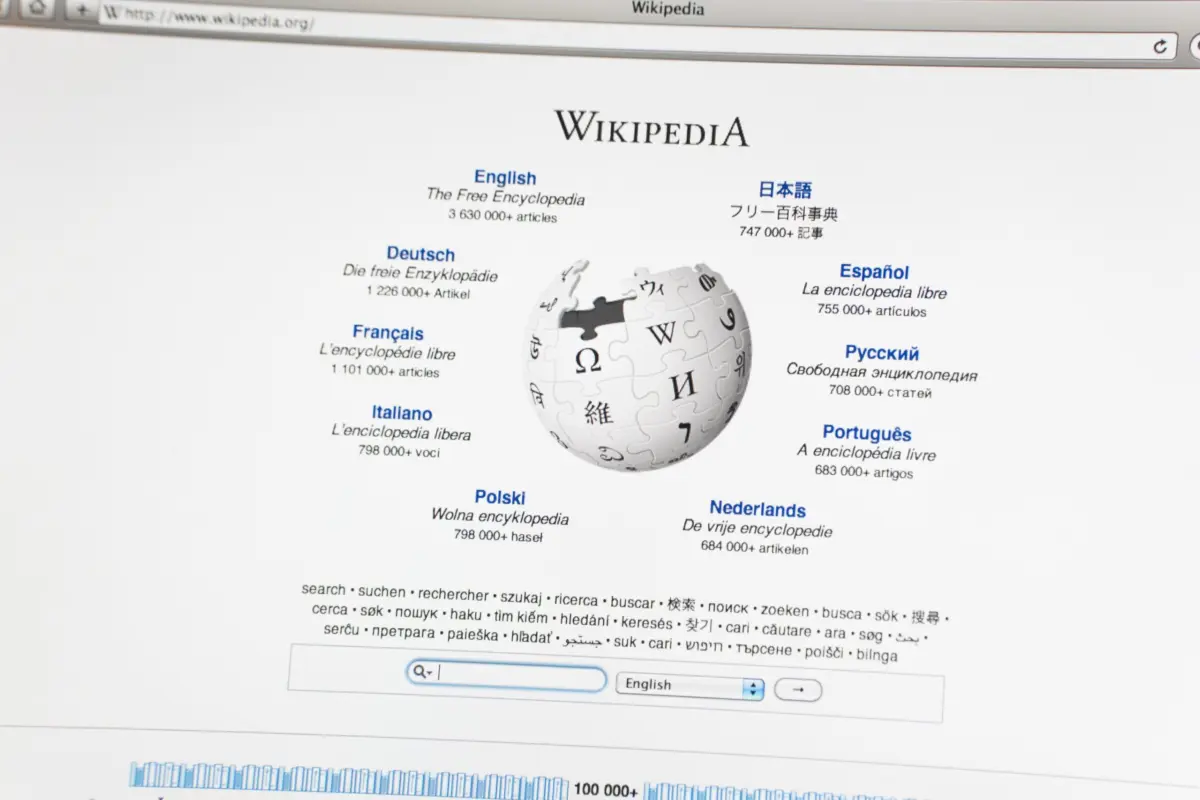
For a quarter of a century, Wikipedia has operated as the intellectual scaffolding of the internet. It is routinely cited as one of the web’s most trusted, egalitarian troves of human knowledge. Yet, as generative artificial intelligence, large language models (LLMs), and automated answer engines fundamentally rewrite how humans source information online, Wikipedia—and the broader digital publishing ecosystem—faces an existential paradox: unprecedented ubiquity paired with declining direct engagement.
According to search engine measurement data from Ahrefs, ChatGPT cites Wikipedia more frequently than almost any other single domain, trailing only Reddit. Every day, millions of queries regarding history, science, biography, and global current events are answered instantly by voice assistants and AI chat agents, which extract their facts directly from Wikipedia’s open-source architecture.
However, this massive distribution comes with a hidden tax. Fewer human beings are visiting the core platform itself. While automated web-scraping bots are flooding servers and driving up technical infrastructure costs, year-over-year human traffic to Wikipedia is seeing an 8% decline.
For commercial publishers, traffic erosion is primarily an acute financial crisis tied directly to plummeting programmatic ad revenue and dwindling paywall conversions. But for Wikipedia—a nonprofit public institution reliant on volunteer editors and modest donations—the crisis is structural and behavioral. When humans stop visiting the homepage, they stop editing. When they stop editing, the foundational mechanism that keeps the world’s digital encyclopedia accurate, vibrant, and self-correcting begins to fray.
This investigation explores how Wikipedia, alongside other major media organizations like NPR and Politico, is confronting the post-search era. Through exclusive insights from Wikimedia Foundation’s global head of brand marketing, Zach McCune, and NPR COO Ryan Merkley, this article examines the strategies institutions are deploying to survive an internet where content is consumed everywhere, yet known nowhere.
Detailed Chronology: From Search Dominance to AI Invisibility
To understand Wikipedia’s current crossroads, one must look back at the evolutionary shifts of internet discovery over the past 25 years.
Phase 1: The Organic Discovery Era (2001–2010s)
At its inception, Wikipedia relied entirely on direct navigation and conventional search engines. As Google grew into the undisputed gateway of the internet, Wikipedia optimized its structure to rank near the top of organic search results. Users actively clicked blue links, landed on Wikipedia articles, read long-form entries, and—crucially—discovered the "Edit this page" button.
Phase 2: The "Knowledge Graph" Compromise (2014–2020)
The first major warning sign for publishers arrived when Google introduced features like the Knowledge Panel and featured snippets. Instead of directing users to a publisher’s domain, Google extracted the information directly onto the search results page.
Reflecting on this era, Ryan Merkley, COO of NPR and former chief of staff at the Wikimedia Foundation, notes that when Google launched its early Knowledge Bar, it did so with immense caution. Engineers scraped Wikipedia in real time but deliberately delayed updating information concerning sensitive categories like health, finance, and living persons. Tech platforms wanted to guarantee that users never made life-altering decisions based on unverified or rapidly changing data.
Phase 3: The Generative AI Disruption (2023–Present)
Today, conversational search and generative AI have accelerated this trend to its logical extreme. Answer engines do not merely summarize information; they synthesize answers across multiple domains, completely obfuscating attribution.
For Wikipedia, this has triggered a brand health decline characterized by shrinking stability, lowered public awareness of the site’s structural origins, and a dip in favorability. Paradoxically, Wikipedia’s content is more visible across the digital universe than ever before, yet the institution itself is fading from the public consciousness.
To combat this invisibility, the Wikimedia Foundation recently launched a major, emotionally driven brand campaign in the United States and Europe, created in partnership with the creative agency Kin. Celebrating its 25th anniversary, the campaign aims to remind the public that the knowledge powering their AI assistants does not magically materialize—it is built, debated, and refined by human hands.
Supporting Context & Metrics: The Crisis of the Contributor Loop
While traditional media organizations navigate the AI transition through a combination of high-stakes litigation and defensive licensing deals—a strategy often described by media analysts as the "woo and sue" approach—Wikipedia’s challenges and remedies are fundamentally unique.
The Metrics of Disintermediation
- AI Citations: Ahrefs data reveals that ChatGPT references Wikipedia second only to Reddit, proving that LLMs rely heavily on its structured repositories.
- Traffic Erosion: Human visitation to Wikipedia is declining by roughly 8% annually.
- Bot Traffic Surge: Conversely, automated scraping traffic from AI developers and web crawlers is surging, placing heavy burdens on servers without contributing to the community ecosystem.
- The Contribution Funnel: According to Zach McCune, global head of brand marketing at the Wikimedia Foundation, brand awareness for Wikipedia acts as a direct funnel to usage, which in turn fuels editing.
"It’s a public library where sooner or later we say, ‘We’d like you to write a book—could you do that on something you love?’… If you see a typo, if you realize something’s missing or wrong in an article, that’s where it gets fixed. All the composition happens on our site." — Zach McCune, Wikimedia Foundation
The Commercial vs. Nonprofit Divide
Unlike commercial publishers whose primary metric of survival is Average Revenue Per User (ARPU) or subscription growth, Wikipedia operates under a decentralized, nonprofit model. It sustains its operations through approximately 8 million donors giving an average of $11 each.
However, reliance on donations does not shield the foundation from operational decline if the human community of fact-checkers evaporates. Without human eyes to review edits, defend against vandalism, and update fast-moving global events, the underlying data fed into AI models will inevitably degrade in quality.
Official Statements & Industry Perspectives
Wikimedia Foundation: Breaking Down the Atomic Units
When asked about how Wikipedia balances its identity as a trusted global institution versus a decentralized collective of creators, McCune emphasized a deliberate shift in strategy:
"Wikipedia often gets referred to as ‘according to Wikipedia,’ which makes it sound like ‘according to The New York Times,’ like a single publisher’s voice, and that’s not accurate. It’s really ‘according to the 480 people who edited this article and reached this consensus view in the past 24 hours.’ So we’re actually trying to emphasize the people more—get them from behind the page to the front of the page."
To achieve this, the 25th-anniversary campaign utilizes actual screenshots from hundreds of Wikipedia pages, breaking the monolithic brand back down into its atomic units: individual edits, factual statements, images, and the real people behind them.
NPR and the "Half-Baked" AI Dilemma
In parallel, public media organizations like NPR are grappling with similar dilemmas regarding distribution, accessibility, and AI licensing. NPR COO Ryan Merkley highlighted the unique pressures facing legacy newsrooms:
"Blocking them is on the table, but it is more complicated for us because we are a distributed network through our member stations… We are also a mission-driven organization with a mandate to serve all Americans, so access is really important to us. That being said, the integrity of answer engine results is paramount, and that has not been a top priority for many of these companies."
Merkley sharply contrasted the careful engineering safeguards of the early search era with the rapid, unvetted deployment of modern generative AI products:
"This is the first time where a massive consumer product has arrived half-baked. The public has served as the de facto quality assurance team. It could be because of the enormous capital expenditures it laid out to come to market."
Future Outlook: Building a Virtuous AI Ecosystem
As the media industry looks toward the late 2020s, survival in the generative AI era requires looking beyond short-term traffic metrics. Organizations are actively building sustainable frameworks to ensure that technology companies pay a fair share for the intellectual labor that powers their systems.
1. Enterprise APIs and Commercial Partnerships
For its part, Wikipedia is not sitting idly by. The foundation has assembled an enterprise team developing real-time APIs tailored for LLM companies. These high-speed data pipelines deliver structured information precisely how AI developers need to program against it.
The dual objective of this initiative is clear:
- Ensure Wikipedia’s accurate, up-to-date knowledge continues to flow seamlessly into emerging AI platforms.
- Establish formal commercial licensing relationships, ensuring that massive tech firms financially compensate the nonprofit foundation for its data usage.
2. Safeguarding the Human Content Community
Technology trends will continue to evolve through 2028, 2029, and beyond. However, industry leaders agree that the ultimate bottleneck in the AI age is not computational power or data storage—it is human trust and verification.
If search engines and chat interfaces disintermediate publishers entirely, they risk starving the very ecosystems that generate original reporting, deep research, and factual consensus. For Wikipedia, the mandate is clear: keep the cycle virtuous. By reminding the global public of the human ingenuity underpinning every single article, institutions can ensure that the internet’s greatest collaborative experiment remains vibrant, accurate, and fiercely human for decades to come.