

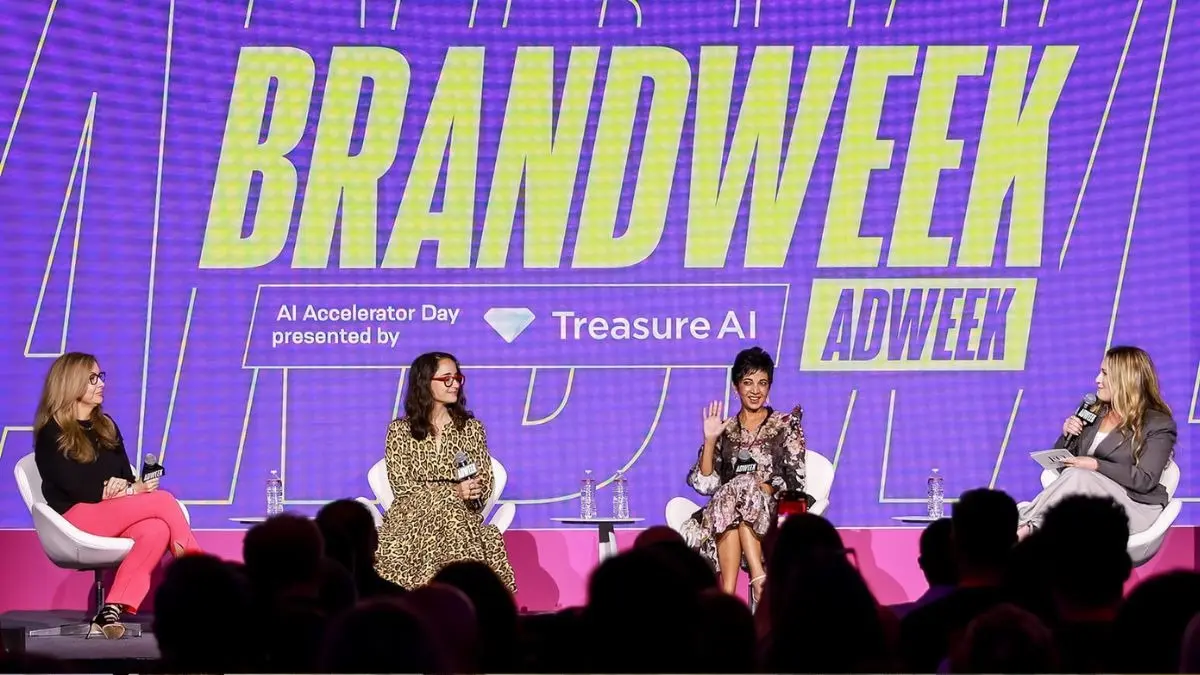
ATLANTA — As the corporate landscape undergoes its most profound structural evolution since the advent of the internet, the integration of artificial intelligence has shifted from an exploratory boardroom luxury to an existential operational necessity. At ADWEEK’s prestigious Brandweek event in Atlanta, senior marketing executives from three of the world’s most recognized brands—Intuit Credit Karma, pet-care innovator Ollie, and industrial and consumer goods titan 3M—took to the main stage to offer a rare, unfiltered look inside the corporate machine.
In a candid panel discussion, these marketing leaders detailed the exact organizational battlegrounds where AI has delivered monumental operational triumphs, alongside the stubborn, systemic hurdles that continue to resist automation. Their insights paint a complex portrait of an industry in transition: one where algorithms are supercharging productivity, yet human intuition remains the irreplaceable anchor for brand authenticity and strategic vision.
Executive Overview
The panel’s disclosures arrive at a critical inflection point for the global economy. For the past two years, executive suites across every sector have been inundated with promises of seamless digital transformation driven by generative AI, machine learning, and predictive modeling. However, the lived reality of implementation has proven far more nuanced than vendor pitches suggest.
During the Brandweek session, the dialogue moved past high-level theoretical musings to confront the granular mechanics of enterprise change management. The core takeaway from the discussion is clear: the success of AI integration is no longer bottlenecked by the capability of the technology itself, but rather by an organization’s structural readiness, cultural adaptability, and willingness to redesign workflows from the ground up.
While companies like Intuit Credit Karma have reaped immediate dividends by establishing dedicated, cross-functional AI transformation units, others continue to grapple with the friction of legacy systems, data silos, and the delicate balance between algorithmic efficiency and brand safety. This article explores the nuanced accounts shared in Atlanta, examining the structural frameworks, early wins, persistent bottlenecks, and strategic horizons that are currently defining the intersection of marketing and artificial intelligence.
Detailed Chronology of the AI Integration Wave
To understand where corporate marketing departments stand today, it is essential to trace the rapid evolution of AI adoption over the past several years—a trajectory that has transformed from experimental tinkering into a top-down mandate.
Phase 1: The Wild West of Prompt Engineering (2022–Early 2023)
When generative AI tools first burst into the public consciousness, adoption was largely decentralized and ad-hoc. Individual copywriters, junior data analysts, and rogue digital marketers experimented in silos. Tools were used primarily for quick ideation, drafting rudimentary email copy, or generating placeholder imagery. During this phase, there was little to no institutional governance, leading to concerns regarding data privacy, copyright infringement, and brand consistency. Marketing departments operated without a unified playbook, viewing AI as a novel toy rather than a core operational infrastructure.
Phase 2: The Strategic Pivot and Centralization (Mid 2023–2024)
As executive leadership recognized both the immense productivity gains and the inherent risks of unchecked AI usage, the approach shifted dramatically. Organizations began moving away from fragmented, grassroots experimentation toward centralized governance. Companies realized that deploying AI effectively required more than just purchasing software licenses; it demanded structural reorganization.
This is precisely the inflection point highlighted at Brandweek by Natasha Madan, Head of Marketing at Intuit Credit Karma. Recognizing that sporadic adoption would yield only marginal returns, Credit Karma took the decisive step of establishing a dedicated AI transformation team. This strategic move shifted the company’s posture from reactive experimentation to proactive, problem-first implementation—a watershed moment that fundamentally altered how the marketing organization conceptualized workflow efficiency.
Phase 3: Operational Integration and Current Realities (Present Day)
Today, enterprises are deep in the trenches of execution. The focus has shifted from whether to use AI to where it creates sustainable competitive advantage and where it introduces unacceptable risk. Modern marketing operations now require continuous calibration between automated output and human oversight. As the panelists at Brandweek revealed, while tactical execution—such as localized ad variations, programmatic scaling, and data synthesis—has been radically accelerated, strategic oversight, emotional resonance, and high-stakes creative direction remain fiercely human domains.
Supporting Context & Metrics: The State of Enterprise AI in Marketing
The experiences shared on the Brandweek stage reflect broader macroeconomic and industry-wide trends. According to recent enterprise marketing benchmarks, the integration of artificial intelligence is no longer a peripheral initiative; it commands a significant share of modern marketing technology (MarTech) budgets.
- Adoption Rates: Over 75% of enterprise marketing organizations report active utilization of generative AI tools across at least three core functions, including content creation, predictive analytics, and customer segmentation.
- Productivity Gains: Companies that have successfully implemented centralized AI transformation units—mirroring the structural approach detailed by Intuit Credit Karma—report a 30% to 50% reduction in time-to-market for routine campaign assets.
- The Trust Deficit: Despite high adoption rates, nearly 65% of CMOs express persistent anxiety regarding brand safety, hallucinated data, and the potential dilution of unique brand voice in an increasingly homogenized, AI-generated digital landscape.
- The Talent Gap: Organizations consistently cite a lack of internal expertise as the primary barrier to scaling AI operations. Training existing staff to act as effective "orchestrators" of AI systems, rather than mere executors of tasks, remains a paramount challenge.
These metrics underscore the dichotomy presented in Atlanta: while the technical tools are universally accessible, the organizational architecture required to wield them effectively is rare and difficult to build.
Official Insights: Dispatches from the Brandweek Stage
The heart of the Brandweek session centered on the granular disclosures made by industry leaders who are actively steering their organizations through this technological upheaval. Their commentary provides a masterclass in modern corporate leadership.
Natasha Madan on Structuring for Success at Intuit Credit Karma
Intuit Credit Karma’s head of marketing provided one of the most compelling operational blueprints of the event, detailing how her organization tackled the chaos of early AI adoption by imposing strategic order.
"That just was a game changer," Madan stated on stage, reflecting on the establishment of their dedicated AI transformation team nine months prior to the event. "It really helped us understand what problems we wanted to solve first, and how we could solve them, and then work backwards from there to create the processes [and] teams."
Madan’s emphasis on "working backwards" offers a vital lesson for enterprise leaders. Too often, companies fall into the trap of technology-led implementation—procuring advanced AI tools first and desperately searching for use cases afterward. By inverting this dynamic—starting with clearly defined consumer and operational pain points, and subsequently engineering the AI infrastructure and team dynamics to address them—Credit Karma successfully insulated itself from wasted expenditures and operational friction.
The creation of a specialized transformation unit also bridged the traditional chasm between marketing strategists, data scientists, and IT security compliance teams. By fostering a collaborative ecosystem from day one, Credit Karma ensured that their AI initiatives were scalable, legally compliant, and deeply aligned with broader business objectives.
The Broader Panel Consensus: Wins and Persistent Challenges
While Credit Karma highlighted the triumph of structural reorganization, the broader panel discussion—drawing insights from executives representing Ollie’s pet-wellness ecosystem and 3M’s sprawling industrial and consumer portfolio—illuminated the persistent friction points that continue to test modern marketers.
The Wins: Where AI Excels
Across all three organizations, AI has undeniably triumphed in areas characterized by high volume, data density, and repetitive execution:
- Personalized At-Scale: Tailoring digital advertising variations to hyper-specific consumer segments has become infinitely faster and more cost-effective.
- Data Synthesis and Market Research: Sifting through terabytes of consumer feedback, search trends, and competitive intelligence to unearth actionable insights now takes hours instead of weeks.
- Workflow Acceleration: Automating administrative tasks, localized translation, and basic asset formatting has freed creative teams to focus on higher-level strategic storytelling.
The Challenges: Where AI Falls Short
Conversely, the panel did not shy away from discussing the domains where algorithms consistently hit a wall:
- Emotional Nuance and Empathy: Crafting brand narratives that resonate on a deeply human, emotional level remains an exclusively human endeavor. AI struggles to authentically capture cultural zeitgeists without appearing derivative or sterile.
- Complex Cross-Departmental Workflows: Integrating AI smoothly across deeply entrenched legacy corporate hierarchies often creates bureaucratic bottlenecks that negate the speed advantages of the technology itself.
- Attribution and ROI Measurement: Accurately quantifying the direct financial return on investment of generative AI tools within sprawling marketing ecosystems remains a notoriously elusive metric for executive leadership.
Future Outlook: The Next Horizon of Marketing Intelligence
As the dust settles on the initial wave of hype, the marketing industry is entering a more mature, pragmatic phase of artificial intelligence integration. The insights shared at ADWEEK’s Brandweek event point toward several definitive trends that will shape the corporate landscape over the next three to five years.
1. The Rise of Specialized Organizational Units
The decentralized, "wild west" approach to AI adoption is officially dead. Following the model pioneered by companies like Intuit Credit Karma, future-proofed enterprises will institutionalize dedicated transformation teams. These cross-functional units will serve as internal consultancies—continually auditing workflows, ensuring ethical compliance, and identifying high-impact areas for algorithmic deployment before initiatives ever reach the broader organization.
2. The Premium on Human Creativity
Paradoxically, as AI democratizes the production of standard marketing assets, truly original, emotionally resonant human creativity will command an unprecedented premium. When every brand has access to the same foundational large language models and generative imaging tools, competitive differentiation will no longer stem from how much content a company can produce, but from the distinctiveness, authenticity, and emotional intelligence of its brand voice.
3. Ethical Governance and Brand Safety as Differentiators
As regulatory scrutiny intensifies regarding data privacy, algorithmic bias, and intellectual property rights, the ability to deploy AI transparently and ethically will become a major trust signal for consumers. Organizations that establish robust governance frameworks today will avoid catastrophic PR crises tomorrow, securing a distinct reputational advantage in an increasingly skeptical marketplace.
Conclusion
The conversations at ADWEEK’s Brandweek in Atlanta served as a vital reality check for the marketing industry. Artificial intelligence is neither a magical panacea capable of solving all corporate inefficiencies overnight, nor is it a fleeting fad destined to fade away. It is a powerful, demanding, and transformative medium.
For leaders at Credit Karma, Ollie, 3M, and beyond, the path forward requires a delicate equilibrium: embracing the rigorous, structured efficiency of algorithms while fiercely safeguarding the human ingenuity, empathy, and strategic vision that ultimately build enduring brands.