In the high-stakes arena of Search Engine Optimization (SEO), marketers and site owners have long operated under a shroud of guesswork. For years, the prevailing dogma dictated a simple, brute-force approach to link building: acquire as many backlinks as humanly possible, regardless of context, and hope the algorithms smile upon your pages.
However, modern search landscape dynamics demand a far more sophisticated, surgical strategy. The burning question that keeps digital strategists awake at night remains: "How many backlinks do I actually need to rank?"
Conventional wisdom often leads to panic-driven over-investment, squandering thousands of dollars and countless hours pursuing hundreds of unnecessary links. The reality, however, is both liberating and commercially vital: you typically need far fewer backlinks than you think.
This exhaustive investigative guide unpacks a battle-tested, 5-step analytical framework designed to cut through the noise of Search Engine Results Pages (SERPs). By evaluating not just raw backlink quantity, but vital qualitative metrics—such as competitor domain authority distributions, content formats, and ongoing link velocity—digital marketers can stop guessing and start allocating their resources with maximum efficiency. Whether you are managing an e-commerce catalog or an affiliate-driven content empire, precision engineering your link-building campaigns is no longer optional; it is the cornerstone of sustainable digital growth.
Detailed Chronology: The Evolution of Link Metrics and the 5-Step Analytical Framework
To understand how modern SEOs calculate backlink requirements, we must trace the evolution of search engine evaluation. Early search algorithms relied heavily on raw volume, rewarding the sites that accumulated the most inbound links. Today, semantic search, user intent modeling, and sophisticated link-quality filters mean that a single contextually relevant link from a high-authority domain outweighs hundreds of low-quality directory links.
To operationalize this shift, top-tier SEO practitioners utilize a systematic methodology that shifts the focus from vanity metrics to actionable intelligence.
The first rule of resource allocation is focusing on assets that drive tangible revenue and lead generation. Blindly building links to your homepage or low-intent blog posts yields a poor return on investment (ROI). Instead, you must pinpoint high-converting commercial assets—such as product pages, service hubs, or comparison guides—that are currently lingering on the bottom half of page one (positions 4 through 10) and require that final push into the top 3 spots.
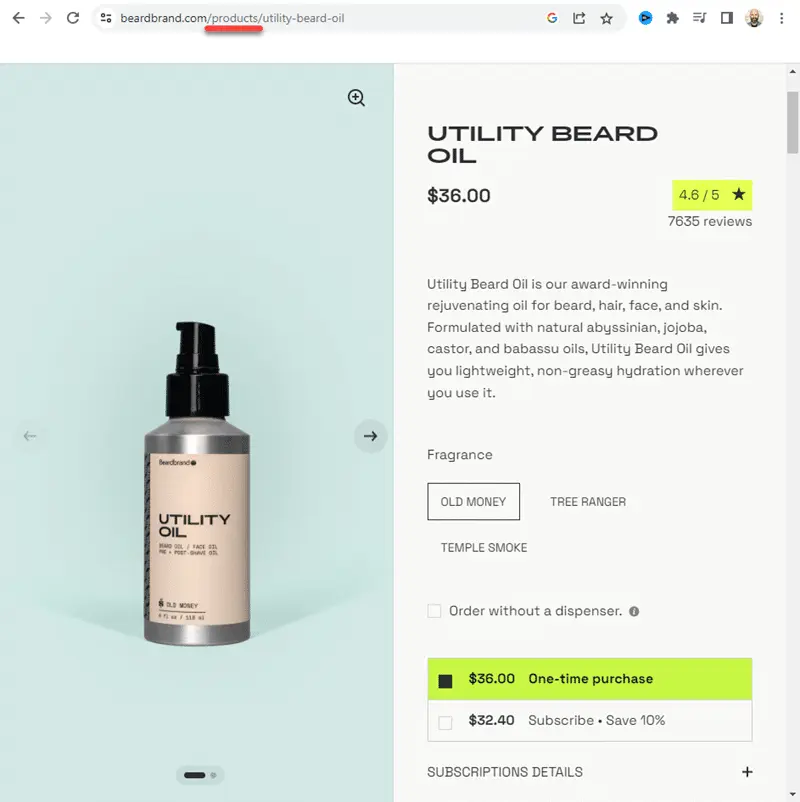
Subfolder Analysis: Many websites neatly organize commercial assets within distinct subfolder pathways, such as /products/, /features/, /services/, or /solutions/. By auditing these URL structures via main site navigation or enterprise SEO tools like Ahrefs Site Explorer, you can isolate high-intent folders. Navigating to the Top Pages report and applying a position filter for ranks 4–10 immediately reveals your highest-potential commercial targets.
Keyword Modifiers: For sites that do not use rigid subfolder hierarchies, keyword modifiers serve as an effective alternative. By applying a Keyword Contains filter within the Top Pages report—using terms like best, software, tools, platform, alternatives, or vs.—you can rapidly extract high-value commercial content ready for optimization.
Step 2: Reviewing SERP Data and Benchmarking Competitors
Once you have isolated a target URL (such as a cornerstone affiliate roundup or product category page), the next step is diving into the macro-environment of the SERP.
By pulling the Keyword Overview report and inspecting the SERP overview, you can visualize every competitor currently occupying the top ten positions. This data immediately highlights the traffic potential: breaking into the top three positions often triples organic traffic, exponentially increasing downstream conversions and affiliate commissions.
However, analysts must exercise caution when examining the Referring Domains (RD) column. Raw referring domain counts can be deeply misleading because they often feature massive outlier sites with thousands of legacy links. To perform an accurate, "apples-to-apples" comparison, look for a competitor that matches your own Domain Rating (DR) profile and utilizes the exact same content format (e.g., a listicle blog post). Selecting the competitor with the lowest referring domain count among your peers sets a realistic, highly achievable benchmark.
Step 3: Conducting Deep Competitor Backlink Profile Audits
Identifying that a competitor ranks with 85 referring domains does not mean you must build 85 links. To uncover the true baseline, you must drill down into their backlink profile.
By opening the competitor’s Referring Domains report and applying strategic filters—such as removing nofollowed links, image links, or low-quality domains—you can drastically refine the dataset. For instance, an initial pool of 85 referring domains frequently shrinks to a core subset of roughly 22 active, impactful links once irrelevant or low-value connections are filtered out. Skimming the remaining list to eliminate topically irrelevant anomalies ensures that your final target reflects only true peer validation.
Step 4: Assessing Domain Rating (DR) Distributions and Link Types
Quantity without quality is a recipe for algorithmic stagnation. Once you have established a realistic referring domain count, you must analyze the quality of those links through domain rating distributions.
Analyzing Authority Gaps: If a competing page boasts a dozen links from DR 80+ domains and another cluster in the DR 70–79 range, closing that authority gap will require a sustained, targeted outreach campaign.
Uncovering Acquisition Channels: By inspecting the individual links within the competitor’s profile, you can reverse-engineer how they built them. Common tactics often include strategic guest posting, industry collaborations, digital PR, or resource page placements. These insights form the tactical foundation of your customized link-building playbook.
Step 5: Determining Link Velocity Targets
Ranking a page once is only half the battle; defending that ranking against aggressive competitors requires understanding link velocity—the rate at which competitors acquire new links over time.
By toggling the backlink report to display New backlinks across 30-day, 3-month, and 6-month intervals, you can gauge ongoing SERP activity. In many cases, mature content pieces require zero new links on a monthly basis once they reach equilibrium. Knowing whether you need to build 22 links to close an initial gap, followed by just one or two links per quarter to maintain competitiveness, prevents over-resourcing and maximizes capital efficiency.
Supporting Context & Metrics: Case Studies in Efficiency
To contextualize this 5-step process, consider two real-world operational scenarios examined through the lens of modern SEO auditing.
Case Study A: The Affiliate Round-Up (/best-serp-tracking-tools/)
An established affiliate blog targeting the keyword "serp tracking tools" found its cornerstone review ranking on the bottom half of page one.
The Competitor Benchmark: A direct competitor (Domain Rating 56, compared to the site’s DR 70) was ranking higher with a reported 85 referring domains.
The Filtered Reality: After applying strict backlink filters and stripping out irrelevant or low-quality noise, the actual number of high-impact referring domains dropped to 22.
The Velocity Check: Historical velocity reports revealed that the competitor had generated zero new qualifying links in the preceding 30 days.
The Strategic Verdict: The site owner realized they did not need 85 links. They needed to close an initial 22-link gap to match the peer benchmark, supported by a content refresh, followed by a maintenance velocity of just one or two links per quarter.
Case Study B: The Enterprise Software Hub (/enterprise-seo-tools/)
Another asset targeting enterprise-level software sat at position nine with minimal historical outreach.
The Competitor Benchmark: A peer site (DR 71) held position five with a mere three referring domains pointing to its URL.
The Filtered Reality: Auditing the competitor’s profile revealed only two quality links in the DR 70–79 tier.
The Strategic Verdict: Because the asset already generated steady organic visibility, pairing a comprehensive content update with just a couple of high-authority, topically relevant DR 70+ backlinks provided a mathematically sound path to vaulting into the top five positions, potentially tripling or quadrupling traffic.
Official Industry Statements & Strategic Insights
Industry leaders and search engine optimization authorities consistently emphasize that modern link-building success hinges on contextual relevance and user satisfaction rather than raw volume.
"Link building is not about collecting badges of authority; it is about establishing consensus within a specific digital ecosystem. When you calculate your backlink requirements based on true peer comparison rather than arbitrary industry averages, you transform link acquisition from an expensive guessing game into a predictable science."
— Senior Enterprise SEO Strategist
Furthermore, search engine representatives have repeatedly reinforced that links serve primarily as votes of confidence. When algorithms parse a query, they evaluate whether a page satisfies user intent better than its competitors. Backlinks act as amplifiers of that satisfaction, meaning that a technically sound, comprehensively updated piece of content requires exponentially fewer links to rank than a thin, outdated page attempting to muscle its way to the top through sheer volume alone.
Future Outlook: The Next Frontier of Backlink Intelligence
As search engines incorporate increasingly advanced machine learning models and intent-based ranking mechanisms, the role of the traditional backlink is evolving. While links remain a critical trust signal, the margin for error in link acquisition is narrowing rapidly. Low-quality, manipulative link-building networks face increasingly severe algorithmic devaluation.
Looking ahead, the most successful digital marketing agencies and enterprise brands will rely entirely on data-driven predictability models—similar to the 5-step framework outlined above. By integrating granular backlink gap analyses with content refreshes, semantic optimization, and user experience enhancements, organizations can ensure every dollar spent on link acquisition delivers a measurable, positive ROI.
Ultimately, knowing precisely how many backlinks you need eliminates waste, empowers lean marketing teams, and builds resilient, top-tier organic visibility designed to withstand future algorithmic updates.


![How Many Backlinks Do I Need To Rank? [Answered]](https://www.robbierichards.com/wp-content/uploads/2023/07/How-many-backlinks-are-needed-to-rank.jpg)
![How Many Backlinks Do I Need To Rank? [Answered]](https://www.robbierichards.com/wp-content/uploads/2023/07/image19.png)
![How Many Backlinks Do I Need To Rank? [Answered]](https://www.robbierichards.com/wp-content/uploads/2023/07/image6.png)
![How Many Backlinks Do I Need To Rank? [Answered]](https://www.robbierichards.com/wp-content/uploads/2023/07/image24.png)
![How Many Backlinks Do I Need To Rank? [Answered]](https://www.robbierichards.com/wp-content/uploads/2023/07/image10.png)
![How Many Backlinks Do I Need To Rank? [Answered]](https://www.robbierichards.com/wp-content/uploads/2023/07/image5.png)
![How Many Backlinks Do I Need To Rank? [Answered]](https://www.robbierichards.com/wp-content/uploads/2023/07/image16.png)
![How Many Backlinks Do I Need To Rank? [Answered]](https://www.robbierichards.com/wp-content/uploads/2023/07/TSP-Banner.jpg)
![How Many Backlinks Do I Need To Rank? [Answered]](https://www.robbierichards.com/wp-content/uploads/2023/07/image2.png)
![How Many Backlinks Do I Need To Rank? [Answered]](https://www.robbierichards.com/wp-content/uploads/2023/07/image8.png)
![How Many Backlinks Do I Need To Rank? [Answered]](https://www.robbierichards.com/wp-content/uploads/2023/07/image9.png)
![How Many Backlinks Do I Need To Rank? [Answered]](https://www.robbierichards.com/wp-content/uploads/2023/07/image3.png)
![How Many Backlinks Do I Need To Rank? [Answered]](https://www.robbierichards.com/wp-content/uploads/2023/07/image4.png)
![How Many Backlinks Do I Need To Rank? [Answered]](https://www.robbierichards.com/wp-content/uploads/2023/07/image20.png)
![How Many Backlinks Do I Need To Rank? [Answered]](https://www.robbierichards.com/wp-content/uploads/2023/07/image13.png)
![How Many Backlinks Do I Need To Rank? [Answered]](https://www.robbierichards.com/wp-content/uploads/2023/07/image11.png)
![How Many Backlinks Do I Need To Rank? [Answered]](https://www.robbierichards.com/wp-content/uploads/2023/07/image18.png)
![How Many Backlinks Do I Need To Rank? [Answered]](https://www.robbierichards.com/wp-content/uploads/2023/07/image23.png)
![How Many Backlinks Do I Need To Rank? [Answered]](https://www.robbierichards.com/wp-content/uploads/2023/07/image14.png)
![How Many Backlinks Do I Need To Rank? [Answered]](https://www.robbierichards.com/wp-content/uploads/2023/07/image15.png)
![How Many Backlinks Do I Need To Rank? [Answered]](https://www.robbierichards.com/wp-content/uploads/2023/07/image21.png)
![How Many Backlinks Do I Need To Rank? [Answered]](https://www.robbierichards.com/wp-content/uploads/2023/07/image7.png)
![How Many Backlinks Do I Need To Rank? [Answered]](https://www.robbierichards.com/wp-content/uploads/2023/07/image22.png)