

Executive Overview
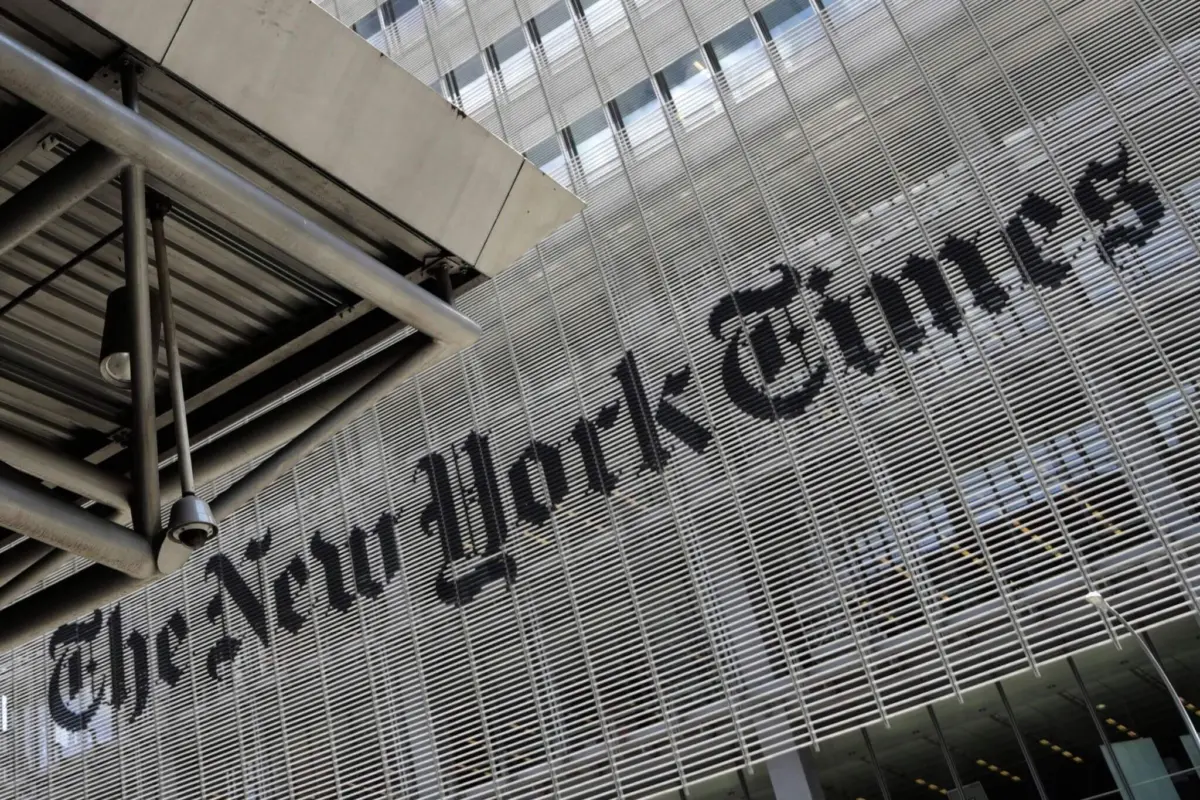
The landscape of modern journalism and collegiate athletics experienced a fascinating convergence of historical introspection and contemporary accountability. On September 18, 1851, The New York Times published its inaugural edition, setting in motion an enduring experiment in fact-based reporting. One hundred and seventy-five years later, the institution stands as a global titan in digital and print media, celebrating its historic milestone by ringing the opening bell at the New York Stock Exchange and launching an unprecedented, months-long public retrospective.
Simultaneously, the sports media ecosystem found itself grappling with a high-profile controversy involving the University of Texas football program, ESPN veteran sideline reporter Holly Rowe, and issues of respect, institutional behavior, and the boundaries of digital discourse in athletics. Together, these parallel developments highlight the shifting paradigms of accountability, transparency, and legacy in the public eye. While The New York Times leverages its history—both glorious and flawed—to reinforce reader trust, the University of Texas saga underscores the ongoing friction between high-pressure athletic programs and the journalists who cover them.
Detailed Chronology
The Legacy of The New York Times: From 1851 to the Digital Era
- September 18, 1851: The New York Times is founded by journalist Henry Jarvis Raymond and banker George Jones, releasing its first issue with a commitment to sober, accurate, and comprehensive reporting.
- May 2003: The paper confronts one of its darkest modern journalistic crises with the resignation of reporter Jayson Blair, following revelations of extensive plagiarism and fabrication.
- May 2004: In a rare and transparent move, editors publish a self-critique regarding the paper’s pre-war reporting on Iraq and weapons of mass destruction, acknowledging systemic blind spots.
- September 2026: The New York Times marks its 175th anniversary, initiating a multi-month retrospective featuring nearly 50 stories from dozens of writers exploring the publication’s peaks and valleys.
- September 18, 2026: Executives and staff ring the opening bell at the New York Stock Exchange to formally commemorate the milestone.
The University of Texas and Holly Rowe Controversy
- August 31, 2026: Respected ESPN sideline reporter Holly Rowe suffers a profound personal loss with the passing of her mother.
- Saturday Night: Following the University of Texas’ thrilling come-from-behind victory against then-No. 1 Ohio State, Longhorns head coach Steve Sarkisian abruptly walks away from a live field-interview attempt by Holly Rowe.
- Monday: The controversy escalates when Texas star quarterback Arch Manning is seen laughing with reporters regarding an AI-generated deepfake video depicting Sarkisian physically striking Rowe. Manning subsequently reaches out to Rowe privately to apologize; Rowe accepts the apology publicly.
- Wednesday: Holly Rowe lays her mother to rest in a deeply moving family memorial service, sharing details of the celebration of life on social media.
- Thursday: Following days of mounting criticism—and initial, unpersuasive excuses regarding technical difficulties—Steve Sarkisian publicly addresses the incident, expressing explicit regret for his dismissive behavior and condemning Manning’s reaction to the AI-generated video.
Supporting Context & Metrics
The New York Times: Scale and Historical Self-Reflection
To understand the weight of The New York Times’ 175th anniversary, one must examine its current operational scale alongside its historical journey. Far from being a relic of the print era, the organization enters its 176th year experiencing unprecedented financial stability and audience reach. According to internal corporate releases, the publication currently boasts:
- The largest active newsroom in its storied history.
- A subscription base that leads all dedicated subscription-supported news organizations globally.
- An overarching digital audience orders of magnitude larger than its peak distribution days in print.
However, the most striking aspect of the publication’s sesquicentennial celebration is its refusal to sanitize its own history. Under the direction of editors such as David Shipley, the Times has chosen to spotlight its lowest points alongside its greatest triumphs. By addressing institutional failures—such as the Jayson Blair fabrication scandal of 2003 and the flawed intelligence reporting leading up to the Iraq War in 2004—the organization is attempting a bold pedagogical exercise.
This approach serves a dual purpose: it offers contemporary journalism a masterclass in institutional resilience and builds long-term audience trust through radical transparency. In an era where misinformation is rampant and public institutions routinely deflect criticism, acknowledging past misjudgments has become one of the publication’s most effective tools for brand loyalty.
The Anatomy of a Collegiate Sports PR Crisis
In the realm of college athletics, the incident involving Steve Sarkisian, Arch Manning, and Holly Rowe revealed systemic vulnerabilities in how programs handle media relations and human decency. The core conflict arose when a high-stakes athletic victory—defeating the top-ranked team in the nation—clashed with the basic professional courtesies owed to media partners.
The initial defense offered by a university source—blaming ESPN technical glitches for Sarkisian’s abrupt exit—was widely viewed as an implausible public relations deflection. The situation deteriorated further when sophomore quarterback Arch Manning engaged with an AI-generated video depicting violence against a female journalist. The trivialization of such digital media highlighted a dangerous blind spot among young athletes regarding the implications of deepfakes and gender-based violence.
The emotional backdrop of the week—specifically Rowe mourning the loss of her mother—intensified the public backlash. When public figures fail to extend basic empathy, the optics damage not only the individuals involved but the broader culture of the university athletic department. Sarkisian’s eventual acknowledgment on Thursday, five days post-game, brought a degree of closure, but it also raised critical questions about the speed and sincerity of institutional crisis management in modern collegiate sports.
Official Statements
Perspectives on The New York Times Anniversary
The corporate philosophy guiding the Times’ milestone was articulated clearly in their official announcement regarding the NYSE bell-ringing ceremony:
"At the core of The Times’s long-term business success has been our investment in original, fact-based journalism. For 175 years, our reporters have gone out into the world to unearth facts that would otherwise remain unknown. That work is hard and increasingly rare, but it remains the most valuable thing we do… That growth has enabled us to continue investing in our journalism and in new ways to bring that work to more people around the world."
Editor David Shipley expanded on the emotional and historical weight of the retrospective project in conversation with Times writer Sarah Bahr:
"It’s been a giant lesson in perspective. You see context and precedent where you didn’t necessarily see it before. You see that challenges we face today are challenges we’ve faced along the way, in just about every realm. Maybe most of all, when you look back, you come away with deep admiration for the stubborn persistence of our values and commitment."
Addressing the inclusion of the paper’s historic missteps, Shipley added:
"The ways we’ve addressed our mistakes and blind spots are in some ways our proudest moments, especially in an age when apologizing and acknowledging errors or misjudgment isn’t something you see every day. If you’re really clear about it, it builds trust and helps give people one more reason to have faith in what you’re doing."
Accountability in Austin: Steve Sarkisian’s Address
Facing intense scrutiny after nearly a week of silence, Texas Longhorns head coach Steve Sarkisian addressed the media on Thursday, offering a candid assessment of his post-game conduct:
"If hindsight’s 20/20, if I could do it all over again, I would have exuded more patience in that moment and… sat through and waited for the interview with Holly. Obviously, we have a ton of respect for ESPN and Holly. Holly and I go way back to even my days of playing at BYU, and we’ve got a great relationship. ESPN is a great partner of ours."
Sarkisian continued, noting the inevitability of future interactions and addressing the missteps of his quarterback:
"We know we’re going to have more opportunities with that crew covering us, and we’re looking forward to those opportunities. So, could have definitely handled that situation better with a little bit more patience in the moment. Obviously, Arch recognizes he made a mistake, and it’s an unfortunate one. Nowhere do we condone domestic violence or violence against women. Nothing in our program says that nor Arch individually. I think if he could take it back, he would. But he has since apologized to Holly."
Honoring Personal Loss: Holly Rowe’s Statement
Amidst the media storm, Holly Rowe demonstrated remarkable grace, sharing her grief following the loss of her mother:
"We buried my beautiful Mother today. We honored her with the things she loves most… Dr. Pepper, Purple, Butterflies released and music. So grateful for my amazing family. We laughed, cried and loved on each other today. Love you Momma. You raised an amazing family."
Future Outlook
As The New York Times embarks on its next 175 years, its strategy offers a blueprint for legacy media navigating the turbulent waters of the digital age. By coupling immense technological expansion with radical historical honesty, the publication demonstrates that institutional longevity relies not on the perfection of its record, but on the rigor of its self-correction. Over the coming months, as the Times publishes its series of nearly 50 reflective essays and special commemorative magazine editions—all made freely accessible to the public—media scholars and readers alike will watch to see how the paper frames its future in an increasingly fragmented global information market.
In the world of collegiate sports, the resolution of the Sarkisian-Rowe controversy signals a necessary pivot toward media literacy and behavioral accountability. The rapid proliferation of AI-generated content, combined with the immense pressure cooker of major college football, demands heightened institutional oversight. Athletic departments can no longer treat sideline reporting as an administrative inconvenience or allow young athletes to navigate the digital frontier without comprehensive education regarding respect, empathy, and professional ethics.
Ultimately, both narratives converge on a singular truth: whether in the hallowed halls of a century-and-a-half-old newsroom or on the turf of a college football stadium, the currency of modern communication is trust. Protecting that trust requires vigilance, humility, and an unwavering commitment to the truth—values that remain as vital today as they were when The New York Times first went to press in the autumn of 1851.