

Executive Overview
In the modern corporate lexicon, few terms have been as relentlessly weaponized as "pivot," "reset," "reevaluate," and "restructure." For the better part of the last two decades, these words have served as the standard-issue vocabulary for executives attempting to signal operational agility, crisis management, or strategic transformation to stakeholders, investors, and consumers. Yet, according to author, creative executive, and strategist Michael Ventura, these tired corporate tropes have run their course. They imply a violent, reactionary departure from a company’s core identity—a frantic wheel spin that often alienates loyal consumers and exhausts internal talent.
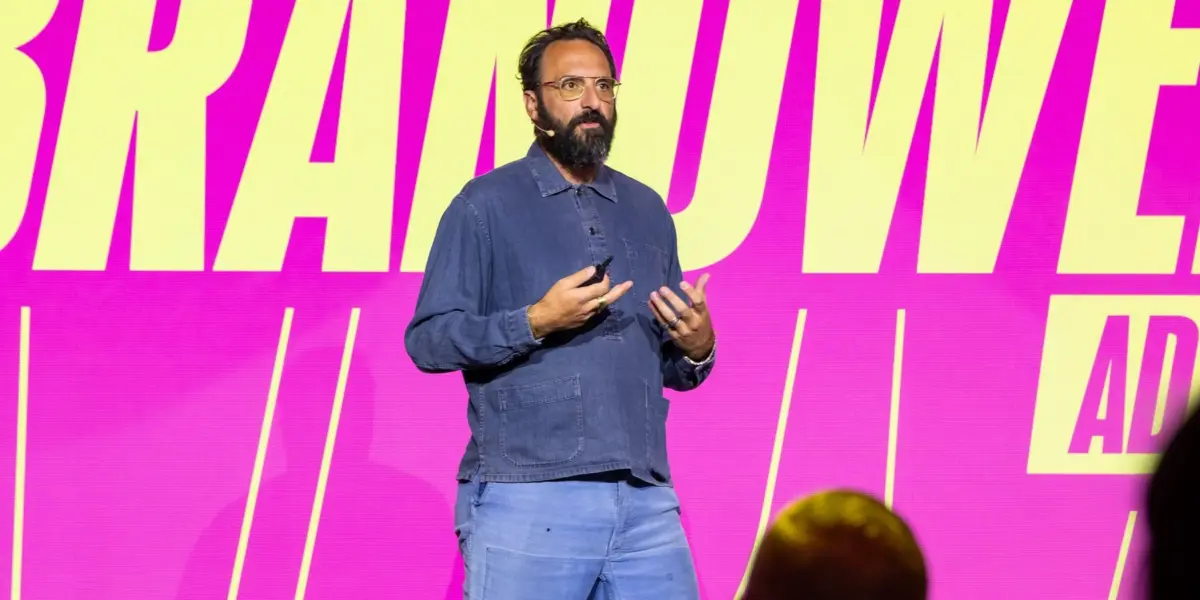
Kicking off the final, high-stakes day of this year’s Brandweek conference on Thursday, Ventura stepped onto the stage to offer an alternative framework. Addressing a packed room of industry leaders, marketers, and brand architects who find themselves at profound strategic inflection points, Ventura introduced a paradigm he calls "constellation thinking." Rather than tearing down an organizational framework or abruptly changing direction in response to market volatility, constellation thinking urges brands to map, connect, and honor the multifaceted components of their identity—both internal and external—viewing them as stars in a larger, coherent system.
This comprehensive report examines Ventura’s provocative thesis, explores the mechanics of constellation thinking as detailed ahead of his upcoming book published by Authors Equity, analyzes the current corporate fatigue surrounding traditional change management, and provides a forward-looking roadmap for organizations seeking sustainable, values-aligned evolution in an increasingly unpredictable marketplace.
Detailed Chronology: Brandweek’s Grand Finale and the Genesis of a New Philosophy
The atmosphere inside the main auditorium on the final day of Brandweek was palpable. Industry professionals, having spent the week dissecting consumer sentiment shifts, artificial intelligence integration, and economic headwinds, were primed for a session that moved beyond tactical marketing advice into higher-order philosophy.
Michael Ventura took the stage with a calm, deliberate presence that contrasted sharply with the frantic energy often brought by corporate turnaround specialists. Instead of opening with slides detailing quarterly earnings metrics or case studies of emergency rebranding campaigns, Ventura began by deconstructing the language of corporate distress.
The Anatomy of Corporate Fatigue
"How many times have you sat in a boardroom where someone suggested a ‘pivot’?" Ventura asked the audience, drawing an immediate wave of knowing nods. "We use these words—pivot, reset, restructure—as if business is a video game where we can simply hit undo and start a new level. But brands are living, breathing ecosystems made of human beings, cultural touchpoints, and historical contexts. When you violently pivot, you break the gravitational pull that kept your community in your orbit to begin with."
Ventura traced the evolution of corporate communication over the last twenty years. In the wake of the 2008 financial crisis, "restructure" became the polite euphemism for layoffs and downsizing. During the digital acceleration of the 2010s, "pivot" became the Silicon Valley mantra for abandoning failing business models in search of hyper-growth. And in the post-pandemic era, "reset" has been the catch-all phrase for trying to recapture a normalcy that no longer exists.
According to Ventura, these words share a common psychological flaw: they are rooted in fear and reaction rather than vision and alignment. They suggest that who a company was yesterday is fundamentally wrong, rather than recognizing that yesterday is merely the foundation for what is required tomorrow.
Introducing Constellation Thinking
To counter this cycle of reactive whiplash, Ventura unveiled the core tenets of constellation thinking. Drawing on humanity’s ancient history of looking at scattered stars in the night sky and drawing lines between them to create meaningful shapes, Ventura argued that modern organizations must view their assets, values, employees, and customers in the exact same way.
"There is no one-size-fits-all approach to brand values and purpose," Ventura asserted during his Brandweek keynote. "Traditional branding tries to force every company into a neat, uniform square. But reality is messy. You have your inner-self—your corporate culture, your leadership philosophy, your operational DNA. You have your outer-self—how the public perceives you, your market positioning, your social impact. And you have everything in between: your supply chain, your customer service ethos, your retail footprint."
Ventura explained that constellation thinking rejects the idea that a brand must choose just one of these points to focus on at the expense of the others. Instead, all components together—the inner self, the outer self, and every nuance in between—are collectively the components of a constellation. By drawing intentional lines between these disparate points, a brand can navigate turbulent market shifts without losing its identity.
Supporting Context & Metrics: The Cost of Constant Pivoting and the Rise of Integrated Brand Architecture
To fully appreciate the weight of Ventura’s intervention at Brandweek, one must examine the broader economic and cultural landscape in which modern brands operate. The pressure on CMOs, brand directors, and CEOs has arguably never been higher. According to recent industry data, the average tenure of a Chief Marketing Officer has hovered near historic lows, frequently sitting below the 30-month mark. This institutional instability breeds short-term thinking, where leaders feel compelled to deliver immediate, dramatic changes—hence, the endless cycle of pivots and resets.
The Quantitative Toll of Reactive Branding
Market research firms have increasingly noted the diminishing returns of reactive corporate transformations:
- Consumer Trust Deficit: A 2023 global brand study revealed that nearly 64% of consumers feel brands change their stated values too frequently to chase short-term cultural trends, leading to widespread brand cynicism.
- Employee Disengagement: Internal surveys across Fortune 500 companies indicate that organizational "restructuring fatigue" is a leading driver of burnout and voluntary turnover. When employees feel their company’s identity shifts with every quarterly earnings report, internal alignment and morale plummet.
- The Cost of Rebranding Capital: Data from corporate finance analysts shows that botched or overly frequent brand pivots cost global enterprises billions of dollars annually in lost equity, diluted messaging, and wasted marketing spend.
The Psychological Parallels: Ancient Navigation to Modern Commerce
Ventura’s background—spanning design, psychology, and organizational leadership—heavily influences his approach. Constellation thinking is not merely a marketing metaphor; it is rooted in cognitive science and systems theory.
For millennia, human beings used constellations not because the stars themselves were physically connected in space, but because connecting them made navigation possible across vast, dark oceans and uncharted deserts. The stars remained fixed in their complexity, but human perception organized them into useful tools for survival and discovery.
In the business context, market disruptions like generative artificial intelligence, macroeconomic inflation, geopolitical instability, and shifting generational values (such as Gen Z’s demand for hyper-authenticity) represent the vast, dark ocean. A company that tries to move every star in its galaxy every time a storm hits will quickly become lost. However, a company that practices constellation thinking uses its existing points of light—its heritage, its core competencies, its workforce talent, and its customer loyalty—to redraw its navigational lines, adapting its trajectory without destroying its map.
Official Statements & Industry Reception at Brandweek
The response to Ventura’s keynote at Brandweek was immediate and enthusiastic, signaling that his message struck a deep chord with industry professionals exhausted by the superficiality of modern corporate jargon.
In an exclusive post-keynote panel discussion, several prominent brand executives weighed in on the practical implications of constellation thinking.
"For too long, leadership has operated under the delusion that if you aren’t constantly announcing a massive strategic pivot, you aren’t doing your job," noted a senior vice president of global brand strategy from a Fortune 100 consumer goods conglomerate who attended the session. "Michael is giving us permission to mature. He’s reminding us that stability and agility are not mutually exclusive if your brand architecture is flexible enough to see the big picture."
Another leading marketing executive emphasized the internal cultural benefits of Ventura’s philosophy:
"When we talk about restructuring, employees brace for impact. When we talk about resetting, they wonder what they did wrong. If we adopt constellation thinking, we invite our teams to look at the sky together and figure out which stars are burning bright and which ones need more energy. It changes the power dynamic of change management from top-down imposition to collaborative sense-making."
A Preview of the Upcoming Book: Constellation Thinking
The momentum generated at Brandweek serves as a major runway for Ventura’s upcoming book, tentatively titled Constellation Thinking, which is scheduled for publication through Authors Equity in 2027.
Publishing insiders note that Authors Equity—known for its author-centric publishing model that aligns the long-term success of creators directly with market performance—is an ideal home for a work of this caliber. Unlike fast-turnaround business books designed to capitalize on a single fleeting trend, Constellation Thinking is being positioned as a definitive, enduring guide for organizational resilience.
In the book, Ventura expands extensively on the philosophy introduced on the Brandweek stage. Early manuscript excerpts reveal a deep dive into practical methodologies, including:
- Mapping Exercises: Step-by-step frameworks for organizations to catalog their internal capabilities, cultural values, and external market perceptions.
- Tension Management: Strategies for holding opposing corporate truths—such as the demand for immediate profitability versus long-term sustainability—within the same systemic constellation.
- Case Studies of Endurance: Deep dives into legacy brands that survived century-old market shifts not by pivoting away from who they were, but by deepening their connections to their core purpose.
Future Outlook: Navigating the Inflection Point Ahead
As industries brace for the remainder of the decade, the business landscape will only grow more complex. The rapid maturation of artificial intelligence, automated labor markets, hyper-personalized consumer expectations, and increasing ecological pressures mean that every organization will inevitably face profound inflection points.
Ventura’s message at Brandweek suggests that the winners of tomorrow will not be the companies that shout the loudest about their latest "pivot." Rather, they will be the quiet, deliberate architects who understand how to read the stars.
Key Takeaways for Industry Professionals
- Audit Your Vocabulary: Leadership teams must consciously phase out reactionary buzzwords like "pivot" and "reset" when communicating internally and externally. Language shapes culture; treating change as a natural systemic evolution rather than an emergency crisis changes organizational behavior.
- Embrace Multi-Dimensional Identity: Recognize that a brand is not a single value proposition or a monolithic logo. It is a constellation of inner culture, outer perception, and operational execution. Protect and nurture all parts of the system.
- Prepare for 2027 and Beyond: As the release of Ventura’s book approaches, forward-thinking organizations should begin experimenting with constellation mapping exercises—identifying their core corporate fixed points before the next wave of market disruption forces their hand.
Ultimately, Michael Ventura’s Brandweek address served as a timely wake-up call. In a world obsessed with rapid disruption and ephemeral trends, the most radical thing a brand can do is slow down, look up at the sky, and remember who it really is.