

Executive Overview
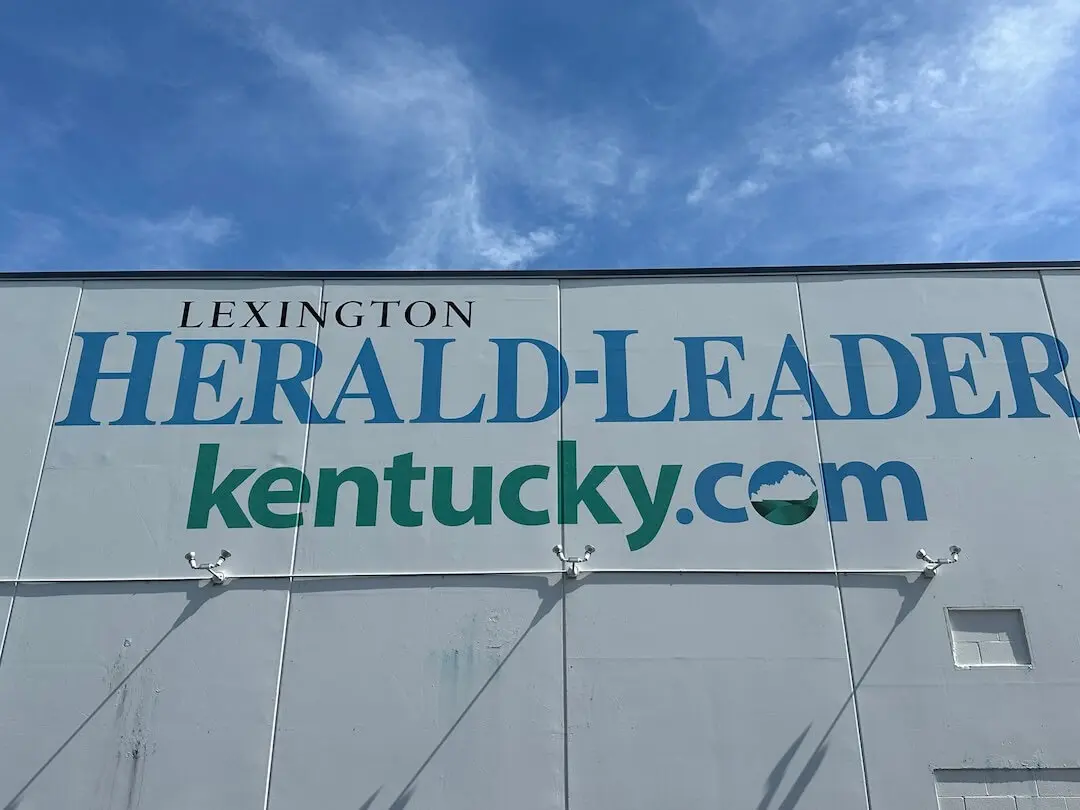
The systematic dismantling of local journalism in the United States reached a grim milestone on September 10, when media giant McClatchy executed a nationwide purge, eliminating more than 30% of its journalism workforce. Among the hardest hit was the Lexington Herald-Leader, one of Kentucky’s oldest and most historically significant statewide newspapers. The cuts devastated the newsroom, stripping away over half of its editorial staff, including its sole reporters for Appalachian Kentucky and Lexington city government, its entire statehouse reporting infrastructure, and vital investigative positions.
This corporate contraction is not an isolated budgetary adjustment; it is a profound institutional failure with far-reaching democratic consequences. For years, regional newspapers have patched structural revenue leaks with philanthropic band-aids, nonprofit partnerships, and digital pivots. Yet, as corporate owners pivot toward subscriber-driven optimization and artificial intelligence integration, the foundational infrastructure of local accountability is collapsing.
When newsrooms are gutted, the immediate casualties are the dedicated reporters whose investigative grit exposes public corruption, tracks public health crises, and gives voice to marginalized communities. The long-term casualties are far more severe: unchecked municipal spending, obscured legislative overreach, declining civic engagement, and an accelerating descent into news deserts where misinformation thrives. This article examines the anatomy of the September 10 layoffs at McClatchy, the systemic pressures facing legacy print media, and the perilous cost of losing the watchdogs charged with preserving local democracy.
Detailed Chronology: The Fall of the Herald-Leader and the September 10 Purge
The erosion of the Lexington Herald-Leader’s newsroom mirrors the broader, agonizing decline of the American press corps over the past two decades. To understand the magnitude of the September 10 cuts, one must examine the trajectory of reporting in Eastern Kentucky over the last several years.
The Rise of Philanthropic Journalism
In May 2019, Alex Acquisto returned home to Eastern Kentucky, hired by the Herald-Leader to cover public health. Her position was born out of necessity and innovation. Facing mounting financial pressures, the newspaper partnered with Report for America (RFA)—a national service program founded in 2017 to combat the collapse of local reporting by placing young journalists in underserved news deserts. Under RFA’s tripartite funding model, local newsrooms, community grants, and philanthropic organizations cobbled together salaries for three-year stints, with the ultimate goal that the host publication would eventually absorb the positions permanently.
Acquisto’s early beat was expansive and grueling. For six months, she produced long-form narrative investigations into the resurgence of methamphetamine across Eastern Kentucky, documented physicians’ concerted efforts to curb the opioid crisis by restricting opioid prescriptions, and exposed the existential panic of local public health departments teetering on the brink of bankruptcy.
When the COVID-19 pandemic struck in March 2020, Acquisto stood as one of the few dedicated public health reporters in the Commonwealth. Her coverage was relentless: she documented rural health departments desperately scrambling to vaccinate remote populations, featured church pastors fighting pulpit-level misinformation, exposed the harrowing death threats hurled at public health officials, and investigated the alarming spikes in premature births among unvaccinated pregnant women.
Most searingly, she bore witness to the human cost of the virus. She stood in full personal protective equipment in a quarantined Eastern Kentucky hospital room, watching a mother die of COVID-19, comforting the woman’s adult children as they kissed their mother goodbye before her ventilator was unplugged. Her reporting was not merely informational; it was an empathetic, unflinching documentation of collective trauma.
Transition to State Politics and Investigative Accountability
As the acute phase of the pandemic subsided, Acquisto transitioned to the state politics desk, where she chronicled the seismic shift following the June 2022 Supreme Court overturning of Roe v. Wade. She detailed the political mechanics behind Kentucky’s near-total abortion ban and exposed how pregnant women facing catastrophic medical complications were forced to travel hundreds of miles out of state for routine, life-saving health care.
Collaborating with former colleague Austin Horn, Acquisto co-reported a damning series of investigations concerning a former Kentucky lawmaker with a long-documented history of sexual misconduct dating back to his college years—behavior that ultimately culminated in a lifetime ban from a local strip club. Furthermore, serving as a ProPublica Local Reporting Network fellow, she spent a year investigating the meteoric rise and catastrophic collapse of Kentucky’s largest addiction treatment provider, unearthing whistleblower accounts alleging the company exploited vulnerable employees to fraudulently bill millions to Kentucky Medicaid.
These were the stories that defined the Herald-Leader‘s public service mission. Yet, on September 10, 2026, McClatchy leadership informed Acquisto—and 12 of her newsroom colleagues—that their services were no longer economically viable.
Supporting Context & Metrics: The Scale of the Crisis
The devastation in Lexington was replicated across McClatchy’s national portfolio, laying bare the deep systemic rot afflicting corporate-owned regional media.
A Nationwide Execution
On the morning of September 10, McClatchy slashed more than 30% of its journalism workforce across more than a dozen major metropolitan and regional papers. The cuts spared few corners of the company’s footprint:
- The Miami Herald / El Nuevo Herald: Stripped of at least 25 positions—representing over a quarter of its editorial staff—including its dedicated city government reporter.
- The Charlotte Observer: Eliminated roughly 30% of its newsroom, decisively gutting its entire two-person investigative reporting unit.
- Other Markets: Significant staff reductions crippled operations from Fort Worth to Fresno, and from Columbia, South Carolina, to Boise, Idaho.
The Hollowed-Out Herald-Leader
In Lexington, the cuts decimated over half of the active newsroom. The casualties read like an obituary for local watchdog reporting:
- The Lexington city government reporter.
- The paper’s sole business development reporter.
- The entire politics reporting team, including its editor, leaving zero coverage of the Kentucky General Assembly’s day-to-day legislative operations.
- Two University of Kentucky sports reporters covering men’s basketball and football.
- The region’s only dedicated high school sports reporter.
- The newsroom’s only reporter covering Eastern Kentucky and the burgeoning data-center and AI infrastructure proposals animating Appalachian voters.
By the end of September, for the first time in its modern history, the Herald-Leader will operate without a single dedicated reporter in Appalachian Kentucky and without a single municipal government reporter covering the city of Lexington itself.
Official Statements: Corporate Rationale vs. Editorial Reality
The corporate justification for the layoffs relied heavily on the language of consumer alignment and economic survival. In a companywide email distributed on the day of the cuts, Greg Farmer, McClatchy’s executive vice president of local news, framed the downsizing as an inevitable response to market realities.
"We believed continued investment in our journalism would strengthen our relationship with subscribers and our business," Farmer wrote. Highlighting that consumer revenue had plummeted by 41% over the preceding five years, he added: "The results are clear and require us to make a different choice. We need to listen to our subscribers, make choices and focus resources to create the greatest value."
Farmer insisted that the publisher "cannot continue investing where subscriber interest does not support the investment," noting that the company must concentrate exclusively on journalism that is "differentiated, consequential and difficult to replicate; reporting rooted in our communities and strengthened by sources, investigation, verification, context and judgment."
However, this corporate rhetoric sits in sharp tension with McClatchy’s recent operational maneuvers. Earlier in the year, McClatchy rolled out an internal artificial intelligence tool designed to automatically generate and summarize different iterations of stories originally authored by human reporters. The initiative—intended to capture a different demographic of digital consumer—forced reporters to share bylines with generative algorithms, prompting immediate, unionized pushback across its newsrooms. Critics point out the profound hypocrisy of a corporate entity starving its investigative core of human capital while simultaneously leaning on AI automation to manufacture synthetic engagement.
Future Outlook: The Cascading Costs of News Deserts
As laid-off journalists return their press badges and weigh whether to remain in a collapsing industry, the broader societal implications of these cuts are already materializing. The retreat of legacy print journalism does not occur in a vacuum; it triggers a cascade of civic deterioration.
The Economics of Corruption
Decades of empirical research confirm that when local newspapers contract or close, municipal financial health suffers. Without reporters sitting in city council chambers, attending school board meetings, and auditing public expenditures, the cost of municipal borrowing rises. Bond rating agencies charge higher interest rates to local governments operating without public oversight, directly increasing taxpayer burdens. Studies published by organizations like Rebuild Local News estimate that the national shortage of local news costs communities upwards of $1.1 billion annually in wasteful spending, graft, and unchecked administrative bloat.
The Erosion of Democracy and Rise of Partisanship
Transparency is the lifeblood of representative government. When statehouse reporting staffs decline—pew research indicating a 34% drop in full-time statehouse reporters at U.S. newspapers since 2014—lawmakers are emboldened to operate behind closed doors, insulated from public accountability.
Furthermore, the decimation of local news directly correlates with intensifying political polarization. Without neutral, community-rooted reporting to establish a shared set of factual baselines, citizens increasingly retreat into hyper-partisan echo chambers. Local journalism acts as a civic adhesive; when it dissolves, communities fracture along ideological lines, civic engagement plummets, and public trust in democratic institutions collapses.
Conclusion
The destruction of local newsrooms like the Lexington Herald-Leader is a tragedy that extends far beyond the hundreds of newly unemployed journalists joining the ranks of an abandoned trade. It represents a slow-motion dismantling of American democracy itself. By prioritizing short-term financial margins over long-term public trust, corporate media conglomerates are trading the hard-earned accountability of investigative journalism for algorithmic efficiency and hollowed-out digital echoes. In doing so, they are plunging communities into darkness—one lost job, one uninvestigated budget, and one silenced watchdog at a time.