

Executive Overview
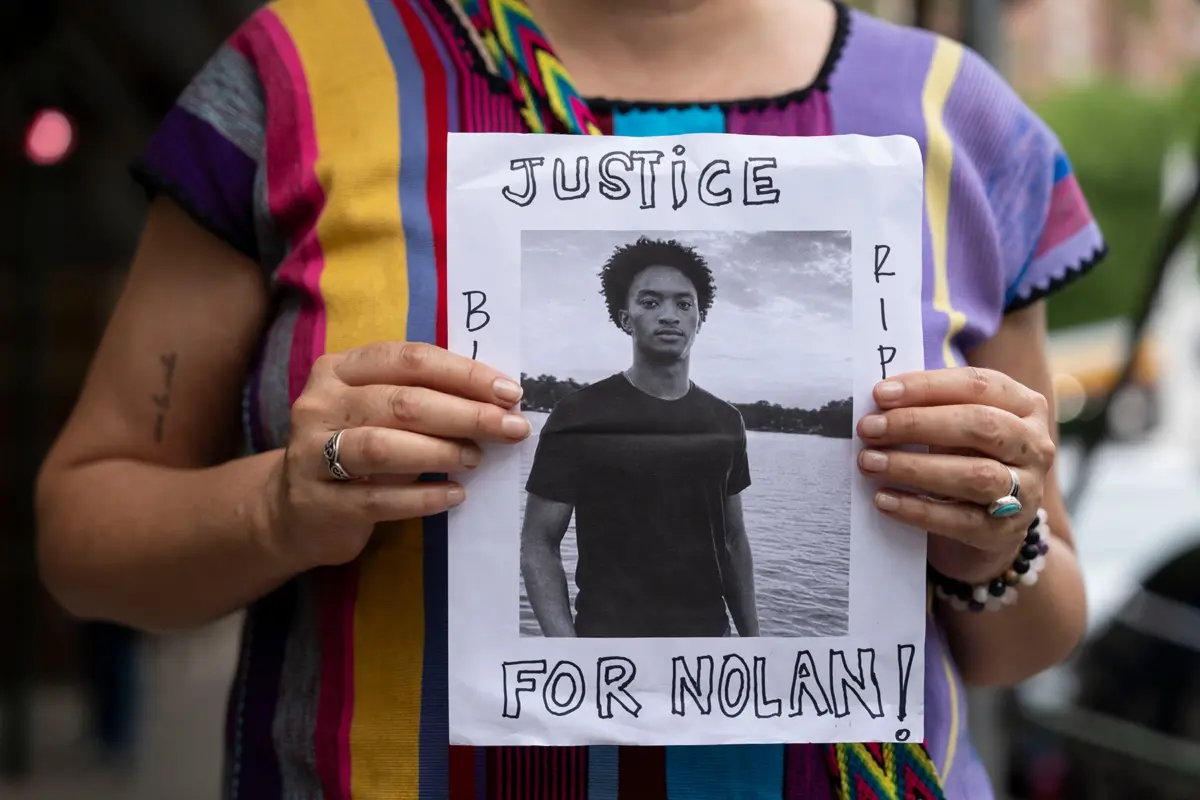
The pursuit of accountability in the tragic death of 18-year-old Nolan Wells reached a critical inflection point following a Mississippi grand jury’s unanimous decision to bring no criminal charges in the case. Wells, a college football player whose life was cut short under deeply contested circumstances, vanished on July 4 following a recreational boating excursion off the coast of Ocean Springs, Mississippi. Two days later, after an intensive multi-agency search, a federal park ranger discovered his body washed ashore on Horn Island, the very location where he was last seen alive.
In the wake of the grand jury’s findings, Wells’ parents—Christine and Elmore Wonsley—alongside high-profile civil rights attorney Ben Crump and NAACP General Counsel Kristen Clarke, convened a powerful press conference at a Georgia Baptist church. The gathering served as a platform not only to denounce the grand jury’s conclusions of an accidental drowning, but also to formally request a comprehensive, independent federal investigation by the U.S. Department of Justice (DOJ).
While Jackson County District Attorney Angel Myers McIlrath released extensive documentation—including the full grand jury report, investigative correspondence, and public video statements defending the panel’s exoneration of individuals—the Wells family remains resolute. Pointing to unexplained blunt force trauma, conflicting witness accounts, and unanswered questions regarding digital forensics, the family and their legal team maintain that the full story of what happened on that fateful July afternoon has yet to be told.
Detailed Chronology: From a Fourth of July Celebration to a Legal Impasse
To understand the profound grief and skepticism driving the Wells family’s fight for justice, it is essential to trace the timeline of events that began as a routine holiday outing and evolved into a complex legal and public relations battle.
July 4: The Outing and Disappearance
Nolan Wells traveled with a group of friends to Horn Island, a barrier island off the coast of Mississippi, to celebrate the Independence Day holiday. What was intended to be a day of leisure quickly descended into a tragedy. According to testimony later presented to the grand jury, an eyewitness under oath recalled seeing Wells slip awkwardly off the side of a boat at approximately 3:30 p.m.
Crucially, the witness testified that Wells did not appear visibly injured from the fall and continued to socialize afterward. However, video footage captured at approximately 3:45 p.m. showed members of Wells’ travel party engaged in a heated argument on the beach. While early internet speculation and social media rumors tied Wells directly to this altercation, the grand jury later concluded that Wells was not physically involved in any argument that day. Sometime following these events, Wells disappeared.
July 6: The Discovery
Following an extensive two-day search operation involving local, state, and federal assets, a federal park ranger made the grim discovery of Wells’ body washed up on the shores of Horn Island. The recovery immediately sparked widespread concern, grief, and scrutiny, setting off an investigation that would capture national attention.
Summer and Fall: Autopsies and Online Fallout
In the months following the discovery, the Mississippi State Medical Examiner’s Office officially classified Wells’ cause and manner of death as "undetermined" and "inconclusive." Dissatisfied with the initial state findings, the Wells family commissioned an independent forensic autopsy during the summer. This secondary examination similarly reported an undetermined cause of death, but notably documented blunt force trauma to the back of Wells’ head.
Concurrently, the case became a flashpoint on social media. Online sleuths directed intense harassment and accusations at the friends who accompanied Wells to the island. Amid escalating tensions, death threats, and public scrutiny, those friends launched their own legal defense fund and filed lawsuits against attorney Ben Crump and various social media influencers, asserting their full cooperation with law enforcement.
December: The Grand Jury Verdict and Public Fallout
After convening a panel of 23 members who issued 132 subpoenas and heard testimony from 43 witnesses (with seven individuals explicitly invited to testify), the Jackson County grand jury rendered a unanimous decision. They declined to return any indictments, concluding there was insufficient evidence of criminal conduct.
Reacting swiftly, District Attorney Angel Myers McIlrath released a public video statement and published the complete grand jury report alongside correspondence with the family’s legal team. The report asserted that the position, condition, time of discovery, and location of Wells’ body were "consistent with drowning."
The day after the announcement, the Wells family, Ben Crump, and Kristen Clarke held their defiant press conference, rejecting the grand jury’s findings and announcing plans to scrutinize remaining digital and physical evidence.
Supporting Context & Metrics
The investigation into Nolan Wells’ death stands out not only for its emotional resonance but also for the sheer volume of judicial resources dedicated to it, as well as the unique legal parameters governing homicide investigations in the state of Mississippi.
Investigation Scale and Scope
The Jackson County District Attorney’s Office and the grand jury panel conducted a remarkably thorough evidence-gathering process. Key metrics from the grand jury report include:
- Grand Jury Panel: 23 citizens empaneled to review evidence.
- Subpoenas Issued: 132 judicial subpoenas executed to secure records, communications, and testimony.
- Witnesses Examined: 43 total witnesses evaluated, with 7 specific individuals formally invited to testify.
- Forensic Evaluations: Two distinct autopsies performed—one by the Mississippi State Medical Examiner’s Office and an independent examination commissioned by the family—both of which ultimately returned "undetermined" causes of death.
Legal Ramifications and the Statute of Limitations
Under Mississippi law, there is no statute of limitations for homicide. This legal reality provides a crucial window of persistence for the Wells family and their legal representatives. Even though the current grand jury returned a unanimous decision of no indictment based on existing evidence, the case is not permanently closed. If new, credible evidence indicating foul play emerges at any point in the future, prosecutors possess the authority to convene a new grand jury and formally reopen the criminal investigation.
Official Statements and Diverging Perspectives
The public discourse surrounding Nolan Wells’ death is characterized by starkly contrasting viewpoints from state prosecutors, the grand jury, the victim’s grieving parents, and civil rights advocates.
The District Attorney and Grand Jury Perspective
District Attorney Angel Myers McIlrath emphasized the dual responsibility of the grand jury system, noting that its purpose is as much to exonerate the falsely accused as it is to prosecute the guilty. Addressing online rumors of racial animus, McIlrath stated unequivocally:
"There is absolutely no evidence to support the allegations that Nolan’s disappearance and death were racially motivated."
Regarding the physical injury discovered on the back of Wells’ head, the grand jury report acknowledged that members "considered credible evidence concerning the circumstances of how Mr. Wells sustained the injury…, but the exact cause of injury remains uncertain." Ultimately, the panel maintained that the physical evidence aligned most closely with an accidental drowning.
The Family and Legal Team Perspective
Conversely, the Wells family and their legal representatives have forcefully rejected the drowning narrative, pointing to the unresolved head trauma and logical inconsistencies in witness testimonies.
During the emotional press conference in Georgia, Christine Wonsley, Nolan’s mother, captured the family’s anguish:
"Last night was a reminder that our son’s life does not matter to those who hold positions that are supposed to serve and protect the public… How can a jury come to the conclusion of drowning, despite knowing that there was trauma to his body, and despite hearing many inconsistencies? Elmore and I do not believe that Nolan simply and accidentally drowned. And nobody saw anything?"
Elmore Wonsley, Nolan’s father, urged the public to keep his son’s memory alive with dignity:
"Continue to speak his name, because he’s not a hashtag, he’s our son."
Attorney Ben Crump echoed these sentiments, vowing to leave no stone unturned:
"We’ll never stop until we get to the truth. We’re going to fight until hell freezes over… The grand jury left us with questions, Nolan’s family deserves answers."
Adding institutional weight to the family’s demands, NAACP General Counsel Kristen Clarke invoked federal oversight, stating:
"We call, as the Congressional Black Caucus has, for a full and independent Justice Department investigation."
Future Outlook
As the immediate shock of the grand jury’s decision gives way to a protracted legal strategy, several critical battlegrounds remain on the horizon for the Wells family and their legal team:
- Independent Digital Forensics: Crump’s team announced plans to release findings from an independent investigation into Nolan Wells’ cell phone data. While the Jackson County District Attorney maintained that her office never received the full data extraction—noting she was only provided a 282-page report—the family’s legal team continues to analyze digital footprints to reconstruct Wells’ final hours.
- Federal Intervention: With support from civil rights heavyweights like the NAACP and calls echoing from the Congressional Black Caucus, the primary institutional goal for the family is compelling the U.S. Department of Justice to launch an independent civil rights and homicide probe.
- Ongoing Public Advocacy: The Wonsley family remains committed to keeping international attention focused on the case. By framing the tragedy not merely as an isolated local incident but as a broader question of institutional transparency and accountability, they hope to unearth the credible evidence required under Mississippi law to prompt a future grand jury review.
The journey toward resolution for Nolan Wells’ loved ones is far from over. As legal experts comb through the newly released transcripts and independent forensic specialists re-evaluate the physical evidence, the central question remains: what truly happened on the waters off Horn Island on July 4? For Christine and Elmore Wonsley, the fight to answer that question has only just begun.