

Executive Overview
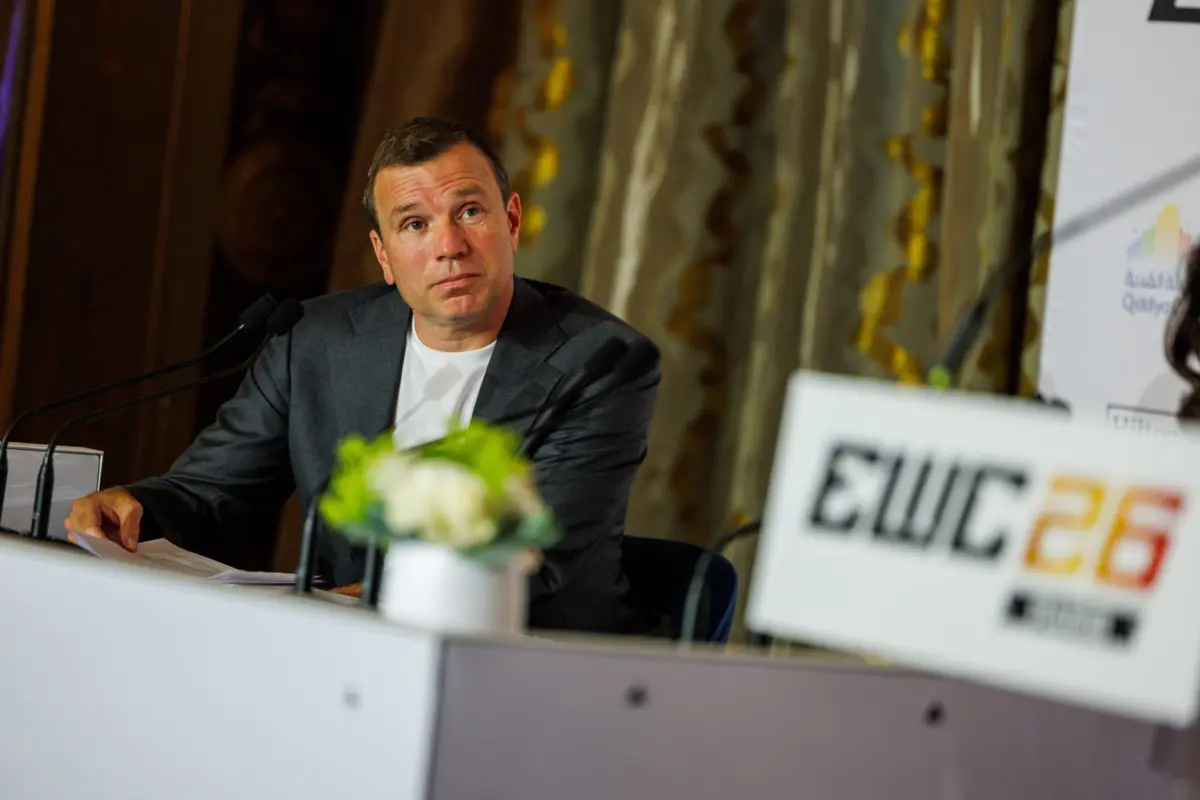
Seven weeks into the world’s largest international video game competition, the atmosphere inside the VIP embassy at Paris’ Expo Porte de Versailles hums with quiet intensity. Yet, amidst the high-stakes pressure of the Esports World Cup (EWC), CEO Ralf Reichert appears entirely unruffled. Sipping a cappuccino, the former pro gamer-turned-entrepreneur sits at ease. The days of hauling heavy equipment to subterranean venues are long behind him.
Today, Reichert presides over one of the most powerful gaming organizations on the planet as the head of the Esports Foundation. What began as a decentralized underground subculture of passionate hobbyists in the late 1990s has matured into a multi-billion-dollar global spectacle. At the EWC, elite competitors battle across 24 distinct titles for a staggering prize pool of $75 million.
The journey to this modern colosseum has not been straightforward. The third iteration of this annual summer event was originally slated to return to Riyadh, Saudi Arabia, mirroring its predecessors. However, shifting geopolitical circumstances forced Reichert and his executive team to execute a massive relocation to Paris in just over eight weeks—a logistical hurdle compounded by a venue floor plan that required weekly redesigns to accommodate rotating game tournaments.
For Reichert, navigating unchartered waters is second nature. As a pioneer of professional gaming before digital competition was recognized as a viable vocation, he helped invent the modern esports blueprint. This profile examines Reichert’s quarter-century journey, tracing the rise of professional gaming from familial bedroom rivalries to an international phenomenon, and exploring the future of global competitive play through initiatives like the upcoming Esports Nations Cup.
Detailed Chronology: The Making of an Industry Pioneer
The Oberhausen Roots and the Birth of SK Gaming
Raised in Oberhausen, Germany, Reichert’s passion for gaming was forged through relentless sibling rivalry. Growing up alongside his two brothers, Benjamin and Tim, competition was a way of life.

"I have two brothers; we competed in everything," Reichert recalls. "Football was our main turf, but [it was] everything you can think of, as well as video games. I had my first console at the age of six, and we would compete in Pong. They were on that journey with me, and it was as much digital as physical from the very start."
While the trio tested their skills across numerous platforms, the release of id Software’s Quake in 1996 fundamentally altered their trajectory. As one of the earliest true 3D multiplayer shooters, Quake catalyzed online multiplayer culture.
The brothers founded SK Gaming during the nascent stages of internet connectivity. Without established leagues, corporate sponsorships, or societal validation, building a team required raw entrepreneurial grit. They constructed their own rudimentary website to serve as a digital business card and piled into cars with heavy CRT monitors to compete in early European LAN (Local Area Network) events, such as Paris’ historic LAN Arena.
A watershed moment arrived in the late 1990s at the True Gamers Invitation (TGI), where Reichert’s parents traveled to watch the brothers compete. Despite a narrow second-place finish, the experience bridged the generational divide. Upon returning home, their parents acknowledged the structural parity between digital competition and traditional athletics, offering a crucial psychological endorsement during an era when professional gaming was heavily stigmatized.
Founding the ESL and the "Innovator’s Dilemma"
By 2000, Reichert’s brothers pursued traditional football careers, viewing it as the more reliable economic path. Ralf, however, chose to double down on the digital frontier, helping to found the Electronic Sports League (ESL).

The early days of ESL mirrored the Wild West. Reichert faced a fundamental structural question: while people clearly wanted to play video games, who would actually want to watch them?
Initially attempting to mirror the traditional sports league model, Reichert quickly encountered what he terms the "innovator’s dilemma." Static leagues produced numerous low-stakes, irrelevant matches—a poor fit for an industry evolving at lightning speed. By 2004, ESL pivoted heavily toward tournament-based structures, prioritizing high-impact elimination formats that maximized spectator engagement.
Promoting these events presented an entirely separate barrier. Traditional media outlets in the early 2000s viewed internet-based content with skepticism, and early efforts to purchase television broadcast studios proved financially unsustainable. It was not until the explosive growth of dedicated streaming platforms like Twitch and YouTube in the early 2010s that the technological infrastructure finally caught up with Reichert’s vision.
Supporting Context & Metrics: Scaling to the Mainstream
The path from regional club matches to global arenas was defined by a series of exponential scaling milestones:
- The 2010s Catalyst: In 2013, an offline Counter-Strike tournament in Katowice, Poland, drew 8,000 live attendees, shattering skepticism regarding live arena attendance.
- The Pandemic Accelerator: While COVID-19 paralyzed traditional live-entertainment sectors, esports thrived. Drawing on over two decades of remote digital coordination, organizations transitioned online seamlessly. As Reichert notes: "We’ve been training for 25 years to do this."
- The Billion-Dollar Milestone: Having cemented ESL’s global dominance, the organization was acquired by Savvy Gaming Group in 2022 for over $1 billion.
- The Modern Spectacle: Today, the Esports World Cup operates on a monumental scale. The Parisian iteration of the EWC drew 175,000 ticket sales, culminating in a sold-out 20,000-person arena event at the Accor Arena in Paris, where Serbian-based Team Spirit triumphed over Turkey’s FUT Esports in Counter-Strike.
Official Statements and Industry Insights
Reflecting on the psychological core of competitive gaming, Reichert emphasizes that the industry’s success is rooted in shared human experience rather than mere digital entertainment.

"The core feeling is community," Reichert states. "You go to a place where hundreds, sometimes thousands, of people come for the same reason, for the same purpose, for the same passion… It was a sense of joint belonging, joint purpose, joint interest, and that sense of building something which will be meaningful and will enable future generations to do this for a living."
Addressing the unique financial realities facing modern professional players—many of whom sign multi-million-dollar contracts at very young ages—Reichert remains pragmatic. He actively advocates for structural literacy within the talent pool, noting bluntly that rising stars "should all have a financial advisor."
Furthermore, Reichert is deliberate about defining esports on its own terms rather than slavishly mimicking traditional athletics:
"Esports is not here to become traditional sports. My job is to make it the best version of esports it can be."
Future Outlook: The Esports Nations Cup and Beyond
With the ESL legacy secured, Reichert’s current mandate as CEO of the Esports Foundation centers on the Esports World Cup and its upcoming expansion: The Esports Nations Cup.

While the traditional EWC operates on a club-based ecosystem—where team performance drives overall standings and loser brands are metaphorically melted down to forge championship trophies—the forthcoming Nations Cup introduces a geopolitical dimension designed to engage national pride on a massive scale.
"If you look at any traditional sport, national teams play a huge role," Reichert explains. "In the Esports Nations Cup, more than 150 nations participated in qualification. There’s 150 nations which have a clear club to identify with and rally behind. If you give each country a club to rally behind, you engage a much larger part of the world’s population."
This national model provides tangible pathways for talent from regions historically underrepresented in traditional athletic institutions. Reichert points to recent qualifying rounds where the ultimate Tekken champion emerged out of Pakistan as proof of the democratizing power of digital competition.
With an estimated 3.6 billion gamers worldwide—accounting for roughly 40 percent of the global population—the total addressable market for competitive gaming continues to expand. For Ralf Reichert, every packed stadium serves as tangible validation of a decades-old conviction.
"Every single time I walk into a stadium, it’s a proof point that what we believed 25 years ago became reality," Reichert reflects. "Seeing is believing."