

Executive Overview
The landscape of modern consumer behavior is undergoing a seismic, technology-driven transformation. For legacy brands and forward-thinking enterprises alike, the traditional methodologies of market research—relying on static focus groups and lagging demographic indicators—are no longer sufficient to capture the nuance of contemporary purchasing decisions.
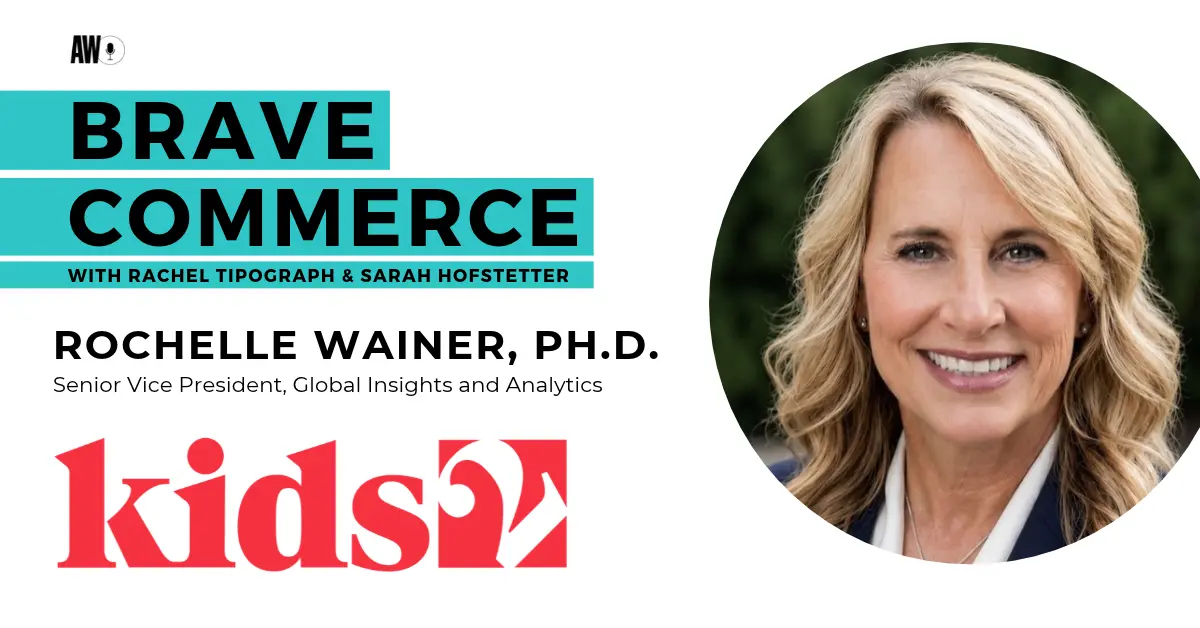
In a recent, highly anticipated episode of Brave Commerce, co-hosts Rachel Tipograph and Sarah Hofstetter sat down with Rochelle Wainer, Senior Vice President of Global Insights and Analytics at Kids2. The dialogue offered a masterclass in how modern organizations must adapt their analytical frameworks to keep pace with rapid technological shifts, evolving retail ecosystems, and the emergence of an entirely new demographic cohort of decision-makers: Generation Z parents.
Kids2, a global leader in the early childhood products and toy industry, has long understood that the journey of parenthood is inherently emotional, dynamic, and fraught with complex decision-making. However, the ways in which parents research, evaluate, and purchase products for their children have fundamentally changed. Today’s consumer operates within an omni-channel matrix, seamlessly blurring the lines between digital discovery, social commerce, and physical retail environments.
This deep-dive analysis examines the core themes explored during the Brave Commerce session, breaking down how Kids2 synthesizes quantitative behavioral data with qualitative research to drive innovation. Furthermore, this report explores the tactical translation of consumer insights into product development, the operational challenges of mapping the modern shopper journey, and the strategic imperatives brands must embrace as Gen Z transitions into parenthood.
Detailed Chronology: The Evolution of Consumer Insights at Kids2
To understand where consumer research is heading, it is vital to trace how the discipline has evolved within organizations like Kids2. Historically, market research operated as a siloed, reactive function. Brands would conceptualize a product, develop it behind closed doors, and then deploy surveys or focus groups to evaluate its viability before a commercial launch.
In her conversation with Tipograph and Hofstetter, Wainer outlined a radical departure from this legacy model. The modern analytics division at Kids2 functions as an agile, proactive engine embedded deeply within every phase of the business lifecycle.
Phase 1: The Death of Static Research and the Rise of Behavioral Data
The conversation began by addressing the fundamental shifts in how consumers interact with information. In the past, research teams relied heavily on what consumers said they did. Today, the proliferation of digital touchpoints allows brands to analyze what consumers actually do.
Wainer detailed how Kids2 has integrated qualitative research with hard behavioral data. While qualitative studies provide the "why" behind consumer sentiment—capturing the anxieties, aspirations, and emotional triggers of new parents—behavioral data provides the "what" and the "how." By tracking search patterns, digital engagement metrics, cart abandonment rates, and social media interactions, Kids2 creates a holistic portrait of the consumer in real-time. This dual-lens approach ensures that strategic decisions are validated not just by opinion, but by verifiable digital footprints.
Phase 2: Bridging the Gap Between Insight and Action
A recurring challenge for corporate analytics teams is the "insight-to-action gap"—the phenomenon where rich, expensive research reports sit on digital shelves without influencing operational strategy. Wainer emphasized that at Kids2, the mandate for the global insights and analytics department is clear: data must be actionable.
During the podcast, Wainer explained how insights are translated across three critical pillars of the organization:
- Product Development: Utilizing consumer feedback loops and emerging tech trends to design products that solve real, unarticulated pain points for parents (such as space-saving designs, multi-functional gear, and integrated smart technologies).
- Marketing: Crafting messaging that resonates with the emotional realities of modern parenting, moving away from idealized, outdated tropes toward authentic representation.
- Retail Partnerships: Equipping retail partners with granular data on shopper behavior, enabling more effective merchandising strategies, optimized shelf-space allocation, and cohesive omni-channel promotions.
Phase 3: Navigating the Omni-Channel Shopper Journey
The modern shopper journey is no longer linear. A parent might discover a stroller via an algorithmic TikTok recommendation, read reviews on an online forum while waiting in line at a grocery store, compare prices across three e-commerce platforms, and ultimately purchase the item via curbside pickup at a brick-and-mortar big-box retailer.
Wainer highlighted the complexities of studying this non-linear pathway. Kids2 invests heavily in tracking the multi-touch attribution of the parent journey, recognizing that digital research heavily influences physical retail sales—and vice versa. By understanding the specific digital catalysts that prompt a physical purchase, Kids2 can optimize its marketing investments across the entire funnel.
Supporting Context & Metrics: The Generational Paradigm Shift
To contextualize Wainer’s insights, it is necessary to examine the broader macroeconomic and demographic forces shaping the consumer landscape. The parenting demographic is currently undergoing a massive generational handover. Millennials, who dominated the birth rates over the past decade, are now being joined—and in some segments, superseded—by Generation Z.
The Rise of Gen Z Parents
Generation Z (born roughly between 1997 and 2012) is entering their prime childbearing years. Brands that fail to understand the distinct psychological, economic, and technological profile of Gen Z parents risk obsolescence.
- Digital Natives by Default: Unlike Millennials, who experienced the transition from analog to digital, Gen Z has never known a world without smartphones, social media, and instantaneous access to information. Their expectations for brand transparency, customer service, and digital integration are exceptionally high.
- Value-Driven and Skeptical: Gen Z consumers are notoriously skeptical of traditional advertising. They heavily favor peer reviews, user-generated content (UGC), and micro-influencers over polished corporate campaigns.
- Inclusivity and Authenticity: For Gen Z parents, representation matters deeply. They expect brands to reflect the diverse realities of modern families, moving far beyond the nuclear family tropes of 20th-century marketing.
The Technological Catalyst: AI and Predictive Analytics
The acceleration of artificial intelligence and machine learning has fundamentally altered how brands process consumer insights. According to industry analyses, companies that successfully integrate AI-driven predictive analytics into their consumer research see a significant reduction in product failure rates.
Kids2 leverages these technological advancements to cut through the noise of big data. By deploying advanced natural language processing (NLP) tools to analyze millions of customer reviews, social media comments, and forum discussions, the brand can identify emerging consumer trends months before they register on traditional research trackers. This agility is vital in the fast-paced juvenile products sector, where safety, innovation, and trend cycles move at lightning speed.
Official Statements & Industry Perspectives
The Brave Commerce episode featuring Rochelle Wainer underscores a broader industry realization: consumer insights can no longer be treated as a support function; they must be the strategic compass of the enterprise.
Reflecting on the core themes of the discussion, industry analysts and retail experts have pointed out several key takeaways regarding the future of consumer engagement:
"The modern parent is navigating an unprecedented volume of information and choices. Brands that win are those that cut through the cognitive overload by offering genuine utility, emotional resonance, and frictionless omni-channel experiences." — Industry Analyst Report on Retail Dynamics
Rochelle Wainer’s approach at Kids2 exemplifies this philosophy. By treating consumer research as an active, listening dialogue rather than a passive measurement tool, Kids2 ensures that its product ecosystem evolves in lockstep with the human beings it serves.
Furthermore, the conversation highlighted the vital importance of cross-functional collaboration. Insights teams can no longer operate in a vacuum. To drive real business value, insights professionals must work hand-in-hand with supply chain managers, digital marketers, product designers, and retail account executives. This collaborative ecosystem ensures that a discovery made in an analytics dashboard quickly translates into a tangible improvement on a store shelf or digital cart.
Future Outlook: What Brands Can Learn Today
As we look toward the remainder of the decade and beyond, the lessons imparted by Rochelle Wainer on Brave Commerce serve as an essential roadmap for consumer packaged goods (CPG) brands, toy manufacturers, and retail enterprises navigating a volatile economic and technological landscape.
1. Embrace Radical Agility in Research Methodologies
Annual or quarterly market research reports are no longer sufficient. Brands must build continuous feedback loops that capture consumer sentiment in real-time. This requires investing in social listening tools, predictive analytics, and agile consumer panels that can provide rapid-fire qualitative and quantitative feedback.
2. Prepare for the Gen Z Parent Wave
The transition from Millennial to Gen Z parents requires an immediate audit of brand messaging, product design, and digital infrastructure. Brands must ask themselves:
- Is our digital checkout experience frictionless and optimized for mobile commerce?
- Do our marketing campaigns reflect authentic, diverse representations of modern parenting?
- Are we engaging with the digital communities (TikTok, Reddit, specialized parenting apps) where Gen Z parents actively seek advice and validation?
3. Harmonize Digital and Physical Retail Experiences
The artificial divide between "e-commerce" and "brick-and-mortar" retail must be completely dismantled. Consumers do not view retail channels as distinct silos; they experience brands holistically. Organizations must ensure that product information, brand values, and promotional strategies are entirely synchronized across digital touchpoints and physical store aisles.
4. Prioritize Purpose and Practicality
Modern parents are under immense economic and psychological pressure. Products that successfully combine multi-functional utility with aesthetic appeal and emotional reassurance will consistently outperform single-purpose items. Brands must use consumer insights not just to sell products, but to genuinely alleviate the daily friction points of family life.
Conclusion
The conversation between Rachel Tipograph, Sarah Hofstetter, and Rochelle Wainer on Brave Commerce provided a compelling look inside the machinery of modern consumer analytics. By successfully merging rigorous quantitative data with deep qualitative empathy, Kids2 demonstrates how legacy brands can successfully future-proof their operations in an era of unprecedented disruption.
As technology continues to evolve, consumer expectations will only accelerate. For brands operating in the parenting space—and across the broader CPG and retail sectors—the mandate is clear: listen closely, analyze deeply, act swiftly, and always keep the human being at the center of the strategic equation.
For those looking to dive deeper into the intersection of commerce, technology, and leadership, industry professionals can experience these conversations live at events such as ADWEEK House: Advertising HQ, taking place in Midtown from October 5–8.